
Nutrition
Series: Proteins, the Building Material - Episode 7: Fish and Seafood
September 10, 2026
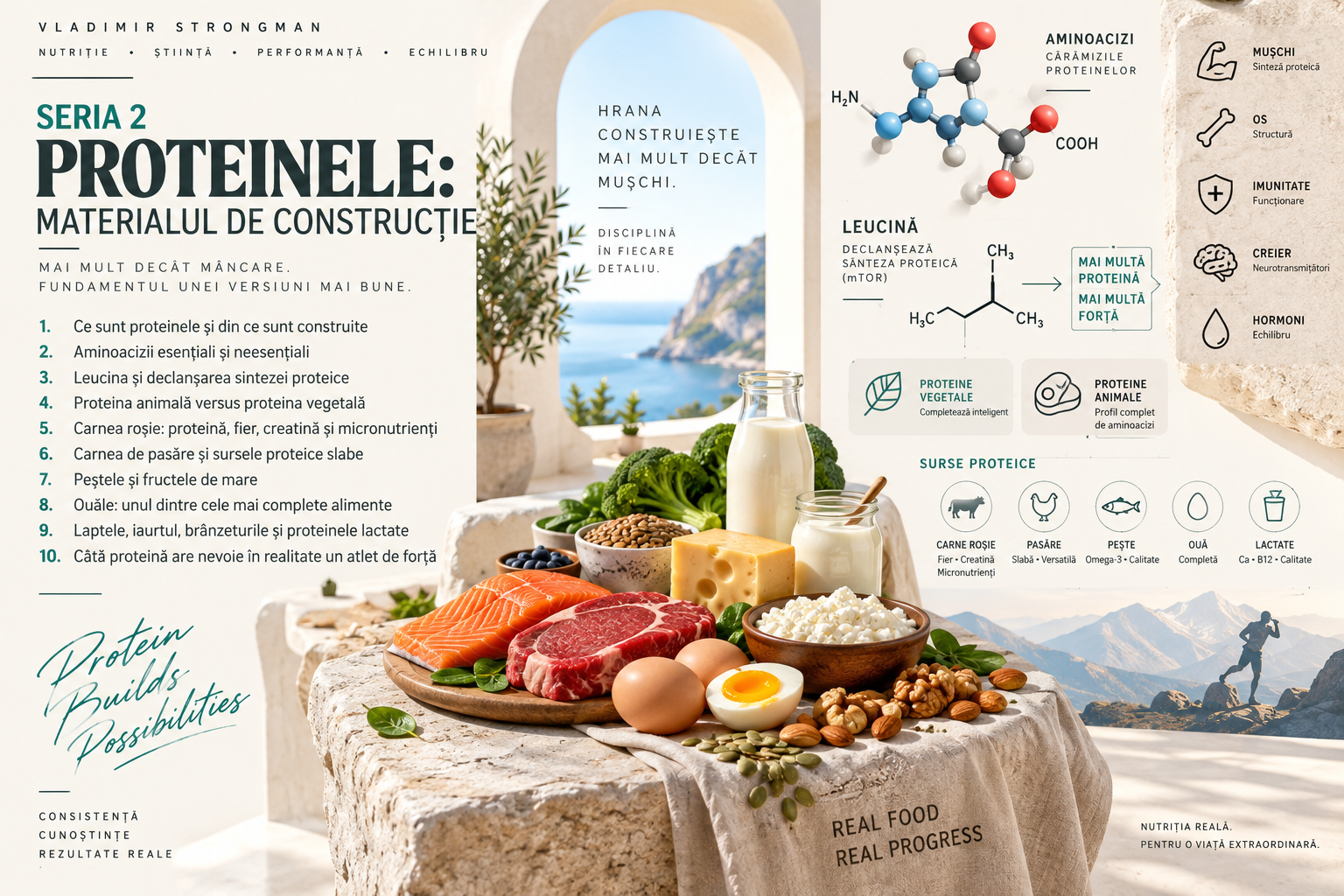
Fish and seafood occupy a distinctive place among protein sources. They can provide complete, highly digestible protein while delivering a micronutrient and lipid profile that differs from meat, eggs and dairy. Some species are extremely lean, while others provide meaningful amounts of EPA and DHA, the characteristic long-chain marine omega-3 fatty acids.
For strongman athletes, this category is valuable because of its flexibility. Cod, hake or shrimp can function as lean protein sources, while salmon, sardines or mackerel can provide protein and dietary fat in the same meal. Iodine, selenium, vitamin B12, vitamin D and other bioactive compounds extend their nutritional value beyond protein grams alone.
This episode examines fish and seafood through composition, digestibility, muscle-protein synthesis, recovery, cardiovascular health, contaminants, cooking methods and use around training or competition. The central idea is simple: there is no single ideal fish, but a very large family of foods with different nutritional roles.
1. Fish is a complete protein source
Fish muscle protein provides all essential amino acids required by the human body. For athletes, an adequate serving can support repair and remodeling of muscle tissue in the same broad way as other high-quality animal proteins. Major differences between species usually involve fat content, micronutrients and energy density.
2. Amino-acid quality is high
Fish has a well-balanced indispensable-amino-acid profile and good digestibility. It does not need to be combined with another protein to become complete. In a sports diet, its value comes from the combination of amino acids, digestive tolerance and nutrients that are especially common in marine foods.
3. Leucine is present in meaningful amounts
Fish proteins contain leucine, one of the amino acids involved in signaling muscle-protein synthesis. As discussed in earlier episodes, however, leucine does not build muscle on its own. The full set of essential amino acids and sufficient total protein are required to turn the anabolic signal into newly synthesized tissue.
4. Fish is usually easy to digest
Many fish species contain less dense connective tissue than mammalian meat and become tender quickly during cooking. For athletes, this can make fish easier to tolerate when daily food volume is high. Digestion still depends on fat content, side dishes, meal size and preparation method.
5. Lean fish and fatty fish serve different purposes
Cod, hake, pike-perch and haddock tend to be very lean, whereas salmon, sardines, herring and mackerel contain more lipids. Both categories provide high-quality protein, but calorie content and fat composition differ. The better choice depends on the energy requirements of the day.
6. Lean white fish is excellent for calorie control
Lean species can provide many grams of protein with relatively few calories. During fat loss, or when an athlete wants to reserve more of the energy budget for carbohydrates, white fish can be a highly efficient alternative to chicken or turkey breast.
7. Fatty fish provides energy together with protein
Salmon, herring, sardines and mackerel contain more calories because they contain more fat. For a strongman with very high energy needs, this can be an advantage rather than a flaw. One serving can provide protein, energy and marine omega-3 fatty acids at the same time.
8. EPA and DHA are nutritional signatures of fatty fish
Eicosapentaenoic acid and docosahexaenoic acid are long-chain marine omega-3 fatty acids with structural and functional roles in cell membranes, signaling and regulation of inflammatory processes. Fatty fish is one of the most direct dietary sources, although amounts vary substantially between species and individual fish.
9. Omega-3 does not automatically mean miraculous recovery
EPA and DHA are biologically important, but they do not erase muscle damage, sleep deprivation or poor training design. Some research suggests favorable effects on inflammatory signaling, cell membranes and anabolic responsiveness in certain contexts, but omega-3 should be viewed as part of a sound diet rather than as a magical anti-inflammatory food.
10. Fish can contribute to cardiovascular health
Regular fish intake, especially fatty fish, is associated in nutritional research with a favorable cardiovascular profile as part of a balanced dietary pattern. This matters for strength athletes because performance does not exist separately from cardiovascular health. The benefit comes from the total dietary pattern, not one isolated meal.
11. Vitamin D is found especially in fatty fish
Salmon, herring, sardines and other fatty species can contribute significantly to vitamin D intake. Vitamin D supports calcium homeostasis, bone health and muscle function. Food content varies, while individual vitamin D status also depends on sun exposure, season and other factors.
12. Vitamin B12 is abundant in many species
Fish and seafood can be excellent sources of vitamin B12, which is required for normal blood-cell formation and nervous-system function. These roles are fundamental for an athlete, but consuming more than is needed does not automatically create more energy or more strength.
13. Iodine is one of the key micronutrients
Marine fish and many types of seafood can contribute iodine, a mineral required for thyroid-hormone synthesis. Thyroid hormones influence energy metabolism and many physiological processes. Iodine content varies considerably between species and geographic regions, so marine foods are not nutritionally interchangeable.
14. Selenium is frequently present in useful amounts
Fish and shellfish can provide selenium, which is incorporated into selenoproteins involved in redox control and thyroid-hormone metabolism. Selenium follows the basic principle of dose: adequate intake is beneficial, while excess does not provide proportional advantages and can become harmful.
15. Phosphorus contributes to bone and energy metabolism
Marine foods contain phosphorus, which is present in bone, cell membranes and energy molecules such as ATP. Deficiency is uncommon in mixed diets, but its presence is another reminder that fish is more than a package of amino acids. Every food delivers a broader nutrient matrix.
16. Magnesium and potassium vary between species
Some fish and seafood contribute magnesium and potassium, minerals involved in neuromuscular function. They do not replace vegetables, fruit, potatoes and other foods rich in electrolytes. A complete meal matters more than isolating one mineral from one protein source.
17. Iron from seafood can be relevant
Mollusks, especially some shellfish, can contain meaningful amounts of iron. Dietary variety may help athletes at risk of deficiency. However, diagnosis and correction of iron deficiency should be based on laboratory testing and medical evaluation rather than the assumption that more iron is always better.
18. Zinc is especially concentrated in some mollusks
Oysters are well known for their high zinc content, and other seafood contributes as well. Zinc participates in enzyme function, immunity and protein synthesis. The relevant goal is adequate long-term intake, not treating one food as a hormonal booster.
19. Copper can be high in some crustaceans and mollusks
Crustaceans and mollusks can provide copper, a mineral involved in oxidative enzymes, connective tissue and iron metabolism. A major advantage of dietary variety is that it spreads micronutrient intake across many foods instead of relying excessively on one source.
20. Taurine is present in many marine foods
Fish and especially some seafood contain taurine, a compound involved in osmoregulation, cellular function and metabolism. Its presence is physiologically interesting, but a serving of seafood is not equivalent to a concentrated taurine supplement. The food should be evaluated as a whole.
21. Fish also contains creatine
Fish muscle tissue contains creatine, with some species providing meaningful amounts. Dietary intake contributes to daily exposure but is not equivalent to a standardized dose of creatine monohydrate. Cooking and processing can alter content to some extent, and variation between species is substantial.
22. Salmon is more than protein and omega-3
Salmon combines complete protein with EPA, DHA, vitamin B12, selenium and, depending on species and origin, vitamin D. Differences between wild and farmed salmon involve fat profile, feed and energy density rather than a simplistic good-versus-bad distinction.
23. Sardines are small, nutrient-dense and practical
Sardines provide protein, omega-3 fatty acids, vitamin B12 and minerals. When eaten with their soft bones, they can also contribute calcium. Their small body size is relevant to contaminants because small fish tend to accumulate less mercury than large predatory species.
24. Mackerel can provide abundant omega-3, but species matters
Mackerel is generally rich in marine fats and protein, but different species do not have identical contaminant profiles. Some varieties are commonly consumed, while larger predatory mackerel species may raise greater mercury concerns. The exact species on the label therefore matters.
25. Herring is a traditional source of marine fats
Herring provides protein, EPA and DHA and can be highly nutrient-dense. Pickled, smoked or salted versions may contain substantial sodium. For athletes, the difference between fresh fish and a processed product may matter depending on total salt intake and hydration strategy.
26. Tuna is convenient protein, but it should not become a monopoly
Tuna canned in water is convenient, protein-dense and easy to transport. However, tuna includes species of different sizes, and mercury levels can vary. Repeating the same species every day is not the best diversification strategy; rotating with sardines, salmon, cod or seafood broadens the nutrient profile.
27. Cod is almost the definition of a lean marine protein
Cod usually contains little fat and a high proportion of protein relative to calories. It is well suited to a light, controllable protein meal. Its low fat content does not make it superior to salmon; it simply gives it a different metabolic and caloric role.
28. Shrimp provides protein with relatively few calories
Shrimp is relatively lean, rich in protein and can contribute selenium, iodine and vitamin B12. Its calorie profile changes dramatically if it is deep-fried or served with energy-dense sauces. The basic ingredient and the finished dish are nutritionally different foods.
29. Squid is an interesting protein source, but preparation matters
Squid can provide protein, copper, selenium and vitamin B12. Simply cooked squid has a very different profile from breaded fried rings. For athletes, this is a clear example of why the oil, flour, sauces and final portion must be considered along with the raw ingredient.
30. Mussels and clams can be micronutrient-dense
Mollusks can provide protein together with iron, vitamin B12, selenium, iodine and other minerals in proportions that differ substantially between species. They broaden dietary variety and can deliver micronutrients that are not equally concentrated in chicken breast or lean white fish.
31. Oysters have a distinctive mineral profile
Oysters can contain high amounts of zinc, copper, iron and vitamin B12. Their nutrient concentration is precisely why more is not necessarily better. Normal servings can contribute to requirements without turning the food into a pseudo-hormonal supplement.
32. Octopus provides lean protein and minerals
Octopus can be a relatively lean protein source and provides iron, copper, selenium and vitamin B12. Texture and digestibility depend heavily on preparation. Boiling or slow cooking can improve palatability, while rich sauces can dramatically change the calorie density of the meal.
33. Shellfish can contain cholesterol, but dietary context matters
Shrimp and other shellfish can contain more dietary cholesterol than many fish species. That does not mean they must automatically be avoided. Blood-lipid responses are influenced by the total diet, saturated-fat intake, individual genetics and metabolic status.
34. Mercury is the best-known concern, but species are not equal
Methylmercury can accumulate through the food chain, which is why large, long-lived predatory fish tend to contain higher levels. Smaller species generally contain less. A simple strategy is to eat a variety of fish, avoid monotonous intake of large predators and follow local official guidance.
35. Fish size tells us something about trophic position
A large fish that lives for many years and eats other fish can concentrate contaminants as it moves higher in the food chain. This bioaccumulation principle helps explain why sardines and other small fish are often useful rotation choices. It is not an absolute rule, but it is biologically important.
36. PCBs and other contaminants exist, but risk needs context
Some waters and species can contain persistent pollutants including PCBs. Risk assessment must consider species, origin and official guidance. Saying that fish is toxic is as simplistic as saying that every marine food is automatically healthy.
37. Microplastics are a real topic with many unanswered questions
Plastic particles have been identified in aquatic environments and marine organisms. The precise health implications of dietary exposure in humans are still being investigated. At present, the issue justifies monitoring and research rather than dramatic conclusions that all seafood should be avoided.
38. Wild and farmed fish cannot be reduced to good versus bad
Aquaculture and wild capture produce foods whose profiles depend on species, feed, environment and production practices. Farmed fish may contain more fat or different fatty-acid proportions, while wild fish are not automatically free from contaminants. Comparisons should be made on specific products rather than slogans.
39. Freezing does not destroy protein value
Frozen fish can remain an excellent source of protein and micronutrients. Proper freezing is primarily a preservation method. Texture may change in some products, but the idea that frozen fish is nutritionally empty has no basis. For logistics, frozen fish is often one of the most practical choices.
40. Canned fish can be extremely useful for athletes
Tuna, sardines, mackerel and other canned products provide ready-to-eat protein with long shelf life and easy transport. For athletes who travel or work long hours, that logistical advantage is substantial. Sodium, added oil and the actual drained weight should still be checked.
41. Smoked fish can contain a great deal of sodium
Smoking and salting alter the final product compared with fresh fish. Sodium can rise considerably, which may matter for blood pressure, total salt intake and hydration strategies. At the same time, sodium is not a universal enemy for athletes; dose and context matter.
42. Frying can radically change calorie density
A very lean cod fillet can become a high-calorie meal after breading and deep frying. Absorbed oil, flour and sauces may contribute more energy than the fish itself. For body-composition control, cooking method can matter more than the difference between two species.
43. Overcooking can dry fish and reduce dietary adherence
Lean fish can dry out quickly. If a diet requires tasteless, difficult-to-eat foods every day, adherence will fall. Baking, steaming, controlled grilling and sauces matched to the energy goal can preserve palatability without turning the meal into a calorie bomb.
44. Raw fish requires serious food-safety attention
Sushi, sashimi and other raw preparations can carry microbiological or parasitic risks if sourcing and cold-chain handling are inadequate. For an athlete, food poisoning before a competition can destroy performance. Food safety matters more than how sophisticated a meal appears.
45. Histamine can be a problem in poorly stored fish
Improper storage of some species can promote histamine formation and scombroid poisoning. Cooking does not necessarily solve the problem once histamine has formed. Correct refrigeration and reliable sourcing are especially important for tuna, mackerel and other susceptible species.
46. Shellfish allergy can be severe
Crustaceans and mollusks are important food allergens, and reactions can range from mild to severe. A person with a known allergy should not experiment with seafood simply for its nutritional benefits. Many other protein and micronutrient sources can support a complete diet.
47. Purines can matter for people with hyperuricemia or gout
Some fish and seafood contain meaningful amounts of purines. People with hyperuricemia or gout may need individualized food choices with medical guidance. For most athletes without this condition, purine content does not justify eliminating fish as a whole category.
48. Before training, lean fish can be easy to manage
A fillet of white fish with rice or potatoes can provide protein and carbohydrate without much fat. Many athletes may tolerate such a meal better before exercise than a very fatty dish. Individual tolerance and the time remaining before training are still decisive.
49. After training, fish can support protein recovery
After a hard session, a sufficient serving of fish provides essential amino acids for muscle remodeling. Adding carbohydrates can also support glycogen restoration. There is no need for a tiny post-workout window measured in minutes; total intake and distribution across the day matter more.
50. On competition day, fish is not mandatory simply because it seems light
Some athletes tolerate fish very well between events, while others prefer more familiar foods. Competition day is not the right time for culinary experiments. If a particular fish, sauce or preparation has not been tested during training, theoretical digestibility matters less than predictability.
51. For a very large strongman, lean fish may provide too few calories if the entire diet is ultra-lean
An athlete weighing 120-150+ kilograms may have enormous energy requirements. If every meal is built from cod, chicken breast, vegetables and low-fat foods, total food volume may become difficult to manage. Fatty fish, olive oil, rice and other energy-dense foods can make the diet more practical.
52. During a calorie deficit, white fish becomes highly valuable
When reducing body weight, a food that provides substantial protein for relatively few calories helps preserve portion size and satiety. White fish can periodically replace chicken or turkey, reduce dietary monotony and provide a different micronutrient profile.
53. During a calorie surplus, fatty fish can be more practical
During mass-gain phases, salmon, sardines or mackerel can provide more energy in a moderate food volume. This can help an athlete with limited appetite. The calorie surplus still needs control; nutritious fats do not cancel the principles of energy balance.
54. Species variety is smarter than eating the same fish every day
Rotating lean fish, fatty fish, crustaceans and mollusks spreads micronutrient intake and reduces dependence on one contaminant profile. Variety also makes the diet more enjoyable. Long-term nutrition works better as an ecosystem than as a list of two supposedly perfect foods repeated endlessly.
55. Cost can shape choices more than theory
Fresh salmon, cod, canned sardines and seafood can differ greatly in price. For an athlete consuming large amounts of protein, cost per serving becomes a real variable. Frozen fish, canned products and local species may sometimes provide a much better nutrition-to-cost ratio.
56. Sustainability and origin are part of food choice
Pressure on wild stocks, fishing methods and aquaculture practices differ between species and regions. Origin and credible certifications can provide useful information to consumers. A performance diet does not have to ignore the resources from which food is produced.
57. Saying fish is healthy only makes sense when form and context are specified
A baked fillet, deep-fried battered fish, canned fish in oil and an ultra-processed fish product are not nutritionally identical. The generic label fish can hide enormous differences in calories, sodium, fat and ingredients. The actual finished food must be evaluated.
58. Fish does not need to replace every other protein source
Red meat, poultry, eggs, dairy and plant proteins all have different nutrient profiles. Fish offers specific advantages, but an exclusively marine diet is not required for performance. Combining protein sources provides more flexibility and broader nutritional coverage.
59. For strongman, fish is an exceptionally flexible metabolic tool
Lean fish provides abundant protein for few calories, while fatty fish combines protein with energy and omega-3 fats. Seafood adds micronutrients and variety. This flexibility is valuable in a sport where needs can shift between very high body mass, recovery, travel and phases of weight control.
60. Conclusion: the sea offers a family of proteins, not one single food
Fish and seafood provide complete protein and can contribute omega-3 fatty acids, iodine, selenium, vitamin B12, vitamin D, iron, zinc and other nutrients. Their value depends on species, origin, preparation, frequency and the context of the total diet. For strongman athletes, intelligently rotating lean and fatty marine sources is more useful than searching for one superfood.
The first key point is that fish and seafood generally provide complete, highly digestible protein, while fat and micronutrient content can vary greatly between species.
The second point is that fatty fish is distinctive because of EPA and DHA, but these nutrients do not replace sleep, sound training design or an otherwise balanced diet.
The third point is that iodine, selenium, vitamin B12, vitamin D, iron, zinc and other micronutrients make marine foods more than simple protein sources.
The fourth point is that mercury, histamine, allergens and food safety matter, but risk differs greatly between species and preparations. Variety and reliable sourcing are simple, effective strategies.
Finally, for strongman athletes, lean fish is excellent for calorie control while fatty fish provides energy and omega-3 fats in moderate food volume. Rotating both with crustaceans, mollusks and other protein sources creates a more robust diet.
Sources and recommended reading
1. Jäger R et al. International Society of Sports Nutrition Position Stand: Protein and Exercise. Principles of protein intake, essential amino acids and training adaptation.
2. FAO. Dietary Protein Quality Evaluation in Human Nutrition. Digestibility, indispensable amino acids and assessment of protein quality.
3. USDA FoodData Central. Composition data for fish, crustaceans and mollusks, including protein, lipids, vitamins and minerals.
4. FAO/WHO literature on fish consumption, nutritional value and risk-benefit assessment of contaminants.
5. European Food Safety Authority. Assessments of methylmercury, food contaminants and fish consumption.
6. U.S. FDA and EPA. Guidance on choosing fish according to mercury exposure.
7. Cardiovascular-nutrition literature on fish, EPA, DHA and cardiometabolic risk.
8. Sports-nutrition literature on omega-3 fatty acids, inflammation, muscle mass and responses to resistance training.
9. Food-safety literature on raw fish, parasites, histamine, refrigeration and prevention of foodborne illness.
10. Nelson DL, Cox MM. Lehninger Principles of Biochemistry; Hall JE. Guyton and Hall Textbook of Medical Physiology. Foundations of biochemistry, metabolism and physiology.
Editorial note: this article is educational. People with seafood allergy, hyperuricemia, relevant medical conditions or specific contaminant-related guidance should individualize their choices with an appropriate healthcare professional.
More From The Journal

Training
The Science of Strongman Training - Episode X: Competition Programming
How to build a complete Strongman competition preparation block: calendar, events, volume, intensity, specificity, simulations, autoregulation, tapering and fatigue management.

Training
The Science of Strongman Training - Episode IX: Peaking
Peaking in Strongman: how to turn months of training into maximal competition performance by reducing fatigue, preserving adaptations and managing specificity.