
Nutrition
Series: Proteins, the Building Material - Episode 6: Poultry and Lean Protein Sources
September 10, 2026
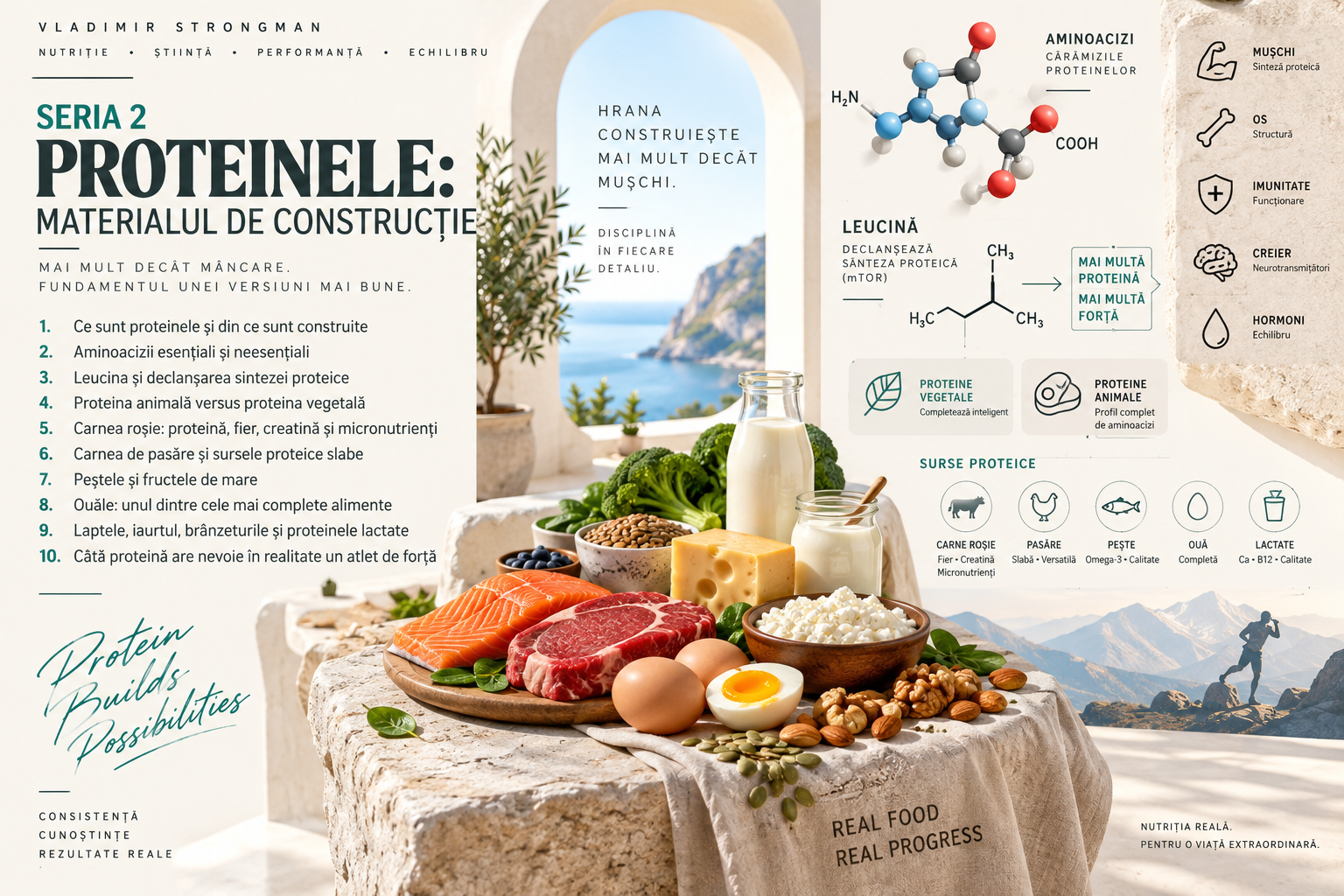
Poultry has become almost synonymous with sports nutrition because it provides a large amount of protein in a relatively easy-to-control calorie package. Chicken breast is the classic image, but the category is much broader: thighs, turkey, duck, organs and other birds differ in fat, micronutrients, flavor and practical use.
For strongman athletes, lean protein sources have a special role. They make it possible to reach a high protein intake without every meal also bringing large amounts of fat and calories. That creates programming freedom, allowing energy from carbohydrates and fats to be adjusted separately according to training volume, goals and digestive tolerance.
This episode examines poultry and major lean protein sources through amino-acid quality, leucine, digestibility, calorie density, micronutrients, satiety and practical use. The central idea is not that “lean” automatically means superior, but that these foods are highly precise tools inside a well-designed diet.
1. What poultry means
Poultry mainly includes chicken, turkey, duck and goose, but nutritional profiles differ between species and cuts. Muscles used more intensively tend to contain more myoglobin and appear darker. Differences in fat content are often more important in practice than the general label “poultry.”
2. Chicken breast and chicken thigh are nutritionally different foods
Skinless breast is very lean and protein-dense, whereas thigh usually contains more fat and somewhat more myoglobin. Both provide complete protein. Choosing between them depends on calorie needs, taste, satiety and timing rather than on one option being universally correct.
3. Poultry protein is complete
Poultry provides all essential amino acids required for human protein synthesis. Its amino-acid profile is well suited to muscle repair and remodeling. For athletes, an adequate serving can efficiently help reach the protein and essential-amino-acid threshold of a meal.
4. Leucine is present in meaningful amounts
Chicken and turkey protein contain enough leucine for a sufficient serving to contribute to muscle-protein-synthesis signaling. As discussed in earlier episodes, leucine does not work alone: the remaining essential amino acids are required to convert the anabolic signal into newly synthesized protein.
5. Digestibility is high
Poultry muscle proteins are generally well digested, and appropriate cooking improves access for digestive enzymes. For athletes who need a large daily protein intake, digestibility and tolerance matter greatly. A source that looks excellent on paper is of little use if it constantly causes gastrointestinal discomfort.
6. Chicken breast has an excellent protein-to-calorie ratio
Removing the skin and the naturally low fat content make chicken breast one of the most efficient foods for obtaining many grams of protein with relatively few calories. This ratio is useful in fat-loss phases and also during mass gain when carbohydrates and fats are being controlled separately.
7. Thighs provide more energy and often more flavor
Chicken or turkey thighs usually contain more fat than breast. This raises calorie density and often improves palatability. For a strongman with high energy needs, that can be an advantage. During a calorie deficit, the same characteristic must be accounted for more carefully.
8. Skin can substantially change calorie content
A significant share of the fat in a poultry serving can come from the skin. Removing it lowers energy density without removing the protein in the underlying muscle. Skin is not a forbidden food, but its presence must be considered when comparing apparently similar portions.
9. Turkey is one of the most versatile lean protein sources
Turkey breast has a profile close to chicken breast, with abundant protein and little fat, while other cuts can be fattier. Turkey adds variety and works well roasted, grilled, minced or paired with carbohydrates and vegetables.
10. Duck and goose are not usually lean proteins
Although they are poultry, duck and goose can contain substantially more fat, especially when eaten with skin. They provide high-quality protein but should not automatically be placed in the same calorie category as chicken breast. The example shows why foods should be classified by composition, not species alone.
11. Niacin is well represented in poultry
Chicken and turkey can contribute significantly to niacin intake. Vitamin B3 is used to form NAD and NADP, coenzymes central to energy metabolism. Micronutrients do not create energy from nowhere, but they allow the biochemical machinery that processes fuel to operate normally.
12. Vitamin B6 supports amino-acid and glycogen metabolism
Vitamin B6 is a cofactor for important reactions in amino-acid metabolism and also contributes to glycogen use. Poultry is a meaningful dietary source. In a sports diet with high protein and carbohydrate intake, these pathways are constantly active, although adequacy matters more than simply consuming more.
13. Selenium completes the micronutrient profile
Poultry can provide selenium, incorporated into selenoproteins involved in antioxidant function and thyroid-hormone metabolism. Amounts vary with animal feed. As with other micronutrients, adequacy is the goal; excess does not provide a proportional performance bonus.
14. Phosphorus is present in useful amounts
Phosphorus contributes to bone structure, phospholipids and energy molecules such as ATP. Poultry contributes to daily intake. Deficiency is uncommon in mixed diets, but its role is a reminder that a protein source is also a package of minerals and metabolic cofactors.
15. Potassium contributes to neuromuscular function
Chicken and turkey also provide potassium, required for membrane potential, nerve signaling and muscle contraction. They are not the most concentrated sources, so vegetables, fruit and potatoes remain important. Poultry with potatoes can therefore pair protein with carbohydrate and potassium.
16. Iron is present, usually at lower levels than in red meat
Poultry supplies iron, but concentrations tend to be lower than in many red meats, especially in breast meat. Dark meat may contain more. For athletes with high requirements or documented deficiency, total dietary iron and the sources used become important.
17. Zinc is present, but the profile differs from red meat
Poultry contributes zinc, although some red meats are more concentrated. Zinc participates in enzyme function, immunity, wound healing and protein synthesis. Variety across animal and plant foods can make it easier to meet needs without relying on one source.
18. Poultry also contains creatine
Bird muscle tissue contains creatine, although amounts vary by species, muscle and preparation method. Dietary intake contributes to daily creatine exposure, but, as with red meat, it is not equivalent to a standardized dose of creatine monohydrate.
19. White meat and dark meat reflect muscle function
Muscles used differently have different proportions of fiber types, mitochondria, myoglobin and lipids. That is why breast and thigh differ in more than color. The functional anatomy of the bird appears on the plate as real differences in composition and flavor.
20. Connective tissue influences texture and cooking method
Cuts with more connective tissue may need slower cooking to become tender. Collagen contributes to texture, while muscle protein remains the main contributor to the essential-amino-acid profile. Cooking can turn a tougher cut into an easy-to-eat protein source.
21. Lean protein sources allow precise calorie control
When protein comes with little fat, the athlete can decide separately where the remaining calories come from. This allows carbohydrates to rise on hard training days, energy to be reduced during fat loss, or dietary fats to be adjusted without protein intake collapsing.
22. Protein has a strong satiety effect
Protein tends to be more satiating than an equivalent amount of energy from many highly refined foods. Lean sources provide this effect without a large fat load. For an athlete reducing body mass, that combination can improve dietary adherence.
23. During a calorie deficit, lean protein helps preserve lean mass
During energy restriction, sufficient protein and resistance training are the main tools for preserving muscle. Lean sources are practical because they allow a large protein intake without rapidly consuming the day's calorie budget.
24. Lean protein remains useful in a calorie surplus
Trying to gain weight does not mean every protein source must be fatty. Lean proteins leave room for carbohydrates that support glycogen and training volume, while also allowing better control over the rate of weight gain.
25. White fish is an excellent lean protein alternative
Cod, hake, pike-perch and other white fish can provide substantial protein with very little fat. Depending on the species, they also provide iodine, selenium and other micronutrients. White fish can easily replace a chicken-based meal for variety.
26. Fatty fish is nutritious, but it is not a lean protein
Salmon, mackerel and sardines provide high-quality protein plus omega-3 fats, but their calorie density is higher. That does not make them nutritionally worse, only different tools. A diet can use both lean and fatty fish for different purposes.
27. Egg whites are almost pure protein with minimal fat
Egg whites provide high-quality protein with very little fat. Yolks contain valuable nutrients including choline, fat-soluble vitamins and lipids. Combining whole eggs with additional whites allows calories to be adjusted without eliminating yolks entirely.
28. Fat-free Greek yogurt combines protein and calcium
Low-fat or fat-free Greek yogurt can provide substantial protein, mainly casein and whey proteins, together with calcium. It pairs easily with fruit, cereal or honey and can work well as a snack or lighter meal.
29. Cottage cheese and low-fat cheeses are practical slow proteins
Cottage cheese and other lower-fat cheeses can provide substantial casein. Slower digestion can be useful between meals or before sleep. Sodium content varies considerably between products and should be checked individually.
30. Whey is one of the most concentrated lean protein sources
Whey concentrate and isolate rapidly provide essential amino acids and are rich in leucine. Isolate usually contains less fat and lactose. Powder is not mandatory, but it is an efficient tool when solid food is difficult to consume or time is limited.
31. Lean red meat can belong in this category too
Very lean beef or other trimmed cuts can have a protein-to-calorie ratio close to some poultry. The category “lean protein” describes composition, not meat color. Some beef cuts may be leaner than some chicken dishes served with skin.
32. Pork tenderloin can be surprisingly lean
Certain pork cuts, such as tenderloin, can be low in fat and high in protein. The idea that pork is automatically fatty comes from generalizing across very different cuts. The specific cut matters more than the reputation of the species.
33. Seafood can provide very lean protein
Shrimp, squid and other seafood can provide substantial protein with relatively few calories. Depending on species they also supply iodine, selenium, copper and vitamin B12. Preparation matters greatly because frying and rich sauces can quickly turn a lean source into a calorie-dense meal.
34. Tuna in water is practical, but species variety matters
Tuna canned in water is protein-dense and easy to transport. However, frequent intake of some larger fish species can increase mercury exposure. Rotating with smaller fish and other protein sources is a simple diversification strategy.
35. Plant protein isolates can also be very lean
Soy, pea and other plant isolates concentrate protein while reducing some of the carbohydrate and fat found in the original food. Their amino-acid profiles differ from whey, but adequate doses and blends can provide an effective essential-amino-acid intake.
36. Tofu can be moderately calorie-dense, not always ultra-lean
Tofu provides complete soy protein, but fat and water content vary widely between products. Some versions have an excellent protein-to-calorie ratio, while others are denser. The nutrition label is more useful than assuming every plant food is automatically lean.
37. Seitan is protein-dense, but its amino-acid profile has limitations
Seitan, made from wheat gluten, can have an excellent protein-to-calorie ratio but is relatively low in lysine. Combining it with legumes or other protein sources improves the overall amino-acid profile. Quality should not be judged from protein grams alone.
38. Legumes bring protein together with carbohydrate and fiber
Beans, lentils and chickpeas are not “lean” in the same way as chicken breast because they also provide carbohydrates, but their nutrient density is valuable. Fiber, potassium, folate and starch make them useful in mixed diets, especially alongside other protein sources.
39. Protein density and protein quality are different concepts
A food can provide many grams of protein for few calories yet have a less favorable amino-acid profile, or the reverse. Athletes need to consider total protein, essential amino acids, digestibility and the whole day's intake. No single number describes a protein source completely.
40. Cooking can turn a lean protein into a high-calorie meal
Chicken breast itself is low in calories, but breading, oil, cheese, mayonnaise and rich sauces can double or triple the energy content of the meal. When calorie control is the goal, preparation method and side dishes matter as much as the central protein food.
41. Processing can radically change a lean protein source
Plain turkey breast and processed turkey slices may come from the same species but are not the same food. Added salt, fats, starches, preservatives and energy density can differ substantially. The final product matters more nutritionally than the name printed on the package.
42. Sodium can range from very low to very high
Fresh poultry differs greatly from brined, injected or processed products. Sodium is important for hydration and muscle contraction, but it must be considered within total intake. Reading labels can reveal large differences between products that look almost identical.
43. Food safety is critical with poultry
Raw poultry can carry pathogenic microorganisms. Thorough cooking, proper refrigeration, avoiding cross-contamination and good utensil hygiene are essential. For an athlete, gastrointestinal infection near competition can damage performance far more than the difference between two otherwise excellent protein sources.
44. Washing raw chicken does not make it safer
Rinsing raw poultry can spread contaminated droplets across sinks and nearby surfaces. Safety comes from correct handling and cooking, not washing meat. This simple rule is practically more important than many sophisticated discussions about protein timing.
45. Overcooking can reduce palatability
Very dry chicken breast is difficult to eat in large amounts. Adherence matters, so a protein source must also be enjoyable. Controlled cooking, marinades, appropriately calorie-dense sauces and recipe rotation can turn a repetitive diet into a sustainable routine.
46. Digestion may be easier when a meal is lower in fat
Lower-fat meals generally leave the stomach faster than very fatty meals. Close to training, a serving of lean poultry with carbohydrate may be easier to tolerate than a very large, high-fat meal.
47. Before training, simplicity can be an advantage
Lean chicken or turkey, rice or potatoes and a moderate amount of vegetables create a predictable meal for many athletes. It is not a mandatory formula, but it provides protein, carbohydrate and manageable food volume before demanding training.
48. After training, lean protein leaves room for carbohydrates
After hard training, glycogen restoration can matter, especially when another session or multiple events follow. A lean protein source allows generous carbohydrate intake without making the meal excessively fatty and slow to digest.
49. On competition day, individual tolerance is the main rule
Some athletes tolerate solid meat well between events, while others prefer yogurt, shakes or very small meals. There is no universal competition food. Lean sources are useful because they provide protein without a large fat load, but personal tolerance should be tested in training.
50. Protein distribution matters more than obsession with one food
An athlete does not need chicken breast at every meal. More important is sufficient total protein and essential amino acids distributed reasonably across the day. Variety also increases the chance of covering micronutrient needs and reduces dietary monotony.
51. Rotating protein sources improves micronutrient variety
Chicken provides one nutrient profile, fish another, dairy contributes calcium, red meat supplies more heme iron, and legumes provide fiber and folate. Rotating them creates a more robust dietary system than repeating one source obsessively.
52. Lean protein sources should not eliminate fat from the diet
A diet based on very lean proteins does not mean fat should be minimized. Essential fatty acids, absorption of fat-soluble vitamins and numerous physiological functions require adequate dietary fat. The advantage of lean protein is control, not fat elimination.
53. For a very large body, food volume can become a problem
A large strongman may need so many calories that a diet composed only of very lean foods becomes bulky and difficult to eat. In that situation, lean protein needs to be combined intelligently with more energy-dense foods.
54. During a deficit, the same food volume can become an advantage
When body-weight reduction is the goal, foods with high protein and low calorie density allow satisfying portions. They can help manage hunger and preserve performance, provided the deficit is not so aggressive that recovery collapses.
55. Cost per gram of protein is a real variable
Chicken, eggs, dairy, canned fish and protein powders can vary greatly in cost by country and season. For an athlete consuming large amounts of protein, budget matters. The best diet is also one that can be sustained financially.
56. Convenience can determine adherence
Batch-cooked meat, canned foods, yogurt, cottage cheese and shakes can reduce meal-preparation time. For someone who works, trains and travels frequently, logistics are part of nutrition. A perfect plan that cannot be executed has little value.
57. “Clean” and “dirty” are overly primitive labels
A lean protein source can be useful without becoming morally superior to other foods. Nutrition operates through amounts, composition, frequency and context. Moral categories can make a diet more rigid without making it better.
58. Lean protein is a tool for metabolic precision
Its main advantage is the ability to alter protein intake without simultaneously making huge changes to dietary fat and total energy. This separation simplifies dietary programming for performance, body recomposition or weight-class goals.
59. For strongman, combining sources beats a chicken monopoly
Chicken and turkey can form the backbone of some meals, but fish, dairy, eggs, lean red meat and plant proteins contribute different nutrients. Intelligent rotation provides protein plus metabolic and culinary variety.
60. Conclusion: lean protein is a control tool, not a dietary religion
Poultry and other lean protein sources provide complete or highly concentrated protein with relatively few calories. They are excellent for intake control, recovery and planning, but work best within a varied diet in which carbohydrates, fats and micronutrients are adjusted to the athlete's goals.
The first key point is that poultry provides complete, highly digestible protein, and lean cuts allow precise calorie control without sacrificing protein intake.
The second point is that “poultry” does not automatically mean “lean.” Skinless breast, thighs, duck and processed poultry products can have very different energy profiles.
The third point is that lean protein sources extend far beyond chicken: white fish, low-fat dairy, egg whites, lean beef or pork cuts and some plant isolates can serve the same nutritional purpose.
The fourth point is that preparation can completely change the meal. Oil, breading, sauces and skin can rapidly turn a lean protein into a very calorie-dense dish.
Finally, for strongman athletes, lean proteins are precision tools: they keep protein high while allowing carbohydrates, fats and total calories to be placed where training demands and body-composition goals require them.
Sources and recommended reading
1. Jäger R et al. International Society of Sports Nutrition Position Stand: Protein and Exercise. Principles of protein intake, distribution and adaptation to training.
2. Morton RW et al. Meta-analyses on protein supplementation, resistance training and skeletal-muscle hypertrophy.
3. FAO. Dietary Protein Quality Evaluation in Human Nutrition. Indispensable amino acids, digestibility and protein-quality assessment.
4. USDA FoodData Central. Food-composition data for chicken, turkey, fish, eggs, dairy and other protein sources.
5. Nelson DL, Cox MM. Lehninger Principles of Biochemistry. Amino-acid metabolism, ATP and cofactor biology.
6. Hall JE. Guyton and Hall Textbook of Medical Physiology. Digestion, metabolism, neuromuscular function and energy regulation.
7. Sports-nutrition literature on satiety, energy restriction and preservation of lean mass in athletes.
8. Literature on dairy proteins, whey, casein and the muscle-protein-synthesis response.
9. Food-safety literature on poultry handling, cooking and prevention of cross-contamination.
10. Comparative literature on animal and plant protein sources, energy density and amino-acid quality.
Editorial note: this article is educational. Protein and energy needs should be individualized according to body mass, goals, training volume, digestive tolerance and any relevant medical conditions.
More From The Journal

Training
The Science of Strongman Training - Episode X: Competition Programming
How to build a complete Strongman competition preparation block: calendar, events, volume, intensity, specificity, simulations, autoregulation, tapering and fatigue management.

Training
The Science of Strongman Training - Episode IX: Peaking
Peaking in Strongman: how to turn months of training into maximal competition performance by reducing fatigue, preserving adaptations and managing specificity.