
Nutrition
Series: Proteins, the Building Material - Episode 5: Red Meat: Protein, Iron, Creatine and Micronutrients
September 10, 2026
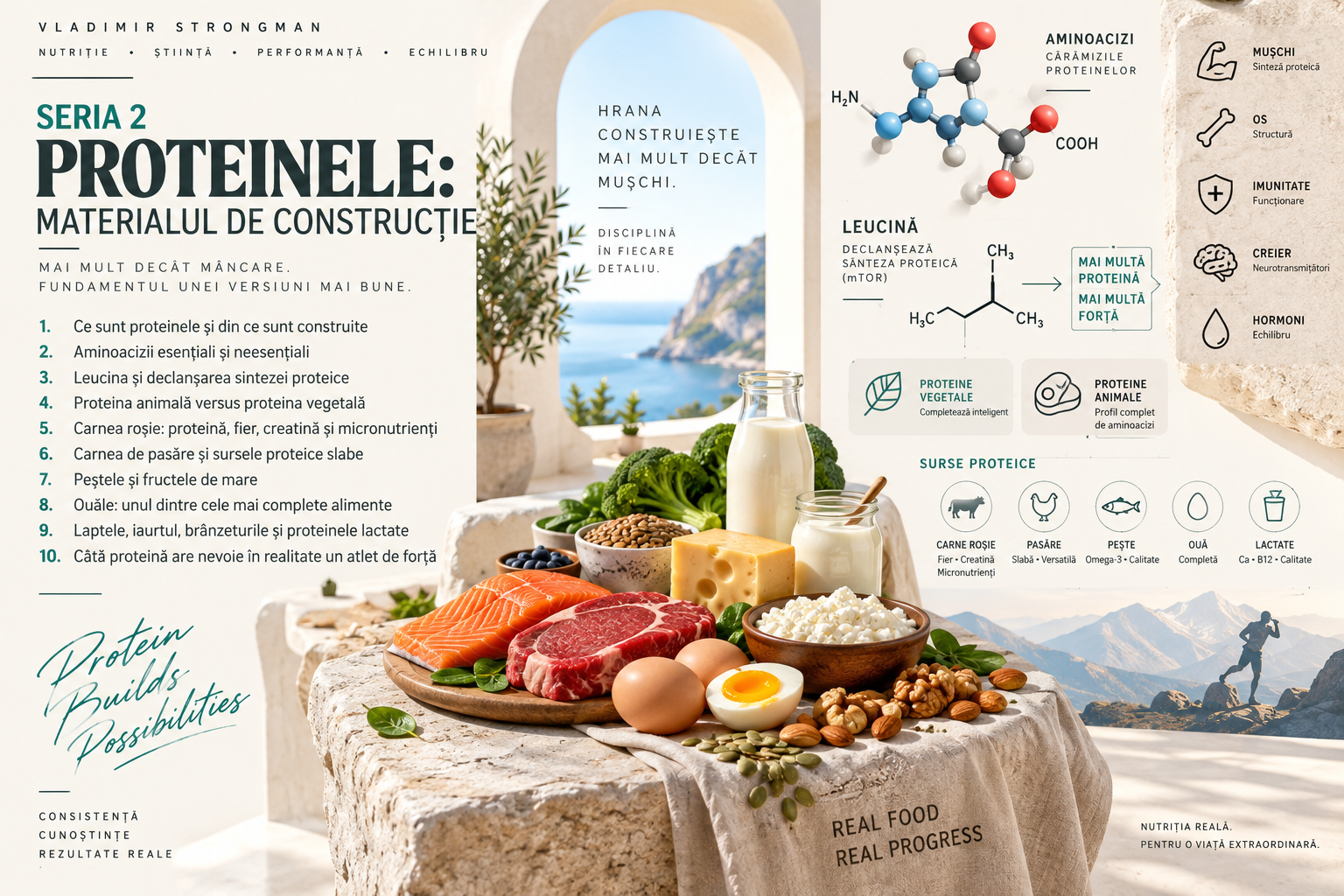
Red meat holds a distinctive place in strength-sport nutrition. Its value extends beyond protein grams: the same serving can provide essential amino acids, heme iron, creatine, vitamin B12, zinc, selenium and other metabolically relevant compounds.
For a strongman, that combination matters because performance depends on muscle tissue, oxygen transport, rapid ATP regeneration, neurological function and recovery. Red meat concentrates several of these components into a relatively compact amount of food.
This episode examines red meat as a complete food rather than a symbol. It separates unprocessed meat from processed products and discusses benefits, limitations, amount, cooking method and the broader dietary context.
1. What red meat actually means
Red meat generally refers to meat from mammals such as beef, pork, lamb, mutton, goat and game. Its darker color is largely related to myoglobin concentration. Species and cuts differ considerably in fat, iron, creatine and energy density.
2. Unprocessed red meat is not the same as processed meat
A steak or plain ground meat is not nutritionally identical to salami, sausages, bacon or other preserved products with substantial salt and additives. This distinction matters when interpreting health data. Risks associated with processed meat should not automatically be transferred to every form of red meat.
3. Red meat provides complete protein
Meat protein contains all essential amino acids in proportions suitable for human protein synthesis. For athletes, an ordinary serving can provide both a substantial protein dose and an amino-acid profile capable of supporting muscle turnover and recovery.
4. Meat protein is highly digestible
Animal muscle proteins are generally highly digestible. Cooking unfolds their three-dimensional structure and improves access for digestive enzymes. A large fraction of ingested amino acids can therefore become available for absorption and metabolic use.
5. Leucine in meat participates in protein-synthesis signaling
Meat provides leucine together with the other essential amino acids. Leucine contributes to mTORC1-related signaling, while the remaining amino acids supply the material required for construction. The advantage is the combination of signal and complete substrate.
6. Protein density varies by cut and preparation
Lean cuts provide a high amount of protein relative to energy, while fattier cuts contain more calories. After cooking, water loss can concentrate protein per 100 grams. Nutritional values therefore depend on the specific product and whether it is measured raw or cooked.
7. Much of the iron in meat is heme iron
An important portion of iron in meat is present in heme form, associated with myoglobin and hemoglobin. Heme iron is generally more bioavailable than non-heme iron and is less affected by common dietary inhibitors.
8. Iron is indispensable for hemoglobin
Hemoglobin contains iron and allows red blood cells to transport oxygen from the lungs to tissues. Poor iron status can reduce exercise tolerance and recovery, especially during repeated efforts where aerobic recovery between events becomes important.
9. Myoglobin also uses iron
Myoglobin inside muscle fibers binds oxygen and contributes to its local availability. High myoglobin content is one reason red meat has its characteristic color. Iron therefore participates not only in blood physiology but also in muscle oxygen handling.
10. Iron also contributes to energy production
Many mitochondrial proteins contain iron, including components of the respiratory chain. Iron therefore supports oxidative metabolism and ATP production. Severe deficiency can impair both oxygen transport and cellular processes that convert nutrients into usable energy.
11. Ferritin reflects iron stores
Iron status cannot be judged from meat intake alone. Ferritin reflects stores, while hemoglobin and transferrin saturation add important context. Because ferritin can rise with inflammation, laboratory interpretation must consider the wider clinical picture.
12. Hepcidin controls iron absorption and distribution
Hepcidin, a hormone produced by the liver, regulates ferroportin and influences how much iron is absorbed from the intestine and released from stores. Inflammation and some acute responses to exercise can alter hepcidin, making iron status more complex than intake alone.
13. More iron does not automatically mean more performance
Correcting a deficiency can improve physiological function, but excess iron does not become a universal ergogenic aid. Very high intake or supplementation without indication can be harmful. The appropriate strategy is to assess need and laboratory status.
14. Meat is a meaningful natural source of creatine
Creatine naturally occurs in animal muscle tissue. Red meat contributes to daily intake, although the amount is smaller and more variable than standardized supplement doses. Vegetarians and vegans generally consume very little dietary creatine.
15. Phosphocreatine supports rapid ATP regeneration
Inside muscle, creatine can be phosphorylated to phosphocreatine. During short, intense efforts, the creatine-kinase system rapidly regenerates ATP from ADP. For strongman, this is relevant to maximal lifts, yoke or farmers sprints and other explosive events.
16. Creatine from meat and creatine supplements are not quantitatively equivalent
A meat-rich diet provides creatine, but reaching standardized supplement doses would require very large amounts of food. Supplements provide precise dosing, whereas meat provides creatine together with protein and micronutrients.
17. Cooking can reduce some dietary creatine
Heat and cooking time can convert some creatine to creatinine or cause losses into cooking liquids. The amount remaining depends on temperature, duration and method, so actual creatine content on the plate is not fixed.
18. Vitamin B12 is one of red meat's major strengths
Vitamin B12 is required for DNA synthesis, red-blood-cell formation and neurological function. Deficiency can cause megaloblastic anemia and neurological symptoms. Meat contributes naturally to B12 intake in omnivorous diets.
19. Zinc supports hundreds of enzymatic processes
Red meat is a dense and well-absorbed source of zinc. Zinc participates in protein and DNA synthesis, immunity, wound healing and cellular signaling. Adequacy matters, but excess does not automatically improve performance and can disrupt other minerals.
20. Selenium contributes to antioxidant defense and thyroid function
Selenium is incorporated into selenoproteins involved in oxidative-stress control and thyroid-hormone metabolism. Meat can contribute meaningfully to intake, although concentration varies with animal feed and environmental selenium.
21. Phosphorus is part of ATP and bone structure
Meat provides phosphorus, a mineral present in bone, membranes and energy molecules such as ATP. Deficiency is uncommon in ordinary diets, but its biochemical role is fundamental to both energy metabolism and structural maintenance.
22. Potassium from meat contributes to neuromuscular function
Meat contributes to daily potassium intake even though it is not usually thought of as a potassium-rich food. Potassium is essential for membrane potential, nerve excitation and muscle contraction, with vegetables, fruits and potatoes also serving as major sources.
23. Niacin supports energy metabolism
Vitamin B3, or niacin, is a precursor for NAD and NADP, central coenzymes in redox reactions and energy metabolism. Meat provides niacin in a readily usable form, adding another important micronutrient to its profile.
24. Vitamin B6 participates in amino-acid metabolism
Vitamin B6 is a cofactor in numerous transamination and amino-acid reactions. It also contributes to glycogen metabolism and neurotransmitter synthesis. Meat can be a meaningful source within a varied diet.
25. Riboflavin and other B vitamins complete the profile
Depending on species and cut, meat also provides riboflavin, pantothenic acid and other B vitamins. These nutrients support energy transfer, substrate metabolism and cellular function. Protein never operates in a micronutrient vacuum.
26. Carnosine is abundant in animal muscle tissue
Carnosine is a dipeptide made from beta-alanine and histidine and is present in muscle. It contributes to proton buffering and other cellular functions. Meat supplies carnosine and precursors, although beta-alanine supplementation is the usual strategy for meaningfully increasing muscle carnosine.
27. Taurine is also present in animal foods
Taurine is a sulfur-containing compound involved in osmoregulation, membrane function and other physiological processes. Meat contributes to dietary intake. The body can synthesize taurine to a degree, so it should not be treated as a classic essential amino acid.
28. Carnitine is concentrated in red meat
L-carnitine transports long-chain fatty acids into mitochondria for oxidation. Red meat is among the richest dietary sources. However, consuming more carnitine does not automatically produce greater fat loss or athletic performance in healthy people.
29. Choline contributes to membranes and neurotransmission
Meat can contribute to choline intake, a precursor for phosphatidylcholine and acetylcholine. Choline supports membrane integrity, lipid transport and nervous-system function, adding another layer to the nutritional value of meat.
30. Nutrient density is red meat's central advantage
A serving can combine complete protein with heme iron, B12, zinc, selenium, creatine and other compounds in a relatively small volume. For a strongman with high calorie and protein needs, that density can be practical when appetite or meal time is limited.
31. Fat content varies enormously between cuts
Lean muscle and a heavily marbled cut can come from the same animal yet have very different calorie profiles. Choosing the cut allows energy intake to be adjusted without abandoning protein. Fattier cuts may help mass gain, while leaner options are more efficient when weight control matters.
32. Saturated fat is not identical across all red meat
The proportions of saturated, monounsaturated and polyunsaturated fats differ by species, feed and cut. Saying that all red meat is simply “fatty” loses important information. A lean cut can differ substantially from a fatty processed product.
33. For a strongman, calorie density can be an advantage or a problem
A very large athlete may have enormous energy needs, and fattier cuts can make those calories easier to reach. The same density can also push intake beyond need and promote unnecessary fat gain. Its usefulness depends on goals, body composition and actual expenditure.
34. Total energy intake matters more than a food's reputation
Red meat does not automatically cause either hypertrophy or fat gain. Energy balance, training, total protein intake and the rest of the diet determine direction. A nutrient-dense food can still sit inside an unbalanced dietary pattern.
35. Processed meat often brings a large sodium load
Sausages, cured meats and other preserved products may contain substantial sodium. Athletes do need sodium for hydration, but chronically very high intake can be problematic, particularly in salt-sensitive people or those with elevated blood pressure.
36. Nitrites and nitrates must be understood in the context of processing
Some processed meats use nitrites or nitrates for preservation and microbial safety. Under certain conditions they can contribute to N-nitroso compound formation. The issue is not one additive in isolation but the combination of processing, quantity, frequency and the rest of the diet.
37. Very high-temperature cooking can form undesirable compounds
Intense frying, direct flame and charring can promote formation of heterocyclic amines and polycyclic aromatic hydrocarbons. An occasional crust is not a catastrophe, but routinely burning or blackening meat is unnecessary exposure.
38. Gentler cooking methods reduce extreme heat exposure
Moderate roasting, boiling, stewing or slow cooking can reduce formation of some compounds generated by very high heat. These methods may also make meat easier to chew and digest, which can matter for athletes eating large amounts of food.
39. Heme iron has benefits and its own oxidative chemistry
High heme-iron bioavailability is useful when need is high, but iron can also participate in oxidative reactions. This has been discussed mechanistically and epidemiologically in relation to very high red-meat intake. Benefit and risk can coexist depending on dose and context.
40. Colorectal-risk associations are stronger for processed meat
Population studies repeatedly find associations between high processed-meat intake and colorectal risk. For unprocessed red meat, the relationship is generally more modest and harder to separate from lifestyle factors. The practical message is moderation and differentiation, not dietary panic.
41. Cardiovascular risk depends on the whole dietary pattern
Cut selection, saturated-fat intake, fiber, body weight, blood pressure, smoking and physical activity all influence cardiovascular risk. Red meat cannot be evaluated in isolation. Replacing heavily processed products with minimally processed foods is a clearer strategy than demonizing the entire category.
42. Carnitine and TMAO are a research area, not a simple verdict
Gut microbes can transform compounds including carnitine into precursors of TMAO. TMAO levels have been associated with cardiovascular risk in some settings, but the relationship is influenced by microbiota, kidney function, diet and other factors. Meat cannot be reduced to one molecule.
43. The dietary pattern can change the meaning of the same serving
A serving of meat eaten with vegetables, potatoes, legumes and minimally processed foods exists in a very different context from the same meat consumed alongside ultraprocessed foods, little fiber and chronic calorie excess. People eat dietary patterns, not isolated nutrients.
44. Meat provides no dietary fiber
Meat can be rich in protein and micronutrients, but it contains no fiber. Fiber supports bowel function, microbiota and metabolic health. A diet dominated by meat with very little plant food can be nutrient-dense in one direction and deficient in another.
45. Vegetables and grains complement what meat does not provide
Vegetables, fruits, legumes and whole grains add fiber, vitamin C, folate, potassium and numerous phytochemicals. Meat contributes different strengths. A well-designed diet uses complementarity rather than turning food groups into opposing camps.
46. Vitamin C complements the meal even though heme iron is well absorbed
Heme iron is relatively well absorbed independently of vitamin C, but mixed meals also contain non-heme iron. Vegetables and fruits rich in vitamin C can improve absorption of that component. Pairing meat with plant foods can therefore improve both micronutrient variety and fiber intake.
47. Organ meats are nutritionally different from muscle meat
Liver, heart and kidneys come from the same animals but have very different nutrient profiles from skeletal muscle. Some organs are extraordinarily concentrated in vitamins and minerals and should be treated as distinct foods rather than just another cut of meat.
48. Liver is nutrient-dense, but extreme concentration requires moderation
Liver is exceptionally rich in vitamin A, B12, copper, folate and iron. That same density means very large and frequent servings are unnecessary and can create excessive intakes of some micronutrients. More is not always better.
49. Game meat can be a very lean protein source
Many game meats are lean and protein-dense, although composition varies by species and season. They can provide iron and other micronutrients with relatively low calorie density. Food safety and source control remain essential.
50. Beef, lamb and pork are not nutritional copies
All can provide complete protein, but they differ in fat, iron, zinc, vitamins and fatty-acid composition. Even within one species, different muscles can vary markedly. “Red meat” describes a family of foods rather than one nutritional profile.
51. Animal feed can modify lipid composition without changing the basic nature of the food
Production system and feed can shift certain fatty acids and micronutrient concentrations. Those differences are real but do not transform one type of beef into a fundamentally different food. Access, taste, cost and overall dietary goals still matter more than marketing labels.
52. A very fatty pre-workout meal may be difficult to tolerate
Fat slows gastric emptying, and a large serving of fatty meat can remain in the stomach for a long time. For yoke, farmers or medley training, digestive comfort matters. Leaner cuts and moderate portions may be more practical close to training.
53. On competition day, digestive tolerance beats theoretical perfection
Meat can be part of pre-competition meals, but very large or fatty portions may be impractical when events are close together. Familiar, well-tolerated and properly timed foods are more important on contest day than maximizing every micronutrient.
54. Meat should fit into protein distribution across the day
One enormous meat-heavy dinner does not necessarily compensate for a day of weak protein intake. For repeated stimulation of muscle protein synthesis, high-quality protein can be distributed across several meals. Meat may occupy one or two of those meals without being the only source.
55. Red meat is useful, not mandatory for strength
Complete protein, iron, B12, zinc and creatine can be obtained through other food combinations or supplementation when needed. Red meat is a highly efficient and nutrient-dense option, but it is not a biological requirement for building strength.
56. Vegetarian athletes can perform well, but planning changes
A well-designed vegetarian diet can cover protein and micronutrient needs, but may require more attention to B12, iron, zinc, omega-3 fats and creatine depending on the dietary pattern. Removing meat changes nutritional logistics, not physiology.
57. Food safety matters as much as macros
Raw or undercooked meat can transmit pathogens, and cross-contamination can occur in the kitchen. Refrigeration, hygiene, separate utensils and appropriate cooking are part of sports nutrition. A theoretically perfect meal is useless if it causes gastroenteritis before competition.
58. Kidney disease changes the protein discussion
Sports-protein recommendations for healthy people are not automatically appropriate for someone with chronic kidney disease. When renal impairment exists, protein amount and source may need medical individualization. Context changes the recommendation.
59. Iron-overload disorders require individualization
People with iron-overload disorders such as hereditary hemochromatosis require specific medical guidance. For them, the high bioavailability of heme iron may become a disadvantage. The value of a nutrient always depends partly on the physiology of the person receiving it.
60. Conclusion: red meat is a nutrient-dense package, not a magic shortcut
Red meat provides complete protein, heme iron, creatine, B12, zinc, selenium and other compounds useful to strength athletes. But its value depends on quantity, cut, processing, cooking and the rest of the diet. For strongman, it is a powerful nutritional tool, not the whole workshop.
The first idea to remember is that red meat's value is not limited to protein. It combines essential amino acids with heme iron, creatine and micronutrients that are difficult to obtain at the same density from a single food.
The second idea is that heme iron and creatine are directly relevant to exercise physiology, but benefits come from meeting real needs rather than assuming that more is always better.
The third idea is that unprocessed red meat must be separated from processed meat. Sodium, processing, additives and cooking methods can substantially change nutritional context.
The fourth idea is that a strongman can use red meat strategically: lean cuts when protein is needed with fewer calories, fattier cuts when energy requirements are high, and lighter portions close to training or competition.
Finally, red meat works best inside a varied diet containing vegetables, fruits, grains, legumes and other protein sources. Nutrient density is an advantage, but dietary variety remains the architect of the whole system.
Sources and recommended reading
1. Hall JE. Guyton and Hall Textbook of Medical Physiology. Hemoglobin, erythropoiesis, oxygen transport, renal physiology and exercise physiology.
2. Nelson DL, Cox MM. Lehninger Principles of Biochemistry. Amino-acid metabolism, iron biology, coenzymes and ATP production.
3. Institute of Medicine. Dietary Reference Intakes for iron, zinc, selenium and B vitamins.
4. Kreider RB et al. International Society of Sports Nutrition position stand: safety and efficacy of creatine supplementation in exercise, sport and medicine.
5. Jäger R et al. International Society of Sports Nutrition Position Stand: Protein and Exercise.
6. FAO. Dietary Protein Quality Evaluation in Human Nutrition. Protein quality, indispensable amino acids and digestibility.
7. Sports-nutrition literature on iron, hepcidin, iron status and athletic performance.
8. Literature on meat composition, creatine, carnosine, carnitine and micronutrient content.
9. Epidemiological literature on red meat, processed meat, cardiovascular disease and colorectal risk interpreted within overall dietary patterns.
10. Food-science literature on meat cooking, heterocyclic amines, polycyclic aromatic hydrocarbons and food safety.
Editorial note: this article is educational. People with kidney disease, iron-overload disorders, cardiovascular conditions or other medical issues should individualize diet with qualified professionals.
More From The Journal

Training
The Science of Strongman Training - Episode X: Competition Programming
How to build a complete Strongman competition preparation block: calendar, events, volume, intensity, specificity, simulations, autoregulation, tapering and fatigue management.

Training
The Science of Strongman Training - Episode IX: Peaking
Peaking in Strongman: how to turn months of training into maximal competition performance by reducing fatigue, preserving adaptations and managing specificity.