
Nutrition
Series: Proteins, the Building Material - Episode 3: Leucine and the Triggering of Protein Synthesis
September 10, 2026
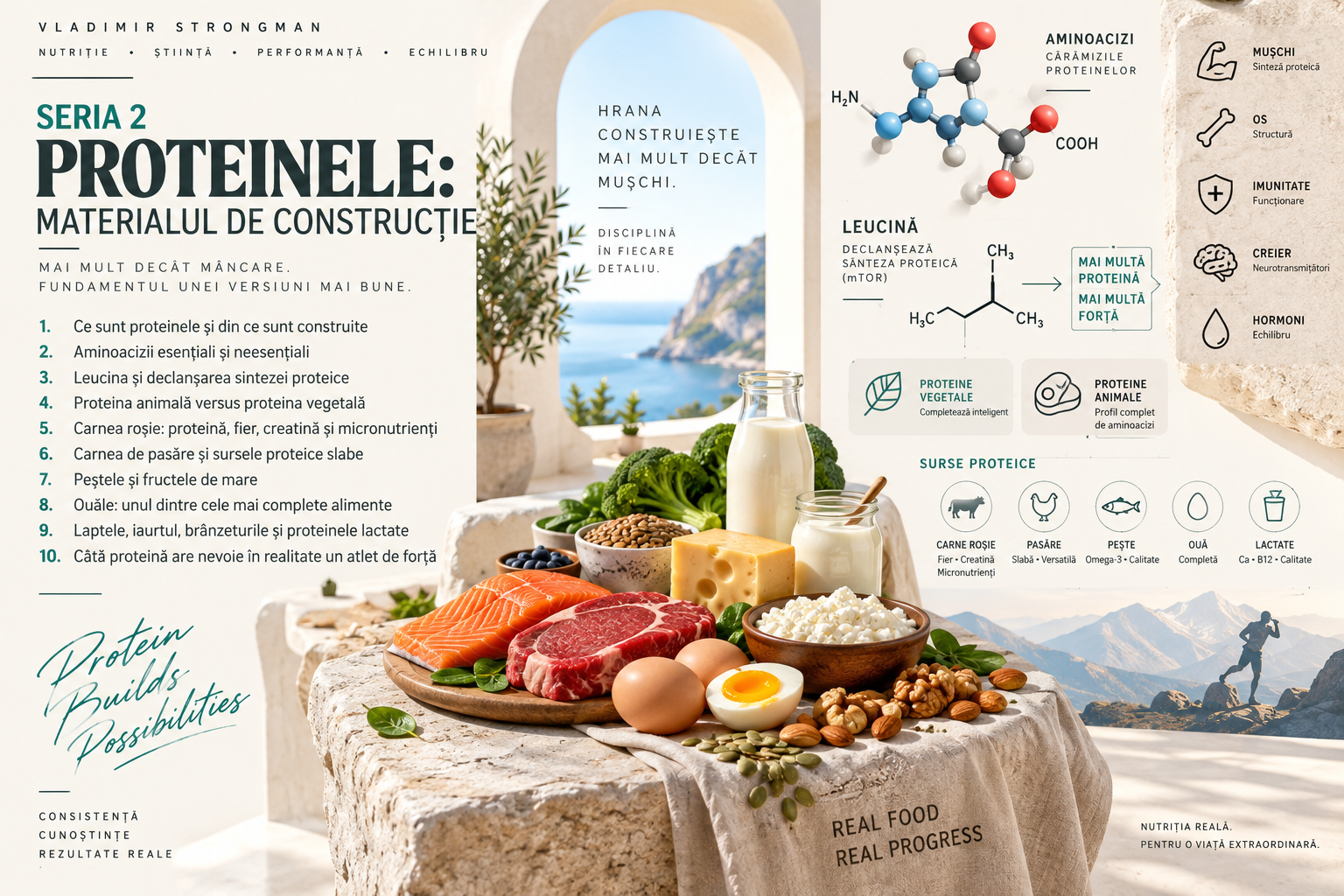
Leucine occupies a special place in sports nutrition because it is both building material and a metabolic signal. It is one of the nine essential amino acids, meaning the body cannot produce enough of it and must obtain it from food. At the same time, its availability is interpreted by muscle cells as evidence that resources are present to support an energetically expensive process: protein synthesis.
This is where the popular idea of leucine as a “trigger” for hypertrophy comes from. The image is useful but incomplete. Leucine can help activate signaling pathways such as mTORC1, but a new muscle protein cannot be built from leucine alone. Every amino acid required by that protein sequence must be available, together with sufficient energy, functioning ribosomes and, for training adaptation, an appropriate mechanical stimulus.
This episode follows leucine from food to the muscle fiber: what it is, how it is absorbed, how cells sense it, what the “leucine threshold” really means, why complete protein remains more important than one isolated amino acid, and how all of this should be interpreted for a strength athlete with a high protein requirement.
1. Leucine is an essential amino acid
Leucine cannot be synthesized by the adult body in an amount sufficient to meet physiological needs. It is therefore classified as an essential amino acid and must be supplied by the diet. The classification does not mean leucine is “more important” than every other amino acid; it means external intake is mandatory. Without adequate leucine and the other essential amino acids, normal protein synthesis cannot be sustained.
2. Leucine belongs to the BCAA family
Together with isoleucine and valine, leucine is a branched-chain amino acid, hence the abbreviation BCAA. Their particular chemical structure influences metabolism and allows substantial utilization in extrahepatic tissues, including muscle. Yet their special properties do not mean the three BCAAs can replace complete protein. They represent only part of the amino-acid alphabet required to build muscle proteins.
3. Leucine is both a brick and a message
Nutritionally, leucine has two roles that should be separated. The first is structural: it is physically incorporated into newly synthesized proteins. The second is signaling: greater intracellular availability can activate mechanisms that favor translation initiation and protein synthesis. This combination is exactly why leucine has been studied so intensively. One nutrient can signal that material is available and then become part of the final product.
4. Muscle protein synthesis is a continuous process
Muscle does not wait for training before it starts synthesizing proteins. Synthesis and breakdown occur continuously, and the balance between them determines whether tissue gains, loses or maintains protein over time. A protein-rich meal can temporarily increase muscle protein synthesis, while resistance exercise can amplify muscle sensitivity to amino acids. Hypertrophy emerges from repeatedly creating these favorable periods over the long term.
5. Training makes muscle more responsive to amino acids
After resistance exercise, mechanical and metabolic signals alter the protein-synthetic machinery of the muscle fiber. Muscle becomes more responsive to dietary amino acids, and this heightened sensitivity can persist for many hours. Leucine matters within this window, but it does not work alone. The maximal response depends on the interaction among mechanical stimulus, protein quantity and quality, energy intake and overall recovery status.
6. mTORC1 is a major nutrient-sensitive signaling hub
mTORC1 is a central signaling complex that integrates information about amino acids, energy, growth factors and cellular stress. When conditions are favorable, mTORC1 promotes processes involved in messenger-RNA translation and protein production. Leucine is one nutrient capable of influencing this system. However, mTORC1 activation is not synonymous with hypertrophy and does not by itself guarantee long-term muscle growth.
7. Leucine is detected through intracellular sensing systems
Cells do not simply “taste” leucine. They use nutrient-sensing proteins and signaling complexes that report amino-acid availability to mTORC1. One well-studied mechanism involves Sestrin2 and Rag GTPase systems, which help position mTORC1 near the lysosome when amino acids are available. Real biology is therefore a network of sensors and relays rather than one molecular switch.
8. mTORC1 localization matters for activation
For full activation, mTORC1 must be brought to cellular compartments where it can interact with activators such as Rheb. Amino-acid signaling, including leucine signaling, contributes to this relocation. This architecture helps explain why the mere presence of one nutrient is insufficient if other cellular conditions are unfavorable. The cell checks several signals at once before investing energy in biosynthesis.
9. Sestrin2 is an important leucine sensor
Sestrin2 has been identified as an important component of the mechanisms by which mammalian cells respond to leucine availability. During scarcity it contributes to restraint of the Rag-mTORC1 pathway; when leucine is available, these interactions change and anabolic signaling can be facilitated. It is an elegant example of how a nutritional molecule can be converted into a molecular decision.
10. Leucyl-tRNA synthetase also has proposed sensing roles
Leucyl-tRNA synthetase is the enzyme that attaches leucine to its corresponding transfer RNA, an indispensable step for incorporating leucine into proteins. Research has also proposed metabolic sensing roles for this enzyme in some contexts. The key is not to turn a nuanced mechanism into an oversimplified story. Several systems contribute to amino-acid sensing, and their relative importance may vary by tissue and condition.
11. The “leucine threshold” is a concept, not a universal number
The “leucine threshold” describes the idea that a meal needs to provide enough leucine to generate a robust muscle-protein-synthesis response. The concept is useful for comparing meals, but there is no fixed value that applies to everyone. Age, muscle mass, training status, protein type, total amino-acid availability and energy status can all modify the response. The threshold is better viewed as a physiological zone than a sacred number.
12. More leucine does not mean infinite synthesis
The anabolic response follows a saturating curve. Once signaling and substrate availability are sufficient, continuously adding leucine does not produce an unlimited proportional rise in muscle protein synthesis. Excess leucine can be metabolized and oxidized. This is a crucial correction to supplement marketing: if a dose is enough to approach a maximal response, doubling it does not automatically double the result.
13. Leucine cannot build muscle protein by itself
A muscle protein contains many amino acids in a precise order. If leucine is abundant but another essential amino acid is missing, the ribosome cannot continue construction indefinitely. Leucine is therefore better imagined as a start signal in a warehouse that still needs to contain all the materials. If the other components are absent, the construction site stops. Complete protein supplies both signal and substrate.
14. All essential amino acids matter for a complete response
All nine essential amino acids must be available in sufficient proportions for body-protein synthesis. Leucine has a particular signaling strength, but the structural material is collective. This is why essential-amino-acid mixtures can support protein synthesis more completely than BCAAs alone. In ordinary diets, high-quality protein foods deliver this package in an integrated form.
15. BCAAs alone provide an incomplete signal-and-substrate package
BCAAs can raise the availability of leucine, isoleucine and valine, but they do not provide the other six essential amino acids. If those are not available from food or body-protein turnover, construction becomes limited. This is why, for someone already consuming adequate complete protein, BCAA supplementation usually has a weaker rationale than simply ensuring sufficient total protein intake.
16. EAA mixtures and complete protein are related but not identical
An EAA mixture contains the amino acids the body cannot synthesize in adequate amounts, while a complete food protein provides both essential and nonessential amino acids. For acute protein synthesis, the EAAs are essential in the literal sense, but protein foods also provide energy, micronutrients and a broader food matrix. Supplements can be useful tools, but they do not define dietary quality on their own.
17. Dietary leucine reaches the blood after digestion
Proteins from meat, eggs, dairy or legumes are first denatured and fragmented by digestive enzymes. Amino acids and small peptides are absorbed in the small intestine, and leucine then enters the circulation and becomes available to tissues. The speed and magnitude of the rise in blood leucine depend on protein type, amount, digestibility, meal matrix and the presence of other macronutrients.
18. Whey usually produces a rapid rise in circulating leucine
Whey protein is rich in essential amino acids and leucine and is digested relatively quickly. It therefore tends to produce a prompt rise in plasma amino acids and a strong muscle-protein-synthesis response. This profile explains its popularity around training. Yet speed does not make whey “magical”; daily protein intake, meal pattern and the rest of the diet still matter more over time.
19. Casein is slower, not automatically inferior
Casein forms a structure in the stomach that slows amino-acid release and produces a more prolonged profile. This differs from whey but should not be simplified into “better” versus “worse”. A slower protein can be useful when the interval to the next meal is long. Physiological response depends on dose, timing and context, not digestion speed alone.
20. Meat, eggs and dairy provide complete amino-acid packages
Animal protein sources generally provide all essential amino acids in favorable proportions and have high digestibility. Meat, eggs, milk, yogurt and cheese can efficiently help reach both protein and leucine targets per meal. Their nutritional value is not limited to leucine, however: they also provide other amino acids, minerals, vitamins and, depending on the food, varying amounts of fat and energy.
21. Plant proteins provide leucine, but profiles differ among sources
Plant proteins contain leucine and can fully contribute to an athlete's needs, although some sources have a lower density of essential amino acids or lower digestibility than certain animal proteins. This does not make them absolutely “incomplete”; it may simply mean that a larger serving, a combination of sources or foods with a more favorable amino-acid profile is useful.
22. Combining plant proteins can improve amino-acid balance
Grains tend to be relatively lower in lysine, while some legumes can provide lower proportions of sulfur-containing amino acids. Combining sources across the day can compensate for these limits. Every bite does not need a perfect amino-acid profile, but for an athlete trying to optimize each protein meal, intelligent source selection and adequate serving size become useful.
23. Total protein per meal also determines leucine intake
In most foods, leucine arrives together with the rest of the protein. A meal containing enough high-quality protein will therefore usually provide a meaningful amount of leucine as well. Focusing exclusively on leucine grams can unnecessarily complicate nutrition. For most athletes, building meals around adequate servings of complete protein solves both the leucine problem and the need for the other essential amino acids.
24. The optimal protein dose per meal is not identical for every body
Dose-response studies show that muscle protein synthesis rises with protein intake until the response begins to plateau. Yet the amount of muscle recruited, training type, age and body size can shift where this plateau occurs. A recommendation expressed in absolute grams for an average adult should not be copied mechanically to a very large strongman.
25. A large body changes scale, not the biological rules
A 120-150+ kg strongman does not possess a different anabolic system from another adult, but has more tissue to maintain and often far more lean mass. Effective protein servings may therefore be larger in absolute terms. Total body weight should not be treated as a perfect synonym for muscle mass, however, because adipose tissue does not increase protein requirements in the same proportion.
26. The muscle mass recruited by training can alter the protein response
A workout that recruits much of the body can create a broader anabolic demand than a session focused on one small muscle group. Some research suggests larger protein doses may be useful after whole-body resistance exercise than after localized exercise. This is particularly relevant in strongman, where deadlifts, squats, yoke, farmers walks and loading events recruit large amounts of muscle simultaneously.
27. Aging can increase the amount needed for a robust anabolic response
With aging, anabolic resistance can develop, meaning muscle protein synthesis responds less strongly to the same amino-acid or exercise stimulus. In that context, meals containing more protein and sufficient leucine may become increasingly important. The phenomenon is not absolute and can be modified by physical activity, metabolic health and resistance training.
28. Inactivity can reduce anabolic sensitivity
Immobilization, prolonged bed rest or periods of very low activity can diminish the muscle response to protein. Resistance exercise works in the opposite direction by increasing amino-acid sensitivity. This is another reason nutrition cannot be separated from mechanical stimulus: leucine may signal nutrient availability, but an active muscle and an unused muscle do not interpret the physiological context in exactly the same way.
29. Protein distribution across the day can create multiple anabolic opportunities
If nearly all daily protein is concentrated in one meal, the rest of the day may contain long periods of low amino-acid availability. Spreading intake across several substantial meals can create repeated rises in muscle protein synthesis. There is no need to eat obsessively every two hours, but coherent protein meals spaced reasonably apart are more physiologically sensible than an extremely uneven pattern.
30. Muscle shows a saturation response after a protein-rich meal
After amino acids rise and protein synthesis is activated, the rate does not remain maximal forever simply because amino acids are still present in blood. A phenomenon sometimes called the “muscle-full” effect describes the gradual return toward baseline. This observation supports separating protein meals in time, but it does not justify rigid rules about one perfect interval.
31. The anabolic window is wider than the old 30-minute myth
After training, muscle remains responsive to amino acids much longer than the few dozen minutes once promoted in fitness culture. A protein meal near training is practical and useful, but there is no door that suddenly closes. If the athlete ate protein before exercise, amino acids from that meal may still be available after the session ends.
32. Pre-workout protein matters too
A protein-containing meal eaten a few hours before training continues to digest and can supply amino acids during and after the session. Therefore, the need for a shake immediately after the last repetition depends partly on what was eaten beforehand. For a strongman, digestive tolerance is crucial: the pre-training meal should provide nutrients without turning a yoke run into a gastrointestinal event.
33. Post-workout protein takes advantage of heightened muscle sensitivity
After exercise, a meal that provides enough high-quality protein and essential amino acids supports recovery and protein synthesis. Leucine contributes to signaling while the remaining amino acids provide the physical material. In practice, the goal is not to chase one nutrient but to deliver a complete package when muscle tissue is especially ready to use it.
34. Daily protein intake remains the foundation
Meal distribution and leucine content can refine a good diet, but they cannot repair an inadequate daily protein intake. When total protein is too low, the body lacks enough material to optimally support turnover, repair and adaptation. The hierarchy is straightforward: adequate daily protein first, then quality and distribution, and only then the finer details of leucine content in each meal.
35. Leucine cannot compensate for a severe energy deficit
Protein synthesis costs energy. During a severe and prolonged calorie deficit, the body prioritizes survival and may downregulate expensive processes. High protein intake and resistance training help preserve lean mass, but leucine cannot erase the energetic context. An anabolic signal operates inside a cell that is simultaneously evaluating fuel availability, stress and the needs of the entire organism.
36. Carbohydrate does not replace leucine, but it supports the training context
Carbohydrate supplies no amino acids and cannot substitute for protein, but it supports glycogen, performance and energy recovery. Training performed with sufficient intensity and volume creates the mechanical stimulus that makes protein nutrition relevant. In strongman, where sessions can combine explosive efforts with substantial volume, carbohydrate availability can indirectly influence anabolic adaptation through training quality.
37. Insulin is largely permissive, not the primary driver of MPS
A protein-containing mixed meal changes hormones, including insulin. For muscle protein synthesis, physiological insulin levels appear largely permissive when amino acids are available, while essential amino acids provide the main nutritional stimulus. Insulin can reduce protein breakdown, but the idea that an enormous insulin spike is required to “drive” leucine into muscle oversimplifies the physiology.
38. Leucine can also influence insulin secretion
Leucine acts beyond skeletal muscle. In pancreatic beta cells it can participate in mechanisms that support insulin secretion, especially within a meal. This interaction again illustrates that nutrients are also signals. The effect should not be turned into a hormone-manipulation strategy, however; meal responses are integrated and depend on combinations of amino acids, glucose and other nutrients.
39. Excess leucine is metabolized rather than stored in a special reservoir
The body has no dedicated leucine store comparable with glycogen for carbohydrate or adipose tissue for lipid energy. Amino acids circulate in a dynamic pool, are incorporated into proteins or are metabolized. When leucine is supplied beyond the needs of synthesis and other functions, its degradation increases. A nutrient being anabolic at an appropriate dose does not mean unlimited doses are productive.
40. Leucine oxidation rises when availability exceeds use
Leucine can be catabolized and its carbon skeleton can enter energy metabolism. As intake and concentration rise beyond what is required for biosynthesis, a greater proportion can be oxidized. This explains why the response is not linear: the body does not convert every additional milligram into muscle tissue but redirects excess through ordinary metabolic pathways.
41. The first step of leucine catabolism is transamination
Leucine is initially metabolized by transfer of its amino group, forming alpha-ketoisocaproate, or KIC. Unlike many other amino acids, a substantial portion of initial BCAA metabolism occurs in extrahepatic tissues, including muscle. This helps explain the close relationship between BCAAs and muscle metabolism without implying that muscle uses them exclusively for construction.
42. BCKDH controls a major step in BCAA breakdown
The BCKDH enzyme complex catalyzes oxidative decarboxylation of keto acids derived from BCAAs and is an important control point in their catabolism. Its activity is regulated according to metabolic state. When BCAA availability rises beyond synthetic needs, flux through degradation pathways can increase, allowing the body to manage surplus rather than store it indefinitely.
43. Leucine is an exclusively ketogenic amino acid
Metabolically, leucine is classified as ketogenic because the final products of its carbon skeleton can contribute to acetyl-CoA and acetoacetate rather than net glucose production. This distinguishes leucine from glucogenic amino acids. For athletes, the detail shows that leucine is not only structural material and a signal but also a substrate that can enter energy metabolism.
44. KIC is the principal keto acid derived from leucine
Alpha-ketoisocaproate produced by leucine transamination can enter several metabolic pathways. Most flux continues toward oxidation, while a small fraction can contribute to HMB formation. KIC is important because it links leucine as an amino acid with cellular energy pathways. It should not, however, be confused with leucine itself or presented as an anabolic mechanism detached from the rest of metabolism.
45. HMB is a leucine metabolite, but only a small fraction becomes HMB
Beta-hydroxy-beta-methylbutyrate, or HMB, is produced during leucine metabolism. Only a small proportion of ingested leucine follows this route, so direct HMB supplementation is not equivalent to simply increasing dietary leucine. Studies of HMB report variable effects, sometimes more apparent during deconditioning, unusual stress or unfamiliar training than in well-adapted athletes.
46. HMB does not replace complete protein
Even if HMB influences aspects of protein turnover, it does not supply the nine essential amino acids required to build muscle protein. Any discussion of HMB therefore belongs after the nutritional foundation: total protein, meal distribution, energy and training. A metabolite may modify signaling, but it cannot replace the basic structural material.
47. Collagen is low in leucine and is not a complete muscle-building protein
Collagen is rich in glycine, proline and hydroxyproline but has a weak profile for stimulating muscle protein synthesis and does not provide all essential amino acids in adequate proportions. It is useful to separate objectives: EAA- and leucine-rich proteins efficiently support muscle, while collagen may serve a different nutritional role for connective tissue. One should not replace the other.
48. Tendons respond to loading and amino-acid availability through their own mechanisms
Connective tissue is not a copy of muscle. Collagen synthesis responds to mechanical loading and amino-acid availability, but the relevant amino-acid profile differs from that of myofibrillar proteins. For a strongman this matters enormously: protein strategy must support both muscle and the structures that transmit force, without assuming that one supplement solves both problems.
49. Acute signaling is not the same as long-term hypertrophy
A study may show that a meal increases mTORC1 signaling or protein synthesis for several hours, but hypertrophy is measured across weeks and months. The relationship between acute responses and chronic adaptation is complex. Leucine is biologically important, yet muscle growth emerges from repeated effective training, progressive loading, adequate protein, energy, sleep and recovery, not obsessive maximization of one molecular marker.
50. Mechanical tension remains the training-specific signal
Leucine can signal that nutrients are available, but it cannot tell muscle what load it must tolerate in the future. That information comes from mechanical tension and training demand. Without sufficient stimulus, extra leucine cannot reproduce the adaptations produced by deadlifts, presses, yoke or farmers walks. Nutrition supplies resources and supports the response; training determines the direction of adaptation.
51. Leucine can help when a meal contains too little high-quality protein
Adding leucine to a suboptimal protein serving can, in some situations, enhance the acute muscle-protein-synthesis response. This is physiologically interesting and may have applications, but it does not make an inadequate meal fully equivalent to an appropriate dose of complete protein. Once other essential amino acids become limiting, stronger signaling cannot sustain continued construction.
52. Isolated leucine supplementation only makes sense after the basics are solved
For an athlete already consuming enough high-quality protein at each meal, separate leucine supplementation often adds little. It may be useful when a meal is low in leucine, when calorie restriction limits food volume or when chosen protein sources provide a modest amino-acid profile. The priority remains building a solid diet rather than permanently repairing it with powders.
53. In strongman, digestive tolerance can determine the protein source
A very large athlete may have a high absolute protein requirement, but that does not mean every meal must be enormous. Food volume, reflux, bloating and training schedule can become practical limitations. More concentrated sources such as dairy, lean meat or protein powders can help reach targets without overwhelming digestion. Leucine only becomes useful inside a feeding strategy the athlete can actually tolerate.
54. Meals between events should prioritize tolerance over theoretical perfection
During a strongman competition, intervals between events can be short and unpredictable. A large meal high in fat and fiber may delay gastric emptying just before a truck pull or stone run. At such times, easily tolerated protein in moderate amounts may be more useful than obsessively chasing a theoretical leucine threshold.
55. Recovery across consecutive days requires repeated nutritional stimulation
During multi-day competitions or consecutive heavy training days, synthesis and repair must be supported repeatedly. One leucine-rich meal cannot cover 24-48 hours of recovery. It is more effective for each main meal to provide adequate high-quality protein alongside energy, carbohydrate, fluids and micronutrients. Adaptation is a sequence of pulses, not one anabolic explosion.
56. There is no evidence that leucine megadoses produce proportionally greater hypertrophy
Once a meal provides enough leucine and essential amino acids for a near-maximal response, further increases in leucine do not produce hypertrophy in the same proportion. Biology contains ceilings, feedback and degradation pathways. Marketing prefers linear relationships because they are easy to sell; physiology works through thresholds, saturation and context.
57. A protein shake is a tool, not a separate anabolic event
Whey powder can quickly provide protein and leucine, but the body makes no moral distinction between protein from a shaker and protein from food. Differences involve digestion, convenience, composition and tolerance. For a strongman consuming very high calories, shakes can reduce food volume and simplify logistics, but they belong inside a diet rather than functioning as a mandatory ritual after every set.
58. The best “leucine threshold” is one embedded in a complete meal
In practice, a well-built meal simultaneously provides leucine, the other essential amino acids, energy and nutrients required for recovery. This integration is more robust than calculating every isolated gram. For most athletes, if meals contain adequate servings of high-quality protein and daily intake is sufficient, the leucine problem is almost automatically solved.
59. For strongman, leucine matters, but it is not the center of the nutritional universe
A strongman needs adequate protein, but also carbohydrate for repeated efforts, fat for energy and physiological function, fluids and electrolytes, micronutrients and calorie intake matched to the goal. Leucine can optimize one important node in this system. If everything else is neglected, even a perfect amino-acid profile cannot compensate for poor training, inadequate sleep or an unbalanced diet.
60. Conclusion: leucine starts the anabolic conversation, but it does not build the structure alone
Leucine is one of the most important amino acids for signaling muscle protein synthesis. It contributes to mTORC1 activation and helps cells recognize nutrient availability. But hypertrophy requires much more: all essential amino acids, energy, mechanical stimulus, time and recovery. The most accurate way to view leucine is as a powerful messenger inside a system, not a button that manufactures muscle on command.
The first idea to remember is that leucine has two simultaneous functions: it becomes part of proteins and also communicates amino-acid availability to cellular signaling systems.
The second idea is that mTORC1 is not a magical switch. It integrates leucine with energy, growth factors, cellular stress and the mechanical signals generated by training.
The third idea is that the leucine threshold is not a universal number. Age, body size, active muscle mass, protein source and energy status all modify the response.
The fourth idea is that leucine alone cannot support synthesis of a complete protein. All essential amino acids must be available, which is why complete protein takes priority over isolated BCAAs or leucine.
Finally, the most useful strategy for a strongman is to build each meal around an adequate amount of high-quality protein, distribute intake across the day and treat leucine as an important part of the mechanism rather than the entire engine.
Sources and recommended reading
1. Nelson DL, Cox MM. Lehninger Principles of Biochemistry. Amino-acid metabolism, BCAAs, translation and metabolic regulation.
2. Hall JE. Guyton and Hall Textbook of Medical Physiology. Protein metabolism, hormonal regulation and skeletal-muscle physiology.
3. Jäger R et al. International Society of Sports Nutrition Position Stand: Protein and Exercise. Journal of the International Society of Sports Nutrition.
4. Morton RW et al. Protein supplementation and resistance training-induced gains in muscle mass and strength: systematic review, meta-analysis and meta-regression. British Journal of Sports Medicine.
5. Moore DR et al. Ingested protein dose response of muscle and albumin protein synthesis after resistance exercise in young men. American Journal of Clinical Nutrition.
6. Macnaughton LS et al. The response of muscle protein synthesis following whole-body resistance exercise is greater following 40 g than 20 g of ingested whey protein. Physiological Reports.
7. Atherton PJ, Smith K. Muscle protein synthesis in response to nutrition and exercise. Journal of Physiology.
8. Wolfe RR. Branched-chain amino acids and muscle protein synthesis in humans: myth or reality? Journal of the International Society of Sports Nutrition.
9. Phillips SM, Van Loon LJC. Dietary protein for athletes: from requirements to optimum adaptation. Journal of Sports Sciences.
10. Cell-biology literature on leucine sensing, Sestrin2, Rag GTPases and mTORC1 regulation, together with sports-nutrition literature on EAAs, protein distribution and anabolic resistance.
Editorial note: this article is educational. Optimal protein and amino-acid intakes vary between individuals and should be adapted to body size, body composition, training, energy intake, age and health status.
More From The Journal

Training
The Science of Strongman Training - Episode X: Competition Programming
How to build a complete Strongman competition preparation block: calendar, events, volume, intensity, specificity, simulations, autoregulation, tapering and fatigue management.

Training
The Science of Strongman Training - Episode IX: Peaking
Peaking in Strongman: how to turn months of training into maximal competition performance by reducing fatigue, preserving adaptations and managing specificity.