
Training
Building a Champion - Episode 4: Technique in Strongman - Turning Strength into Performance
September 4, 2026

1. What Technique Means in Strongman
Technique is not merely visual form. It is the ability to reproduce an efficient mechanical solution when the implement, load and fatigue change.
2. Positioning, Center of Mass and Bracing
Foot position, distance from the implement, torso angle and hand placement establish moment arms and force direction. Bracing provides a stable base for force transfer, while breathing must be integrated into strategy.
3. Trajectory and Movement Economy
Efficient technique reduces unnecessary movement. In the deadlift, keeping the bar close reduces trunk moment demands. In Log and Axle work, the trajectory should support efficient movement through clean, rack and overhead positions.
4. Deadlift
The first centimeters are a synchronization problem. If the hips rise too early or the knees obstruct the bar path, mechanical advantage can be lost. Lockout should meet the judging standard without unnecessary extension. Axle deadlift adds implement-specific grip and mechanical constraints.
5. Log and Overhead
The Log clean should conserve energy for the overhead phase. The rack is an active force-transfer position. Strict press, push press and jerk have different demands, but all depend on timing and a final position that satisfies the judging standard.
6. Axle
The large diameter and stiffness of an Axle change grip and clean mechanics. During repeated lifts, clean efficiency becomes important for energy conservation and rhythm.
7. Yoke and Farmer's Walk
The pick-up and first step can determine the stability of the entire carry. Biomechanical research associates better Farmer's Walk performance with shorter ground contact time and favorable combinations of stride length and stride rate. In the Yoke, control of oscillation and center of mass is critical.
8. Stones and Loading
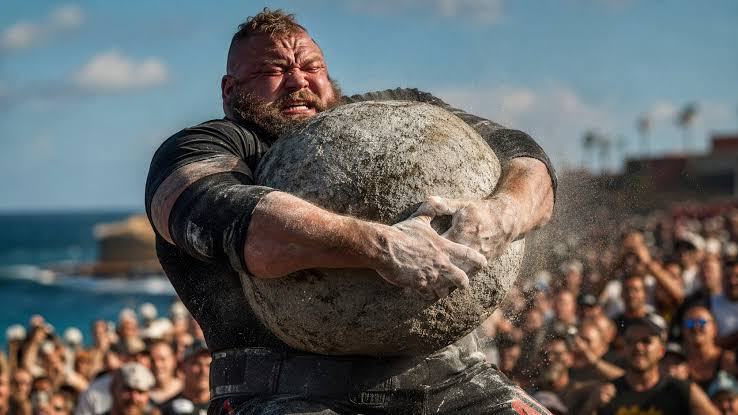
Close initial contact reduces the moment arm in stone work, while the lap position allows mechanical reorganization before final extension. During loading, the implement should clear the obstacle on a controlled trajectory. Repeatability is more valuable than spectacular one-off execution.
9. Medleys and Transitions
A medley tests technique at the system level. Grip changes, body orientation and placement of the next implement should be anticipated. Time lost during transitions accumulates quickly.
10. Technique and Speed
Speed is useful when it reduces total time without disproportionately increasing errors. A very fast movement that creates a major correction can be slower across the entire event than a slightly more controlled one. Optimal rhythm is individual.
11. Technique Under Fatigue
Fatigue can reduce torso stiffness, grip precision, synchronization and rhythm. The athlete must learn to preserve the key movement pattern under competition-like fatigue.
12. Technical Errors and Video Analysis
A visible error is not necessarily the cause. Video can identify implement position, trajectory, timing and the point at which the problem appears. Time, repetitions and success rate make technique measurable.
13. Learning Technique
Technique develops through precise repetition and specific feedback. Research on attentional focus frequently supports directing attention toward the movement effect for motor performance, although long-term outcomes are not identical across all contexts.
14. Programming Technique
The off-season allows experimentation with setups, grips and rhythms. As competition approaches, the athlete should consolidate the solution that works. Loading should be specific enough to reproduce event constraints without destroying the movement pattern.
15. Individualization
Principles can be standardized, but the solution should reflect the athlete's leverages and style. Strongman variability makes individualization essential.
16. Conclusion
In Strongman, strength is the raw material and technique is the mechanism that turns it into performance. Advanced technique means controlling the implement, body, rhythm and transitions under real competitive constraints.
More From The Journal

Training
The Science of Strongman Training - Episode X: Competition Programming
How to build a complete Strongman competition preparation block: calendar, events, volume, intensity, specificity, simulations, autoregulation, tapering and fatigue management.
Training
The Science of Strongman Training - Episode IX: Peaking
Peaking in Strongman: how to turn months of training into maximal competition performance by reducing fatigue, preserving adaptations and managing specificity.