
Physiology
Peptides, Secretagogues and Modulators - Episode 1: What Is a Peptide and Why Its Structure Matters
September 7, 2026
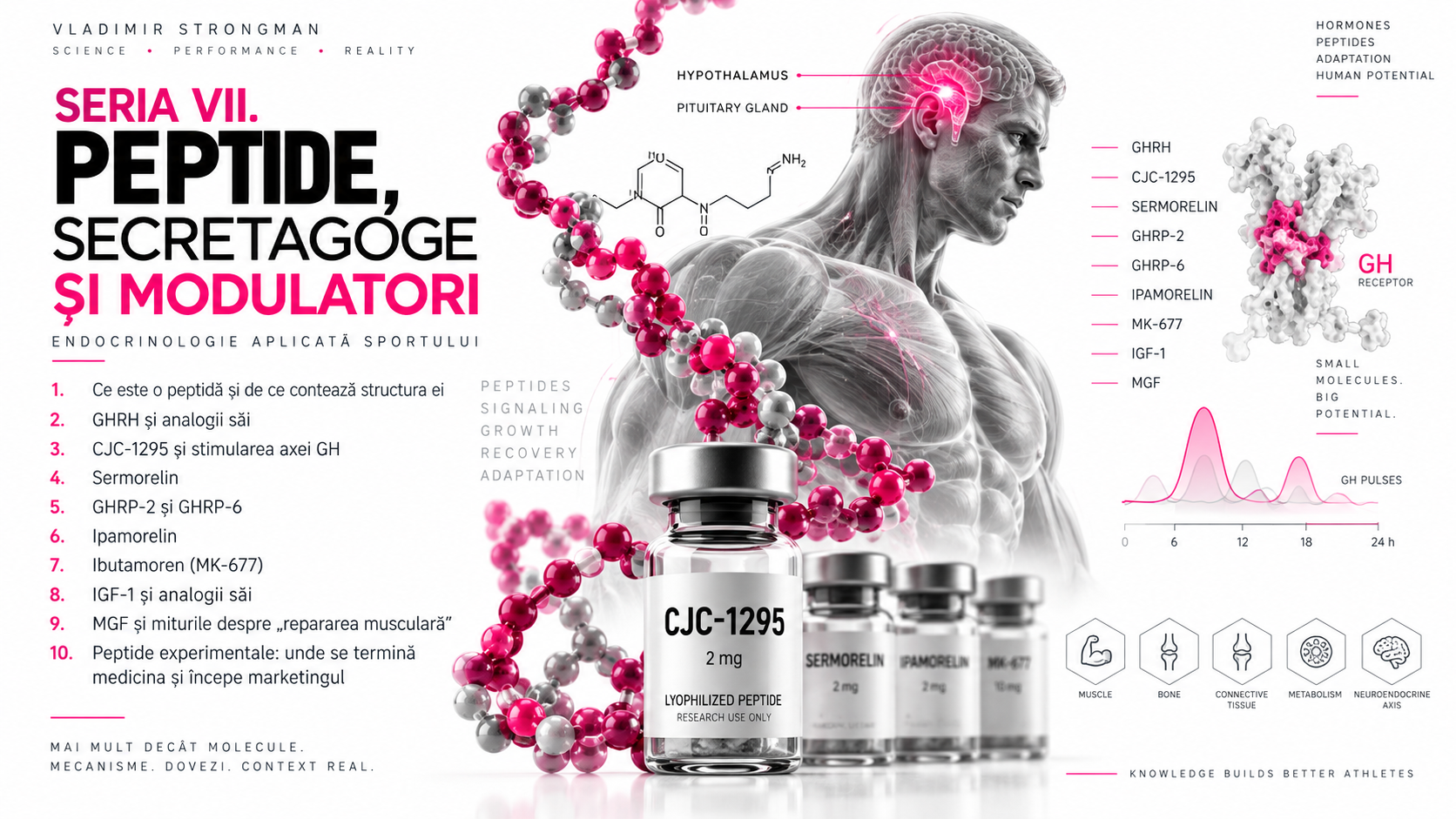
1. A peptide is a short chain of amino acids
Amino acids are chemical building blocks used by the body to construct proteins and peptides. When a relatively small number of amino acids are linked in a chain, the molecule is usually called a peptide. The boundary with proteins is not absolute, but the distinction is useful for understanding function.
2. Peptide bonds connect amino acids
Amino acids are joined through peptide bonds. These bonds form the backbone of the chain and impose specific geometry. A peptide is not simply a collection of amino acids, but an ordered sequence connected in a precise chemical architecture.
3. Amino-acid order is biological information
Two peptides can contain the same amino acids yet have different functions if their order is changed. Sequence influences molecular shape, exposed chemical surfaces, and receptor interaction.
4. Primary structure is only the beginning
The amino-acid sequence is the primary structure. Function also depends on how the chain bends, twists, and interacts with water, membranes, and other molecules. Spatial chemistry can be as important as sequence.
5. Three-dimensional shape influences receptor recognition
Receptors recognize combinations of shape, electrical charge, chemical groups, and flexibility. A small structural change can alter receptor affinity and therefore the intensity or nature of the biological response.
6. A single amino-acid change can alter function
Replacing one amino acid can reduce activity, increase it, change receptor selectivity, or make the molecule more resistant to degradation. Closely related structural variants should not automatically be assumed equivalent.
7. Chain length matters
The number of amino acids influences flexibility, stability, and the ability to adopt a receptor-compatible shape. A sequence that is too short can lose essential recognition elements, while a longer sequence may gain other properties.
8. Molecular termini matter too
Peptides have amino and carboxyl termini. Modifying them can change stability, solubility, enzyme susceptibility, and sometimes receptor affinity.
9. Peptides are often vulnerable to proteases
The body contains enzymes that cleave peptide bonds. These proteases can rapidly inactivate certain peptides, which is why some peptide signals have a short biological lifetime.
10. Stability is not the same as potency
A more stable peptide is not automatically stronger at its receptor, and a high-affinity peptide is not automatically longer-lived. Stability, affinity, efficacy, and distribution are distinct properties.
11. Biological distribution depends on structure
Interactions with plasma proteins, water, and membranes can change receptor availability, half-life, and tissue distribution. Molecular structure influences these relationships.
12. Peptides often act through membrane receptors
Because they are generally polar and relatively large compared with steroid hormones, many peptides do not readily cross cell membranes. Instead, they bind surface receptors and trigger intracellular signaling cascades.
13. The receptor converts binding into a signal
Peptide binding can activate G proteins, kinases, second messengers, or other signaling systems. The final effect emerges from the interaction among peptide, receptor, tissue, and cellular state.
14. The same peptide can have different effects in different tissues
Receptor distribution is not uniform. One tissue may express many receptors, another few, and another none. Tissue context can therefore transform the effect of the same ligand.
15. Structural modifications can change selectivity
Changing sequence or specific chemical groups can make a molecule more selective for one receptor or reduce interactions with others. Peptide pharmacology is deeply structure-dependent.
16. Structural modifications can change half-life
A natural peptide may be degraded quickly. Modified variants can be less easily recognized by enzymes or distribute differently, altering how long a biological signal persists even when the target receptor remains the same.
17. Natural and modified do not predict effect by themselves
A natural peptide may be highly active and short-lived. A modified variant may be more stable, more selective, or less active. Structural identity must be evaluated specifically.
18. Peptides are not automatically secretagogues
The word peptide describes chemical nature, not function. Some peptides are hormones, others neurotransmitters, local factors, or ligands. A secretagogue is defined by its ability to stimulate secretion of another substance, not by necessarily being peptide-based.
19. Peptides are not automatically anabolic
Being a peptide does not tell us whether a molecule stimulates muscle growth, appetite, hormone secretion, inflammation, or another process. Function is determined by receptor and biological circuit.
20. Why structure is the key to this series
Discussions about peptides, secretagogues, and modulators often involve similar names, modified variants, and fragments of related sequences. Without structural understanding, related molecules can be confused and fundamentally different mechanisms can be placed in the same category.
21. The key idea of Episode 1
A peptide is an ordered chain of amino acids, but biological identity is not defined only by the amino-acid list. Sequence, three-dimensional shape, molecular termini, stability, protease susceptibility, and receptor affinity together determine what the molecule does. In peptide pharmacology, structure is the operating instruction.
Editorial and safety note
This article is educational and explains foundational principles of peptides and molecular structure. It does not provide doses, protocols, administration methods, or instructions for using peptides or other substances for doping or performance enhancement.
More From The Journal

Training
The Science of Strongman Training - Episode X: Competition Programming
How to build a complete Strongman competition preparation block: calendar, events, volume, intensity, specificity, simulations, autoregulation, tapering and fatigue management.

Training
The Science of Strongman Training - Episode IX: Peaking
Peaking in Strongman: how to turn months of training into maximal competition performance by reducing fatigue, preserving adaptations and managing specificity.