
Nutrition
Series: Strongman Nutrition: Food That Builds Strength - Episode 4: The Liver and Nutrient Processing
September 10, 2026
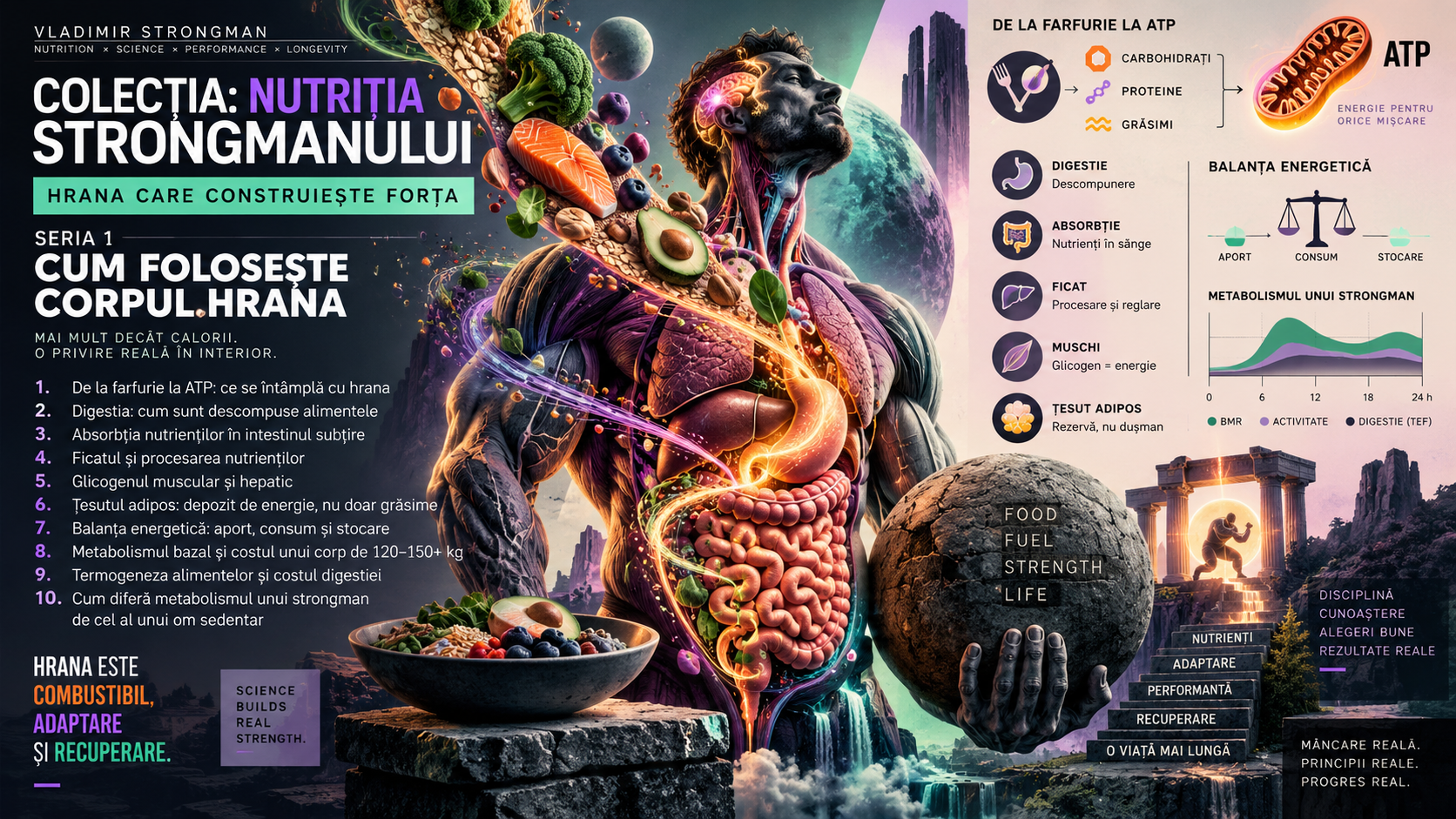
After intestinal absorption, most carbohydrates, amino acids, water-soluble vitamins and minerals travel directly to the liver through the portal vein. Here nutrients are sorted, transformed, stored or released toward other tissues.
The liver is not merely a detoxification organ. It regulates blood glucose, builds and breaks glycogen, processes amino acids and fats, produces urea, cholesterol and bile and stores numerous micronutrients.
For a strongman, the liver is a metabolic dispatch center. During days of large meals and repeated events, it helps maintain circulating fuel, restore reserves and handle by-products of protein metabolism.
1. The liver receives the first wave of absorbed nutrients
Blood from the intestine reaches the liver through the portal vein before entering systemic circulation. Hepatocytes therefore encounter high nutrient concentrations immediately after a meal and can buffer large fluctuations.
2. The liver has a dual blood supply
The portal vein brings nutrient-rich blood while the hepatic artery brings oxygen-rich blood. Together they allow the liver to process absorbed material while supporting its own large energy demand.
3. The hepatocyte is a metabolic factory
Hepatocytes can store, synthesize, oxidize and transform many different molecules. Pathways for glycogen, fatty acids, amino acids, cholesterol and chemical detoxification meet in the same cell.
4. First-pass metabolism changes what reaches tissues
Many molecules are taken up or modified before leaving the liver. Glucose may be stored, amino acids used and certain compounds metabolized. Blood leaving the liver is therefore not identical to portal blood arriving from the intestine.
5. After a meal, glucose becomes a major priority
A carbohydrate-containing meal increases glucose delivery to the liver. Some is oxidized, some becomes glycogen and an energy surplus can contribute to fat synthesis. The liver therefore helps control post-meal blood glucose.
6. GLUT2 supports rapid glucose exchange
Hepatocytes use GLUT2 to exchange glucose with blood. The transporter has high capacity and allows movement in either direction depending on the metabolic gradient.
7. Glucokinase traps glucose inside the hepatocyte
Glucokinase converts glucose into glucose-6-phosphate. The molecule then remains inside the cell and can enter glycogen synthesis, glycolysis or other pathways.
8. Glycogenesis builds the hepatic reserve
The liver links glucose molecules into glycogen. This reserve can be mobilized rapidly when food intake stops or energy demand rises.
9. Glycogen branching provides speed
The highly branched structure of glycogen provides many terminal ends on which enzymes can work at the same time, allowing rapid construction and breakdown.
10. Liver glycogen buffers blood glucose
Between meals, the liver mobilizes glycogen and releases glucose. During a long competition day, this internal buffer complements carbohydrate intake between events.
11. Glycogenolysis breaks down the reserve
Glycogenolysis removes glucose units from glycogen and converts them into intermediates that can become free glucose. Glucagon and catecholamines stimulate the pathway.
12. Glucose-6-phosphatase allows glucose export
The liver can convert glucose-6-phosphate into free glucose and release it into blood. Skeletal muscle lacks this same ability, so muscle glycogen is primarily local fuel.
13. Gluconeogenesis creates new glucose
As glycogen declines, the liver can synthesize glucose from lactate, glycerol and selected amino acids. This pathway becomes more important during fasting and prolonged exercise.
14. The Cori cycle recycles lactate
Lactate produced by tissues can travel to the liver and be converted back into glucose. The liver therefore participates in recycling products generated by intense muscular metabolism.
15. The glucose-alanine cycle links muscle and liver
Alanine can carry both carbon and nitrogen from muscle to liver. The carbon skeleton may support gluconeogenesis while the nitrogen is directed toward the urea cycle.
16. Fructose is processed largely by the liver
A substantial share of absorbed fructose is taken up by the liver and converted into intermediates that can support glucose, glycogen, lactate or lipid production.
17. Galactose is converted for glucose metabolism
Galactose, derived mainly from lactose, is converted in the liver into intermediates compatible with glucose metabolism. Different dietary sugars therefore converge on common energy pathways.
18. Insulin shifts the liver toward storage
After a meal, insulin promotes glycogen synthesis and lipogenesis while suppressing hepatic glucose production. The metabolic message is that energy is available and can be stored.
19. Glucagon shifts the liver toward fuel supply
When blood glucose falls, glucagon stimulates glycogenolysis and gluconeogenesis. The liver shifts from capturing fuel toward producing and releasing it.
20. Catecholamines accelerate fuel release during exercise
Epinephrine and norepinephrine can rapidly increase hepatic glucose output during stress and effort. During maximal events, the liver responds to hormonal demand by increasing circulating fuel.
21. Excess carbohydrate can be converted into fat
When glycogen stores are well supplied and energy remains abundant, the liver can convert carbohydrate-derived carbon into fatty acids through de novo lipogenesis.
22. Acetyl-CoA is a metabolic crossroads
Acetyl-CoA can come from carbohydrates and fatty acids and can be oxidized for energy, used to make lipids and cholesterol or directed toward ketone production.
23. Amino acids reach the liver rapidly after absorption
Absorbed amino acids enter portal blood and a substantial fraction is taken up by the liver. They can support hepatic proteins, enzymes, energy production or synthesis of other molecules.
24. Transamination reorganizes nitrogen
Transamination transfers amino groups between molecules. Enzymes such as ALT and AST participate in these reactions, which is one reason they commonly appear in biochemical testing.
25. Deamination releases nitrogen that must be controlled
When amino acids are oxidized or converted, their amino group must be removed. This can generate ammonia, a toxic compound that the liver must rapidly neutralize.
26. Ammonia is too toxic to circulate freely
Ammonia is especially dangerous to the nervous system. The body carries nitrogen in safer forms such as glutamine and alanine before the liver converts it into urea.
27. The urea cycle converts nitrogen into an excretable form
Inside hepatocytes, the urea cycle converts toxic nitrogen into urea, which enters blood and is eliminated mainly through the kidneys. Liver and kidneys therefore cooperate in protein-metabolism waste handling.
28. The liver synthesizes many plasma proteins
Hepatocytes use amino acids to produce albumin, transport proteins, clotting factors and many other molecules. Dietary protein is not reserved exclusively for skeletal muscle.
29. Albumin is one of the liver's major products
Albumin helps maintain plasma oncotic pressure and transports fatty acids, hormones, drugs and other compounds. Its concentration reflects more than protein intake alone.
30. Blood coagulation depends heavily on liver synthesis
The liver produces many clotting factors, several of which depend on vitamin K for activation. Severe liver dysfunction can therefore significantly alter coagulation.
31. Branched-chain amino acids are handled differently
Leucine, isoleucine and valine are metabolized to a greater extent in peripheral tissues, including muscle. A larger fraction can therefore pass through the liver into systemic circulation.
32. Amino-acid carbon skeletons can become glucose
After nitrogen removal, many carbon skeletons can support gluconeogenesis. This provides flexibility during fasting or energy deficit without making protein the preferred glucose source when carbohydrate is abundant.
33. Dietary lipids reach the liver by a different route
Most long-chain fats are absorbed into chylomicrons, enter lymph first and then reach systemic circulation. The liver therefore encounters them differently from glucose and amino acids.
34. Chylomicron remnants are captured by the liver
After chylomicrons deliver triglycerides to muscle and adipose tissue, cholesterol-rich remnants are taken up by the liver and their components recycled.
35. The liver can oxidize fatty acids for energy
During fasting and lower-insulin states, fatty acids reach the liver and undergo beta-oxidation. The resulting energy and acetyl-CoA can support hepatic metabolism and ketone production.
36. Ketogenesis creates fuel for other tissues
When fatty-acid flow is high and carbohydrate availability falls, the liver converts part of its acetyl-CoA into ketone bodies. Muscle, heart and, after adaptation, brain tissue can use them as fuel.
37. The liver makes ketones but does not consume them
Hepatocytes lack the key enzyme needed to fully use the ketone bodies they produce. The liver therefore acts primarily as a producer and exporter of this fuel.
38. Cholesterol is synthesized and processed in the liver
The liver synthesizes cholesterol, takes it up from lipoproteins and converts part of it into bile acids. Cholesterol is essential for membranes and steroid synthesis, while excessive atherogenic particles increase cardiovascular risk.
39. Bile acids are made from cholesterol
The liver converts cholesterol into bile acids and secretes them in bile. In the intestine they support fat digestion and absorption before most are recycled through enterohepatic circulation.
40. VLDL exports hepatic triglycerides
The liver packages triglycerides into VLDL particles and releases them into circulation. These particles deliver fatty acids to tissues and are subsequently remodeled into other lipoproteins.
41. LDL and HDL are parts of the same transport system
LDL carries cholesterol toward tissues, while HDL participates in reverse transport and lipid exchange. The liver regulates the production, uptake and remodeling of these circulating particles.
42. Energy surplus can lead to liver fat accumulation
If energy intake stays high while lipid oxidation and export fail to keep pace, triglycerides can accumulate in hepatocytes. This process is central to metabolic dysfunction-associated steatotic liver disease.
43. The liver stores vitamin A
A large proportion of body vitamin A reserves is stored in the liver. This provides a long-term reserve but also helps explain why chronic excess of preformed vitamin A can become toxic.
44. Vitamin D is metabolically modified in the liver
Vitamin D is hydroxylated in the liver to 25-hydroxyvitamin D, the form most commonly measured in blood. Final activation occurs mainly in the kidneys.
45. Vitamin B12 can be stored for years
The liver is the body's principal vitamin B12 reservoir. Large stores explain why deficiency can develop slowly after an absorption problem begins.
46. Iron is stored and redistributed under strict control
The liver stores iron in ferritin and hemosiderin and helps regulate systemic availability through the hormone hepcidin. Hepcidin can reduce intestinal absorption and iron release from stores.
47. Copper is processed and excreted through bile
The liver takes up absorbed copper, incorporates it into proteins such as ceruloplasmin and removes excess through bile. Disruption of this process can produce toxic accumulation.
48. Bile is produced by the liver
The liver produces bile and the gallbladder can concentrate and release it during meals. Bile contains bile acids, phospholipids, cholesterol and excretory products and is essential for efficient fat absorption.
49. Hepatic detoxification is not one reaction
The word detox oversimplifies liver chemistry. The liver modifies and conjugates many compounds so they can be eliminated more easily through urine or bile.
50. Phase I reactions alter molecular structure
Cytochrome P450 enzymes transform many drugs, hormones and foreign compounds. Sometimes the result is less active, while in other cases a reactive metabolite may be formed.
51. Phase II reactions increase solubility
During phase II, the liver conjugates molecules with glucuronate, sulfate, glutathione or other groups. These changes generally support excretion and complement phase I metabolism.
52. Alcohol is metabolized largely by the liver
Ethanol is converted to acetaldehyde and then acetate. High intake alters hepatic redox balance and can promote fat accumulation and oxidative stress.
53. Drugs and other compounds can interact metabolically
Multiple compounds may depend on the same liver enzymes. Enzyme inhibition or induction can change how quickly other molecules are cleared, making some combinations difficult to predict.
54. Oxidative stress appears when production exceeds defense
Liver metabolism generates reactive oxygen species, while systems including glutathione normally keep them controlled. When production rises beyond defensive capacity, cellular injury can occur.
55. The liver behaves differently in fed and fasted states
After meals, nutrient uptake and storage dominate. During fasting, glycogenolysis, gluconeogenesis, fatty-acid oxidation and sometimes ketogenesis become more prominent. The liver constantly changes metabolic gears.
56. During exercise, the liver becomes a fuel supplier
During exercise, hepatic glucose production rises to compensate for muscular consumption. Glycogenolysis and gluconeogenesis contribute in different proportions depending on intensity, duration and feeding.
57. Very high-calorie diets increase hepatic workload
A large recurring energy surplus means more glucose, amino acids and lipids to process. The liver can adapt, but it is not immune to chronic excess even in highly active athletes.
58. ALT, AST, GGT and bilirubin tell different stories
ALT and AST can rise with liver injury, but AST can also originate from muscle and hard training can complicate interpretation. GGT and bilirubin provide different information, so no marker should be read alone.
59. Liver warning signs should not be ignored
Jaundice, very dark urine, pale stools, persistent right-upper-abdominal pain, repeated vomiting or major deterioration in general condition require medical evaluation.
60. Conclusion: the liver turns absorption into metabolic availability
The intestine brings nutrients into the body, but the liver largely determines what happens next. It stabilizes glucose, manages glycogen and amino acids, produces and exports lipids, synthesizes bile and processes micronutrients and many other compounds.
The first major idea is that the liver is not merely a filter. It receives absorbed nutrients directly and converts them into forms useful to the entire body.
Second, hepatic metabolism changes continuously. Storage dominates after meals, while mobilization and fuel production dominate between meals and during exercise.
Third, dietary protein also requires nitrogen management. The liver converts toxic ammonia into urea and uses amino acids for many functions beyond muscle.
Fourth, the liver coordinates fat, cholesterol and bile metabolism and can become vulnerable when energy surplus or chemical exposure exceeds adaptive capacity.
For strength athletes, liver health influences blood glucose, glycogen restoration, lipid transport, protein processing and the capacity to sustain repeated high-intensity effort.
Sources and recommended reading
1. Hall JE. Guyton and Hall Textbook of Medical Physiology. Chapters on liver physiology and carbohydrate, lipid and protein metabolism.
2. Boron WF, Boulpaep EL. Medical Physiology. Sections on hepatic physiology, portal circulation and metabolic regulation.
3. Nelson DL, Cox MM. Lehninger Principles of Biochemistry. Glycogen metabolism, gluconeogenesis, beta-oxidation, ketogenesis and the urea cycle.
4. Berg JM, Tymoczko JL, Gatto GJ, Stryer L. Biochemistry. Integrated metabolism and hormonal control of the liver.
5. European Association for the Study of the Liver. Guidelines and consensus documents on metabolic dysfunction-associated steatotic liver disease.
6. American Association for the Study of Liver Diseases. Clinical and educational resources on liver physiology, evaluation and disease.
7. Exercise-physiology literature on hepatic glucose production, glycogenolysis and gluconeogenesis during exercise.
8. Clinical-biochemistry literature on interpretation of ALT, AST, GGT, bilirubin, albumin and hepatic synthetic function.
9. Literature on VLDL metabolism, chylomicron remnants and hepatic cholesterol homeostasis.
10. Pharmacology literature on cytochrome P450 enzymes, conjugation reactions, drug metabolism and hepatic interactions.
Editorial note: this article is educational and does not replace medical assessment. Jaundice, very dark urine, persistent abdominal pain, repeated vomiting or major abnormalities in liver-related blood tests require appropriate medical evaluation.
More From The Journal

Training
The Science of Strongman Training - Episode X: Competition Programming
How to build a complete Strongman competition preparation block: calendar, events, volume, intensity, specificity, simulations, autoregulation, tapering and fatigue management.

Training
The Science of Strongman Training - Episode IX: Peaking
Peaking in Strongman: how to turn months of training into maximal competition performance by reducing fatigue, preserving adaptations and managing specificity.