
Physiology
Muscle Under the Microscope - Episode 9: Satellite Cells and Muscle Adaptation
September 6, 2026
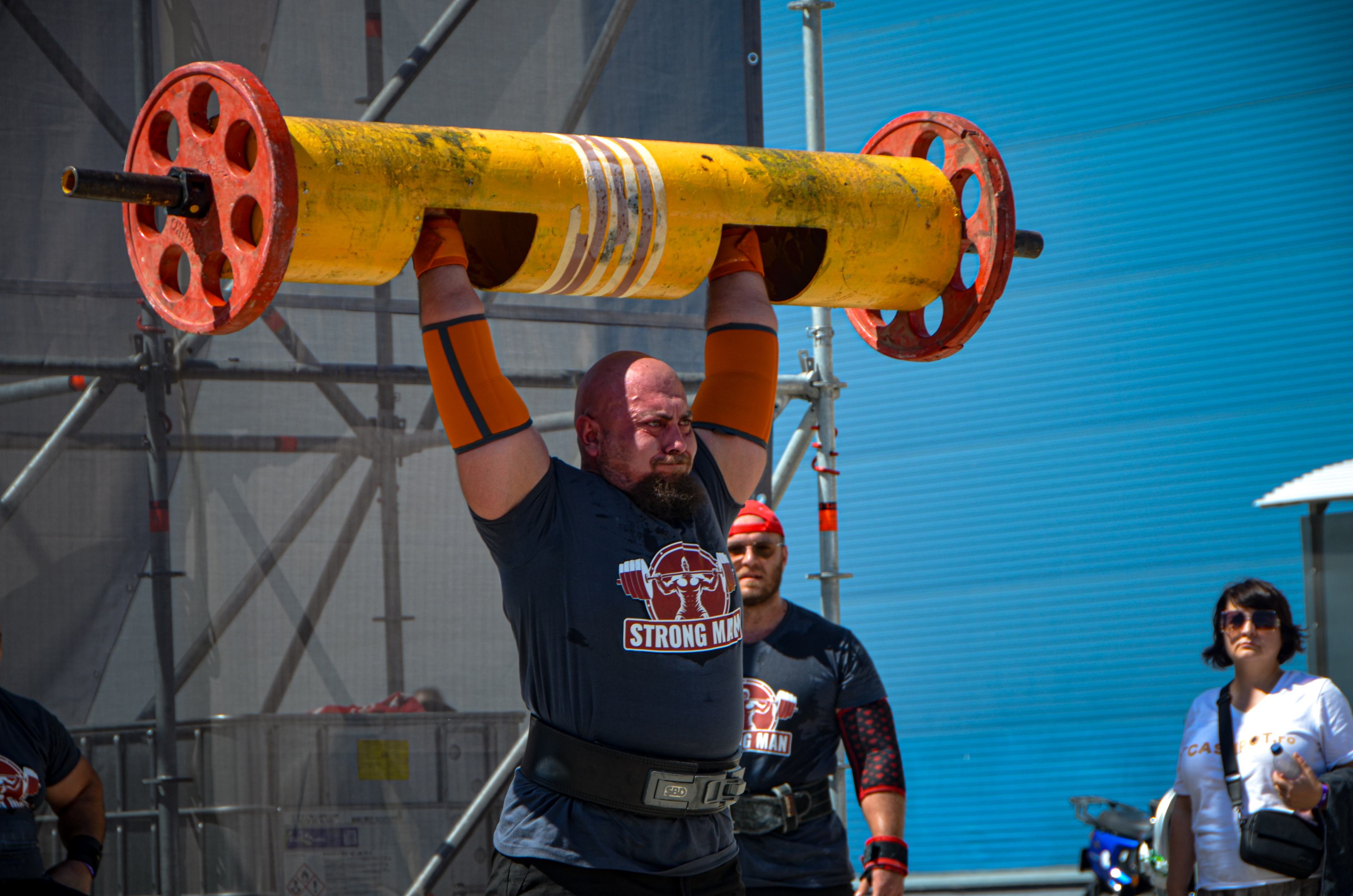
In the previous episodes we followed the muscle fiber from microscopic architecture to actin, myosin, the neuromuscular junction, calcium, hypertrophy and repair after injury. Now we reach one of the most fascinating cell populations in skeletal muscle: satellite cells. They are part of the muscle's resident stem-cell pool and can contribute both to regeneration after injury and to adaptation to physical loading.
Satellite cells are not simply spare bricks. They can leave quiescence, proliferate, differentiate and integrate with existing muscle fibers. At the same time, modern research shows that their role extends beyond fusion: they communicate with the local environment, influence other cells and help organize tissue adaptation.
1. What are satellite cells?
Satellite cells are resident stem cells of skeletal muscle. In adult muscle they are usually quiescent and are located between the sarcolemma and the basal lamina of the muscle fiber. Their position allows them to sense changes in the neighboring fiber and local niche.
In this resting state, satellite cells retain the capacity to respond to biological stimuli. When injury, sufficient mechanical loading or another relevant signal appears, part of the population can become activated. Other cells remain quiescent or return to quiescence, preserving the reserve for future demands.
2. Why does muscle need stem cells?
An adult muscle fiber is a very large and complex structure. It contains many myofibrils, multiple nuclei, an extensive membrane system, sarcoplasmic reticulum, mitochondria and extracellular components. When the fiber is damaged or grows substantially, repair and adaptation may require additional cellular resources.
Satellite cells can provide new myonuclei by fusing with existing fibers. A new myonucleus adds transcriptional capacity to the fiber. This idea is linked to the concept of the myonuclear domain, although the relationship between nuclear number, fiber size and hypertrophy is not a simple universal rule.
3. What activates them?
Satellite-cell activation can be influenced by injury, mechanical tension, growth factors, inflammatory signals, changes in the extracellular matrix and communication among cells in the local niche. Resistance exercise is an important stimulus and can increase satellite-cell content or activity after periods of training.
The response is not identical in every person or after every type of exercise. Intensity, volume, exercise selection, training status, age and tissue history can all alter the response. Therefore, measuring satellite cells after one workout cannot by itself predict how much a muscle will grow.
4. Pax7 - the signature of satellite cells
Pax7 is a transcription factor commonly used as a marker of satellite cells and plays an important role in maintaining the muscle stem-cell population. As satellite cells enter activation and differentiation programs, their molecular profile changes.
Factors such as MyoD, Myf5 and myogenin participate in transitions among activation, proliferation and differentiation. These events do not occur simultaneously in every cell. The population is heterogeneous, and each cell's fate depends on local signals and the overall state of the tissue.
5. From satellite cell to myoblast
After activation, satellite cells can proliferate and generate myogenic progenitors. These are often called myoblasts and enter a differentiation program. During this process, cells alter gene expression, align and prepare for fusion.
During regeneration after injury, myoblasts can fuse with one another and form immature muscle structures or integrate into existing fibers. During loading-induced adaptation, fusion with the fiber can contribute to myonuclear accretion and remodeling. Not every satellite cell must become a fusion cell because preserving a reserve population is essential.
6. Satellite cells and repair after injury
After muscle injury, satellite cells are part of the regeneration sequence together with immune cells, extracellular matrix and blood vessels. They respond to changes in the tissue and enter proliferation and differentiation programs that allow restoration of damaged regions.
The sequence matters. Inflammation and debris clearance create an environment in which myogenic progenitors can function. If inflammation remains prolonged or the niche becomes dysregulated, regeneration may be impaired and excessive matrix deposition and fibrosis may increase.
7. Satellite cells and hypertrophy
The relationship between satellite cells and muscle hypertrophy is one of the most studied topics in exercise physiology. During hypertrophy, satellite cells can contribute to the addition of myonuclei to existing fibers. This may increase the capacity of a larger and more active fiber to support remodeling.
However, the presence or increase of satellite cells should not be treated as a single switch that turns hypertrophy on. Some forms of hypertrophy can occur with limited satellite-cell fusion in certain experimental contexts and stages of adaptation. Over longer periods, their role may become important for fiber maintenance and remodeling.
8. What is a myonucleus?
Skeletal muscle fibers are multinucleated cells. Most nuclei lie near the fiber periphery, and each nucleus contributes to control of gene expression within part of the cytoplasm. New nuclei derived from satellite cells integrate into this nuclear network.
The myonuclear-domain concept suggests practical limits on how much cytoplasm can be efficiently supported by one nucleus. It is a useful model, but modern research shows that domain size can be dynamic and that the relationship between myonuclear number and hypertrophy is more complex than the formula «more nuclei equals more muscle».
9. Satellite cells do not work alone
An important shift in modern literature is the focus on the tissue niche. Satellite cells interact with macrophages, fibro-adipogenic progenitors, endothelial cells, muscle fibers and the extracellular matrix. Through secreted signals and cell-cell contacts, they help organize the tissue response.
This means that muscle adaptation is a property of a cellular community, not of one population alone. Satellite cells both influence and respond to their environment. In this network, mechanical and metabolic signals generated by training are translated into cellular and molecular changes over time.
10. Resistance training and satellite-cell response
Resistance training is a strong stimulus for muscle adaptation. Studies have observed increases in satellite-cell content or activation after certain resistance-training protocols, with responses detectable in different fiber types.
There is no single recipe that maximizes the satellite-cell response. Evidence supports stem-cell adaptations after resistance training, but magnitude and timing differ. In sports practice, the goal should not be to chase an isolated cellular marker, but to build systematic progress in muscle mass, strength and function.
11. What happens with aging?
With aging, the capacity of muscle to regenerate and adapt can decline. Satellite-cell number and function, as well as the quality of the niche in which they live, can be affected by systemic and local changes. This contributes to the vulnerability of muscle to loss of mass and function.
Resistance training remains an important stimulus in older age. A meta-analysis of studies in older adults found that resistance training can increase satellite-cell content and fiber size, with notable responses in type II fibers. This shows that aging muscle is not inert but retains meaningful adaptive capacity.
12. Muscle memory and myonuclei
The idea of muscle memory is often linked to the observation that muscle can regain size and performance relatively quickly after detraining. One proposed mechanism involves retention of myonuclei acquired during hypertrophy.
However, this field is more nuanced than fitness culture often suggests. A systematic review of the literature found evidence for changes in satellite cells and myonuclei with training and detraining, but human data remain limited and do not justify the claim that a fixed number of nuclei alone explains all muscle memory.
13. Satellite cells and fast fibers
Satellite-cell responses can differ between fiber types. Some studies, including data from older populations, have identified stronger responses in type II fibers after resistance training. Fast fibers are important for force and power production, making this relationship relevant to strength sports.
This does not mean slow fibers are irrelevant or that all type II fibers respond identically. Fiber type, recruitment, training history and local niche all interact. Muscle is a mosaic of fibers and nuclei adapting to the specific demands imposed on it.
14. Satellite cells in Strongman
A Strongman athlete must build muscle capable of tolerating high loads, producing force and handling substantial volumes of work. Heavy deadlifts, squats, log press, Atlas stones and loaded carries repeatedly challenge muscle fibers and their local microenvironment.
In this context, satellite cells are part of the biological infrastructure of adaptation. They do not explain a strongman's progress by themselves, but they participate in maintenance and remodeling when tissue is repeatedly challenged. Final strength emerges from cooperation among the nervous system, hypertrophy, the contractile apparatus, tendons, muscle architecture, technique and recovery capacity.
15. Conclusion - satellite cells are the hidden architects of muscle adaptation
Satellite cells are one of the most important stem-cell populations in skeletal muscle. They can leave quiescence, proliferate and differentiate, contributing to regeneration and, in some contexts, myonuclear accretion in existing fibers. At the same time, their role extends beyond fusion. They are part of a complex network that includes immune cells, extracellular matrix, blood vessels and muscle fibers.
For training adaptation, the main message is simple even though the biology is not: muscle adapts as a system. Satellite cells provide regenerative and adaptive flexibility, myonuclei support fiber function, and repeated mechanical loading provides one of the major stimuli for remodeling. In Strongman, every increase in strength and every kilogram added to the bar is the final expression of this microscopic collaboration.
Scientific bibliography
1. Yin H, Price F, Rudnicki MA. Satellite cells and the muscle stem cell niche. Physiological Reviews. 2013;93(1):23-67. DOI: 10.1152/physrev.00043.2011.
2. Relaix F, Zammit PS. Satellite cells are essential for skeletal muscle regeneration: the cell on the edge returns centre stage. Development. 2012;139(16):2845-2856.
3. Dumont NA, Bentzinger CF, Sincennes MC, Rudnicki MA. Satellite Cells and Skeletal Muscle Regeneration. Comprehensive Physiology. 2015;5(3):1027-1059.
4. Tidball JG, Villalta SA. Regulatory interactions between muscle and the immune system during muscle regeneration. American Journal of Physiology-Regulatory, Integrative and Comparative Physiology. 2010;298:R1173-R1187.
5. Murach KA, Bagley JR. Skeletal Muscle Hypertrophy with Resistance Training: Role of the Myonucleus. International Journal of Sports Medicine. 2016;37(1):1-9.
6. Keefe AC, Lawson JA, Flygare SD, et al. Muscle stem cells contribute to myofibres during regeneration but not during hypertrophy. Nature Communications. 2015;6:7460.
7. Egner IM, Bruusgaard JC, Eftestøl E, Gundersen K. A cellular mechanism for muscle memory. Journal of Physiology. 2013;591(17):5057-5072.
8. Snijders T, Nederveen JP, McKay BR, et al. Satellite cells in human skeletal muscle plasticity. Frontiers in Physiology. 2015;6:348.
9. Haun CT, Vann CG, Roberts BM, et al. A critical evaluation of the biological construct muscle hypertrophy: size matters but so does the content. British Journal of Sports Medicine. 2019;53:150-160.
10. Fusion and beyond: Satellite cell contributions to loading-induced skeletal muscle adaptation. Journal of Physiology. 2022.
11. The Resistance Training Effects on Skeletal Muscle Stem Cells in Older Adult: A Systematic Review and Meta-Analysis. 2023. PMID: 37641413.
More From The Journal

Training
The Science of Strongman Training - Episode X: Competition Programming
How to build a complete Strongman competition preparation block: calendar, events, volume, intensity, specificity, simulations, autoregulation, tapering and fatigue management.
Training
The Science of Strongman Training - Episode IX: Peaking
Peaking in Strongman: how to turn months of training into maximal competition performance by reducing fatigue, preserving adaptations and managing specificity.