
Physiology
Muscle Under the Microscope - Episode 7: Myofibrillar vs Sarcoplasmic Hypertrophy
September 6, 2026
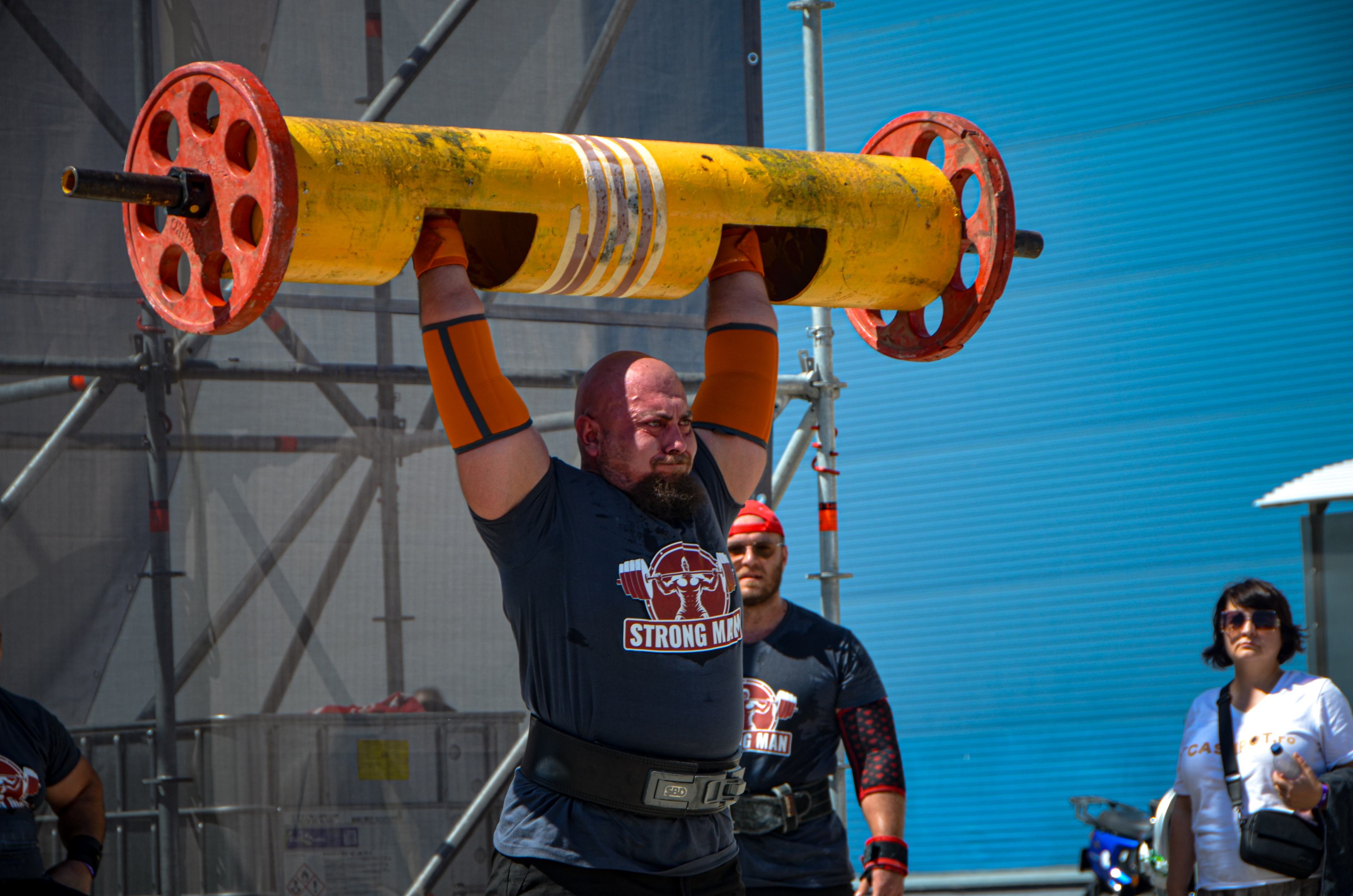
In the previous episodes we followed the muscle from microscopic architecture to the neuromuscular junction, calcium, actin and myosin, and the mechanisms that generate tension. Now we reach a question that almost every strength athlete eventually asks: what actually changes inside a muscle when it grows?
Two terms appear repeatedly in training discussions: myofibrillar hypertrophy and sarcoplasmic hypertrophy. The first is associated with increases in contractile elements, especially myofibrils and proteins involved in force production. The second is commonly described as an increase in the volume of non-contractile components and the intracellular environment, including glycogen, water, organelles and other structures. The problem is that living muscle does not fit neatly into two separate boxes.
1. What does muscle hypertrophy actually mean?
Muscle hypertrophy is an increase in muscle size, primarily through enlargement of existing muscle fibers. In adults, training-induced muscle growth is explained mainly by hypertrophy of existing fibers rather than the creation of a large number of entirely new fibers.
At the microscopic level, a hypertrophied fiber can accumulate more contractile proteins, alter myofibrillar size and organization, and increase the content of non-contractile components. Hypertrophy is therefore better understood as coordinated remodeling of the whole fiber rather than the addition of one single material.
2. Myofibrillar hypertrophy - when the contractile apparatus grows
Myofibrils are the contractile structures that occupy much of the muscle fiber. They contain sarcomeres arranged in series and parallel, with proteins such as myosin, actin, troponin and tropomyosin. When synthesis and accumulation of myofibrillar proteins exceed their breakdown over sufficient time, the mass of the contractile apparatus can increase.
This component of hypertrophy is highly relevant to strength sports because the contractile apparatus is what converts neural activation and calcium signaling into mechanical tension. More contractile protein and a favorable muscle architecture can contribute to greater force-producing capacity, although the relationship between size and strength is not perfectly linear.
3. Sarcoplasmic hypertrophy - what surrounds the myofibrils?
The sarcoplasm is the intracellular environment of the muscle fiber. It contains water, glycogen, metabolic enzymes, mitochondria, structural proteins and many other components needed for cellular function. After some forms of training, some of these compartments can expand, contributing to fiber size.
Glycogen is an important example because each gram of muscle glycogen is associated with several grams of water under physiological conditions. Therefore, changes in glycogen stores and intracellular water can alter muscle volume visibly without representing a proportional increase in contractile protein.
4. Why are the two types often presented too simply?
Strength and fitness culture often tells a tidy story: low reps and heavy loads for myofibrillar hypertrophy, high reps and short rests for sarcoplasmic hypertrophy. Human physiology is less tidy. Different forms of training can produce several adaptations within the same fiber, and those adaptations overlap.
A muscle does not decide at the end of a set that it will build only contractile proteins or only sarcoplasm. Mechanical stimuli, motor-unit recruitment, duration of effort, energy availability, hormonal environment and local protein turnover all contribute to remodeling.
5. Mechanical tension - the central piece of hypertrophy
A central concept in hypertrophy is the mechanical tension experienced by active fibers. When an activated fiber must produce force against a load, mechanosensitive structures within the cell detect changes in tension and initiate signals that can alter gene expression, protein synthesis and tissue remodeling.
Tension is not the only stimulus. Metabolic stress may influence cellular signaling, while muscle damage can occur under some conditions but should not be treated as an obligatory goal of hypertrophy. The modern view is that adaptation results from interacting signals, with mechanical tension playing a central role.
6. Muscle protein synthesis and protein balance
A muscle fiber grows when, across repeated periods, muscle protein accretion exceeds protein loss. Training temporarily stimulates protein synthesis, while nutrition, recovery and energy availability influence whether that period of synthesis contributes to a positive net balance.
Muscle proteins are not one single group. There are myofibrillar proteins, mitochondrial proteins, enzymes, structural proteins and many other fractions. Measuring one component therefore cannot describe the entire adaptation of the muscle.
7. What do studies say about myofibrillar and sarcoplasmic hypertrophy?
Experimental studies have sometimes found acute or chronic increases in sarcoplasmic components after training, but the idea that sarcoplasmic hypertrophy is a dominant and universal adaptation remains debated. Findings depend on the measurement method, biopsy timing, training protocol, training status and recovery period.
Some studies have reported disproportionate expansion of sarcoplasmic components, whereas others suggest that changes are better explained by coordinated accumulation of contractile proteins and cellular components. It is therefore inaccurate to treat the two concepts as two pure types of muscle that a training program can select.
8. The muscle pump is not the same thing as hypertrophy
The training pump can be dramatic, but it should not be confused with structural hypertrophy. During exercise, blood flow, osmotic shifts, metabolite accumulation and water movement between compartments can temporarily increase muscle volume.
These changes may participate in adaptive signaling, but a muscle that looks larger immediately after a set has not built a meaningful amount of new myofibrillar tissue in minutes. True hypertrophy is cumulative remodeling over time.
9. Low reps versus high reps - is there a simple verdict?
There is no single magical repetition range that produces exclusively one type of hypertrophy. Research on hypertrophy indicates that a fairly broad range of loads can support muscle growth when sets provide sufficient stimulus and are performed with appropriate effort.
For maximal strength, heavy loads have specific advantages because they train the ability to produce high levels of force and facilitate neural and technical adaptations. For accumulating training volume, moderate and sometimes lighter loads can be highly effective. This does not automatically turn one loading strategy into a pure sarcoplasmic hypertrophy program.
10. What does all this mean for Strongman?
In Strongman, muscle mass is one physical foundation of performance, but it is not enough. An athlete must combine muscle mass, strength, the ability to recruit motor units rapidly, coordination, trunk and tissue stiffness, conditioning and strategy.
A Strongman program may include heavy deadlifts, squats, overhead presses and log presses, as well as higher-volume work for the back, legs, shoulders and arms. These demands can produce simultaneous adaptations in the contractile apparatus and the metabolic compartments of the muscle fiber.
11. Why is a larger muscle not automatically a stronger muscle?
Muscle force depends on multiple factors. Physiological cross-sectional area matters, as do fiber architecture, fascicle length, pennation angle, fiber type, activation state and length-tension relationships.
At the whole-exercise level, leverage, joint position, tendon behavior, intermuscular coordination and technique also matter. This is why two athletes with similar muscular circumference can perform very differently in the deadlift or log press.
12. Glycogen, water and the illusion of rapid growth
Carbohydrate intake and glycogen storage can rapidly influence muscle appearance. After increasing carbohydrate intake or restoring glycogen after training, muscle can hold more water associated with glycogen stores.
This is a normal physiological phenomenon and relevant to performance because glycogen is an important substrate for muscle work, but it should not be confused with the instant creation of new myofibrillar mass. Body weight and circumference can change quickly because of glycogen and water, whereas structural hypertrophy develops much more slowly.
13. mTOR and cellular signaling
One of the best-known signaling networks associated with muscle growth is the mTORC1 pathway. It integrates signals related to amino acids, energy and mechanical stimuli and can increase processes involved in protein synthesis.
mTOR is not a simple hypertrophy switch. The muscular response depends on dose, timing, substrate availability, metabolic state and training history. In addition, an acute increase in a signaling marker does not guarantee an equivalent chronic increase in muscle mass.
14. What does realistic muscle hypertrophy look like?
In a muscle adapting to training, hypertrophy is likely a mixture of changes. Contractile components, glycogen and water stores, enzymes and organelles, connective tissues and other intracellular and extracellular elements may all change.
The proportion of these components is not fixed and can vary with training type, athlete status and the time at which the tissue is measured. Therefore, myofibrillar versus sarcoplasmic hypertrophy is useful as a teaching framework but too rigid when used to describe two perfectly separate outcomes.
15. Conclusion - muscle grows as a system, not as two rival compartments
Myofibrillar and sarcoplasmic hypertrophy describe two aspects of muscle remodeling. Growth of contractile elements can support force-producing capacity, while expansion of non-contractile and metabolic components can contribute to fiber volume and function. In reality, these changes occur within one integrated system.
For Strongman, the goal is not to choose between two pure types of hypertrophy, but to build muscle capable of producing, repeating and controlling force. Muscle mass provides material, the contractile apparatus produces tension, calcium activates the machinery, the nervous system recruits it, and technique turns everything into performance. Under the microscope, there is no purely myofibrillar muscle in one corner and a purely sarcoplasmic muscle in another. There is one living fiber, constantly adapting.
Scientific bibliography
1. Haun CT, Vann CG, Roberts BM, Vigotsky AD, Schoenfeld BJ, Roberts MD. A critical evaluation of the biological construct muscle hypertrophy: size matters but so does the content. British Journal of Sports Medicine. 2019;53:150-160.
2. Haun CT, Vann CG, Mobley CB, Osburn SC, Holmes HM, Pledge CD, et al. Acute high-intensity resistance exercise increases myofibrillar protein synthesis and alters myofibrillar protein composition. Journal of Applied Physiology. 2018.
3. Damas F, Phillips SM, Libardi CA, Vechin FC, Lixandrão ME, Jannig PR, et al. Resistance training-induced changes in integrated myofibrillar protein synthesis are related to hypertrophy only after attenuation of muscle damage. The Journal of Physiology. 2016;594:5209-5222.
4. Schoenfeld BJ, Grgic J, Krieger J. How many times per week should a muscle be trained to maximize muscle hypertrophy? A systematic review and meta-analysis. Journal of Sports Sciences. 2019.
5. Morton RW, Oikawa SY, Wavell CG, Mazara N, McGlory C, Quadrilatero J, et al. Neither load nor systemic hormones determine resistance training-mediated hypertrophy or strength gains in resistance-trained young men. Journal of Applied Physiology. 2016;121:129-138.
6. Schoenfeld BJ, Grgic J, Ogborn D, Krieger JW. Strength and hypertrophy adaptations between low- vs. high-load resistance training: a systematic review and meta-analysis. Journal of Strength and Conditioning Research. 2017;31:3508-3523.
7. Haun CT, Vann CG, Mobley CB, Roberson PA, Osburn SC, Holmes HM, et al. Muscle fiber hypertrophy in response to resistance training: a critical analysis of the mechanisms and methods. Sports Medicine. 2019.
8. Bodine SC, Stitt TN, Gonzalez M, Kline WO, Stover GL, Bauerlein R, et al. Akt/mTOR pathway is a crucial regulator of skeletal muscle hypertrophy and can prevent muscle atrophy in vivo. Nature Cell Biology. 2001;3:1014-1019.
More From The Journal

Training
The Science of Strongman Training - Episode X: Competition Programming
How to build a complete Strongman competition preparation block: calendar, events, volume, intensity, specificity, simulations, autoregulation, tapering and fatigue management.

Training
The Science of Strongman Training - Episode IX: Peaking
Peaking in Strongman: how to turn months of training into maximal competition performance by reducing fatigue, preserving adaptations and managing specificity.