
Physiology
Muscle Under the Microscope - Episode 3: Fast and Slow Muscle Fibers in Strongman
September 6, 2026
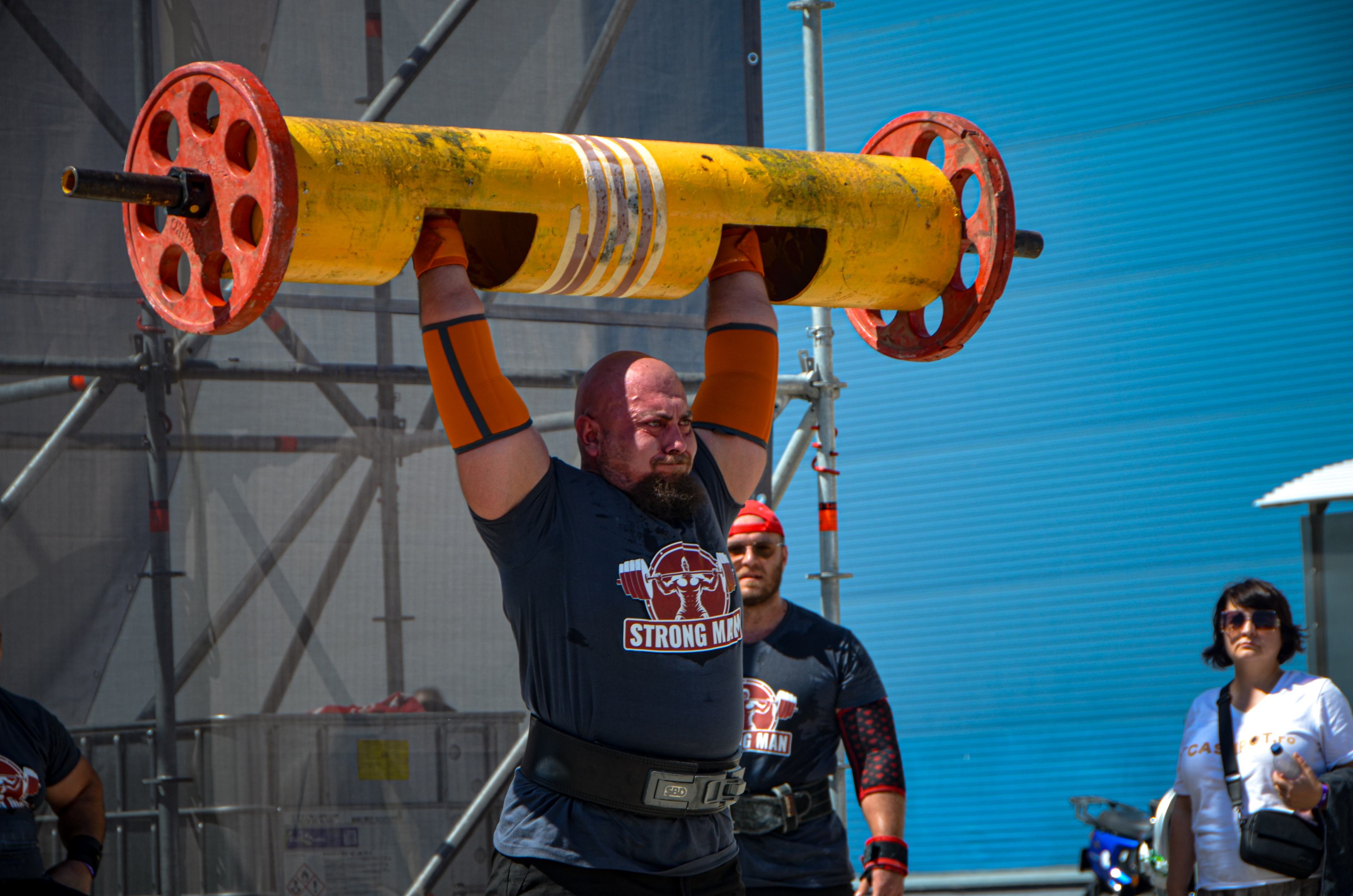
Muscle Under the Microscope - Episode 3: Fast and Slow Muscle Fibers in Strongman
In the first two episodes of the series, we moved from whole-muscle anatomy to the muscle fiber and then explained the major fiber types. Now we change perspective. We are no longer asking only, “What type of fiber is this?” We are asking, “What does this fiber actually do when a strongman lifts, presses, pulls, carries or stabilizes a very heavy load?” This is where the story of fast and slow muscle fibers in strongman becomes useful.
Human muscle is not divided into an army of fast fibers on one side and slow fibers on the other. It is a mixed population organized into motor units, in which type I, type IIa, type IIx and hybrid fibers contribute to the same movement. Type I fibers are generally more oxidative and fatigue resistant, while type II fibers have higher contractile speeds and are important for rapid force and power production. But these differences cannot predict competition outcomes by themselves. Strength and performance emerge from the interaction of fibers, the nervous system, muscle architecture, tendons, technique and energy availability.
This is the central idea of the episode: in strongman there is no event that belongs absolutely to “fast fibers” and another that belongs absolutely to “slow fibers.” There are different task demands that favor different physiological properties. A near-maximal deadlift requires high force production over a short period. A farmer’s walk requires strength, walking, stabilization, grip and repeated contractions. A medley may combine rapid acceleration with carrying and quick changes of position. Under the microscope, every event places a different demand on the same biological machine.
Chapter 1 - What do “fast” and “slow” actually mean?
The terms fast and slow refer mainly to the contractile properties of a muscle fiber, especially shortening velocity associated with its myosin isoform. In adult human skeletal muscle, type I fibers are generally the slowest, type IIa fibers are faster, and type IIx fibers are faster still. This sequence reflects molecular differences in myosin and the kinetics of the actin-myosin cycle.
The key is to separate speed from every other characteristic. A fast fiber is not automatically a giant fiber, and a slow fiber is not automatically weak. Nor do old labels such as “red” and “white” describe the whole biological reality. Modern research shows that MyHC type is a strong marker of contractile behavior, but it does not by itself provide a complete description of fiber metabolism.
Chapter 2 - Type I slow fibers and their role in strongman
Type I fibers express MyHC-I and generally have lower shortening velocity and high oxidative capacity. They are well supplied with capillaries, contain many mitochondria and can sustain repeated contractions efficiently. At first glance, this seems more useful for endurance sports or posture than for strength sports. In strongman, that conclusion would be far too simple.
Strongman includes much more than one maximal repetition. Athletes must hold positions, stabilize unstable objects, walk with heavy loads, repeat attempts and remain efficient as fatigue accumulates. Oxidative fibers contribute to these tasks because of their fatigue resistance and ability to support repeated contractions. Many events also require submaximal but prolonged or repeated force production, where the metabolic advantages of type I fibers become relevant.
A strongman does not “turn off” slow fibers when lifting heavy. They remain part of the system, sometimes contributing to joint and posture stabilization, sometimes providing the background activity that allows faster fibers to work effectively. In complex movement, fiber types cooperate. There is no hard border between “endurance fibers” and “strength fibers.”
Chapter 3 - Type IIa fibers and the main engine of dynamic strength
Type IIa fibers are especially interesting for strength and power sports because they combine relatively high contractile speed with better metabolic capacity than the extremely fast IIx profile. They can produce force quickly and participate in repeated efforts without behaving like a motor designed only for a single explosion.
In strongman, type IIa fibers can be valuable across a wide range of events. A heavy lift requires rapid tension development. A heavy log press requires accelerating the object and then stabilizing it. A throw requires a large impulse over a short period. A heavy carry requires enough force to move the load and the ability to repeat contractions throughout the event. The IIa profile fits this combination well.
Calling IIa “the strongman fiber” would still be another trap. High-level performance does not depend only on myosin type. Fiber size, motor-unit recruitment, fascicle architecture, force transmission to the tendon and effective neural control all matter.
Chapter 4 - Type IIx fibers and explosive power
Type IIx fibers express MyHC-IIX and are associated with very high shortening velocity. In principle, that makes them useful for movements in which a large amount of mechanical work must be produced quickly. In strongman, think about the first phase of a deadlift, accelerating an implement during a throw, or initiating a heavy object from the floor.
There is an important nuance. In healthy adult humans, pure IIx fibers can represent a relatively small and highly variable proportion, and many fibers may show a hybrid IIa/IIx profile. Resistance training is often associated with a lower abundance of pure IIx fibers and a greater prominence of IIa. That does not mean the athlete becomes less strong. IIa fibers can become highly hypertrophied and efficient, while neural and technical adaptations can dramatically increase performance.
Practically, it makes little sense to chase an “optimal” percentage of IIx fibers. A strongman event does not measure how many IIx fibers you have. It measures how much useful force you can produce in a given context. A large, well-recruited IIa fiber integrated into favorable muscle architecture may contribute more to the actual result than a relatively small IIx fiber that is poorly utilized.
Chapter 5 - Why fast fibers matter in maximal events
When a load is extremely heavy and must be moved quickly, or when a large inertia must be overcome, the nervous system must recruit higher-threshold motor units. These units generally have larger axons and innervate faster fibers. The result is access to a large reserve of force and power. As voluntary force demand increases, recruitment expands toward additional motor units until a large proportion of the available units are active.
This is where neurology meets microscopic anatomy. A fast fiber does not activate simply because it is “fast.” It activates because it belongs to a motor unit recruited when the task requires high force. That is why the same fiber can be healthy and capable but still fail to contribute optimally if the nervous system cannot recruit its motor unit effectively under competition conditions.
In strongman, this is especially visible in near-maximal attempts. When the weight barely moves, the athlete needs not only a large amount of muscle tissue, but the ability to activate enough motor units rapidly and keep that activation mechanically effective.
Chapter 6 - Slow fibers in stabilization, carrying and repeated work
Events such as the farmer’s walk, frame carry, yoke walk or a medley are not simply tests of “how strong you are for one second.” They demand force production combined with posture, balance, walking, breathing control and repeated contractions. Oxidative fibers contribute to this infrastructure because they can sustain activity without a rapid decline in contractile function.
Stabilization also does not mean the absence of movement. An athlete holding a heavy object overhead or walking with a massive load must constantly correct small deviations of the trunk and limbs. Fine motor control is produced by continuous motor-unit recruitment. Oxidative fibers are well suited to a substantial portion of this activity, especially as duration increases.
This is one reason a good strongman needs a very broad physiological profile. Being excellent at one maximal repetition does not guarantee excellence in a 30-40 meter carry, where force must be produced, technique maintained and work continued while fatigue builds.
Chapter 7 - Muscle power is force multiplied by velocity
Mechanical power is the product of force and movement velocity. An athlete can therefore be extremely strong but unable to express that force quickly enough to produce very high power. Conversely, a very fast athlete with low absolute force cannot accelerate a very heavy object. Fast fibers clearly matter because contractile speed and rapid tension development contribute to power output.
In strongman, power appears in throws, acceleration of implements, heavy pressing and many medleys. But power is not an isolated property of fiber type. It also depends on load, fiber architecture, joint moments, coordination and the athlete’s ability to direct force into the correct movement pattern.
Chapter 8 - What changes when the event lasts longer?
As exercise duration increases, the advantage of a purely speed-oriented profile becomes less straightforward. Fast fibers do not suddenly stop working. Instead, the energy and mechanical demands shift. Local phosphocreatine stores are used rapidly, glycolysis contributes strongly, and oxidative metabolism contributes increasingly to ATP resynthesis.
In a strongman medley, an athlete may begin with a powerful burst, then continue carrying a load, change implements and produce force again. In this setting, the question is not simply “how fast is the motor?” It is also “how well can the system shift from one demand to another without a major collapse in force output?”
Type I and IIa fibers are well placed in this middle territory because they can contribute to force and repeated work. IIx fibers retain very high shortening velocity, but a competition-ready profile cannot be built on the assumption that every second must be maximally explosive.
Chapter 9 - Why fiber type does not determine strength by itself
One of the most persistent myths in sport is that the percentage of fast fibers can almost directly predict how strong a person will be. The evidence does not support such a simple relationship. A systematic review of determinants of muscular strength found mixed results for the link between fiber type and maximal strength. Some studies found associations, others did not, and the relationship depended on the population and the method used to assess strength.
Muscle mass, physiological cross-sectional area, architecture, fascicle length, pennation angle, motor-unit recruitment, discharge rate, coordination and tendon mechanics can all strongly influence performance. An athlete with a favorable fast-fiber distribution but poor technique or limited neural recruitment will not fully express that potential.
Two athletes can also have similar percentages of fast fibers but different fiber sizes. If one has larger IIa fibers and more favorable architecture, the mechanical result can be very different. Fiber type is an indicator, not a final verdict.
Chapter 10 - Hybrid fibers and the truth between the extremes
Hybrid fibers are cells that express more than one MyHC isoform. In human muscle, examples include I/IIa and IIa/IIx. They show that the transition between contractile profiles is not a simple two-position switch but a graded biological process.
This matters in strongman because athletes experience simultaneous demands for strength, power and local endurance. A hybrid profile can reflect adaptation to training history and habitual loading. Training does not need to “choose” one category. It needs to improve the performance of the system as a whole.
Contemporary literature describes fiber transitions as ordered and stimulus-dependent. Resistance training is frequently associated with transitions from IIx toward IIa and with a lower abundance of pure IIx fibers, while inactivity can shift phenotype in a different direction. These changes are not instantaneous and not unlimited.
Chapter 11 - How fast fibers adapt to strongman training
Strongman training often combines heavy movements, acceleration, unusually shaped objects, carries, presses and pulls. These demands can stimulate fiber hypertrophy, changes in contractile proteins and metabolic adaptation. In fast fibers, increased size means more contractile elements arranged in parallel and, potentially, a greater capacity to produce force.
But adaptation is not only structural. The nervous system learns to recruit relevant musculature faster and with better coordination. The athlete learns to apply force in mechanically advantageous positions, sequence joint actions and reduce unnecessary movement. In strongman, this coordination can be the difference between possessing strength and turning that strength into kilograms moved.
Chapter 12 - How slow fibers adapt to strongman training
Slow fibers respond to loading as well. They can enlarge and change oxidative and structural properties. Training that includes volume, carries, controlled tempos, repeated work and sufficient exposure can provide meaningful stimulus for their ability to sustain effort.
In competition, the benefit is not simply “endurance.” Oxidative fibers contribute to recovery between efforts, maintenance of posture and tolerance for repeated work. In a multi-event contest, this capacity can become critical for maintaining performance from one event to the next.
Chapter 13 - Fast twitch does not mean “good,” slow twitch does not mean “bad”
Sports language sometimes turns biological differences into moral rankings. Fast fibers are described as “good,” while slow fibers are treated as “weak.” That is wrong. A body capable of repeated force production and stable movement needs fibers that do not fatigue quickly. A body capable of rapidly accelerating a heavy implement needs fast fibers. Performance appears when both profiles and the nervous system work together.
A strongman contest demonstrates this perfectly. If you have only explosive output, you may win one event and lose efficiency in the next. If you have only endurance, you may perform well in a carry but lack the force to challenge a maximal lift. The champion needs the ability to change gears, not live permanently in one gear.
Chapter 14 - How fast and slow fibers combine in one event
Consider a heavy farmer’s walk. First, the athlete must break the implements off the floor. Force demand is high and may require recruitment of high-threshold motor units, including those containing fast fibers. Once the weights are up, the event becomes a transport task. Repeated contractions, trunk stability, stepping and grip must be maintained. Oxidative fibers become increasingly important as duration rises.
Now imagine a yoke walk. The initial pick is a high-force event. The walk is a test of coordination, isometric control, breathing, stabilization and repeated force. A medley adds fast implement changes and the need to produce force again before full recovery. In this setting, fast and slow fibers are not taking turns. They are contributing to the same performance from different physiological angles.
This integration also explains why strongman programming has to be specific. If you train only one part of the profile, you may build one impressive quality and one equally impressive weakness. Maximal strength, power, local endurance and repeated-effort capacity all need to be developed within a coherent structure.
Chapter 15 - Conclusion: in strongman, the system wins, not a single fiber
Fast fibers are essential for contractile speed, rapid force production and power. Slow fibers provide oxidative efficiency, fatigue resistance and the ability to support repeated activity. Type IIa fibers occupy an especially useful zone where speed and work capacity need to coexist, while IIx fibers can contribute to very rapid demands even though they are often less abundant in trained adult human muscle.
But the real lesson is bigger than the I-IIa-IIx classification. A strongman does not lift a weight with “fast fibers” in isolation. The nervous system recruits motor units, sarcomeres generate tension, calcium turns contraction on and off, ATP is continually resynthesized, the cytoskeleton and extracellular matrix transmit force, tendons carry that force onward, and technique transforms all of this into efficient movement.
That is why the question “Do I have more fast fibers?” is much less important than it seems. The more useful questions are: how well can your body produce force, how rapidly can it do so, how long can it sustain that output, how efficiently can it repeat the effort, and how well can the entire system coordinate? Strongman is a sport in which all of these qualities have to coexist.
In the next episode we can go one level deeper and examine the motor unit: how the motor neuron decides which fibers are recruited, in what order they are activated, and why the recruitment principle changes the way we understand strength.
Scientific bibliography
1. Schiaffino S, Reggiani C. Fiber types in mammalian skeletal muscles. Physiological Reviews. 2011;91(4):1447-1531. DOI: 10.1152/physrev.00031.2010.
2. Murach KA, Bagley JR. Fiber-type traps: revisiting common misconceptions about skeletal muscle fiber types with application to motor control, biomechanics, physiology, and biology. Journal of Physiology. 2024.
3. Plotkin DL, Roberts MD, Haun CT, Schoenfeld BJ. Muscle fiber type transitions with exercise training: shifting perspectives. Sports. 2021;9(9):127. DOI: 10.3390/sports9090127.
4. Lieber RL, Ward SR. Skeletal muscle design to meet functional demands. Philosophical Transactions of the Royal Society B. 2011;366:1466-1476.
5. Frontera WR, Ochala J. Skeletal muscle: a brief review of structure and function. Calcified Tissue International. 2015;96:183-195.
6. Tieland M, Trouwborst I, Clark BC. Skeletal muscle performance and ageing. Journal of Cachexia, Sarcopenia and Muscle. 2018;9(1):3-19.
7. Bloemberg D, Quadrilatero J. Rapid determination of myosin heavy chain expression in rat, human and mouse skeletal muscle using multicolor immunofluorescence analysis. PLoS One. 2012;7(4):e35273.
8. Gollnick PD, Matoba H. The muscle fiber composition of skeletal muscle as a predictor of athletic success. An overview. American Journal of Sports Medicine. 1984;12(3):212-217. DOI: 10.1177/036354658401200309.
Editorial note: muscle fiber classification primarily describes contractile properties and should be interpreted together with fiber size, metabolism, neural recruitment, muscle architecture and the demands of the event.
More From The Journal

Training
The Science of Strongman Training - Episode X: Competition Programming
How to build a complete Strongman competition preparation block: calendar, events, volume, intensity, specificity, simulations, autoregulation, tapering and fatigue management.

Training
The Science of Strongman Training - Episode IX: Peaking
Peaking in Strongman: how to turn months of training into maximal competition performance by reducing fatigue, preserving adaptations and managing specificity.