
Physiology
Muscle Under the Microscope - Episode 2: Muscle Fiber Types
September 6, 2026
Muscle Under the Microscope - Episode 2: Muscle Fiber Types
In the first episode we moved from the whole muscle to the fiber, myofibril and sarcomere. Now we take the next step: inside skeletal muscle there is not one uniform kind of fiber. Some fibers contract more slowly and sustain activity for long periods. Others contract rapidly and can produce high power when force must be generated quickly. Between these broad extremes are hybrid fibers and a much more nuanced biological continuum than the classic picture of «red» and «white» muscle.
Modern classification of human muscle fibers relies largely on myosin heavy-chain isoforms, commonly abbreviated MyHC or MHC. In adult human skeletal muscle, the major forms are MyHC-I, MyHC-IIA and MyHC-IIX. These isoforms are strongly related to shortening velocity, but myosin type does not by itself determine metabolism, fatigue resistance or athletic performance. Fibers are integrated systems in which contractile proteins, mitochondria, sarcoplasmic reticulum, capillaries, cell size and neural control interact. Research also shows that fiber phenotypes are not completely rigid: hybrid fibers exist, and some characteristics can shift in response to chronic loading and use.
Chapter 1 - What does «muscle fiber type» actually mean?
A muscle fiber is an individual cell. Its «type» describes a group of molecular and functional characteristics, not a permanent box. The most useful modern marker is the predominant myosin isoform. Myosin is the molecular motor of the sarcomere, and different isoforms have different kinetics. For that reason, MyHC type is closely related to how rapidly a fiber can shorten and to its mechanical profile.
In human muscle, the main categories are type I, type IIA and type IIX. Hybrid fibers are also common and can express two or more isoforms. They matter because they show that biological reality is better described as a continuum. A type IIA/IIX fiber is not simply a mathematical 50/50 mixture; the relative expression of each isoform and the rest of the cellular machinery create a functional phenotype that can occupy an intermediate or changing state.
Chapter 2 - Type I fibers - slow, oxidative and fatigue-resistant
Type I fibers express MyHC-I and contract more slowly than fast fibers. That does not mean they are weak. They are well suited to repeated force production and sustained activity. They generally have high oxidative capacity, greater capillary support and substantial mitochondrial content. Those features support oxygen delivery and aerobic energy production.
Type I fibers are important in postural muscles and in tasks where energy efficiency matters over long periods. But it is misleading to call them «cardio fibers» and stop there. Type I fibers can generate force, can hypertrophy and contribute to strength tasks. Their defining differences are primarily contractile and metabolic characteristics, not ownership of a single sport.
Chapter 3 - Type IIa fibers - speed with useful work capacity
Type IIa fibers express MyHC-IIA and are fast. They can generate substantial force over a short period and also possess meaningful oxidative capacity. This has led to the popular label «intermediate fiber», but that phrase can be misleading. Type IIa is a distinct phenotype with its own molecular profile, not simply the average of type I and type IIx.
In strength sports, IIa fibers are particularly interesting because they combine relatively high contraction speed with a useful ability to repeat work. This makes them relevant to explosive repeated efforts, heavy sets and events where high force must be produced more than once.
Chapter 4 - Type IIx fibers - very high contractile speed
Type IIx fibers express MyHC-IIX and are associated with the highest shortening velocity among the major human fiber types. They can support rapid power production, but are generally less oxidative than type I and type IIa fibers. They are therefore less suited to prolonged work and more suited to very intense, rapid demands.
A major terminology point matters here. In adult human muscle, pure IIx fibers can be relatively uncommon, depending on the muscle, person, training status and measurement method. Older literature sometimes used the term IIb for humans, but molecular work established that human fibers historically called IIB correspond primarily to MyHC-IIX. True MyHC-IIB is characteristic of certain non-human mammals and is absent or extremely rare in adult human skeletal muscle.
Chapter 5 - Why speed does not automatically mean maximum strength
It is tempting to say that a fast fiber is simply «stronger». The biology is more complicated. Shortening velocity is strongly influenced by myosin isoform, but whole-muscle force also depends on physiological cross-sectional area, fiber length, the number of contractile elements operating in parallel, neural recruitment, sarcomere length, muscle architecture and joint position.
At the single-fiber level, fast fibers can produce high power because of their higher shortening velocity and contractile characteristics, but their energetic cost can also be higher. At whole-muscle level, the result is the sum of thousands of fibers with different sizes and properties. That is why two athletes with similar percentages of fast fibers can perform very differently in a strength event.
Chapter 6 - Fibers are defined by more than myosin
MyHC type is a strong marker of contractile behavior, but metabolism cannot be inferred perfectly from it. Two fibers with the same dominant myosin isoform can differ in mitochondrial content, oxidative enzyme activity, energy stores, capillarization or size. Modern muscle research has highlighted the danger of treating fiber type as a one-to-one label for metabolic capacity.
This is why phrases such as «slow oxidative fibers» and «fast glycolytic fibers» are useful as broad orientation, but not as absolute definitions. Type IIa, for example, tends to occupy a different metabolic territory from type I or IIx, yet muscle metabolism remains a continuum. During a real strongman event, multiple energy systems contribute, and performance depends on the interaction between mechanical demand and available energy.
Chapter 7 - Hybrid fibers - the real transition zone
Hybrid fibers express more than one MyHC isoform. Commonly discussed examples include I/IIa, IIa/IIx and, in some settings, I/IIa/IIx. They are important because they help explain muscle plasticity. A hybrid fiber may represent a transition between phenotypes or a stable phenotype with intermediate properties.
Modern reviews show that hybrid fibers can be far more common than a simple pure-type diagram suggests. They can constitute a meaningful part of the fiber population in many muscles. Research on fiber transitions also supports the idea that changes occur through graded, ordered shifts rather than instant switching from one extreme to the other.
Chapter 8 - How training changes muscle fiber phenotype
Muscle is plastic. Neuromuscular activity, mechanical loading, training volume and exercise type can alter the expression of contractile proteins and shift fiber phenotype. In broad terms, endurance-oriented and repeated-use stimuli can favor more oxidative profiles, while resistance training commonly reduces the abundance of pure IIx fibers and increases the IIa profile. Reduced activity and unloading can move the phenotype in the opposite direction.
These changes should not be mistaken for unlimited conversion of any fiber into any other type. Skeletal muscle is not biological modeling clay. Transitions follow preferred pathways and depend on the starting phenotype, stimulus duration, activity level and physiological context.
Chapter 9 - Resistance training and muscle fibers
Resistance training creates several adaptations at the same time. Fibers can enlarge through increased contractile protein content, metabolic function can change, and MyHC expression can shift. In many strength-training contexts, the proportion of pure IIx fibers decreases while the IIa profile becomes more prominent, consistent with repeated exposure to high-force, high-activation work.
That does not mean that losing pure IIx fibers makes an athlete less explosive. In trained athletes, increased IIa fiber size, neural adaptation, intermuscular coordination and improved technique can more than compensate for a shift in classification. Performance is a property of the whole system, not the percentage of one band on a gel or one color under a microscope.
Chapter 10 - Fiber type and muscle hypertrophy
Muscle hypertrophy primarily means growth in the size of individual fibers through accumulation of proteins and remodeling of intracellular structures. All major fiber types can hypertrophy, although responses can vary between individuals, muscles and training programs. There is no simple rule that only fast fibers grow substantially.
In strength athletes, hypertrophy of fast fibers can make an important contribution to force potential because it increases the number of contractile elements operating in parallel. But muscle growth cannot be separated from the nervous system and muscle architecture. A larger fiber still has to be recruited effectively, and its force must travel through the cytoskeleton, connective tissue and tendon.
Chapter 11 - Fiber type, fatigue and strongman effort
Strongman does not impose one physiological demand. A maximal deadlift, throw, heavy press, farmer's walk and high-repetition event require different mixtures of strength, speed, isometric control, coordination and local endurance. Fast fibers are critical for rapid force production, while oxidative fibers contribute to sustained activity between repetitions and to metabolic recovery.
Fatigue occurs at multiple levels. Reduced substrate availability, altered calcium handling, metabolite accumulation, impaired contractile function and changes in neural drive can combine. Therefore it is not scientifically accurate to say that an athlete fatigues simply because he «runs out of fast fibers». Fiber type influences fatigue resistance, but fatigue is a system-level phenomenon.
Chapter 12 - Why two people can have different fiber profiles
Fiber proportions vary between individuals and between muscles. Genetics contributes substantially, while muscles used repeatedly for different functions can have different distributions. Age, physical activity, training, immobilization and previous training history can also modify parts of the muscle phenotype.
Laboratory testing also has limitations. A biopsy samples only a small portion of a muscle. A sample from one location may not perfectly represent the whole muscle. The analytical method matters as well: fluorescent immunohistochemistry, single-fiber analysis and homogenate-based protein measurements can produce different estimates. Modern studies emphasize careful interpretation, especially when discussing the abundance of IIx fibers.
Chapter 13 - How muscle fiber types are identified in the laboratory
One modern approach is fluorescent immunohistochemistry. A thin muscle section is treated with antibodies that recognize specific MyHC isoforms, and the fibers are classified from the fluorescent signals. This allows researchers to measure not only fiber type but also fiber size and spatial distribution.
Single-fiber analysis can be even more useful when hybrid fibers are the question. Individual fibers are isolated and analyzed for the myosin isoforms they express. This avoids an important problem: if all fibers are mixed into one homogenate, information about coexpression inside individual cells is lost.
Chapter 14 - The most common myths about muscle fibers
Myth one: everyone is born with a fixed percentage of fibers that cannot change. Reality: genetics matters, but muscle phenotype is plastic. Myth two: fast fibers are always large, white and incapable of endurance. There is no universal definition like that. Myth three: having many fast fibers automatically makes someone a strength champion. Performance also depends on fiber size, neural recruitment, technique and biomechanics.
Myth four: every IIx fiber is automatically better for every explosive event than every IIa fiber. In reality, IIa is fast, can be large, can generate high power and possesses meaningful metabolic capacity. In a real event, the interaction of fiber characteristics, recruitment and architecture may matter more than the isolated label.
Myth five: a muscle fiber is simply a miniature version of the whole muscle. It is not. The fiber is one cell operating inside fascicles, extracellular matrix, vessels, nerves and tendons. Its fiber type is an important piece of the puzzle, not the entire puzzle.
Chapter 15 - What all of this means for strongman
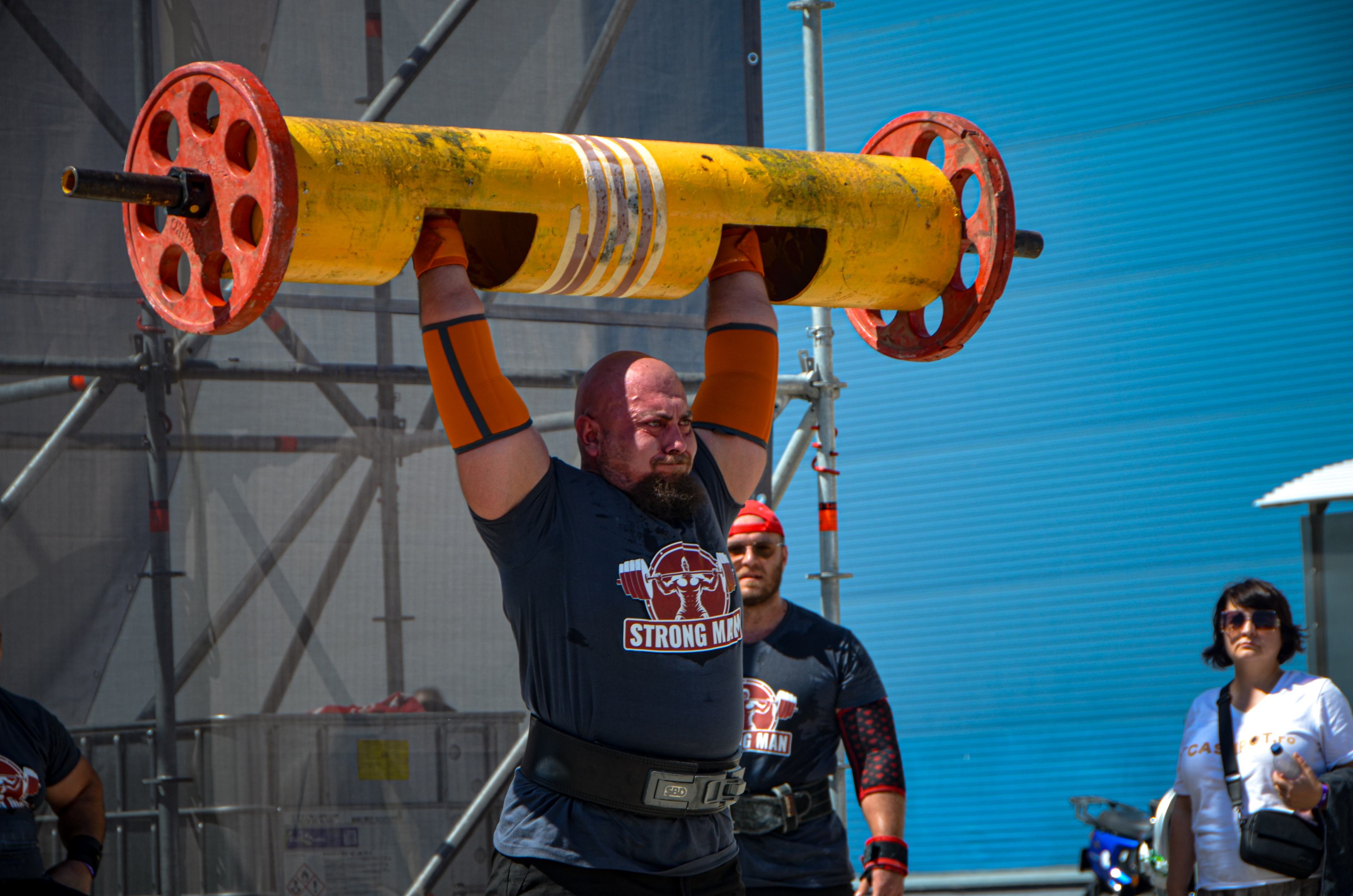
When you watch a strongman lift an enormous load, you do not see fiber type. You see the final outcome. Behind that repetition are millions of sarcomeres, fibers with different phenotypes, motor units recruited at different levels, sarcoplasmic reticulum releasing and recovering calcium, ATP being resynthesized continuously and connective tissue transferring force toward the tendon.
Fast fibers, especially IIa and IIx, contribute strongly to rapid force and power. Type I fibers contribute to endurance, stabilization and repeated work. Hybrid fibers show that muscle can occupy intermediate states and adapt. For the athlete, the goal is not to turn the entire muscle into one fiber type. The goal is to build the capacities demanded by the events: size, force, power, speed, local endurance and neural control.
The central conclusion is simple: fiber type matters, but fiber type alone does not determine who wins. Genetics sets part of the starting terrain. Training changes many characteristics of that terrain. The nervous system, muscle architecture, tendons, technique, energy availability and pacing determine how that potential is expressed. Under the microscope, muscle is not a collection of labels. It is a dynamic population of specialized cells.
Bibliography
1. Schiaffino S, Reggiani C. Fiber types in mammalian skeletal muscles. Physiological Reviews. 2011;91(4):1447-1531. DOI: 10.1152/physrev.00031.2010.
2. Murach KA, Bagley JR. Fiber-type traps: revisiting common misconceptions about skeletal muscle fiber types with application to motor control, biomechanics, physiology, and biology. Journal of Physiology. 2024.
3. Plotkin DL, Roberts MD, Haun CT, Schoenfeld BJ. Muscle fiber type transitions with exercise training: shifting perspectives. Sports. 2021;9(9):127. DOI: 10.3390/sports9090127.
4. Ciciliot S, Rossi AC, Dyar KA, Blaauw B, Schiaffino S. Muscle type and fiber type specificity in muscle wasting. International Journal of Biochemistry & Cell Biology. 2013;45(10):2190-2198.
5. Petrella JK, Kim JS, Cross JM, Kosek DJ, Bamman MM. Efficacy of myonuclear addition may explain differential response to resistance training. Medicine & Science in Sports & Exercise. 2008;40(5):1012-1018.
6. Bloemberg D, Quadrilatero J. Rapid determination of myosin heavy chain expression in rat, human and mouse skeletal muscle using multicolor immunofluorescence analysis. PLoS One. 2012;7(4):e35273.
7. Tieland M, Trouwborst I, Clark BC. Skeletal muscle performance and ageing. Journal of Cachexia, Sarcopenia and Muscle. 2018;9(1):3-19.
Editorial note: classification of human muscle fibers and interpretation of fiber-type transitions depend on the measurement method. The terms «fast» and «slow» primarily describe contractile properties and should not automatically be treated as single metabolic pathways.
More From The Journal

Training
The Science of Strongman Training - Episode X: Competition Programming
How to build a complete Strongman competition preparation block: calendar, events, volume, intensity, specificity, simulations, autoregulation, tapering and fatigue management.

Training
The Science of Strongman Training - Episode IX: Peaking
Peaking in Strongman: how to turn months of training into maximal competition performance by reducing fatigue, preserving adaptations and managing specificity.