
Physiology
Muscle Under the Microscope - Episode 10: Why Do Some Muscles Grow While Others Lag Behind?
September 6, 2026
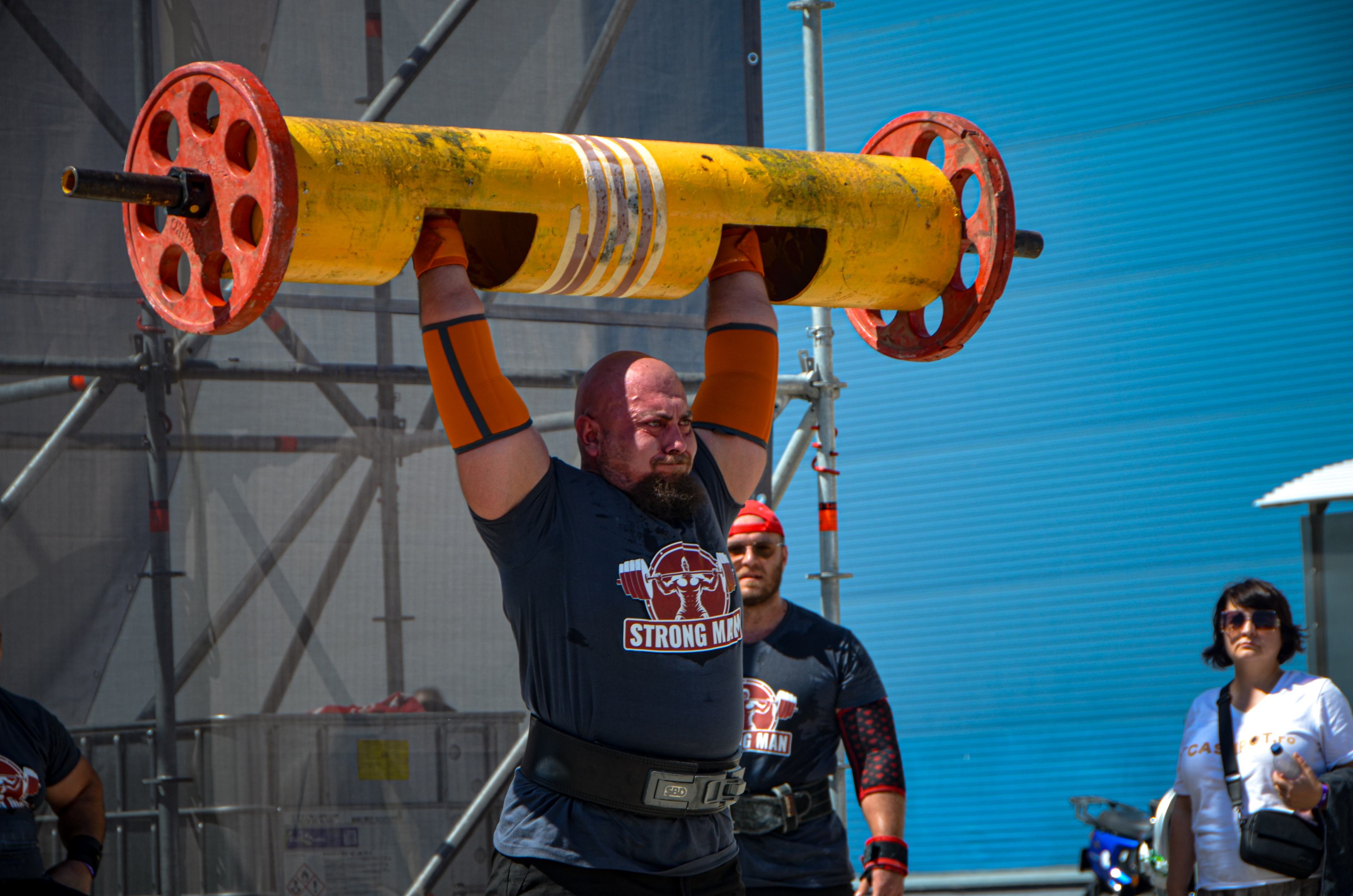
In the previous episodes we followed the muscle from microscopic architecture to the neuromuscular junction, calcium, hypertrophy, injury and satellite cells. Now we reach one of the most practical questions in the gym: why do some muscles appear to grow easily while others remain stubbornly behind even when an athlete trains them consistently?
The answer is not one gene, one exercise or one magical repetition range. Muscle size and shape emerge from interactions among anatomy, fascicle length, muscle architecture, fiber recruitment, mechanical tension, training dose, technique, recovery, nutrition and individual differences. A muscle can also appear not to grow because of how it is measured or how its shape changes, not necessarily because it has failed to adapt.
1. First truth: not all muscles are built the same
The human body is not built from identical muscles copied over and over. Each muscle group has its own architecture: different fascicle lengths, pennation angles, fiber distributions, tendon insertions and proportions among muscle regions. These characteristics influence how much force a muscle can produce and how its size can change with training.
That is why two muscle groups trained with the same load and number of sets do not necessarily receive the same internal stimulus. A movement can be extremely demanding for one group and much less effective for another, even when the exercise looks similar from the outside.
2. Muscle architecture can change hypertrophy potential
Architecture partly determines how contractile tissue is packed. A muscle with longer fascicles may have advantages for force production at certain velocities and ranges, while a greater pennation angle allows more fibers to be packed into a given physiological cross-sectional area. These features do not make one architecture universally superior, but they give each muscle its own mechanical advantages and constraints.
With hypertrophy, changes in size may therefore appear differently from one muscle to another. Some regions may increase more in thickness, others may show changes in fascicle length, and the visible shape of a muscle also depends on tendons and attachment sites.
3. Fiber recruitment: the muscle must actually be challenged
An exercise does not cause hypertrophy simply because it is labeled for a particular body part. Fibers must be recruited and produce sufficient tension. The nervous system determines which motor units are activated and at what discharge rates, and those decisions change as the demand increases.
At high loads, recruitment of higher-threshold motor units can become important. With moderate or lighter loads, approaching muscular failure can increase recruitment of additional fibers. Thus, a lagging muscle can sometimes be less a problem of choosing a particular load and more a problem of how much productive work actually reaches the target fibers.
4. Muscle length at the moment of loading
An important area of modern hypertrophy research concerns muscle position and length during exercise. For some muscle groups, training a muscle at longer lengths can provide a substantial hypertrophic stimulus. This does not mean every exercise should be performed in extreme stretch, but it suggests that the part of the range of motion in which tension is produced can matter.
This is one reason two apparently equivalent exercises can produce different responses. If one keeps the target muscle under tension at a longer length or in a position where it must produce more force, the local stimulus can differ.
5. Exercise selection matters: same group, different stimuli
Exercise selection changes leverage, range of motion, muscle length and load sharing between joints. Two variations for the same muscle can emphasize different parts of the movement or transfer some of the demand to other muscles.
In practice, a lagging muscle may benefit more from changing the exercise and body position than from simply adding sets. The goal is not to discover a secret exercise, but to find a movement that lets the target muscle produce high, repeatable tension with stable technique and observable progression.
6. Training volume: enough, but not infinite
Training volume has an important relationship with hypertrophy, but it is not a simple rule in which more sets always mean more growth. There is likely a range in which additional volume produces additional benefit, after which fatigue cost can rise faster than adaptation.
A lagging muscle may need more volume, a better frequency or simply better distribution of work through the week. But when sets are added without enough recovery, the quality of later sets can fall and progress may slow.
7. Technique can determine where the stimulus goes
Small changes in body position, range of motion, trajectory, joint angle or tempo can shift the demand from one muscle group to another. In a compound exercise, an athlete may finish a set feeling that the target muscle worked, while biomechanics show that another group handled a large part of the load.
This is especially relevant in Strongman, where technique must turn a large, heavy object into an efficient movement. Good technique can improve event performance, but it can also reduce or redistribute loading on a particular muscle group. For hypertrophy, we therefore need to track not only what exercise is performed, but how it is performed.
8. Individual differences: genetics inevitably enters the equation
People respond differently to the same program. Genetic differences can influence fiber-type distribution, muscle architecture, attachment sites, fascicle length, molecular responses to training and the rate at which muscle mass accumulates.
That does not mean genetics determines everything. It means each athlete starts from a different configuration and will not necessarily obtain the same shape or rate of progress. A muscle with shorter insertions, for example, can look different from one with longer insertions even when their muscle mass is similar.
9. Why a muscle may look like it is not growing
Visual perception is not a perfect measurement. Water, glycogen, subcutaneous fat, camera angle, lighting and muscle definition can dramatically change appearance from week to week.
A muscle can also become stronger and more capable without showing a dramatic visible size increase. Performance gains can arise from neural, technical and architectural adaptations while size changes more slowly. Repeated measurements, standardized circumferences, photographs taken under similar conditions and, when possible, objective assessment methods are more useful for evaluating progress.
10. Recovery and nutrition: muscle does not grow during the set
Training provides the stimulus, but adaptation unfolds during recovery. Sleep, energy and protein intake, carbohydrate availability for training and fatigue management influence the ability to sustain high-quality training and convert repeated stimulation into new tissue and improved function.
A stubborn muscle may be part of a program in which it receives a good stimulus, but the athlete is chronically too fatigued, has insufficient energy intake or does not allow enough recovery. The problem is not always the exercise selected for that muscle.
11. Frequency can be a tool for lagging muscle groups
When a muscle is not progressing, distributing its work across more sessions can allow fresher sets and better execution. Frequency is not magic by itself, but it can be useful as a way to organize volume and recovery.
For a Strongman athlete, this matters because the same muscle can be loaded indirectly by several events. Deltoids, triceps, spinal extensors, quadriceps or the posterior chain can accumulate substantial work from different exercises even when the athlete does not count every indirect stimulus. Total workload management becomes increasingly important.
12. Why some muscle groups are harder to isolate
Some muscles participate in many movements. The back, shoulders, arms and posterior chain can all be involved in multiple compound exercises. That can help accumulate stimulus, but it can also make total weekly workload difficult to track.
Other muscle groups may require more specific positions and exercises to receive enough stimulus. When a muscle lags, it is useful to analyze its total weekly contribution, not just the number of sets the athlete labels directly for that muscle.
13. Strongman makes the equation even more complicated
In Strongman, muscles rarely work in isolation. Log press, deadlift, farmer's walk, yoke, Atlas stones and other events combine multiple joints and muscle chains. An athlete may develop some regions extremely well because they are repeatedly loaded through events and training variations, while other areas receive less direct stimulus or are limited by technique, mobility and recovery.
Therefore, a strongman's hypertrophy has to be analyzed in the context of the whole program. If one muscle lags, the first step is not necessarily another exercise. The weekly distribution of loading, proximity to the target effort, accumulated fatigue and interference among events should all be examined.
14. How should a lagging muscle group be approached?
A rational approach begins with diagnosis, not with random addition of sets. Technique, range of motion, exercise selection, position in the session, progression in load or repetitions, direct and indirect weekly volume and recovery should all be checked.
Then it can be useful to give the muscle a period of clearer stimulus, measurable progression and enough time for evaluation. If performance and size improve, the approach is working. If not, relevant variables are changed. The principle is the same as in engineering: do not change ten things at once and then pretend you know what worked.
15. Conclusion - muscles do not respond identically because they are not identical
Differences in development between muscle groups are normal. Some muscles grow faster because of anatomical advantages, a more effective stimulus, better recruitment, loading at favorable lengths, or simply better programming and recovery. Others lag for mechanical, programmatic, biological or perceptual reasons.
For a strength athlete, the solution is not to hunt for a mysterious explanation, but to investigate the whole chain: anatomy, recruitment, exercise, muscle length, tension, volume, frequency, technique, nutrition and recovery. In the microscopic laboratory of muscle, differences in progress emerge from the sum of these variables, not from one hidden lever.
Scientific bibliography
1. Haun CT, Vann CG, Roberts BM, Vigotsky AD, Schoenfeld BJ, Roberts MD. A critical evaluation of the biological construct muscle hypertrophy: size matters but so does the content. British Journal of Sports Medicine. 2019;53:150-160.
2. Schoenfeld BJ, Grgic J, Ogborn D, Krieger JW. Strength and hypertrophy adaptations between low- vs. high-load resistance training: a systematic review and meta-analysis. Journal of Strength and Conditioning Research. 2017;31:3508-3523.
3. Morton RW, Oikawa SY, Wavell CG, et al. Neither load nor systemic hormones determine resistance training-mediated hypertrophy or strength gains in resistance-trained young men. Journal of Applied Physiology. 2016;121:129-138.
4. Schoenfeld BJ, Grgic J, Krieger J. How many times per week should a muscle be trained to maximize muscle hypertrophy? A systematic review and meta-analysis. Journal of Sports Sciences. 2019.
5. Damas F, Phillips SM, Libardi CA, et al. Resistance training-induced changes in integrated myofibrillar protein synthesis are related to hypertrophy only after attenuation of muscle damage. The Journal of Physiology. 2016;594:5209-5222.
6. Wackerhage H, Schoenfeld BJ, Hamilton DL, Lehti M, Hulmi JJ. Stimuli and sensors that initiate skeletal muscle hypertrophy following resistance exercise. Journal of Applied Physiology. 2019;126:30-43.
7. Grgic J, Schoenfeld BJ, Orazem J, Sabol F. Effects of resistance training performed to repetition failure or non-failure on muscular strength and hypertrophy: a systematic review and meta-analysis. Journal of Sport and Health Science. 2022;11:202-211.
More From The Journal

Training
The Science of Strongman Training - Episode X: Competition Programming
How to build a complete Strongman competition preparation block: calendar, events, volume, intensity, specificity, simulations, autoregulation, tapering and fatigue management.

Training
The Science of Strongman Training - Episode IX: Peaking
Peaking in Strongman: how to turn months of training into maximal competition performance by reducing fatigue, preserving adaptations and managing specificity.