
Pharmacology
Molecule by Molecule: Effects on Muscle Growth and Strength - Episode 7: Stanozolol and Performance
September 7, 2026
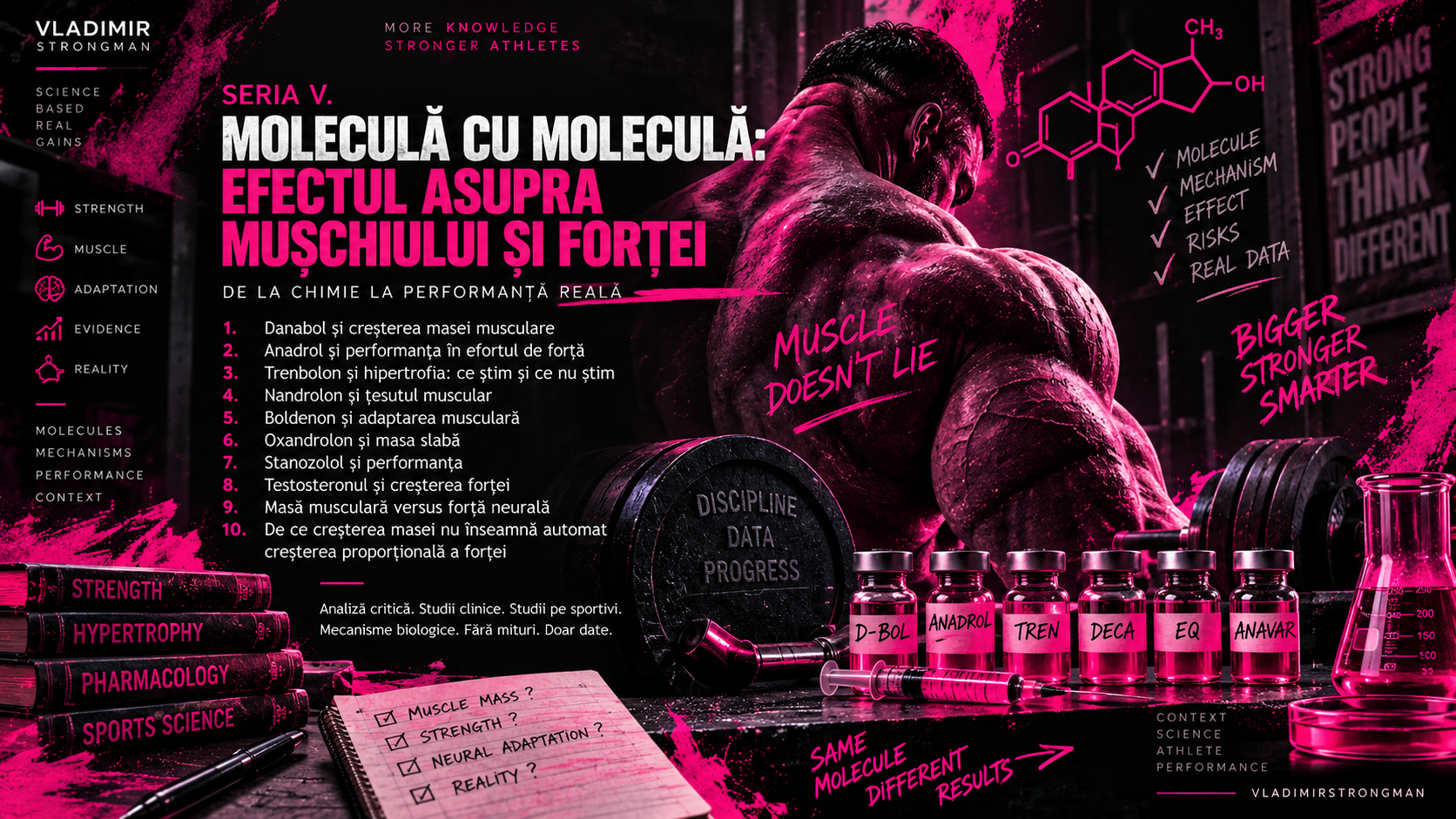
Stanozolol is one of the molecules that has developed a distinct reputation in strength sports and bodybuilding. It is associated with strength, lean mass and a “dry” look. But in this series we look beyond reputation and ask: what does the molecule actually do, and how do those effects translate into performance?
1. What is stanozolol?
Stanozolol is a synthetic anabolic-androgenic steroid structurally derived from dihydrotestosterone and modified to have its own pharmacological profile. Oral and injectable forms exist. The molecule is known for anabolic and androgenic activity and for being 17α-alkylated.
2. Why is it associated with performance?
Performance can change when an anabolic androgen alters lean mass, the muscular response to training and the capacity to produce force. Stanozolol is not a “performance switch,” however. The final result also depends on the nervous system, technique, training, nutrition and recovery.
3. The androgen receptor is the starting point
Stanozolol activates the androgen receptor. This activation can change gene expression and metabolism in androgen-responsive tissues. In muscle, androgen signaling can favor processes associated with maintaining and accumulating contractile proteins.
4. Lean mass is not identical to muscle mass
Lean mass includes all body components except fat. Water, glycogen, organs and other tissues contribute to the measurement. A rise in lean mass therefore cannot automatically be translated into an identical amount of new muscle fiber.
5. Where does the “dry” reputation come from?
Stanozolol is not aromatized to estradiol. In physique culture, this helped create the image of a compound that does not produce the same degree of water retention associated with androgens that generate more estrogenic activity. But “dry” describes appearance, not safety.
6. Appearance does not measure hypertrophy
A muscle with less visible fluid can look more defined even when the actual change in contractile tissue is smaller than the photograph suggests. Proper assessment of hypertrophy requires separating body composition, water, glycogen and muscle tissue.
7. Why can strength increase?
Strength is influenced by contractile mass, motor-unit recruitment, coordination, technique and exercise specificity. An anabolic androgen can support muscle development and adaptation to training, which can contribute to strength gains. There is no simple conversion of the form “a given pharmacological effect = a given percentage increase in strength.”
8. Stanozolol and contractile tissue
In an anabolic environment, the balance between protein synthesis and breakdown can become more favorable for tissue accumulation. This may contribute to maintaining and developing muscle mass. Hypertrophy, however, is a long-term process rather than an instant reaction to a molecule.
9. Stanozolol and recovery
In sports culture, stanozolol is sometimes described as a recovery aid. That claim needs careful handling. Better anabolic adaptation does not mean the nervous system, tendons, joints, sleep and cardiovascular system automatically recover at the same rate.
10. Being “stronger” does not automatically mean being “more performant”
Sport performance is multidimensional. In Strongman, absolute strength matters, but so do technique, speed, stability, repeated-effort capacity and the ability to maintain execution quality. A favorable change in one parameter does not guarantee improvement in all the others.
11. 17α-alkylation is important
Stanozolol is 17α-alkylated. This modification increases oral bioavailability and changes how the liver processes the molecule. This structural solution is one reason the hepatic profile of oral steroids in this class needs to be taken seriously.
12. The liver and stanozolol
Stanozolol can raise liver enzymes and is associated with clinical liver injury, including cholestatic forms. Feeling well does not guarantee that the liver is unaffected. Laboratory testing and clinical context matter more than subjective impressions.
13. Lipids: the hidden cost
Stanozolol can adversely alter the lipid profile, including lowering HDL. A more defined physique can coexist with a less favorable metabolic profile. The mirror and the lipid panel answer different questions.
14. The hormonal axis is affected
As an exogenous androgen, stanozolol can suppress LH and FSH through negative feedback and reduce endogenous testosterone production. Depending on the individual and exposure context, sexual function and fertility can also be affected.
15. Why lack of aromatization does not mean lack of systemic effects
Not being converted to estrogen does not mean being free of effects on the liver, lipids, blood pressure or endocrine axis. The absence of one effect does not erase the existence of others.
16. Stanozolol and tendons: a point that requires caution
Sport culture has long contained the idea that stanozolol can improve performance without a connective-tissue cost. But an increase in muscular force does not guarantee the same adaptation of connective tissues. A mismatch between force-producing capacity and tendon tolerance may increase injury vulnerability.
17. Strongman: where the advantage is visible and the cost is hidden
In Strongman, an increase in relative or absolute strength can have direct competitive value. But changes in liver markers, blood counts, lipids or endocrine function do not appear on the leaderboard. That is exactly why visible performance can make biological cost easier to ignore.
18. What can we say confidently about performance?
We can say that stanozolol has anabolic-androgenic activity and can influence lean mass and force-producing capacity. We cannot give a universal number for “how much strength” it produces in an athlete, because response depends on many variables and human evidence does not support a simple formula.
19. Efficacy versus physiological cost
This is one of the key ideas in pharmacology. A molecule can have a real anabolic effect while simultaneously changing other systems unfavorably. Serious evaluation does not ask only “does it work?” but also “what else changes along with the effect?”
20. What does a serious evaluation look like?
A complete assessment considers performance and body composition together with blood pressure, complete blood count and hematocrit, lipid profile, liver function, endocrine function and clinical symptoms. Performance should not be measured separately from health.
21. Episode 7 conclusion
Stanozolol shows why a molecule can have a simple sporting reputation and a much more complex pharmacology. Androgen signaling can favor lean mass and contribute to strength, while the lack of aromatization can influence appearance. At the same time, the liver, lipid profile and endocrine axis remain part of the equation. In pharmacology, “looks drier” is not synonymous with “safer.”
Safety note
This article is educational. It does not provide doses, cycles, combinations or instructions for non-medical use of stanozolol or other anabolic steroids. In organized sport, stanozolol is a prohibited substance under applicable anti-doping rules.
More From The Journal

Training
The Science of Strongman Training - Episode X: Competition Programming
How to build a complete Strongman competition preparation block: calendar, events, volume, intensity, specificity, simulations, autoregulation, tapering and fatigue management.

Training
The Science of Strongman Training - Episode IX: Peaking
Peaking in Strongman: how to turn months of training into maximal competition performance by reducing fatigue, preserving adaptations and managing specificity.