
Pharmacology
Molecule by Molecule: Effects on Muscle Growth and Strength - Episode 6: Oxandrolone and Lean Mass
September 7, 2026
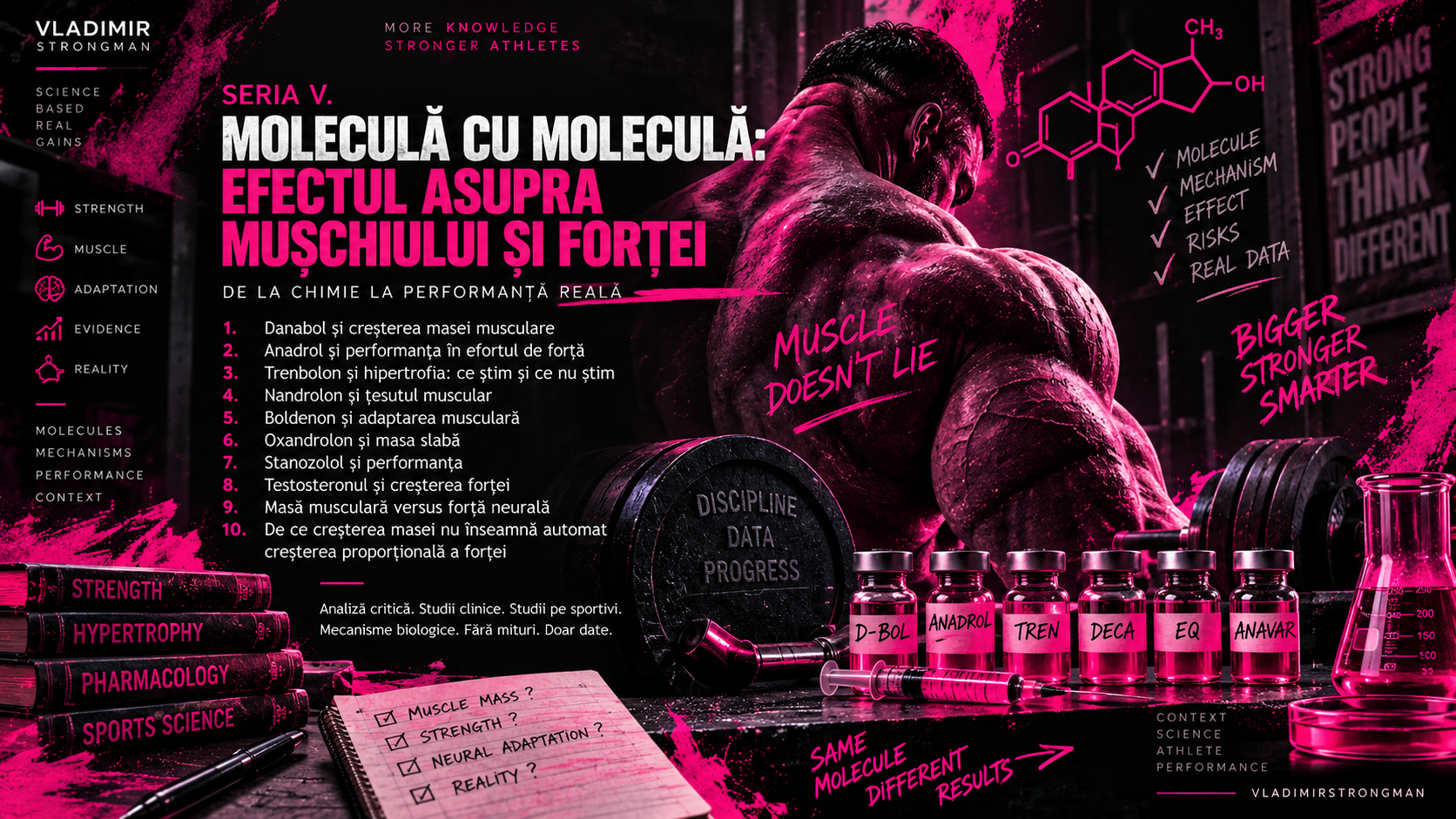
Oxandrolone is one of the molecules known for its reputation for supporting lean mass without dramatic increases in body weight. But, as throughout this series, sporting reputation must be separated from pharmacology. The question is: what actually changes in muscle tissue, and what does an increase in lean mass really mean?
1. What is oxandrolone?
Oxandrolone is a synthetic anabolic-androgenic steroid structurally derived from dihydrotestosterone. It is known for oral administration and for its particular pharmacological profile. In medicine, it has been used in settings where increasing weight and fat-free mass may be useful.
2. What does «lean mass» mean?
Lean mass includes everything that is not fat and therefore represents more than contractile muscle. Body water, glycogen, organs and other tissues are part of the measurement. A rise in lean mass should therefore not automatically be translated into an identical amount of new muscle fiber.
3. Why can oxandrolone support lean mass?
Oxandrolone activates the androgen receptor and can alter gene expression in androgen-responsive tissues. By changing anabolic signaling, it can favor processes that support the maintenance and accumulation of muscle proteins and other components of lean mass.
4. The androgen receptor is not a muscle button
Activating the androgen receptor does not instantly create hypertrophy. It initiates a series of processes that depend on tissue, metabolism, training, nutrition and time. The same molecule can therefore have different outcomes in different biological contexts.
5. Protein balance is essential
Muscle growth requires long-term accumulation of protein to exceed its loss. Training creates the mechanical stimulus, while amino acids, energy availability and recovery support the process. An androgen can shift the balance toward an anabolic state, but it cannot remove the role of the other components.
6. Oxandrolone and true hypertrophy
It is reasonable to say that oxandrolone can support increases in fat-free mass in certain clinical settings. It is less accurate to automatically turn that increase into an exact measure of contractile hypertrophy. To do that, we would need to know how much of the change represents muscle and how much represents the other components of lean mass.
7. Why does it look different from «mass» steroids?
Oxandrolone’s reputation also comes from the perception that it produces fewer obvious changes in body weight and fluid retention than some other compounds. Visually, this can make lean mass appear «cleaner». But «clean» is a physique-culture term, not a pharmacological category.
8. Oxandrolone and body water
Oxandrolone is not aromatized to estradiol, which helps explain part of its different profile compared with androgens that can generate more estrogenic activity. But lack of aromatization does not mean absence of effects on fluid balance or other systems.
9. Strength can increase without an explosion on the scale
Strength can rise through the combination of contractile mass, neural adaptation, technique and training specificity. Even if body weight changes only modestly, performance can still change. The relationship between mass and strength is not a straight line.
10. Lean mass and performance in strength sports
In strength sports, added body mass is not the only determinant of performance. Contractile mass, coordination, speed, technique and the ability to repeat quality efforts matter. A change in lean mass can contribute to performance, but does not explain it by itself.
11. An important feature: body weight does not have to explode
When fat-free mass increases more discreetly, the relationship between body weight and body composition can change without a dramatic transformation on the scale. For some sports, this characteristic may be more relevant than a blunt increase in kilograms.
12. But lean mass is not synonymous with contractile tissue
This is one of the most important distinctions in the episode. A DXA scan or another body-composition method can show an increase in fat-free mass, but that number alone cannot tell us exactly how much new contractile muscle tissue was formed.
13. Why does being a DHT derivative matter?
The DHT-derived structure changes receptor interactions and metabolism. Oxandrolone should not be treated as testosterone with a different label. Its structural modification is part of the reason its pharmacological profile has its own characteristics.
14. 17α-alkylation also changes the risk profile
Oxandrolone is 17α-alkylated, a modification that favors oral bioavailability and is also part of the explanation for the characteristic hepatic profile of oral steroids in this class. An anabolic muscular effect does not erase the potential hepatic cost of oral administration.
15. Lipids are an important part of the story
Oxandrolone can alter the lipid profile, including lowering HDL. For an athlete, a good training response and a favorable physique do not mean vascular health is moving in the same favorable direction.
16. The hormonal axis can be suppressed
As an exogenous androgen, oxandrolone can reduce LH and FSH through negative feedback, which can decrease endogenous testosterone production. Thus, a molecule that supports lean mass can simultaneously suppress normal endocrine function.
17. «Less water» does not mean «healthier»
A less swollen appearance may be aesthetically or sportingly attractive, but it is a visual characteristic. It is not a measure of hepatic, cardiovascular or endocrine health. Pharmacology has to be evaluated by systems, not by the mirror.
18. Oxandrolone and Strongman
In Strongman, competitive goals can favor both muscular mass and absolute strength. A molecule associated with increasing lean mass without a very large increase in body weight may appear interesting, but performance has to be separated from the compound’s systemic costs.
19. What can we say confidently about oxandrolone?
We can say that it is an anabolic androgen with real biological activity and that clinical data support its ability to increase fat-free mass in certain populations. We can also say that this effect should not be converted into a universal estimate of muscle hypertrophy in healthy athletes.
20. How should a change in lean mass be evaluated?
A serious evaluation combines body composition with performance, training history and systemic indicators. Body weight, circumferences and photographs can be useful, but none can identify on its own exactly which tissue changed.
21. Episode 6 conclusion
Oxandrolone shows why pharmacology should not be reduced to labels such as «dry», «mild» or «lean». The molecule can support increases in fat-free mass and may contribute to performance, but lean mass is not identical to contractile muscle tissue, and muscular benefit can coexist with hepatic, lipid and endocrine effects. When we analyze a molecule, we have to look at the muscle and the rest of the organism at the same time.
Safety note
This article is educational. It does not provide doses, cycles, combinations or instructions for non-medical use of oxandrolone or other anabolic steroids. In organized sport, oxandrolone is a prohibited substance under applicable anti-doping rules.
More From The Journal

Training
The Science of Strongman Training - Episode X: Competition Programming
How to build a complete Strongman competition preparation block: calendar, events, volume, intensity, specificity, simulations, autoregulation, tapering and fatigue management.

Training
The Science of Strongman Training - Episode IX: Peaking
Peaking in Strongman: how to turn months of training into maximal competition performance by reducing fatigue, preserving adaptations and managing specificity.