
Pharmacology
Molecule by Molecule: Effects on Muscle Growth and Strength - Episode 4: Nandrolone and Muscle Tissue
September 7, 2026
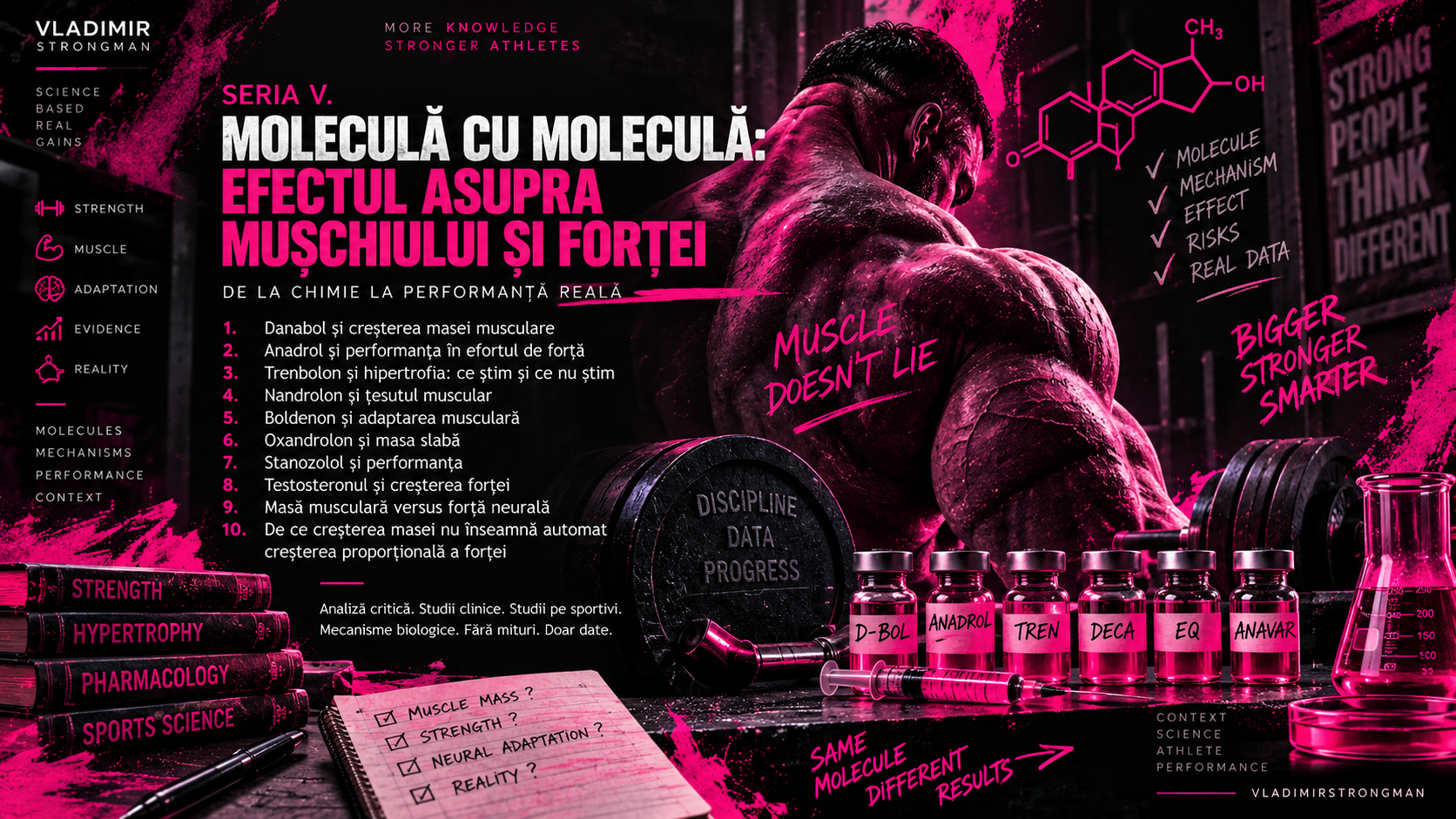
Nandrolone is one of the classic molecules in anabolic pharmacology. In sport, the name is associated with muscle mass, recovery and strength. But to understand the molecule, we need to go one level deeper: from the scale and competition platform down to muscle tissue. What actually changes inside the muscle?
1. What is nandrolone?
Nandrolone is a synthetic anabolic-androgenic steroid and a 19-nor derivative of testosterone. Its effects are primarily related to androgen-receptor activation and changes in signaling in androgen-responsive tissues. From this interaction begins a cascade of processes that can favor lean-tissue accumulation and muscular adaptation.
2. Muscle does not grow from a single signal
Hypertrophy results from a long-term balance between building and breaking down muscle components. Training provides the mechanical stimulus, nutrition supplies energy and amino acids, and recovery permits adaptation. Androgen signaling can change this environment and favor anabolic processes, but it does not replace the other pieces of the system.
3. The androgen receptor: the entry point
Nandrolone binds to the androgen receptor. Once activated, the receptor can influence expression of genes involved in protein synthesis and androgen-dependent tissue function. It is important not to confuse this mechanism with a direct command that says «grow muscle». The receptor initiates a biological program, and the final result depends on tissue, metabolism, exposure and physiological context.
4. What happens to muscle proteins?
When muscle protein balance becomes more favorable, contractile proteins and other structural components can accumulate. Over time, this process can contribute to greater muscle cross-sectional area and lean mass. This is one reason nandrolone has been studied in medical settings where loss of lean tissue is a problem.
5. Muscle tissue versus body weight
An increase in body weight cannot automatically be equated with contractile hypertrophy. Water, glycogen, muscle, bone and other compartments all contribute. To describe the effect on muscle correctly, we have to separate lean tissue from simple changes on the scale as much as possible.
6. Why does being a 19-nor matter?
The 19-nor structural modification changes how the molecule is metabolized and how tissues respond to it. Nandrolone should not be treated as testosterone with another name. Although both activate the androgen receptor, their metabolites and tissue behavior can produce distinct biological profiles.
7. Dihydronandrolone and tissue-specific differences
In some tissues, nandrolone can be converted by 5α-reductase to dihydronandrolone. This does not simply reproduce the testosterone-to-DHT pathway. Dihydronandrolone has different androgenic properties, and tissue-dependent metabolism helps explain the particular profile of nandrolone.
8. Why should this metabolic difference not be oversimplified?
The same molecule can generate different signals depending on which enzymes are present in a tissue. That is why an effect seen in muscle cannot automatically be transferred to the prostate, skin or other organs. Real pharmacology is tissue-dependent, not just compound-dependent.
9. Nandrolone and protein synthesis
An androgenic-anabolic environment can favor processes that support muscle-protein synthesis and maintenance. But hypertrophy is not a simple measurement of protein synthesis at one moment. The balance over days and weeks, tissue remodeling and repeated training stimulus all matter.
10. Satellite cells and muscle remodeling
Muscle adaptation also involves satellite cells, which participate in fiber repair and remodeling. Research on androgens indicates interactions with hypertrophy and regeneration processes, but it does not support a simple formula such as «more androgen = more satellite cells = exactly this much muscle». Muscle biology is much more dynamic.
11. Strength can rise with muscle tissue
More contractile tissue can increase the capacity to produce force. However, strength is also influenced by motor-unit recruitment, coordination, technique, leverage and training specificity. Nandrolone can change the environment supporting muscular development, but it does not automatically turn every performance gain into a purely muscular effect.
12. Recovery is not the same as healing
In performance culture, nandrolone is sometimes presented as a molecule that «heals joints». That wording goes beyond the available evidence. An athlete may perceive changes in comfort or training capacity, but that does not demonstrate structural regeneration of a tendon, cartilage or ligament.
13. Muscle tissue does not function in isolation
Muscle is part of a system. Increasing muscle mass changes loading on tendons and joints, energy requirements and cardiovascular demands. For that reason, substantial muscular growth can create competitive benefits while simultaneously increasing other demands on the organism.
14. Nandrolone can suppress the hormonal axis
An externally administered androgen signals androgen excess to the body. Through negative feedback, the hypothalamus and pituitary can reduce LH and FSH, and endogenous testosterone production falls. In the reproductive system, effects can include reduced spermatogenesis and impaired fertility.
15. Lipid profile and cardiovascular health
A favorable muscular effect does not exclude adverse effects on lipids and the cardiovascular system. Anabolic-androgenic steroids can lower HDL and alter other markers associated with atherogenic risk. Blood pressure and cardiac adaptations have to be considered separately from what happens to the biceps or thigh.
16. Nandrolone and fluid balance
Nandrolone can produce changes in fluid balance, and the perception of a «fuller» muscle is not a pure measurement of hypertrophy. Estrogen and other endocrine mechanisms may also contribute to changes in fluid compartments. Visual appearance alone should therefore not be used to quantify new muscle tissue.
17. What can we say with confidence about hypertrophy?
We can say that nandrolone has anabolic activity and that clinical and physiological data support its ability to favor increases in lean mass in certain contexts. We cannot turn that into a universal number of kilograms of muscle for every athlete. The response depends on the person, training, nutrition and exposure.
18. Why is gym experience not enough?
A photograph, a scale or a personal record shows an outcome, not the mechanism. Without body-composition assessment, control of diet and observation of multiple markers, we do not know how much of the change is muscle tissue and how much comes from other components. Individual experience can be real without being an experimental demonstration.
19. Nandrolone and Strongman
For Strongman, muscle mass and absolute strength have direct competitive value. That is why molecules with an anabolic reputation can become attractive within performance culture. But this exact setting can make it difficult to separate muscular benefit from effects on sleep, blood pressure, lipids, hormones and cardiovascular health.
20. Bigger muscle does not mean a healthier organism
This is the key idea of the episode. Muscle tissue can respond favorably to an anabolic signal while other systems respond unfavorably. A better performance profile on the platform is not the same thing as a better biological profile overall.
21. Episode 4 conclusion
Nandrolone is an excellent example of how an anabolic molecule can act at the level of muscle tissue. Androgen-receptor activation and changes in protein balance can favor lean-mass accumulation and muscular development. But hypertrophy is complex, and its muscular effect cannot be separated from metabolism, tissue-specific biology, the hormonal axis and the cardiovascular system. In pharmacology, muscle is only one of the rooms the molecule enters.
Safety note
This article is educational. It does not provide doses, cycles, combinations or instructions for non-medical use of nandrolone or other anabolic steroids. In organized sport, nandrolone is a prohibited substance under applicable anti-doping rules.
More From The Journal

Training
The Science of Strongman Training - Episode X: Competition Programming
How to build a complete Strongman competition preparation block: calendar, events, volume, intensity, specificity, simulations, autoregulation, tapering and fatigue management.

Training
The Science of Strongman Training - Episode IX: Peaking
Peaking in Strongman: how to turn months of training into maximal competition performance by reducing fatigue, preserving adaptations and managing specificity.