
Pharmacology
Molecule by Molecule: Effects on Muscle Growth and Strength - Episode 1: Danabol and Muscle Mass Gain
September 7, 2026
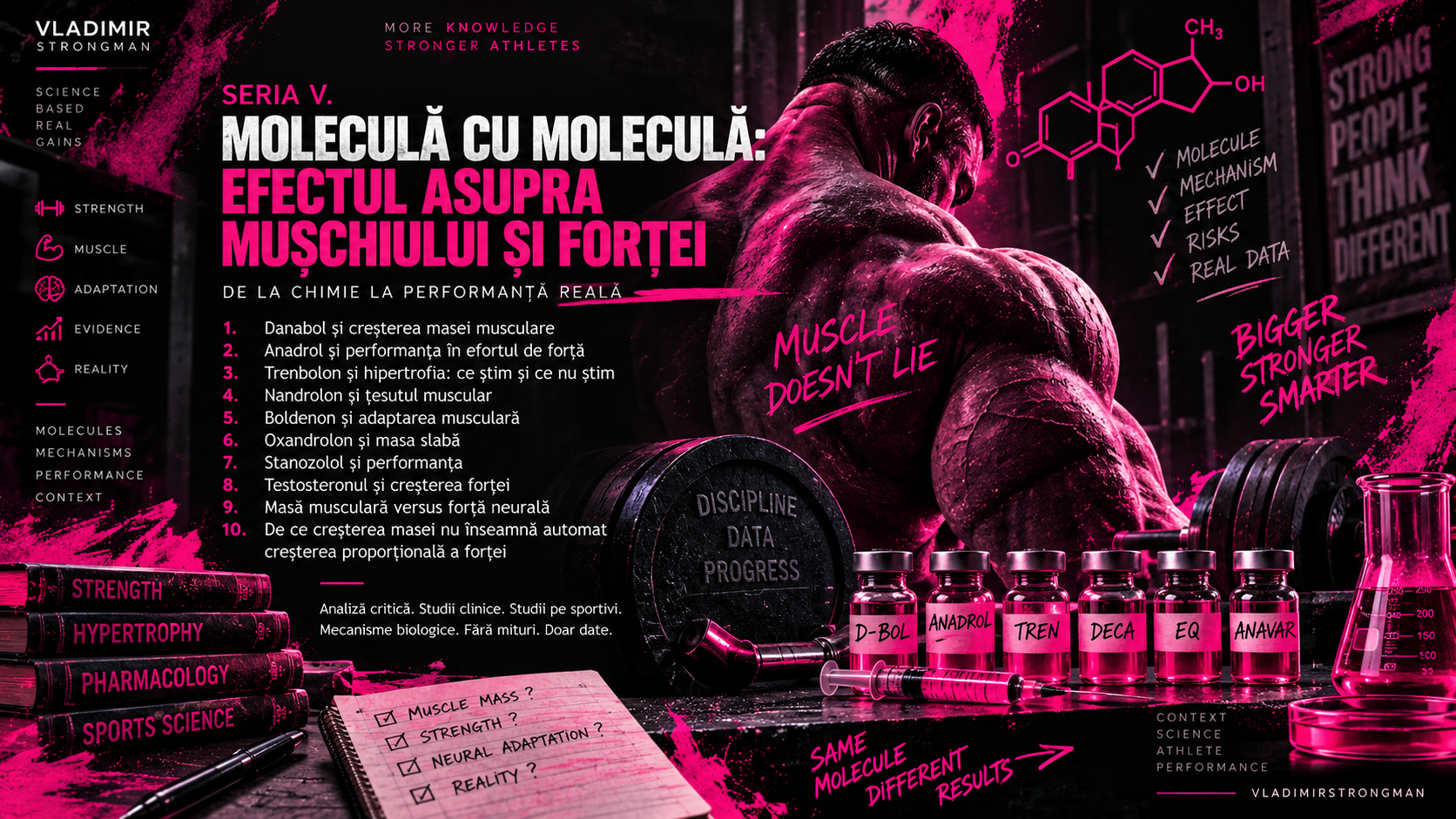
Danabol is one of the brand names associated with methandrostenolone, also known as methandienone. In this series, we do not treat it as a gym-forum label, but as a molecule. The question is simple: what happens in the body when this substance activates the androgen receptor and changes the anabolic environment?
1. What is Danabol?
Methandrostenolone is a synthetic anabolic-androgenic steroid structurally derived from testosterone. It was developed in the twentieth century and became widely known in sport under trade names such as Danabol. The molecule was designed to produce androgenic and anabolic effects, while its oral form matters for how it is absorbed and metabolized.
2. The first important idea: more body mass does not automatically mean new muscle tissue
When an athlete sees body weight rise quickly, the explanation is not necessarily an equivalent amount of newly built muscle fiber. Body weight can increase through a combination of muscle tissue, glycogen, intracellular water and other shifts in body compartments. The scale and muscle mass are therefore not synonyms.
3. The molecule meets the androgen receptor
Methandrostenolone binds to the androgen receptor. This receptor acts as a regulator of gene expression: after activation, it can alter transcription of genes involved in processes such as protein synthesis, development and maintenance of androgen-responsive tissues. There is no single switch called «muscle growth». It is a network of signals that shifts the balance between building and breakdown.
4. Protein synthesis is only one piece of the puzzle
Hypertrophy depends on muscle protein balance over time. An anabolic environment can favor synthesis of myofibrillar proteins and support accumulation of contractile tissue when mechanical training, sufficient energy, amino acids and recovery are also present. The steroid does not replace training. It changes the biological response to the context in which it is introduced.
5. Why can strength increase?
Strength gains can have several components. Some may come from greater muscle mass and a greater capacity to produce force. Some come from neural adaptations and from the quality of training an athlete can tolerate. Increased body mass can also change the mechanics of certain lifts. Therefore, a rise in strength over a given period cannot be assigned to a single cause.
6. Nitrogen and the idea of an anabolic state
Proteins contain nitrogen, and nitrogen balance is influenced by the relationship between synthesis and breakdown. In classic androgen research, greater nitrogen retention was associated with an anabolic environment. But nitrogen balance is a physiological marker, not a direct measurement of how many grams of muscle are built in a day. The body is more complicated than a two-column spreadsheet.
7. Water and glycogen can rapidly change appearance and body weight
Part of a rapid increase in body weight may come from water and changes in glycogen stores. Glycogen is stored with water, and changes in carbohydrate intake, training and hormonal status can quickly change perceived muscle volume. This helps explain why an athlete can look fuller and weigh more before a large proportion of structural muscle change can be quantified.
8. Why Danabol is associated with «mass»
Its reputation as a «mass» steroid comes from the combination of anabolic activity, the relatively rapid response reported by users and changes in body weight that can occur over a relatively short period. In gym language, all of this is compressed into the word «mass». Pharmacologically, however, we should separate muscle hypertrophy, glycogen, water and other changes in body composition.
9. Why is the effect not linear?
Biological response does not rise indefinitely with exposure. Receptors, metabolism, target tissues, endocrine feedback and physiological costs all limit the outcome. Individual differences can also be large. This is a central pharmacology principle: more biological effect does not necessarily mean more net benefit.
10. Estrogen complicates the picture
Methandrostenolone can aromatize, so part of its physiological profile is also related to estrogenic metabolites. Increased estrogen can contribute to fluid retention and influence other systems, including the hormonal axis. Saying simply «it is anabolic» while ignoring estrogen means leaving out an important part of the story.
11. 17-alpha-alkylation changes the pharmacology
Methandrostenolone is 17α-alkylated, a structural modification that enables oral administration and changes first-pass hepatic handling. That pharmacological solution also comes with a cost: the liver is exposed to a compound that is not simply equivalent to naturally produced testosterone taken by mouth. This is why hepatotoxicity matters in the discussion of oral 17α-alkylated anabolic steroids.
12. Why «it builds muscle» does not mean «it is safe»
This is probably the most important distinction of the episode. A drug can increase protein synthesis and performance while simultaneously affecting other systems. Anabolic benefit and physiological cost can coexist. One does not cancel the other.
13. The hormonal axis can be suppressed
When the body receives an external androgenic signal, the hypothalamus and pituitary reduce signals that stimulate its own testosterone production. LH and FSH can fall, with reduced testicular production as a consequence. The severity and duration of suppression vary between individuals and depend on the compound, exposure and context.
14. Lipids and cardiovascular risk
Androgenic steroids can alter the lipid profile, and oral 17α-alkylated compounds are known for the potential to lower HDL and increase other atherogenic markers. Over time, this can matter for cardiovascular health. Today’s strength is not a guarantee of tomorrow’s vascular health.
15. The liver is not a secondary detail
Oral administration and 17α-alkylation make the liver a central part of the risk profile. Liver enzymes may rise and other forms of hepatic stress can occur. Laboratory results should be interpreted in medical context, not by the simplistic rule «if I feel fine, my liver is fine».
16. Hematocrit and blood pressure
Androgens can stimulate erythropoiesis, potentially increasing hemoglobin and hematocrit. At the same time, fluid retention and other physiological changes can affect blood pressure. These effects matter more when combined with other cardiovascular risk factors.
17. Why «more powerful» is not the same question as «better»
If a compound produces an obvious increase in body weight or strength, that does not automatically answer whether it offers the best benefit-risk balance. Modern pharmacology separates efficacy, potency, exposure and toxicity. For an athlete, the cost of an adverse effect may matter more than the size of the anabolic effect.
18. Danabol and Strongman
In Strongman, body mass and absolute strength obviously matter, which helps explain why steroids with a reputation for rapid mass gain have become part of performance culture. But competition does not rewrite physiology. The heart, liver, lipid profile and hormonal axis do not receive the contest rulebook.
19. What can we accurately say about the «mass» gained?
We can say that an androgenic-anabolic environment can favor accumulation of lean mass when training stimulus and nutritional resources are present. We cannot say that every kilogram gained is a kilogram of new muscle fiber. To assess that, multiple variables matter: body composition, water retention, glycogen, performance and the real change in lean mass over time.
20. Episode 1 conclusion
Danabol is a useful example for understanding the difference between gym language and pharmacology. At the molecular level, it is an anabolic-androgenic steroid that activates the androgen receptor, can support anabolic processes and can favor increases in mass and strength. At the organism level, however, there can also be effects on the liver, lipids, blood pressure and the hormonal axis. «It builds mass» describes one part of the effect, not the entire drug.
Safety note
This article is educational. It does not provide dosing schedules, combinations or instructions for non-medical use of anabolic steroids. In organized sport, methandrostenolone is a prohibited substance under applicable anti-doping rules.
More From The Journal

Training
The Science of Strongman Training - Episode X: Competition Programming
How to build a complete Strongman competition preparation block: calendar, events, volume, intensity, specificity, simulations, autoregulation, tapering and fatigue management.

Training
The Science of Strongman Training - Episode IX: Peaking
Peaking in Strongman: how to turn months of training into maximal competition performance by reducing fatigue, preserving adaptations and managing specificity.