
Nutrition
Series: Micronutrients: The Small Things That Keep the Engine Alive - Episode 6: Potassium and Cellular Balance
September 10, 2026
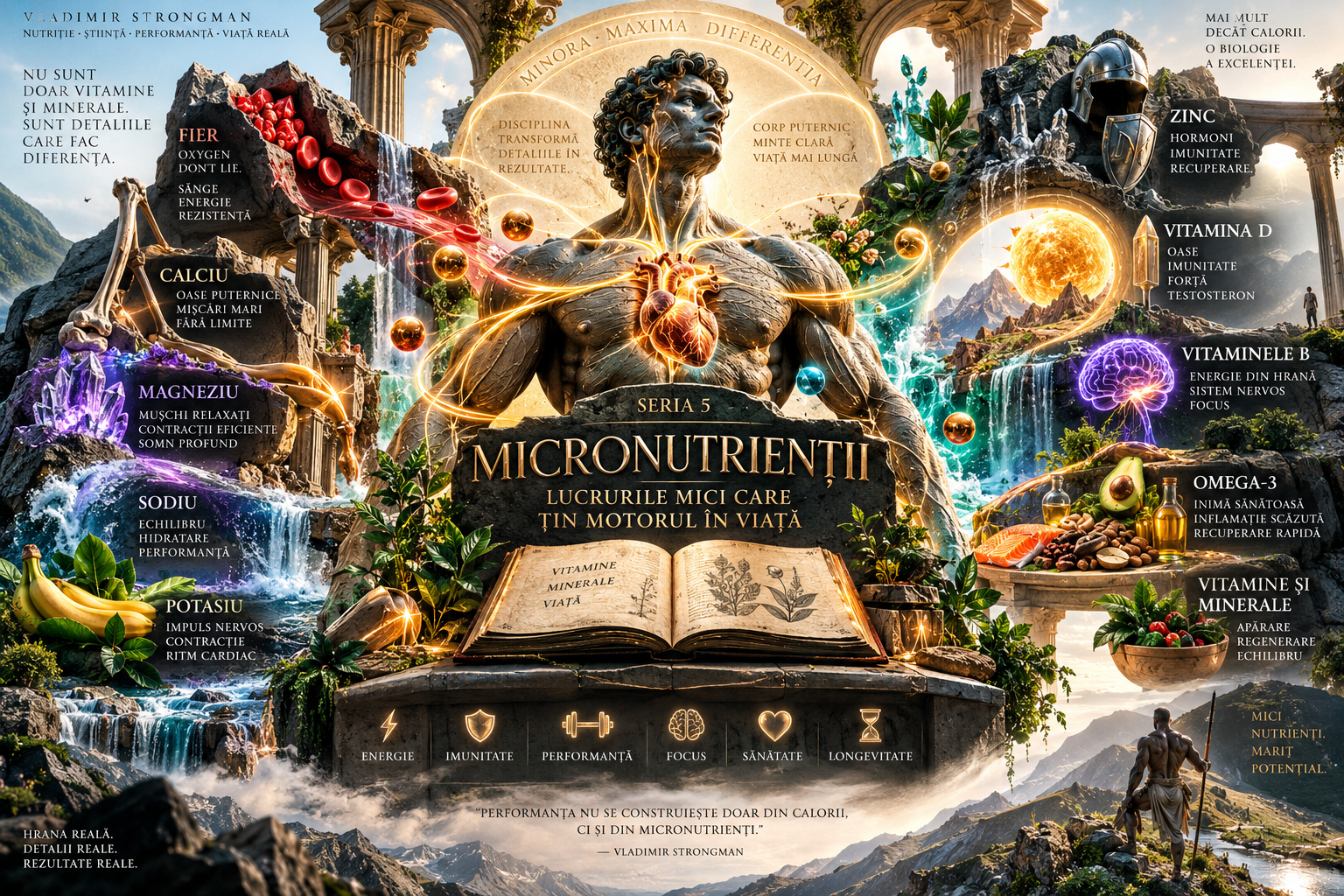
If sodium dominates the extracellular space, potassium is the ion found predominantly inside the cell. This separation is not a textbook curiosity. It is one of the basic conditions that allows nerves to transmit impulses and muscles to contract. Without the sodium-potassium gradient, the cell membrane would lose a crucial part of its electrical function.
For strength athletes, potassium matters mainly through neuromuscular excitability, fluid balance and restoration of ionic gradients after repeated contractions. Its role may be less obvious in a single maximal lift, but it becomes more relevant during repetition events, medleys, carries and long competition days.
This episode follows potassium from the diet to the muscle fiber. We will examine where it is stored, how it works with sodium, what happens during intense exercise, why both deficiency and excess can be dangerous, and how intake should be viewed in practical strength-sport nutrition.
1. Potassium is the major intracellular cation
Most body potassium is located inside cells. Skeletal muscle is an important reservoir because muscle mass contains a large proportion of total body potassium. By contrast, blood potassium concentration is maintained within a very narrow range.
The difference between intracellular and extracellular concentrations creates an electrochemical gradient. Nerve and muscle membranes use this gradient to generate and restore the electrical potential required for normal function.
2. Sodium and potassium form a functional pair
Sodium is predominantly extracellular and potassium predominantly intracellular. This opposition contributes substantially to membrane potential. The two minerals should not be viewed in isolation because the function of each depends on maintaining the distribution of the other.
3. The Na+/K+-ATPase maintains the gradient
The sodium-potassium pump uses ATP to move three sodium ions out of the cell and two potassium ions into it. This process consumes energy but is essential for preserving concentration differences between the intracellular and extracellular compartments.
In muscle, the pump contributes to restoring electrical conditions after repeated activation. The more intensely and frequently the fiber is activated, the more important maintenance and restoration of ion gradients become.
4. Potassium directly contributes to repolarization
After membrane depolarization, potassium leaving the cell contributes to repolarization. In simple terms, potassium helps the membrane return toward its resting electrical state so that another impulse can be generated.
5. During intense exercise, potassium temporarily moves out of the muscle fiber
During repeated contractions, some potassium temporarily leaves muscle fibers and accumulates in the extracellular space. This shift can alter membrane excitability and contributes to peripheral fatigue.
After exercise, potassium is transported back into cells, partly through Na+/K+-ATPase activity. The potassium that leaves the fiber during contraction is therefore often redistributed rather than permanently lost from the body.
6. Muscle fatigue is not only an ATP problem
Fatigue is often discussed only in terms of energy depletion. In reality, muscle function also depends on membrane excitability, calcium handling and ion control. Changes in extracellular potassium are part of this broader fatigue equation.
7. Hypokalemia can seriously impair neuromuscular function
Hypokalemia means a low blood potassium concentration. It can result from gastrointestinal losses, certain medications, kidney disorders or other medical causes. Muscle weakness, cramps and cardiac rhythm disturbances may occur when the deficit becomes significant.
8. Hyperkalemia can be equally dangerous
Excess potassium in the blood, called hyperkalemia, can seriously disturb the electrical activity of the heart. Aggressive potassium supplementation is therefore not a harmless sports strategy and should not be confused with eating potassium-rich foods.
9. Sweat contains potassium, but sodium loss is usually much greater
Potassium is lost in sweat, but its concentration is generally much lower than sodium. For most athletes, normal food intake is sufficient to replace potassium, particularly when the diet includes fruits, vegetables, potatoes, dairy products and legumes.
10. More muscle also means a larger potassium reservoir
Strength athletes often carry large amounts of skeletal muscle, and muscle contains substantial intracellular potassium. This does not mean dietary requirements should automatically scale directly with body mass, but it illustrates how deeply potassium is embedded in muscle physiology.
11. Insulin influences potassium distribution
Insulin stimulates potassium uptake into cells. The effect is strong enough to be used medically in some cases of hyperkalemia. Physiologically, meals and hormonal changes can therefore temporarily influence potassium distribution between blood and tissues.
12. Acid-base balance can change plasma potassium
Acid-base disturbances can shift potassium between compartments. A blood value therefore reflects not only total body potassium but also how potassium is distributed at the moment of testing.
13. The kidneys regulate long-term potassium balance
The kidneys are the main regulators of potassium excretion. They adjust losses according to intake, hormones and physiological needs. Normal kidney function is one reason why potassium-rich foods are well tolerated by most healthy people.
14. Aldosterone links sodium and potassium regulation
Aldosterone promotes sodium reabsorption and potassium excretion in the kidneys. Sodium and potassium homeostasis are therefore hormonally connected, and changes in the renin-angiotensin-aldosterone system can influence both.
15. Normal food is the main source of potassium
Rich sources include potatoes, legumes, fruits, vegetables, dairy products, meat and many whole foods. A varied diet with adequate energy intake can provide substantial potassium without concentrated supplements.
16. Highly processed diets can be high in sodium and low in potassium
A diet dominated by ultra-processed foods may deliver abundant sodium while providing relatively little potassium. Minimally processed foods, especially plant foods and legumes, tend to provide more potassium. The relationship between the two minerals often says more about dietary quality than either one alone.
17. Potassium and blood pressure
Adequate dietary potassium is associated with better blood-pressure control, particularly as part of a diet rich in fruits and vegetables. Cardiovascular health remains relevant to strength athletes even when performance is the primary goal.
18. A single laboratory value does not tell the whole story
Serum potassium must be interpreted medically. Difficult blood draws, sample hemolysis, medications, kidney function and acid-base status can affect the result. An isolated number should not automatically be turned into a conclusion about diet.
19. In strongman, relevance increases as efforts repeat
A single maximal lift lasts only seconds. A log press for repetitions, deadlift for repetitions, yoke-to-farmers medley or loading event exposes muscle fibers to repeated electrical activation. In these situations, maintaining excitability and restoring ion gradients become a more visible part of fatigue physiology.
20. Potassium is not a strength supplement
When potassium status is normal, arbitrarily adding more does not make an athlete stronger. Potassium's role is to permit normal cellular function. Correcting deficiency matters, but exceeding physiological needs does not automatically produce additional performance benefits.
21. Conclusion: potassium is the mineral of intracellular balance
Potassium sits at the center of electrical function in muscle cells. Through its relationship with sodium and Na+/K+-ATPase activity, it contributes to membrane potential, repolarization and the ability of the fiber to respond repeatedly to neural impulses.
For strength athletes, the practical message is simple: eat a varied diet rich in whole foods and natural potassium sources, avoid concentrated supplementation without a clear reason, and treat abnormal blood potassium as a medical issue rather than a casual sports-nutrition detail.
Selected bibliography
Institute of Medicine. Dietary Reference Intakes for Water, Potassium, Sodium, Chloride, and Sulfate. Palmer BF, Clegg DJ. Physiology and pathophysiology of potassium homeostasis. Clausen T. Na+-K+ pump regulation and skeletal muscle contractility. McKenna MJ et al. Potassium, Na+/K+-ATPase and fatigue in skeletal muscle. World Health Organization. Guideline: Potassium intake for adults and children.
More From The Journal

Training
The Science of Strongman Training - Episode X: Competition Programming
How to build a complete Strongman competition preparation block: calendar, events, volume, intensity, specificity, simulations, autoregulation, tapering and fatigue management.

Training
The Science of Strongman Training - Episode IX: Peaking
Peaking in Strongman: how to turn months of training into maximal competition performance by reducing fatigue, preserving adaptations and managing specificity.