
Nutrition
Series: Micronutrients: The Small Things That Keep the Engine Alive - Episode 2: Iron, Hemoglobin and Oxygen Transport
September 10, 2026
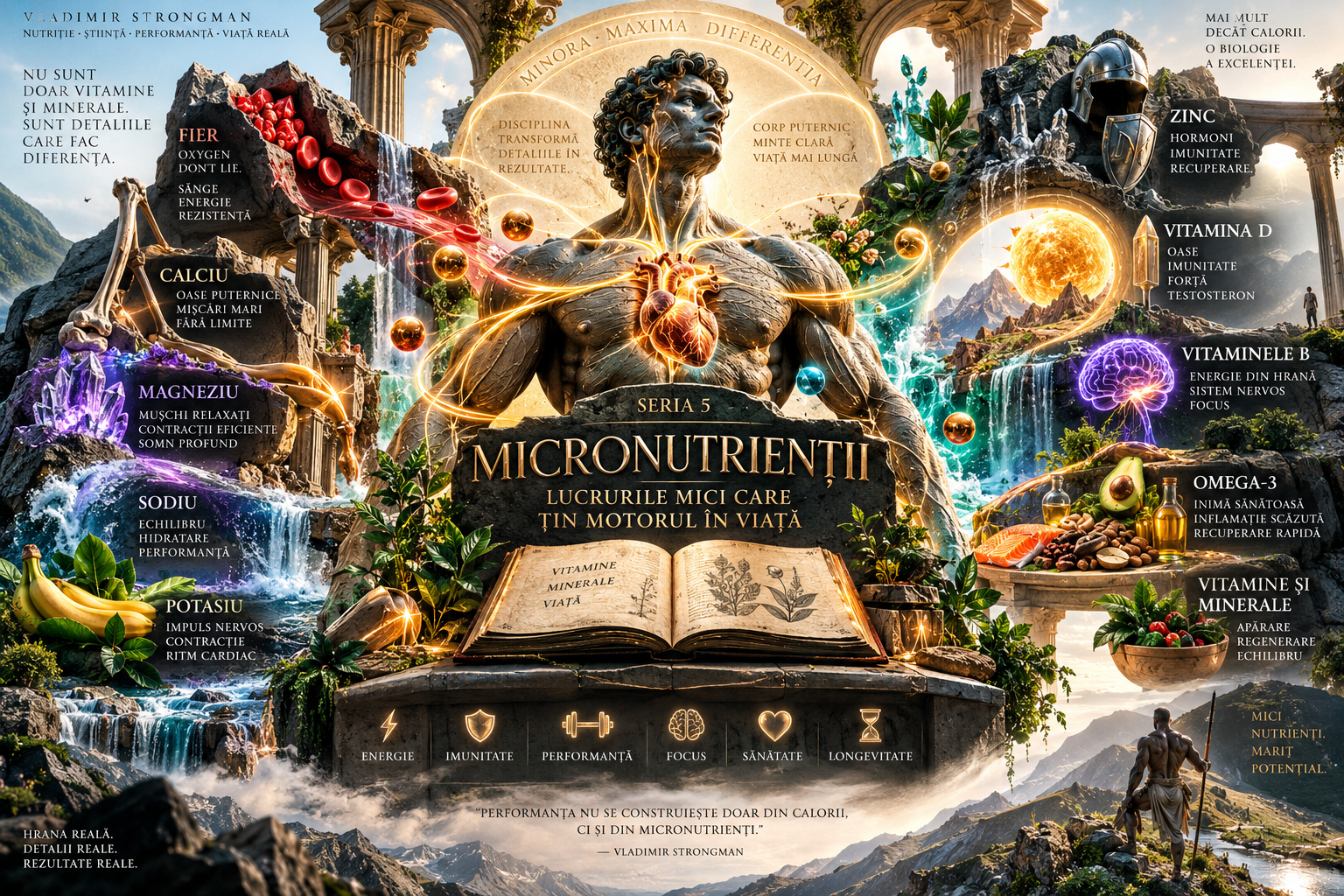
Iron is one of the clearest examples of how a micronutrient can control enormous physiological processes without providing a single calorie. In small amounts, it becomes part of hemoglobin, myoglobin and many enzymes. If its availability falls far enough, the body may have plenty of carbohydrate, fat and protein, yet its capacity to transport and use oxygen begins to suffer.
For a strength athlete, the subject may initially sound more relevant to runners or cyclists. Strongman, however, is not only a one-repetition maximum. Yoke, farmers walk, medleys, loading events, truck pulls and heavy repetition events demand repeated energy production, recovery between bouts and enough cardiovascular capacity to keep working muscle supplied with oxygen.
This episode follows iron from the plate to the red blood cell. We will explain heme and non-heme iron, intestinal absorption, transferrin, ferritin, hepcidin, erythropoiesis, hemoglobin, anemia and laboratory interpretation. We will also see why iron supplementation makes sense when a real need exists, but is not a method for turning an iron-replete athlete into a version with “extra oxygen.”
1. Iron is a small mineral with an enormous responsibility
Iron is a trace element, meaning the body requires much less of it than sodium, potassium or calcium. Its importance is not proportional to its mass. The iron atom can reversibly move between oxidation states, a property that makes it useful for electron-transfer reactions and for binding oxygen within specialized proteins.
The same property explains why iron must be tightly controlled. Excess free iron can participate in reactions that generate reactive oxygen species. The body therefore prefers to transport and store iron bound to proteins rather than allowing large amounts of unbound metal to circulate freely.
2. Hemoglobin is the main vehicle for oxygen
Most functional iron in the body is located in hemoglobin, the protein inside red blood cells that transports oxygen from the lungs to tissues. Each hemoglobin molecule contains heme groups with iron atoms capable of binding oxygen reversibly. Without enough available iron, normal hemoglobin synthesis becomes increasingly difficult.
3. Red blood cells are specialized containers for hemoglobin
Mature red blood cells are highly specialized cells. They lose their nucleus and many organelles to create as much space as possible for hemoglobin. Their biconcave shape favors gas exchange and passage through narrow capillaries. Iron does not create red blood cells by itself, but it is indispensable for loading them with functional hemoglobin.
4. Oxygen binds to iron, but the whole molecule controls the process
Oxygen binds to ferrous iron in the heme group, yet hemoglobin behavior depends on the entire protein structure. Oxygen affinity changes with pH, carbon dioxide, temperature and other factors. This allows hemoglobin to load oxygen efficiently in the lungs and release it more readily in metabolically active tissues.
5. From lung to muscle: the route of oxygen
Inhaled oxygen reaches the alveoli, crosses into blood, binds predominantly to hemoglobin and travels through the circulation. In working muscle, lower oxygen tension and the local metabolic environment favor oxygen release. Oxygen then diffuses toward muscle fibers and mitochondria, where it participates in aerobic ATP production.
6. Myoglobin is the muscle's local oxygen-binding protein
Myoglobin is a heme-containing protein found especially in muscle. It binds oxygen and helps maintain its local availability when demand rises. It does not replace hemoglobin, but complements the transport system. Iron therefore contributes both to central oxygen delivery through blood and to oxygen handling inside muscle tissue.
7. Iron also works inside mitochondria
Iron's role does not end when oxygen reaches muscle. Iron-containing proteins and iron-sulfur clusters participate in the mitochondrial electron transport chain. Electrons derived from metabolism move through this system to create the gradient used for ATP synthesis. Iron deficiency can therefore impair oxygen utilization as well as oxygen transport.
8. Heme and non-heme iron are absorbed differently
Foods provide iron in different forms. Heme iron comes mainly from meat and other animal tissues and is handled differently from non-heme iron found in plants, fortified foods and part of the iron in animal foods. Heme iron generally has greater bioavailability and is less affected by the composition of the meal.
9. Non-heme iron depends heavily on meal context
Non-heme iron must be converted and transported through intestinal mechanisms that are sensitive to meal composition. Acidity, vitamin C and other compounds can enhance absorption, while phytates and certain polyphenols can reduce it. This does not mean plant foods “contain no usable iron,” but it does mean bioavailability matters.
10. Absorption occurs mainly in the proximal small intestine
The duodenum and proximal small intestine are the main sites where dietary iron enters intestinal cells. The body has no powerful active pathway for excreting excess iron, so regulation of absorption is crucial. How much iron enters the body can matter almost as much as how much iron appears on the nutrition label.
Two people eating the same amount of iron can therefore absorb different amounts. Existing iron stores, inflammation, hepcidin, iron form and meal composition all change the absorbed fraction. Dietary recommendations are inevitably approximations of a dynamic biological system.
11. Ferritin is the main laboratory window into iron stores
Ferritin is a protein that stores iron inside cells. Serum ferritin is commonly used as an indirect marker of iron reserves. A low value can indicate depleted stores before hemoglobin falls. Ferritin is also an acute-phase protein, however, and can rise during inflammation, which complicates interpretation.
12. Transferrin carries iron through the blood
Transferrin is the main plasma iron-transport protein. It binds iron and delivers it to tissues, including bone marrow, where it is needed for hemoglobin synthesis. This system minimizes unbound iron and allows controlled distribution of the mineral to cells that need it.
13. Transferrin saturation shows how loaded the transporter is
Transferrin saturation represents the proportion of transferrin binding sites occupied by iron. It provides information different from ferritin. Ferritin tells us more about storage, while transferrin saturation reflects circulating iron availability for transport. Interpreted together, these values are more informative than either one in isolation.
14. Serum iron alone is a temperamental marker
Serum iron can vary with time of day, food intake and other conditions and does not directly measure body stores. A reassuring result on one morning does not rule out iron deficiency, and one low result does not establish the diagnosis. Serious assessment therefore uses a panel of markers and clinical context.
15. Hepcidin is the gatekeeper of iron metabolism
Hepcidin is a hormone produced mainly by the liver and is one of the principal regulators of iron homeostasis. When hepcidin rises, intestinal iron absorption and release of stored iron decrease. When hepcidin is low, the body more readily allows iron to enter circulation and to be mobilized from stores.
16. Ferroportin is the gate hepcidin can close
Ferroportin is the protein that exports iron from intestinal cells and certain storage cells into the blood. Hepcidin binds ferroportin and promotes its internalization and degradation. The result is straightforward: more iron remains trapped inside cells and less becomes available in circulation.
17. Inflammation can hide iron from the body
Inflammation stimulates hepcidin. From an evolutionary perspective, restricting circulating iron can reduce microbial access to this nutrient. For an athlete, however, inflammation can create a situation in which iron exists in stores but is less available for erythropoiesis. This is why elevated ferritin during inflammation does not automatically mean excellent iron status.
18. Heme iron is generally absorbed more efficiently
Red meat, organ meats and other animal foods provide heme iron in a relatively accessible form. Its absorption is less affected by phytates and polyphenols than non-heme iron absorption. This efficiency does not justify unlimited intake of fatty or processed meat; the iron source still has to be judged within the whole dietary pattern.
19. Plant iron can still contribute substantially
Legumes, fortified cereals, tofu, seeds and some leafy vegetables can provide meaningful amounts of non-heme iron. For people who eat few animal foods, meal composition and dietary variety become more important. A plant-based diet can meet iron needs, but bioavailability and biological markers deserve greater attention when risk is elevated.
20. Vitamin C can enhance non-heme iron absorption
Vitamin C can improve non-heme iron absorption by maintaining iron in a more soluble chemical form and forming complexes favorable to uptake. In practical terms, pairing legumes or grains with peppers, citrus fruit, kiwi, berries or other vitamin C sources can increase the amount of meal iron that becomes available.
This does not mean every meal needs to become a laboratory experiment. In a varied diet, meals balance one another. But for someone eating mostly plant sources or already carrying low iron stores, meal-combination details can become more relevant.
21. Phytates and polyphenols can reduce non-heme iron absorption
Phytates in grains, legumes and seeds and certain polyphenols in tea or coffee can bind non-heme iron and reduce absorption within a meal. The effect depends on dose and context. These foods offer many benefits, so the answer is not to eliminate them but to organize key meals intelligently when iron status is a concern.
22. Calcium interacts with absorption, but the long-term effect is complex
Large calcium doses taken with a meal can transiently reduce iron absorption, but the long-term effect on iron status is less dramatic than internet discussions sometimes imply. A strength athlete should not sacrifice calcium intake and bone health out of fear that every serving of dairy will “block” iron.
23. The body recycles iron extremely efficiently
The body does not rely solely on iron absorbed each day. Aging red blood cells are broken down by macrophages, and their iron is recovered and reused. This recycling supplies a very large share of the iron needed each day for erythropoiesis. Diet replaces losses and maintains stores rather than rebuilding the entire system from scratch every morning.
24. Iron losses are small but continuous
Iron is lost through shedding of skin and intestinal cells, small amounts in urine and other secretions, and in some people through blood loss. Because the body lacks a major active excretion pathway, these losses are normally limited. Conditions that increase blood or tissue loss can nevertheless shift iron balance quickly.
25. Sweat contributes a little, but athletes sweat a lot
Small amounts of iron can be lost in sweat. For most people this is not the dominant route of loss, but athletes with large training volumes and heavy sweating can accumulate several small loss pathways. This is not a reason for automatic supplementation, only one factor in an overall risk assessment.
26. The gastrointestinal tract can become a source of loss
Very intense or prolonged exercise can contribute to gastrointestinal microtrauma and occult blood loss in some athletes, especially in endurance sports. In strongman this mechanism is usually less dominant, but digestive symptoms, frequent anti-inflammatory drug use and medical gastrointestinal problems can make occult loss clinically relevant.
27. Exercise hemolysis exists, but not all sports produce it equally
Repeated running can produce hemolysis partly through mechanical foot-strike, while exercise can affect red blood cells through other mechanisms as well. For strongman this route is generally less important than for a marathon runner, but the larger lesson remains: athletic training can increase iron turnover through several processes at the same time.
28. Menstruation is a major risk factor for iron deficiency
Athletes who menstruate lose iron through blood, and heavy menstrual bleeding can substantially increase deficiency risk. This is one reason iron deficiency is more common in many female athlete cohorts. Assessment should still be individualized rather than assumed solely from sex or sport.
29. Blood donation directly removes red blood cells and iron
A blood donation physically removes red blood cells and iron from the body. Plasma volume recovers faster than red cell mass and iron stores. For an athlete, blood donation can be a valuable act, but its timing relative to competition and the athlete's iron status deserves medical consideration.
30. Altitude increases the demand for erythropoiesis
At altitude, lower oxygen availability stimulates erythropoietin and can increase red blood cell production. That process requires iron. Athletes using altitude camps are therefore often assessed for iron status before exposure. An athlete with inadequate stores cannot build hemoglobin efficiently simply because the erythropoietic signal is strong.
31. Training can temporarily alter iron-related markers
Exercise acutely changes plasma volume, inflammation and hepcidin. The timing of a blood draw can therefore influence interpretation. A laboratory panel taken immediately after a brutal training block should not be compared naively with one collected under rested conditions without considering the context.
32. Hepcidin often rises 3-6 hours after exercise
Research in athletes frequently shows a rise in hepcidin roughly three to six hours after an exercise session. During this window, iron absorption and release from stores can be reduced. This phenomenon helps explain why meal and supplement timing may matter when a documented deficiency is being medically treated.
33. Timing iron intake can matter in selected situations
If an athlete has confirmed deficiency and has been advised to supplement, timing may be selected to avoid periods of elevated hepcidin and unfavorable food interactions. This is a treatment detail, not an invitation to self-medicate. Diagnosis, the cause of deficiency and gastrointestinal tolerance matter more than optimizing the minute of administration.
34. Energy and carbohydrate availability can influence the exercise response
Low energy availability and insufficient carbohydrate can amplify physiological stress from training and may influence inflammatory and hepcidin responses. Iron status should not be separated completely from the rest of the diet. Sometimes the problem is not only “too little iron” but a nutrition plan that does not support the athlete's actual workload.
35. Iron deficiency develops in stages
Iron stores can begin to fall before hemoglobin is affected. As deficiency progresses, iron availability for erythropoiesis declines and iron-deficiency anemia may eventually develop. This sequence explains why normal hemoglobin does not automatically guarantee that iron stores are adequate.
36. Iron deficiency without anemia is real
An athlete can have low ferritin and depleted stores while hemoglobin remains within the normal range. This is commonly described as iron deficiency without anemia. Its performance significance varies with severity and the individual, but it should not be dismissed simply because hemoglobin has not yet fallen.
37. Erythropoiesis becomes constrained when available iron is inadequate
Bone marrow continuously produces red blood cells. To synthesize hemoglobin, it needs iron delivered by transferrin. When available iron becomes inadequate, new red blood cells may contain less hemoglobin and become smaller. These changes can appear in the red-cell indices of a complete blood count.
38. Iron-deficiency anemia is the stage where oxygen transport clearly suffers
In iron-deficiency anemia, hemoglobin falls enough to reduce the oxygen-carrying capacity of blood. Symptoms can include fatigue, shortness of breath on exertion, palpitations, reduced work tolerance and poorer recovery. Diagnosis should not be made from symptoms alone because many other problems can produce the same picture.
39. Fatigue does not automatically mean iron deficiency
A tired athlete may have inadequate sleep, excessive training load, infection, low energy availability, thyroid disease, anemia from another cause or simply a very demanding training period. Iron is only one piece of the diagnostic puzzle. Taking iron “to see whether it helps” can delay identification of the real cause.
40. Non-anemic iron deficiency can affect performance, but severity matters
Studies suggest athletes with the lowest iron stores have the greatest potential to benefit when deficiency is corrected. In iron-replete people, performance benefits from supplementation are far less convincing. This makes physiological sense: correcting a limitation can restore function, while adding iron beyond need does not create a new superpower.
For strongman, effects may be felt through the ability to tolerate training volume, recover between sets and events, manage perceived fatigue and maintain general conditioning. A single maximal lift depends less on oxygen transport than a 60-90 second medley, but real strongman competition contains both kinds of demand.
41. Aerobic capacity is sensitive to hemoglobin
Hemoglobin mass influences how much oxygen the blood can carry. When hemoglobin is substantially reduced, aerobic capacity falls. The effect is obvious in endurance sports, but strength athletes also use aerobic metabolism between bouts to resynthesize phosphocreatine, clear metabolites and restore work capacity.
42. Maximal strength has a more indirect relationship with iron
A maximal contraction lasting only a few seconds relies mainly on ATP and phosphocreatine rather than aerobic oxidation. Iron is therefore not a “1RM supplement.” But the training that builds maximal strength includes volume, repeated sets, conditioning and recovery, and severe deficiency can compromise the entire process that leads to peak strength.
43. Iron can also influence fatigue perception and cognition
Iron deficiency can be associated with fatigue, concentration difficulties and the sense that a familiar workload feels unusually expensive. For an athlete managing technique, timing, competition strategy and decisions under pressure, these effects matter. Performance is not only the force a muscle can produce in one instant.
44. The immune system and enzymes need iron too
Iron participates in enzyme function and immune processes. Both deficiency and excess can disturb biological balance. This duality matters: iron is indispensable, but it is not a nutrient for which “more is better” works. Its homeostasis is tightly regulated precisely because both extremes can be harmful.
45. A complete blood count is a starting point, not the final verdict
A complete blood count provides hemoglobin, hematocrit, red blood cell count and indices such as MCV and MCH. These values can suggest anemia and its pattern, but they do not directly measure iron stores. Early iron deficiency can exist with a normal CBC, so iron evaluation often requires additional markers.
46. Hemoglobin must be interpreted with correct thresholds and context
The World Health Organization updated its guidance on hemoglobin cutoffs for defining anemia in 2024. Interpretation depends on age, sex, pregnancy and other conditions, and altitude may require adjustment. In an athlete, the value should be read in medical context rather than mechanically compared with a screenshot from social media.
47. Hematocrit reflects the fraction of blood volume occupied by red cells
Hematocrit is influenced by both red cell mass and plasma volume. Dehydration can concentrate blood and make hematocrit appear higher, while training-related plasma-volume expansion can lower the value without a proportional loss of red blood cells. Hydration and sampling conditions therefore matter.
48. MCV and MCH help characterize the type of anemia
MCV describes average red blood cell volume, while MCH reflects the average amount of hemoglobin in each red cell. Advanced iron deficiency commonly produces smaller cells containing less hemoglobin. These patterns are not exclusive to iron deficiency, however, so differential diagnosis remains a medical task.
49. Ferritin is extremely useful, but inflammation changes its meaning
Low ferritin strongly supports depleted iron stores. Normal or high ferritin does not necessarily exclude deficiency during inflammation because ferritin rises as an acute-phase protein. Guidelines therefore emphasize interpreting ferritin alongside inflammatory status and the broader clinical picture.
50. CRP can help interpret ferritin
C-reactive protein is a commonly used marker of inflammation. When CRP is elevated, an apparently comfortable ferritin value may be harder to interpret. In athletes, recent infection, injury or a very demanding training phase can alter this picture. Laboratory numbers do not live in a vacuum.
51. Transferrin saturation completes the picture
Transferrin saturation and total iron-binding capacity can help assess how much iron is available to tissues. Transferrin saturation tends to fall with iron deficiency. Combined with ferritin, the CBC and inflammatory markers, it produces a much more coherent picture than serum iron alone.
52. Soluble transferrin receptor can be useful in selected cases
Soluble transferrin receptor can provide information about cellular iron demand and is less strongly influenced by inflammation than ferritin. It is not required in every routine assessment and laboratory availability varies, but it can be useful when the conventional picture is ambiguous.
53. No single marker tells the whole story
A good evaluation combines symptoms, dietary history, possible blood loss, the complete blood count, ferritin, transferrin saturation and, when appropriate, inflammatory markers or additional testing. Diagnosing iron deficiency from ferritin alone or anemia from fatigue alone is an unsafe simplification.
54. Red meat and organ meats are concentrated sources of heme iron
Beef, lamb and organ meats, particularly liver, can provide heme iron together with many other micronutrients. Liver is so nutrient-dense, however, that very large amounts eaten frequently are not automatically beneficial. Iron sources should be integrated into a varied diet rather than turned into a nutritional monoculture.
55. Legumes and fortified foods can raise intake without meat
Lentils, beans, chickpeas, tofu, some seeds and fortified cereals can contribute substantially to iron intake. Pairing them with vitamin C sources can improve absorption, while tea and coffee can be moved away from iron-focused meals when stores are low. Small planning changes can make a meaningful difference.
56. Building the meal may matter more than chasing one perfect food
A meal with lean meat, potatoes or rice, vitamin C-rich vegetables and a salad can provide iron, protein and energy without gimmicks. Plant-based versions can combine legumes, vitamin C sources and fortified foods to raise micronutrient density. Diet works as a system, not as a ranking of miracle foods.
57. Iron supplements are treatment, not pre-workout
Oral iron supplements can correct deficiency when prescribed and monitored appropriately. They are not a universal ergogenic aid. In athletes with adequate iron status, routine supplementation has little justification for performance and can produce adverse effects or unnecessary accumulation.
58. Oral iron can cause gastrointestinal side effects
Nausea, abdominal discomfort, constipation and stool changes are recognized effects of oral iron. Formulation, dose, frequency and timing can influence tolerance, and these decisions should be individualized by a professional when treatment is needed. Forcing more iron into the gut does not necessarily mean more iron reaches the blood.
59. Excess iron can be toxic
Because the body has limited ability to excrete excess iron, accumulation can injure the liver and other organs. Conditions such as hereditary hemochromatosis increase overload risk. This is why chronic “preventive” supplementation without testing and an indication is not a harmless strategy.
60. Conclusion: iron provides no energy, but helps deliver oxygen to the engine
Iron links nutrition, blood and metabolism. It enables hemoglobin to transport oxygen, supports myoglobin and mitochondrial enzymes and participates in erythropoiesis. When stores fall, performance can be affected before severe anemia becomes obvious. When stores are adequate, however, more iron does not turn blood into a turbocharger.
For strongman, the rational strategy is simple: eat enough and with variety, include good iron sources, interpret laboratory results as a panel and investigate causes when values become abnormal. Correcting deficiency can restore a lost function; supplementing without need does not build a superhuman one.
Sources and recommended reading
1. Sim M et al. Iron considerations for the athlete: a narrative review. European Journal of Applied Physiology, 2019.
2. Peeling P, McKay AKA. Iron regulation and absorption in athletes: contemporary thinking and recommendations. Current Opinion in Clinical Nutrition and Metabolic Care, 2023.
3. Fensham NC et al. Factors Influencing the Hepcidin Response to Exercise: An Individual Participant Data Meta-analysis. Sports Medicine, 2023.
4. Australian Institute of Sport. Iron Deficiency Best Practice Guidelines. Australian Sports Commission, 2024.
5. World Health Organization. Guideline on haemoglobin cutoffs to define anaemia in individuals and populations. Geneva: WHO, 2024.
6. World Health Organization. WHO guideline on use of ferritin concentrations to assess iron status in individuals and populations. Geneva: WHO, 2020.
7. Kuwabara AM, Tenforde AS, Finnoff JT, Fredericson M. Iron deficiency in athletes: A narrative review. PM&R, 2022.
8. Peeling P et al. Iron Status and the Acute Post-Exercise Hepcidin Response in Athletes. PLOS ONE, 2014.
9. Clénin G et al. Iron deficiency in sports - definition, influence on performance and therapy. Swiss Medical Weekly, 2015.
10. Thomas DT, Erdman KA, Burke LM. Nutrition and Athletic Performance. Journal of the Academy of Nutrition and Dietetics, 2016.
Editorial note: this article is educational and does not replace medical assessment. Iron deficiency and anemia can have nutritional, gastrointestinal, hematological and other medical causes. Iron supplementation, particularly at high doses or over long periods, should be based on laboratory testing and professional guidance.
More From The Journal

Training
The Science of Strongman Training - Episode X: Competition Programming
How to build a complete Strongman competition preparation block: calendar, events, volume, intensity, specificity, simulations, autoregulation, tapering and fatigue management.
Training
The Science of Strongman Training - Episode IX: Peaking
Peaking in Strongman: how to turn months of training into maximal competition performance by reducing fatigue, preserving adaptations and managing specificity.