
Physiology
The Strongman Metabolism: Episode 7 - Adipose Tissue and Its Role in the Body
September 7, 2026
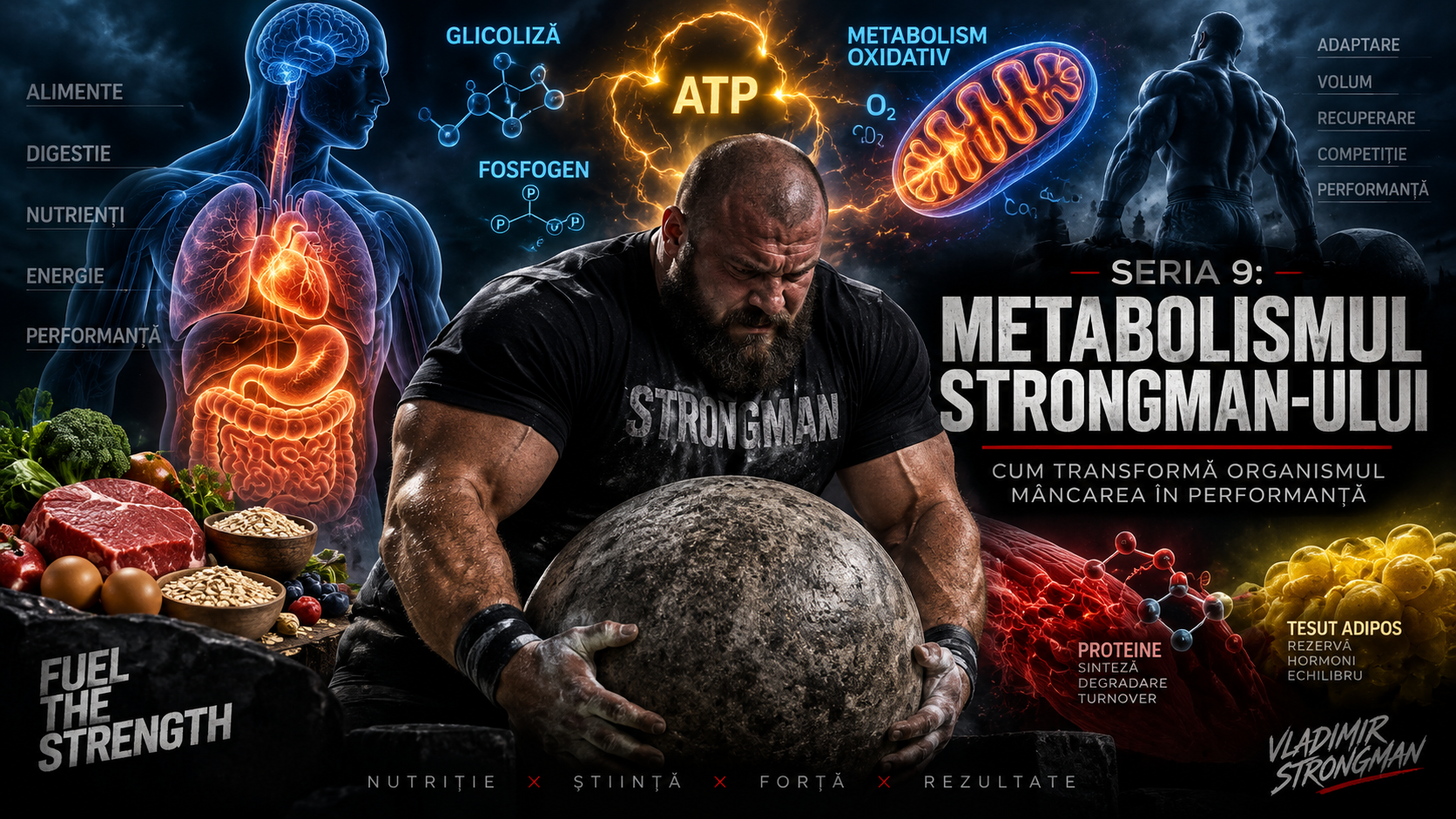
Introduction: fat is not just storage
When people talk about adipose tissue, the most common picture is a passive reservoir where the body places excess energy. That picture is incomplete. Adipose tissue is an active metabolic organ that stores and releases fuel, sends hormonal signals, and influences inflammation, insulin sensitivity, body temperature and the way energy substrates are handled.
For a strongman, this matters because performance is not determined only by how much muscle exists. An organism that has to support hard training, large meals, recovery and sometimes multiple events in one day needs a storage system that can hold energy without losing metabolic control. Adipose tissue is part of that system.
What is adipose tissue?
Adipose tissue is made primarily of adipocytes, cells specialized in storing and mobilizing lipids. But adipose tissue also contains blood vessels, immune cells, fibroblasts, adipocyte precursors and other cell types. It should therefore be understood as a complex tissue rather than an inert mass.
An adipocyte can store triglycerides after a meal and release fatty acids when the body needs fuel. This alternation between storage and mobilization is one of its central functions.
Triglycerides: a compact form of energy storage
Energy from food that is not used immediately can be stored largely as triglycerides. A triglyceride consists of glycerol linked to three fatty acids. This structure allows the body to store a large amount of energy in a relatively small space.
The advantage is enormous. A concentrated energy reserve can support long periods without food. The problem arises when storage becomes excessive and is accompanied by inflammation, insulin resistance and altered fatty-acid traffic.
The adipocyte as storage and transit station
An adipocyte does not simply receive fat and leave it there. There is constant exchange between fatty acids, triglycerides and molecules circulating in the blood. After eating, the tendency is toward storage. During fasting and exercise, the tendency is toward mobilization.
In exercise physiology, this matters because energy availability is a network outcome. The liver processes fuels, adipose tissue releases fatty acids, and muscle selects substrates according to intensity and duration.
Lipolysis: opening the energy reserve
When the body mobilizes stored fat, triglycerides in adipocytes are broken down in a process called lipolysis. The main products are fatty acids and glycerol. Fatty acids can travel in the blood bound to albumin and can be taken up by tissues for oxidation.
Adrenaline and noradrenaline can stimulate lipolysis, while insulin strongly suppresses it in the fed state. Adipose tissue therefore responds to the hormonal context of the whole organism.
Fatty acids and mitochondria
Fatty acids enter oxidative tissues, where they can be processed in mitochondria through beta-oxidation. This produces acetyl-CoA and reduced cofactors that support the oxidative metabolism discussed in the mitochondria episode.
This is where total energy content and rate of energy delivery diverge. Fat is energy dense, but fat mobilization and oxidation cannot by themselves support every situation in which a strongman needs extremely high power over a short interval.
Why a strongman should not treat body fat as a simple enemy
Some athletes treat body fat only as useless weight. In reality, fat has essential physiological functions. It is an energy reserve, contributes to thermoregulation and provides endocrine and mechanical roles in specific regions.
The issue is not the existence of adipose tissue, but the context in which its amount, distribution and metabolic state become unfavorable. A strongman can carry more body fat than a lightweight athlete and still be metabolically healthy.
Subcutaneous versus visceral adipose tissue
Not all body fat has the same profile. Subcutaneous adipose tissue lies beneath the skin and makes up a large share of total body fat. Visceral adipose tissue is located around abdominal organs and is more strongly associated with metabolic abnormalities when excessive.
Distribution matters because visceral tissue has different metabolic fluxes and signaling profiles. Metabolic health should not be judged only by scale weight or appearance.
Adipose tissue is an endocrine organ
One of the major changes in our understanding of adipose tissue was recognizing its endocrine role. Adipocytes and other cells in adipose tissue release signaling molecules, broadly called adipokines, that can influence appetite, glucose metabolism, inflammation and fat use.
Adipose tissue therefore communicates with the brain, liver, pancreas, skeletal muscle and immune system. It is a signaling network, not just a storage depot.
Leptin: a signal about energy reserves
Leptin is produced mainly by adipocytes and helps communicate information about energy stores to the brain. It participates in appetite regulation and energy balance.
As fat mass increases, circulating leptin generally rises, but higher leptin does not automatically mean perfect appetite control. In obesity, leptin resistance can develop, showing again that a hormone signal cannot be confused with the final system-level outcome.
Adiponectin: the less celebrated side of the story
Adiponectin is an adipokine associated with insulin sensitivity and fatty-acid metabolism. In general, adiponectin levels tend to be lower when visceral adiposity and metabolic dysfunction are more pronounced.
For athletes, this demonstrates that adipose tissue is not simply “good” or “bad.” Adipocyte size, tissue distribution, inflammation and the surrounding metabolic context all matter.
Hypertrophic adipocytes and the problem of overload
Adipocytes can enlarge as they store more triglycerides. When adipose tissue can no longer safely accommodate energy surplus, fatty acids may spill over more readily into other tissues and inflammation and insulin resistance can develop.
This helps explain ectopic lipid storage, meaning fat accumulation in organs and tissues that are not designed for large-scale energy storage.
Ectopic fat: when fuel goes where it should not
The liver and skeletal muscle can accumulate excess lipid under certain conditions. When this is accompanied by impaired insulin signaling and altered metabolism, it can contribute to metabolic dysfunction.
For a strongman pursuing high body mass, this distinction matters. The goal should not be maximizing scale weight at any cost, but finding the combination of muscle mass, performance and health that the body can sustain.
Inflammation in adipose tissue
Excessive adipose expansion can alter immune-cell populations and inflammatory signaling. Chronic low-grade inflammation can impair insulin sensitivity and metabolic function.
This does not mean that all body fat causes inflammation. It means that adipose function depends on biological state, not simply on the number of kilograms stored.
Why large muscle mass does not cancel metabolic risk
A strongman can have highly metabolically active muscle and still accumulate excess visceral fat, have high blood pressure, sleep apnea or altered glucose metabolism. Athletic performance and metabolic health overlap only partially.
The idea that “I train hard, so any diet must be safe” is therefore incorrect. High training volume can protect against some consequences of energy surplus, but it is not a universal exemption.
Adipose tissue and insulin
Insulin promotes energy storage and suppresses lipolysis. After a meal, this is useful: fuel is available and some can be placed into storage. During fasting, lower insulin permits greater fat mobilization.
This hormonal choreography makes it possible to alternate between storage and use. Problems develop when insulin signaling becomes impaired and tissues respond less effectively to insulin.
Adrenaline and fat mobilization
During exercise and acute stress, catecholamines can increase fatty-acid mobilization. It is logical: the body anticipates greater energy demand.
But a strongman event is not simple endurance cardio. At very high intensity, carbohydrate and phosphocreatine have rate advantages. Fatty acids contribute mainly to oxidative metabolism and to supporting longer efforts and recovery.
Brown adipose tissue and thermogenesis
In addition to white adipose tissue, the body contains brown adipose tissue, specialized for heat production. Brown adipocytes contain many mitochondria and express proteins that allow energy to be dissipated as heat.
In adults, the amount and activity of brown adipose tissue are lower than in infants, but the phenomenon demonstrates that adipose tissue can also be thermogenic rather than purely an energy store.
Beige adipose tissue and metabolic adaptation
Some cells within white adipose tissue can acquire features resembling brown adipocytes, a process associated with adaptive thermogenesis and often called “browning.” These mechanisms are physiologically interesting, but they should not be turned into miracle fat-burning claims.
Fat as thermal insulation
Subcutaneous adipose tissue reduces heat loss and contributes to insulation. In cold environments this can be useful. For a very large athlete competing in hot conditions, however, greater fat mass can add to total thermal burden.
Strongman does not happen in a laboratory with constant temperature. Ambient temperature, humidity, clothing, surface conditions and event duration can combine to make thermoregulation a real performance limiter.
Adipose tissue and body mass in strongman
In many events, high body mass can be advantageous. It can contribute to stability, inertia, force transfer and more effective contact with implements. That does not mean every extra kilogram is useful.
A kilogram of contractile muscle and a kilogram of adipose tissue do not provide the same mechanical contribution. Body mass therefore has to be interpreted in relation to the event, technique and movement economy.
When fat becomes a mechanical burden
Additional fat mass must also be moved, supported and cooled. In events involving running, climbing, fast walking or repeated position changes, non-contractile mass can increase mechanical cost without directly adding force.
This trade-off is one reason elite athletes do not pursue one universal body weight. They pursue the mass that produces the best combination of strength, power, speed, efficiency and fatigue tolerance.
Adipose tissue and recovery
Adipose tissue does not control recovery by itself, but the metabolic state associated with excess adiposity can influence inflammation, insulin sensitivity and sleep quality. Those factors can indirectly change recovery.
For a strongman, recovery is a systems problem. Muscle, nervous system, liver, adipose tissue, immunity and sleep have to function together.
Sleep apnea and body mass
In people with high body mass, the risk of sleep-disordered breathing can increase, especially when excess fat is present in certain regions. Fragmented sleep can impair recovery, alertness and performance.
This is a useful reminder that performance optimization should not mean ignoring health for a few additional kilograms.
Adipose tissue as an energy buffer during deficit
When energy intake falls, the body can mobilize part of its fat reserves. For an athlete in a weight-loss phase, adipose tissue provides the major stored energy source that can be accessed over longer periods.
But having a large reserve does not mean the athlete can maintain the same exercise intensity without carbohydrate. Oxidation rates and the energetic demands of each event remain decisive.
Why rapid weight loss can hurt performance
An aggressive calorie deficit can reduce glycogen, impair recovery and lower active body mass. Even if fat mass decreases, performance may fall if weight loss also removes muscle, water and training capacity.
For a strongman targeting a class or competition, the rate of body-weight change should therefore be evaluated against the calendar and event demands, not only against the scale.
Adipose tissue and insulin resistance
Excess adiposity, particularly visceral adiposity, can contribute to insulin resistance through changes in fatty-acid flux and inflammatory signaling.
Insulin resistance does not mean the body can no longer use glucose. It means certain tissues respond less effectively to a given insulin signal, and the body may compensate by producing more insulin.
Muscle and adipose tissue communicate
Active muscle also releases signaling molecules, sometimes called myokines. Together with adipokines, these signals create metabolic communication between tissues.
This helps explain why regular physical activity can improve insulin sensitivity and glucose metabolism even when body weight does not change dramatically.
Adipose tissue and the liver: metabolic partners
The liver and adipose tissue are tightly connected. Adipose tissue can release fatty acids, while the liver can oxidize them, transform them or incorporate them into other lipid molecules. The liver can also produce triglycerides and lipoproteins involved in lipid transport.
Under chronic energy surplus, this circuit can become problematic. Excess fatty-acid delivery and lipid synthesis can contribute to hepatic steatosis and metabolic dysfunction.
Why there is no separate “fat-burning zone” for one body region
Exercise can change local blood flow and local lipolysis, but loss of body fat is a systemic process. The body does not receive the simple instruction “burn only the abdomen” because a particular exercise was performed.
For strongman athletes, the practical goal should be whole-body body-composition control through nutrition and training rather than a search for localized miracle solutions.
How diet influences adipose tissue
Long-term energy balance determines whether fat mass is gained or lost, but diet quality also affects satiety, adherence, performance and metabolic health.
A strongman diet may contain many calories. That does not automatically make it unhealthy. What matters is whether the surplus is justified by the goal, adjusted according to weight trends and built from foods the athlete can tolerate and consume consistently.
Dietary fat is not the same thing as body fat
Eating fat and storing body fat are related but not identical processes. Dietary fats can be oxidized, incorporated into membranes, used to synthesize molecules and, when energy is abundant, stored.
Fat type, energy balance, the rest of the diet and physical activity all influence the metabolic outcome. There is no need to demonize a macronutrient.
Adipose tissue and fat-soluble vitamins
Dietary lipids and lipid stores are also connected with vitamins A, D, E and K. These vitamins have broad physiological roles, and their transport and metabolism depend on the body’s lipid system.
This does not mean that more body fat automatically creates a beneficial vitamin surplus. Again, physiology does not follow the rule “more is better.”
Adipose tissue and chronic inflammation: what athletes should understand
Inflammation itself is not inherently bad. It is a normal component of immune defense and tissue adaptation. The problem is persistent chronic inflammation, which can alter metabolic function and contribute to disease.
Heavy training also creates physiological stress. The difference is that sport aims for a controlled stress followed by recovery. When obesity, poor sleep, poor diet and low general activity are added, the system can become harder to manage.
What happens to adipose tissue during a gaining phase
During weight gain, some of the energy surplus will inevitably enter fat stores. The practical goal is to limit unnecessary surplus and create an environment in which training, protein and recovery can support lean-mass growth.
Rapid weight gain is not proof that the body is rapidly building muscle. Some of the change may represent glycogen, water, gut content and fat.
What happens during a cutting phase
During a sustained energy deficit, the body increases use of stored energy, including body fat. But an excessively aggressive deficit comes with costs: reduced performance, poorer recovery and a higher risk of losing lean mass.
For a strength athlete, cutting is not an end in itself. It should serve a weight class, competition or health objective and remain compatible with high-quality training.
Adipose tissue and performance across different events
In a maximal deadlift, body mass and stability may matter differently than in a moving medley. In a yoke, a heavier athlete may gain stability but must also control acceleration. In farmers or loading events, added mass can be helpful in one context and costly in another.
There is therefore no linear relationship between body-fat percentage and performance. There is a relationship between body composition and the mechanical and metabolic demands of the event.
Movement economy and non-contractile mass
In moving events, all mass has to be transported. If a significant fraction does not directly contribute to force production, the relative energetic cost can rise. This is one reason the same body weight can be excellent for one competitor and less suitable for another.
Adipose tissue and protection from starvation
From an evolutionary perspective, the ability to store energy was one of the body’s major adaptations. A fat reserve means energy available in the future. The modern problem is that the food environment can make surplus accumulation very easy even when survival does not require it.
An athlete who eats a lot for performance therefore has to manage a contradiction: the body needs energy, but it does not need unlimited energy.
Adipose tissue and appetite
Leptin is one of the signals involved in appetite regulation, but hunger control also depends on gastrointestinal, pancreatic and neural signals. A strongman with very high energy intake may still experience substantial appetite because training load, eating patterns and the food environment alter these signals.
Why unlimited bulking is a bad idea
When energy surplus is maintained for too long or becomes excessive, the rate of fat gain can exceed the real strength benefit. Excess body mass can also affect mobility, conditioning, sleep and metabolic markers.
An experienced athlete does not try to be as heavy as possible at all times. The goal is to be heavy enough to maximize useful advantages without paying a disproportionate cost.
Adipose tissue and long-term health
A body built for performance should remain usable after the competitive phase ends. Chronic excess adipose tissue, especially when combined with metabolic dysfunction, is associated with higher risk of several chronic diseases.
A mature strongman program therefore needs two horizons: the next competition and the next decade.
How body composition is assessed in practice
Body weight is useful, but it cannot tell you by itself how much is muscle and how much is fat. Circumferences, performance trends, imaging or body-composition methods can provide additional information.
In sports practice, the trend over time is often more informative than a single measurement. A scale that moves upward does not explain what tissue has changed.
Metabolic markers matter more than aesthetics
Blood pressure, blood glucose, lipid profile and, when indicated, evaluation of liver function offer a much more relevant picture of health than the simple question “how much fat do I have?”
For a performance athlete, these data can be discussed with a clinician and interpreted in the context of high muscle mass, hydration and training.
Connection with the metabolism episodes
In the liver episode, we followed how substrates are processed and redistributed. In the mitochondria episode, we followed how energy reaches ATP. Adipose tissue completes the picture by storing and releasing fuel and by sending endocrine signals that help the body decide when to store and when to mobilize.
A simple model for strongman
Think of adipose tissue as a reservoir equipped with sensors and a hormonal control system. It stores energy, releases it when needed, communicates the state of the reserves and participates in metabolic regulation.
For performance, the goal is not to eliminate the reservoir. The goal is to keep its size and function in a range compatible with the sport’s demands and with health.
Conclusion
Adipose tissue is one of the body’s most sophisticated energy-storage systems. It stores triglycerides, releases fatty acids through lipolysis, secretes adipokines, influences insulin sensitivity, participates in inflammation and plays important roles in thermoregulation and energy balance.
For strongman, the lesson is simple but deep: body fat should not be judged only through aesthetics. A few kilograms can change event mechanics, heat tolerance, sleep and metabolic health. At the same time, some adipose tissue is normal and useful. Strong performance emerges when body mass, body composition, metabolism and event demands are kept in balance.
Quick glossary
Adipocyte: a cell specialized in lipid metabolism and storage. Lipolysis: breakdown of triglycerides with release of fatty acids. Adipokine: signaling molecule produced by adipose tissue. Leptin: hormone involved in communicating energy stores and regulating appetite. Adiponectin: adipokine associated with insulin sensitivity and lipid metabolism. Visceral adipose tissue: fat stored around abdominal organs. Brown adipose tissue: tissue specialized in heat production.
Editorial note: this material is educational and does not replace medical evaluation or advice from a qualified professional.
More From The Journal

Training
The Science of Strongman Training - Episode X: Competition Programming
How to build a complete Strongman competition preparation block: calendar, events, volume, intensity, specificity, simulations, autoregulation, tapering and fatigue management.

Training
The Science of Strongman Training - Episode IX: Peaking
Peaking in Strongman: how to turn months of training into maximal competition performance by reducing fatigue, preserving adaptations and managing specificity.