
Nutrition
The Strongman Metabolism: Episode 6 - The Liver and Energy Metabolism
September 7, 2026
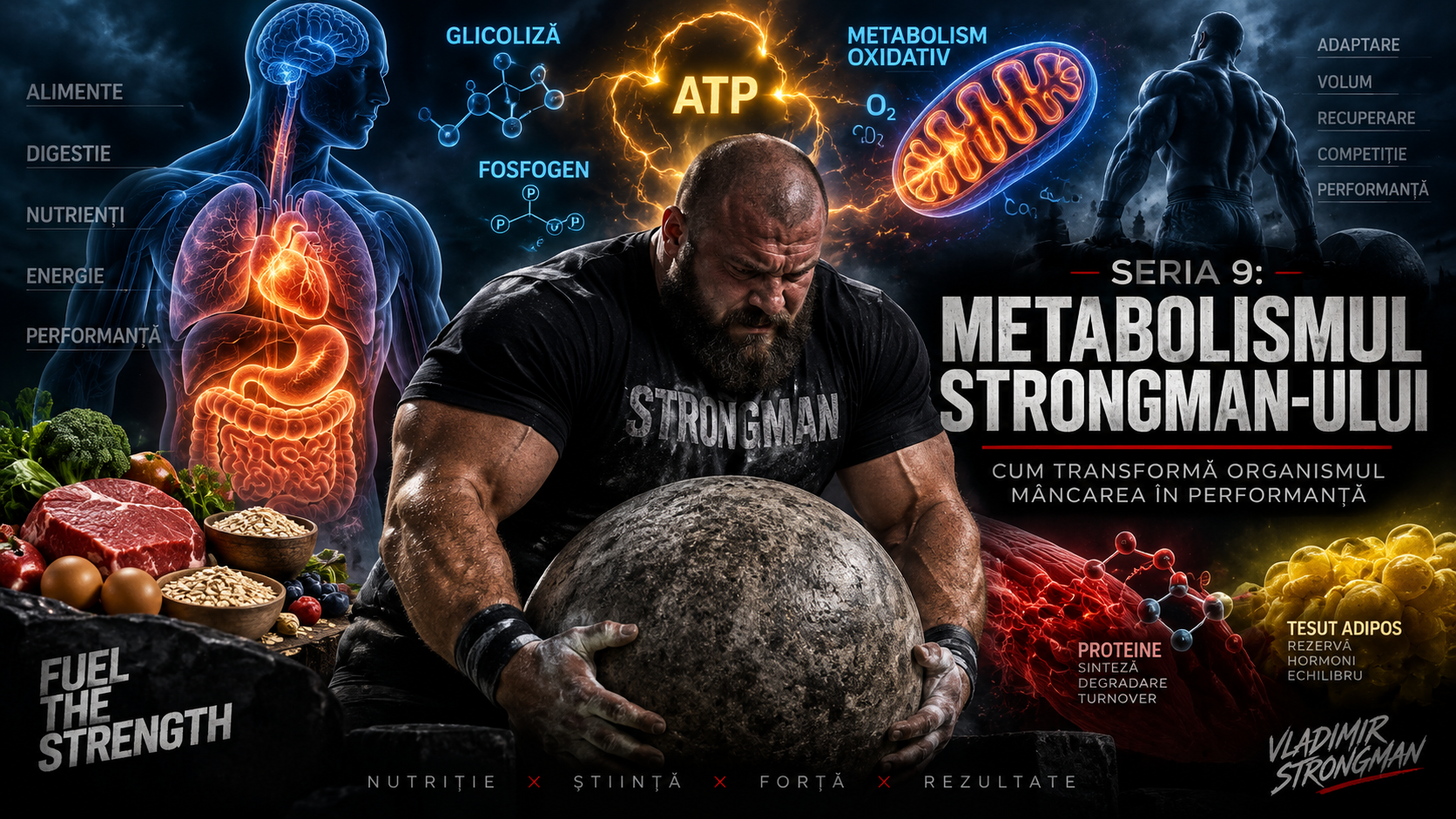
Introduction: the liver, the metabolic control center behind strength
When a strongman grips a bar, lifts a log or starts a loaded yoke, the visible story happens in the muscles. The invisible story starts much earlier, and the liver sits near the center of it. It receives a large share of nutrients absorbed from the intestine, helps decide what can be stored, what must be transformed and what must remain available in the circulation. In that sense, the liver is a fuel administrator.
In earlier episodes we followed ATP, the phosphagen system, glycolysis and mitochondria. The next step is to look at the organ that coordinates many of the raw materials entering those systems. The liver does not generate force directly, but it helps maintain fuel availability, restore reserves and shift substrates as circumstances change.
Why the liver matters so much to a strength athlete
Strongman is a sport with mixed metabolic demands. Some events are nearly maximal and very short. Others last tens of seconds or longer and require high energy output. Sometimes several events take place on the same day, making recovery between them part of performance. The liver is active across all of these windows, adjusting substrate availability.
A functioning liver helps maintain blood glucose, store and mobilize glycogen, process lipids, handle amino acids, produce ketone bodies and transform metabolites such as lactate. These processes form part of the metabolic infrastructure supporting training.
The liver and glycogen: a reserve battery for blood glucose
Carbohydrate absorbed after a meal can be used immediately or stored. In the liver, some glucose is converted to glycogen. Liver glycogen matters because it can be mobilized later to help maintain blood glucose between meals and during exercise.
This is a crucial distinction. Muscle glycogen is a local reserve for that muscle. Liver glycogen has a systemic role. It helps supply glucose to the body when food intake does not cover immediate demand.
Glycogenolysis: opening the storage vault
When the body needs more glucose, the liver can accelerate glycogenolysis, the breakdown of glycogen. The resulting products enter pathways that allow glucose to be supplied to the blood. The process is hormonally regulated and responds to food intake and energy demand.
For a strongman, the difference between having a useful reserve and having heavily depleted stores may be felt indirectly through changes in energy, work capacity and the need to eat or drink between events. Not every sensation of fatigue is hepatic, but the liver is part of the system determining how much fuel remains available in the circulation.
Gluconeogenesis: making glucose when the reserve falls
The liver is not dependent on glycogen alone. As glycogen falls, it can produce glucose through gluconeogenesis. Important precursors include lactate, glycerol and carbon compounds derived from the metabolism of certain amino acids. This is more complex than simply releasing glucose from glycogen, but it is critical for energy homeostasis.
Gluconeogenesis becomes especially relevant during fasting, prolonged exercise and periods when food intake is temporarily insufficient. It does not replace the value of having muscle glycogen available for repeated high-intensity work.
The Cori cycle: muscle and liver working together
During intense exercise, muscle can produce large amounts of lactate. Lactate is not merely waste to be removed. It can travel through the blood to the liver, where its carbon can be used for gluconeogenesis. Newly produced glucose can then return to the circulation.
This relationship is known as the Cori cycle. It illustrates the central idea of this series: metabolism is not a single factory but a network of tissues continually exchanging fuels and intermediates.
Lactate and recovery between events
After a hard event, circulating lactate can be used as fuel by other tissues or enter hepatic pathways. During recovery, this recycling is one way the body reorganizes carbon and energy. A strongman does not need to chase the elimination of “lactic acid”; the goal is to develop the overall ability to produce, transport, reuse and oxidize metabolites.
The liver and amino acids
After protein digestion, amino acids reach the liver in large amounts through the portal circulation. There they can be used for synthesis, transformed or contribute carbon skeletons to other metabolic pathways. The liver is therefore an important protein-processing organ, but it is not a storage tank for intact protein in the way adipose tissue stores triglycerides.
One major role is nitrogen handling. Amino acids contain nitrogen, and their breakdown can generate ammonia. The urea cycle converts nitrogen into urea, a form that can be safely excreted by the kidneys.
The urea cycle and a high-protein diet
A high-protein diet can be appropriate for a strongman, but that does not mean every extra gram automatically creates more muscle. There is a practical limit to how much amino acid can be used for tissue synthesis at a given time, and excess amino acids can be oxidized or transformed.
The liver’s role in these processes links protein metabolism to both construction and nitrogen disposal. In the presence of liver disease or other medical conditions, dietary advice should be individualized by qualified professionals.
The liver and fat
The liver participates in fatty-acid oxidation, lipid synthesis and the production and processing of lipoproteins. When food intake is lower or carbohydrate availability is reduced, fatty acids become more important as a substrate.
Fat has a high energy density, but the rate at which it can support ATP production differs from carbohydrate-based systems. This leads to an important exercise-physiology rule: a fuel that contains more total energy is not necessarily the fuel that can deliver energy fast enough for a particular event.
Beta-oxidation and acetyl-CoA
Fatty acids are broken down through beta-oxidation, producing acetyl-CoA and reduced cofactors that can support oxidative metabolism. The liver can use this energy and, under certain conditions, convert part of the acetyl-CoA pool into ketone bodies.
Ketone bodies: when the liver changes fuel
Beta-hydroxybutyrate and acetoacetate are ketone bodies produced in the liver. They can be transported to other tissues and used as energy substrates. Their production becomes more important during fasting, lower carbohydrate availability and other states with increased fat oxidation.
The presence of ketones does not mean glycogen has become useless. Many strongman events demand high power and short-to-medium duration output, where carbohydrate remains an important fuel. Metabolic adaptation has to be understood in the context of the event, not as a diet slogan.
The liver after a carbohydrate-rich meal
After a meal, blood from the digestive tract reaches the liver through the portal circulation. Glucose, amino acids and other nutrients are processed, stored or distributed. Insulin signals a fed state, favoring nutrient storage and use while reducing hepatic glucose production.
For strongmen, large meals are often necessary because total energy expenditure can be high. But meal size is not the only factor. Gastrointestinal tolerance, timing and food composition can affect how you feel during the next session.
Insulin: the signal that fuel is available
Insulin is not a metabolic enemy. It is an essential hormone of the fed state. When blood glucose rises after a meal, insulin facilitates processes that support nutrient use and storage and suppresses hepatic glucose production.
Glucagon: the signal to mobilize fuel
As time passes without food, glucagon becomes more important. It promotes mobilization of hepatic reserves and helps maintain blood glucose. Adrenaline and other stress hormones can amplify this mobilization when energy demand increases.
What happens during a strongman training session
During training, ATP demand can rise many-fold in active fibers. Muscle uses local glycogen and phosphocreatine and, depending on duration, oxidative pathways. The liver contributes in parallel by helping maintain circulating glucose availability.
As a session becomes longer, the hepatic contribution becomes more visible. When several events occur with breaks between them, the liver is working in the intervals, not only during the effort. This leads to a simple idea: competition performance is not just the sum of the attempts, but also the quality of the recovery periods.
The liver during competition
A competition day can include an early wake-up, travel, anxiety, unusual meals, warm-ups, repeated events, sweating and waiting. Metabolically, this is very different from a controlled gym session.
The liver has to move between storage and mobilization. During feeding periods it can store glucose as glycogen. Between meals and events it can help maintain blood glucose. You cannot control every molecule, but you can create good conditions through a nutrition strategy that has already been tested in training.
Why meals between events matter
When only a few tens of minutes remain before the next event, there is no time to rely on a huge meal. Food choices have to account for digestibility and the need for carbohydrate and fluid. The liver will eventually receive a share of absorbed nutrients, but digestion and absorption speed are largely determined by the gastrointestinal system and food composition.
Restoring liver glycogen
After exercise, dietary carbohydrate contributes to glycogen restoration. The liver and muscle have their own stores and priorities. During days with two sessions or consecutive competitions, rapid restoration of reserves can become strategically important.
The rate of restoration depends on carbohydrate intake, timing and the degree of depletion. There is no need to turn the process into a rigid ritual. What matters is recognizing recovery as a real metabolic phase, not dead time between workouts.
The liver and energy availability
An athlete may consume many calories and still have periods in which the immediate availability of a particular fuel is not optimal. The liver helps smooth these changes through storage and mobilization, but it cannot compensate forever for chronically insufficient energy intake.
Caloric surplus and the liver
During a mass-gain phase, a moderate surplus may support growth and recovery. A chronic, excessive surplus, however, is not the same thing as metabolic fitness. Excess energy can be converted and stored as fat, and excessive liver fat can contribute to poorer metabolic health.
Fatty liver and the paradox of the very large athlete
Large muscle mass does not automatically guarantee a perfect metabolic profile. A strongman can have extraordinary physical capacity and still have metabolic risk factors. Body mass, diet, alcohol, sleep and activity outside the gym interact continuously.
Alcohol and hepatic metabolism
The liver is the primary site of alcohol metabolism. Ethanol oxidation changes the NADH to NAD+ balance and temporarily influences several metabolic pathways. Alcohol can also impair sleep and recovery, both critical in a sport where the nervous system must reproduce very demanding efforts.
Supplements and the liver
A supplement is not automatically safe simply because it is sold as a sports product. Product quality, contamination, dose and combinations matter. Some compounds and medicines can affect the liver, and taking multiple substances can make it difficult to identify the cause of a liver injury.
Creatine and dietary protein should not be treated as interchangeable with products that have known hepatic risks. The right approach is individual assessment, not alarmism and not promises of detoxification.
Liver detox myths
The liver does not need a miracle juice to function. It already contains sophisticated enzyme systems and metabolic pathways. When real liver disease exists, the solution is identifying the cause and treating it appropriately, not using a generic detox regimen.
The liver and metabolic flexibility
Metabolic flexibility is the ability to shift fuel use according to availability and energy demand. After eating, glucose use is favored. During fasting, fat oxidation rises. During exercise, intensity and duration shape the relative contribution of different energy systems.
The liver is one of the main coordinators of this flexibility, working alongside adipose tissue, skeletal muscle, the pancreas and the endocrine system.
Sleep, stress and the liver
Insufficient sleep can alter hormonal regulation, eating behavior and insulin sensitivity. In a high-volume sport, sleep loss adds metabolic stress to training stress.
Cortisol is useful in the stress response, but persistent stress combined with poor recovery and inadequate energy intake can contribute to an unfavorable metabolic environment. The liver responds to these signals rather than functioning in isolation.
Hydration and performance
Hydration does not directly feed the liver, but transport, circulation and waste removal depend on fluid balance. During long events and competitions in heat, water loss can reduce performance and change the perception of fatigue.
The liver and high temperatures
As ambient temperature rises, sweating and thermoregulation become more demanding. Energy metabolism continues, but cardiovascular and thermal constraints add another layer to performance. On competition day, hydration strategy should be prepared beforehand rather than invented between events.
What a metabolically well-supported strongman day looks like
On an ordinary day, the goal is not to “stimulate the liver” but to give it the conditions to work normally. Adequate energy, carbohydrate matched to training volume, sufficient protein, quality fats, hydration and sleep form the foundation.
Before training
Before a heavy session, a carbohydrate-containing meal or snack can support fuel availability. There is no universal formula, and gastrointestinal tolerance varies. Tested foods are generally better than experiments on competition day.
During training
Short workouts do not necessarily require carbohydrate during exercise. Long, high-volume sessions and competition days may benefit from fluid and carbohydrate intake if the strategy has been tested. The liver later participates in redistribution and storage of some of that fuel.
After training
After exercise, carbohydrate and protein can support restoration of energy stores and recovery processes. When another session follows the same day, glycogen restoration becomes more important. When the next session is two days away, distribution can be more flexible.
What the liver cannot do for you
The liver cannot compensate for a chronically chaotic diet, severe sleep loss, major dehydration or poorly managed training. It cannot turn an inappropriate fuel into a perfect energy system. Most importantly, it cannot erase the consequences of liver disease through willpower.
What the liver can do for you
It can store energy, mobilize glucose, produce glucose when needed, process lactate and amino acids, oxidize fats and produce ketone bodies. All of these processes contribute to maintaining an internal environment in which muscle can continue to work.
Connection with the earlier episodes
ATP discussed in the phosphagen episode is the immediate currency. Glycolysis shows how carbohydrate can provide energy rapidly. Mitochondria explain oxidative production. The liver is one of the centers that manages fuels and intermediates feeding all of these systems.
Conclusion
In strongman, muscle is the engine, but the liver is one of the fuel-distribution centers that keeps that engine supplied. Through glycogenolysis and gluconeogenesis it supports glucose availability, through the Cori cycle it participates in lactate recycling, through amino acid metabolism it handles nitrogen and carbon skeletons, and through fat oxidation and ketone production it enables fuel switching.
On a day with one event, its role may seem invisible. On a day with multiple events, meals between attempts and hours of stress, it becomes part of the performance story. A strongman should therefore not see the liver as an abstract anatomy lesson, but as a key component of the system that allows strength to remain available from the first event to the last.
Quick glossary
Glycogen: stored form of glucose. Glycogenolysis: glycogen breakdown. Gluconeogenesis: glucose production from non-carbohydrate precursors. Cori cycle: metabolic exchange between muscle and liver through lactate and glucose. Beta-oxidation: breakdown of fatty acids. Ketone bodies: fuels produced by the liver under certain metabolic conditions. Urea cycle: hepatic pathway for nitrogen disposal as urea.
Editorial note: this material is educational and does not replace medical evaluation, laboratory testing or advice from a qualified professional.
More From The Journal

Training
The Science of Strongman Training - Episode X: Competition Programming
How to build a complete Strongman competition preparation block: calendar, events, volume, intensity, specificity, simulations, autoregulation, tapering and fatigue management.

Training
The Science of Strongman Training - Episode IX: Peaking
Peaking in Strongman: how to turn months of training into maximal competition performance by reducing fatigue, preserving adaptations and managing specificity.