
Nutrition
Series: Food Around Training - Episode 9: The Evening Meal After a Hard Session
September 11, 2026
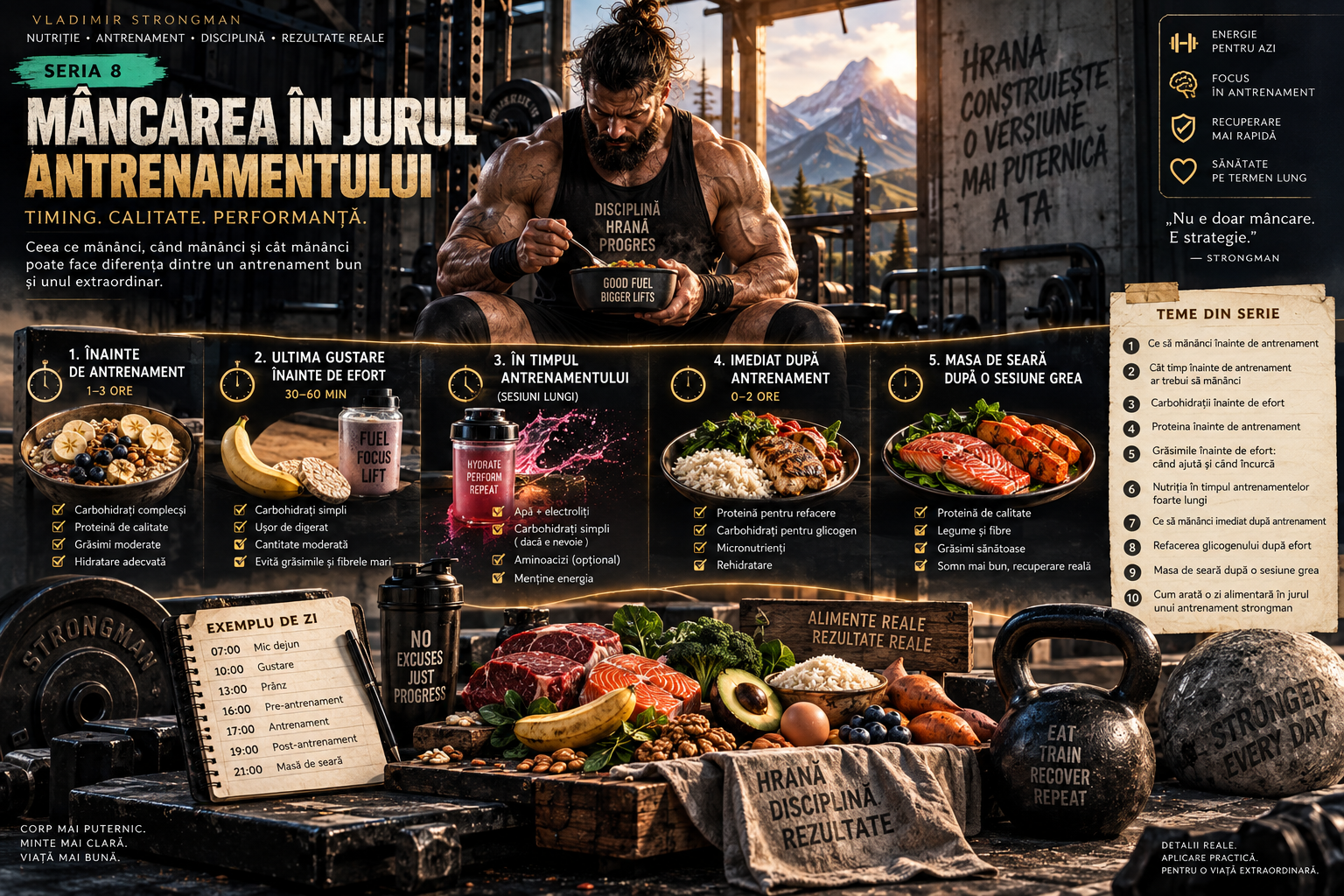
On a day when hard training ends in the evening, the final meal is more than dinner. It becomes part of recovery, energy restoration and preparation for sleep.
For strength athletes, the challenge is to reconcile two needs that can pull in different directions: enough food for recovery and enough digestive comfort for good sleep.
The correct answer is not to eat as much or as little as possible, but to build a meal large enough for the session you completed and comfortable enough for the night ahead.
1. The evening meal must solve several problems at once
After training, the body must repair tissue, restore glycogen, correct fluid balance and continue the adaptations triggered by exercise.
A well-designed dinner does not maximize one process while ignoring the others. It provides enough nutrients without excessive fullness, reflux or fragmented sleep.
2. Dinner can be the post-workout meal
If training ends at 8 or 9 p.m., the post-workout meal and dinner are often the same meal. A shake immediately followed by another large meal is not automatically necessary.
ISSN emphasizes total daily intake and nutrient distribution over rigid timing rituals. One complete meal can serve both recovery and dinner functions [1][2].
3. Protein remains the center of rebuilding
Resistance exercise sensitizes muscle to amino acids, while dietary protein provides the building material required for new contractile proteins and tissue remodeling [1].
After a hard evening session, a complete protein source matters more than any special recovery food. Meat, fish, eggs, dairy or well-designed plant combinations can all serve the purpose.
4. Total daily protein matters more than the exact minute
For most active people, ISSN identifies roughly 1.4-2.0 g protein/kg/day as sufficient to support muscle mass and training adaptation [1].
If the daily total is inadequate, perfectly timed dinner cannot fully repair the problem. When total intake and distribution are sound, the exact clock time becomes much less dramatic.
5. How much protein at dinner?
General per-meal recommendations often fall around 20-40 g or approximately 0.25-0.40 g/kg, but these figures are not a rigid metabolic ceiling [1][2].
For a very large athlete, 35-50 g of high-quality protein in a complete dinner can be highly practical. There is no need to turn total body weight into a formula that creates absurdly large servings.
6. Pre-sleep protein has real evidence, but it is not magic
Controlled studies show that roughly 30-40 g of protein consumed before sleep can be digested and absorbed overnight and can increase overnight muscle protein synthesis after exercise [3][4].
A systematic review concluded that 20-40 g of casein before sleep can increase overnight protein synthesis and, in some long-term training settings, may support muscular adaptation [5][6].
7. Casein versus whey before bed
Casein is often promoted because of its slower digestion, but the idea that only casein works at night is too simplistic. The key is an adequate supply of essential amino acids.
A randomized study published in 2026 found improvements in some sleep measures with 40 g whey before bed compared with an isocaloric control, while casein did not produce the same result; the sample was very small [7].
8. Normal foods can do the same job
Greek yogurt, cottage cheese, milk, eggs, lean meat or fish can provide high-quality protein without making the athlete dependent on supplements.
A shake becomes useful mainly when appetite is low, you arrive home very late or you need a low-volume option. Its primary advantage is convenience, not absolute biological superiority.
9. Carbohydrate at night is not forbidden
After a hard session, carbohydrate has a clear function: restoring glycogen used during training. The fact that it is evening does not erase this metabolic need.
Resistance training measurably reduces muscle glycogen, and a recent meta-analysis found that depletion increases with the number of sets and session duration [10].
10. Glycogen use depends on the session
A few heavy singles with long rest periods use less glycogen than two to three hours of volume, carries, medleys, sled work, sandbags and repeated sets.
That is why the same dinner does not make sense after every workout. The longer and denser the session, the more important the carbohydrate portion may become.
11. When carbohydrate becomes truly urgent
If less than roughly eight hours remain before the next demanding session, rapid glycogen restoration becomes a priority. During short recovery, about 1.2 g carbohydrate/kg/hour can maximize resynthesis [11].
If the next workout is the following day or after a rest day, total carbohydrate across the next meals matters more than how fast the first plate is finished.
12. How much carbohydrate at dinner?
There is no universal number. The amount should reflect training volume, body size, the rest of the day's intake and how close the next session is.
For a very large strongman, mechanically multiplying every gram-per-kilogram target can create intolerable portions. In practice, intake can be divided between dinner, an optional snack and the next day's meals.
13. Rice, potatoes, pasta and bread are tools, not symbols
Simple and predictable carbohydrate sources are often the most useful after evening training. Rice, potatoes, pasta, bread or cereal can provide energy without unnecessarily complicating digestion.
Choice should reflect tolerance, preference and the required amount. No single food is mandatory for glycogen restoration.
14. High-glycemic carbohydrate and sleep
A small study found that a high-carbohydrate, high-glycemic-index meal consumed four hours before bed reduced sleep-onset latency compared with a low-GI meal [14].
However, athlete studies remain limited and results are not perfectly consistent. A systematic review considers the strategy promising but insufficient for universal rules [8].
15. Evening insulin is not the enemy of recovery
After exercise, insulin contributes to nutrient handling and glycogen restoration. Its rise after a meal containing carbohydrate and protein is a normal physiological response.
The metabolic issue is not simply that carbohydrate was eaten at night. Energy balance, dietary composition, biological timing and chronic habits all matter.
16. Very late timing can still change the metabolic response
Controlled studies in healthy adults show that very late meals can produce poorer glucose tolerance than the same meals eaten earlier [19].
This does not mean an athlete should skip post-training dinner. It simply means there is no advantage in unnecessarily delaying a large meal until close to midnight when scheduling is flexible.
17. Fat: useful for calories, less useful for speed
Fat increases energy density and can help athletes who need very high daily calorie intake. It also provides essential fatty acids and supports absorption of fat-soluble vitamins.
But a very large amount of fat can slow gastric emptying and make dinner feel heavy. After a late workout, that effect may matter more than the caloric advantage.
18. Fiber is healthy, but it need not all be packed into dinner
Vegetables, fruit, whole grains and legumes remain important for health. A sports diet should not eliminate fiber simply for convenience.
If an enormous high-fiber dinner causes bloating before bed, some fiber can be moved earlier in the day while the post-training meal uses easier-to-digest foods.
19. Vegetables matter, but they need not occupy the entire plate
After hard training, a giant salad may provide a lot of volume and little energy. For an athlete with high calorie needs, that can make adequate intake harder.
A reasonable serving of vegetables is enough. The rest of the plate can be built around protein and carbohydrate that more directly support recovery.
20. Meal volume and proximity to sleep
The larger the meal and the closer it is to bedtime, the greater the risk of fullness, belching or discomfort. An athlete who finishes very late may tolerate two smaller feedings better than one monumental dinner.
A practical option is a shake or snack immediately after training followed by a moderate meal at home, not because two windows are mandatory, but because digestion may be easier.
21. Reflux changes the practical rules
For people with gastroesophageal reflux, the American College of Gastroenterology guideline suggests avoiding meals within 2-3 hours of bedtime, although the evidence quality for this recommendation is low [13].
An athlete who must eat late can reduce meal volume, fat and personal trigger foods and remain upright after eating. The strategy should be individualized.
22. Hydration continues after the weights are put down
If the session was long, hot or very sweaty, dinner is also an opportunity to rehydrate. Water from drinks and food contributes to restoring the deficit.
ACSM recommends individualizing rehydration according to actual fluid and electrolyte losses rather than using one fixed amount for everyone [12].
23. Sodium helps retain fluid
After heavy sweating, a dinner containing salt can help replace sodium and retain fluid. Sports meals do not need to be universally low in sodium.
The appropriate amount depends on sweat rate, sweat sodium concentration, temperature and the rest of the diet. Athletes with specific medical advice should follow their clinician's guidance.
24. Too much water immediately before bed can disrupt the night
Aggressive rehydration does not mean drinking liters of water in the final ten minutes before sleep. That can produce distension and repeated awakenings to urinate.
It is more sensible to begin rehydration immediately after training and distribute it through the evening so thirst and urine color move gradually toward normal.
25. Caffeine can sabotage a perfect dinner
A flawless post-training meal cannot fully compensate for a strong pre-workout taken at 7 p.m. Caffeine has a half-life of several hours and can remain active long after the session ends.
A 2025 systematic review with meta-analysis found that caffeine used before late-afternoon or evening training and competition can impair subsequent sleep in athletes [18].
26. Sleep is part of recovery nutrition
Insufficient sleep can affect carbohydrate metabolism, appetite, protein synthesis and perceived effort. For athletes, recovery does not end on the plate [8][9].
A dinner that allows good sleep may therefore be more valuable than a theoretically perfect meal that keeps you awake through reflux, discomfort or stimulants.
27. Pre-sleep protein does not guarantee better next-day performance
A strategy that increases overnight protein synthesis does not automatically mean you will lift more the next morning. A study in trained men found no clear next-day performance or recovery benefit from 40 g casein before sleep [16].
This is an important distinction between a physiological mechanism and a sports outcome. Pre-sleep protein is a valid tool, not a guarantee.
28. If you train again the next morning
When the next session is less than 10-12 hours away, dinner should be more recovery-oriented: enough carbohydrate, protein, rehydration and a tolerable meal size.
In that situation, skipping carbohydrate simply because it is nighttime can be a poor choice, especially after a long session with substantial glycogen depletion.
29. If the next day is a rest day
If a rest day follows, you do not need to compress all recovery into one dinner. Stores can be replenished progressively across the next meals.
That allows a more moderate evening meal and can be especially useful for athletes with reflux, slow digestion or poor sleep after very large portions.
30. If you have no appetite after a hard session
Intense exercise, heat, stress and stimulants can temporarily suppress appetite. Forcing an enormous plate immediately can cause nausea and undermine intake.
One solution is an initial liquid or semi-liquid feeding with protein and carbohydrate, followed later by a smaller solid meal when appetite returns.
31. Liquid meals are a tool, not a requirement
Milk, drinkable yogurt, a whey-and-fruit shake or another protein-carbohydrate combination can reduce perceived meal volume and eating time.
For someone who tolerates solid food well, there is no reason to turn recovery into a liquid diet. The choice is about comfort and logistics.
32. Very high-fat fast food can make practical recovery harder
A very large, high-fat meal may provide calories but can also bring slower digestion, thirst, reflux and a heavy feeling before sleep.
An occasional burger or pizza does not erase training adaptation. The issue is when most recovery meals consistently rely on foods that are hard to portion and hard to digest.
33. Alcohol is not a recovery strategy
Large doses of alcohol after exercise reduced muscle protein synthesis in a controlled study even when participants consumed protein [17].
Alcohol can also disrupt sleep architecture, and a recent meta-analysis confirms that its effects on sleep are not those of a true restorative sedative [20].
34. A calorie deficit changes meal size, not the principles
During fat loss, dinner may be smaller, but protein and recovery remain priorities. Food volume can come from vegetables and lean proteins while carbohydrate is matched to training.
Saving nearly all daily calories for a gigantic dinner may work mathematically, but in some athletes it worsens hunger patterns, reflux and sleep. Distribution should reflect tolerance.
35. A calorie surplus requires strategy, not simply a larger plate
In a surplus, large athletes may struggle to eat enough calories without discomfort. Moderate energy density and meals spread across the day are usually easier than one enormous dinner.
Adding some oil, denser dairy, bread, rice or a simple dessert can be more practical than doubling the volume of vegetables and lean meat.
36. Strongman makes dinner more important through the combination of volume and body size
A strongman session may combine pressing, deadlifting, carries, loading and conditioning. This mix can create substantial muscular stress, glycogen use and fluid loss.
At the same time, large body size means high energy needs and a greater risk of compressing recovery into meals that are difficult to digest. Planning the whole day becomes essential.
37. A practical dinner after yoke, farmers and medleys
After a long event-training day, a simple structure can be: a substantial serving of lean protein, a large but tolerable carbohydrate source, moderate fat, vegetables and salted fluids according to sweat losses.
If the meal would become too large, some carbohydrate can be consumed immediately after training as a drink, fruit, bread or cereal, with the remainder at dinner.
38. The practical evening-meal formula
Start with protein. Add carbohydrate in proportion to session volume and the proximity of the next workout. Complete the meal with moderate fat and fiber and restore fluids without drinking everything immediately before bed.
Then adjust according to sleep and digestion. If you go to bed with reflux, bloating or thirst, the meal is not optimal for you even if the macronutrients look perfect in a spreadsheet.
39. Selected bibliography
Sources [1]-[10]: [1] Jäger R et al., ISSN Position Stand: Protein and Exercise, JISSN 2017, PMID 28642676. [2] Kerksick CM et al., ISSN Position Stand: Nutrient Timing, JISSN 2017, PMID 28919842. [3] Res PT et al., Protein ingestion before sleep improves postexercise overnight recovery, MSSE 2012, PMID 22330017. [4] Resistance Exercise Augments Postprandial Overnight Muscle Protein Synthesis Rates, PMID 27643743. [5] Snijders T et al., pre-sleep protein during prolonged resistance training, J Nutr 2015, PMID 25926415. [6] Effects of pre-sleep protein consumption on muscle-related outcomes, systematic review, PMID 32811763. [7] Aussieker T et al., presleep whey versus casein and sleep quality, IJSNEM 2026, PMID 42413910. [8] The Impact of Dietary Factors on the Sleep of Athletically Trained Populations, Nutrients 2022, PMID 36014779. [9] Sleep and nutrition for athletes, Proc Nutr Soc 2024/2025, PMID 39556011. [10] Acute effects of resistance exercise on skeletal muscle glycogen depletion, systematic review and meta-analysis, PMID 41420384.
Sources [11]-[20]: [11] Restoration of Muscle Glycogen and Functional Capacity: Role of Post-Exercise Carbohydrate and Protein Co-Ingestion, PMID 29473893. [12] ACSM Position Stand: Exercise and Fluid Replacement, PMID 17277604. [13] Katz PO et al., ACG Clinical Guideline for GERD, Am J Gastroenterol 2022, PMID 34807007. [14] Afaghi A et al., High-glycemic-index carbohydrate meals shorten sleep onset, AJCN 2007, PMID 17284739. [15] Lehmann L et al., A Delayed Evening Meal Enhances Sleep Quality in Young Rugby Players, PMID 36410338. [16] Pre-sleep protein after evening resistance exercise and next-day recovery, PMID 35599912. [17] Parr EB et al., alcohol impairs post-exercise myofibrillar protein synthesis, PLoS One 2014, PMID 24533082. [18] Caffeine before late training and sleep, systematic review with meta-analysis, PMID 41003623. [19] Bandín C et al., Meal timing affects glucose tolerance, PMID 25311083. [20] Gardiner C et al., alcohol and subsequent sleep, systematic review and meta-analysis, Sleep Med Rev 2025, PMID 39631226.
More From The Journal

Training
The Science of Strongman Training - Episode X: Competition Programming
How to build a complete Strongman competition preparation block: calendar, events, volume, intensity, specificity, simulations, autoregulation, tapering and fatigue management.
Training
The Science of Strongman Training - Episode IX: Peaking
Peaking in Strongman: how to turn months of training into maximal competition performance by reducing fatigue, preserving adaptations and managing specificity.