
Nutrition
Series: Food Around Training - Episode 7: What to Eat Immediately After Training
September 11, 2026
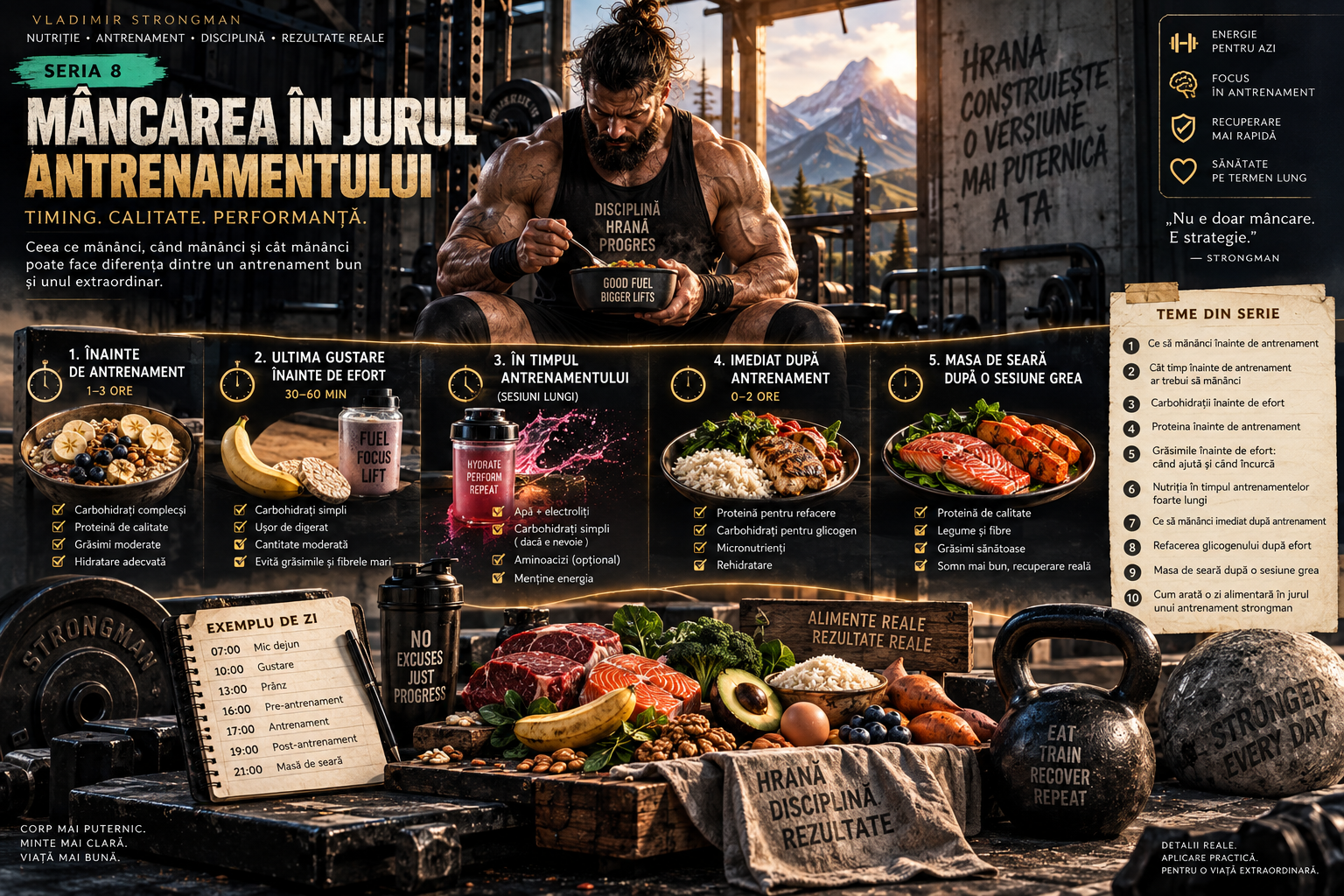
What you eat immediately after training matters, but the importance of the post-workout meal depends on context: how hard you trained, how much glycogen you used, how much you sweated, when you last ate, and how soon the next session begins.
Post-exercise nutrition has four major jobs: restore energy stores, stimulate muscle repair and remodeling, replace lost fluid and electrolytes, and return energy intake toward the athlete's overall training goal.
For a strength athlete or strongman, the correct answer is not a magic food but a meal built around the actual need for protein, carbohydrate, fluid, and digestive tolerance.
1. Recovery starts with context, not a stopwatch
Two people can finish the same workout and still have different post-exercise needs. A short session built around a few heavy singles does not deplete glycogen in the same way as two or three hours of yoke, farmers, medleys and repeated sets.
That is why the post-workout meal should reflect session volume, time until the next hard effort and the rest of the day's diet. ISSN and ACSM position papers treat nutrient timing as part of a daily strategy, not an isolated window [1][3].
2. The anabolic window does not close after 30 minutes
The idea that muscle stops responding unless a shake is consumed within 30 minutes is too rigid. Resistance exercise increases muscle sensitivity to amino acids for many hours, and muscle protein synthesis can remain elevated for 24-48 hours [2][10].
Still, a wide window does not make the post-workout meal irrelevant. If several hours have passed since the previous meal or the session was exceptionally demanding, eating within the first one to two hours is practical [1][8][9].
3. When eating quickly really matters
Urgency rises when the next demanding session is less than roughly eight hours away. In that situation, rapid glycogen restoration and rehydration become practical priorities rather than theoretical details [4].
If the next workout is not until the following day and daily intake is adequate, the difference between eating at 20 minutes and 90 minutes is usually much smaller than the difference between a well-built diet and an insufficient one.
4. Protein is the first building block of the post-workout meal
Resistance exercise and protein intake have complementary effects on muscle protein synthesis. A high-quality protein source after training provides the amino acids needed for repair and remodeling [2].
ISSN states that high-quality protein consumed immediately to about two hours after exercise robustly stimulates muscle protein synthesis, while also emphasizing total daily intake and protein feedings distributed across the day [1][2].
5. How much protein after training?
For most athletes, a useful reference is roughly 20-40 g of high-quality protein or about 0.25-0.40 g/kg per feeding, depending on size, age, training type and the rest of the diet [1][2].
This range should not be interpreted as a ceiling above which protein is 'wasted'. A larger meal can be perfectly legitimate, but the amount needed to maximize the acute muscle protein synthetic response is often lower than the portions used by very heavy athletes.
6. Very heavy athletes should not multiply every recommendation mechanically by body weight
For a 130-150 kg athlete, applying every grams-per-kilogram target mechanically can produce enormous servings. Lean mass, daily intake, digestive tolerance and protein distribution are more useful than blindly scaling from total body mass.
For strongman athletes, roughly 35-50 g of high-quality protein in a complete meal can be a very practical solution, with the rest of the daily requirement distributed across subsequent meals.
7. Leucine and the essential amino acids
Leucine participates in anabolic signaling, but it does not work alone. Muscle protein synthesis requires the full spectrum of essential amino acids, not just a single 'trigger' [2].
ISSN recommends protein doses that provide meaningful leucine together with a complete essential amino acid profile. In practice, dairy, eggs, meat, fish and well-formulated plant combinations can all fulfill this role [2].
8. Whey: fast and convenient, but not mandatory
Whey protein is easy to use after training because it is rich in essential amino acids, mixes quickly and can be consumed when appetite for solid food is low.
Its main advantage is convenience. A shake is not automatically superior to yogurt, milk, meat, eggs or fish if both options provide adequate protein and fit the total daily diet.
9. Solid foods are equally valid
Rice with meat, potatoes with fish, eggs with bread, Greek yogurt with cereal, or a sandwich containing a good protein source can all work extremely well after training.
Whole foods also provide vitamins, minerals, energy and satiety. For an athlete who does not need ultra-fast recovery, a normal meal is often all that is required.
10. Plant protein can work
Plant sources can support recovery, but they vary in digestibility and amino acid profile. Sometimes a slightly larger serving or combining several sources is useful.
Soy, pea protein, blended plant proteins, legumes and grains can all contribute to adequate intake. The important criterion is total protein and essential amino acid availability, not the label 'animal' or 'plant'.
11. Post-workout carbohydrate is not only for runners
Strength training uses glycogen, and demand rises with more sets, repetitions, longer sessions and higher work density. Strongman can combine maximal-force work with substantial metabolic volume.
For that reason, post-workout carbohydrate can be highly relevant after medleys, yoke, farmers, sandbags, sleds or long event sessions, even though a short session of heavy singles does not create the same recovery demand.
12. How much glycogen you used changes the answer
The need for rapid glycogen restoration is proportional to how much was spent. High-volume sessions using large muscle groups create a larger energy bill than a few maximal attempts separated by long rests.
The ISSN position stand notes that high-volume exercise is among the strongest drivers of glycogen depletion [1]. This is why the same post-workout meal should not be copied after every type of training.
13. When two sessions are close together, carbohydrate becomes a priority
During short recovery periods of up to roughly eight hours, evidence shows that regular carbohydrate intake accelerates glycogen resynthesis compared with water or no energy intake [4].
The meta-analysis by Craven and colleagues found a clear benefit of carbohydrate for glycogen resynthesis and suggested that more frequent feeding during short-term recovery can be useful [4].
14. The 1.0-1.2 g/kg/h target is not for every workout
When recovery must be accelerated, the literature commonly uses roughly 1.0-1.2 g carbohydrate/kg/h in the first hours, and ISSN lists 1.2 g/kg/h when rapid restoration is required [1][4].
This protocol is not necessary after every gym session. In a very heavy strongman athlete it can create huge quantities when scaled mechanically, so it should be adapted to lean mass, actual glycogen cost and the interval before the next effort.
15. Carbohydrate and protein together
A mixed meal containing carbohydrate and protein is a logical post-workout choice because it addresses energy restoration and tissue repair at the same time.
However, when carbohydrate intake is already adequate, adding protein does not appear to further accelerate glycogen resynthesis. Protein remains valuable for tissue repair, not because it is an obligatory glycogen accelerator [4].
16. When protein can partly compensate for lower carbohydrate intake
The ISSN position stand discusses combinations around 0.8 g/kg/h carbohydrate with 0.2-0.4 g/kg/h protein when rapid recovery is desired but maximal carbohydrate intake is not used [1].
In practice, this can be easier to tolerate than very large amounts of carbohydrate alone, but it should not be confused with the idea that protein can replace carbohydrate for glycogen restoration.
17. Practical carbohydrate choices immediately after training
Rice, potatoes, bread, pasta, cereal, fruit, juice, carbohydrate drinks and combinations of these foods can all work very well.
During rapid recovery, easily digested and carbohydrate-dense foods are practical. When 20-24 hours remain before the next session, dietary variety and total daily intake matter more than finding a perfect glycemic index.
18. Liquid or solid after training?
Liquid nutrition is useful when appetite is low, sweat losses were high or recovery needs to begin quickly. A shake made with milk or yogurt, fruit and protein can combine fluid, carbohydrate and amino acids.
Solid food is often more filling and may be preferable when a long period will pass before the next meal. There is no requirement to drink calories if normal food is well tolerated.
19. Rehydration is part of the meal, not a separate chapter
After a long session or training in heat, water loss can be large enough to influence recovery and the next workout. The goal is to replace the fluid and electrolyte deficit [5].
ACSM recommends individualizing replacement according to sweat rate and body-mass change because losses vary greatly between athletes [5].
20. The scale can estimate fluid loss
A practical method is to compare body mass before and after training while accounting for fluid consumed and urine produced. Roughly one kilogram of body-mass loss represents about one liter of water loss, with appropriate adjustments.
This approach is more useful than universal advice such as 'drink three liters after the gym', because an athlete may lose very little in a cool facility and a great deal during summer yoke and medley training.
21. Why 150% of body-mass loss is sometimes recommended
When rapid rehydration is required, some guidelines and studies use fluid volumes near 150% of the body mass lost because part of what is consumed will be excreted in urine during the following hours [5][11].
This principle does not mean drinking aggressively without limit. Intake should be spread over time and paired with sodium and food, especially after meaningful dehydration.
22. Sodium helps retain fluid
Sodium losses in sweat vary substantially between athletes. After heavy sweating, plain water may restore fluid balance less effectively than fluids and foods that also contain electrolytes [5][6].
A normally salted meal, an electrolyte drink or foods such as soup can help. The need for an aggressive sodium protocol depends on actual losses and any individual medical advice.
23. Milk can be a very effective recovery food
Milk provides fluid, high-quality protein, carbohydrate and electrolytes at the same time. Rehydration studies suggest that low-fat milk can improve fluid retention compared with water in some conditions [7][11].
This does not make milk mandatory or magical. It is simply a nutrient-dense option for athletes who tolerate it well.
24. What about chocolate milk?
Chocolate milk combines carbohydrate, protein, water and electrolytes and can be a convenient option after long sessions or when appetite for solid food is low.
Meta-analyses do not show that it is universally superior to every other recovery drink, but they support it as a reasonable and practical option when its nutrient profile matches the athlete's needs [12].
25. Fat after training does not need to be eliminated
Fat does not stop recovery and does not need to be automatically removed from the post-workout meal. A moderate amount can be part of a complete meal.
If very rapid absorption and large carbohydrate intake are required over the next few hours, an extremely high-fat meal can slow gastric emptying and make it harder to consume enough energy comfortably.
26. Fiber: healthy, but not always ideal immediately after a brutal session
Fiber is important in the daily diet, but after a very long session an irritated or bloated stomach may tolerate simpler and less bulky foods more easily.
If digestion is good and rapid restoration is not required, vegetables, fruit, whole grains and other fiber-rich foods can remain in the recovery meal without a problem.
27. Loss of appetite after intense exercise
Some very hard sessions temporarily suppress appetite. Adrenaline, heat, dehydration and gastrointestinal stress can make a large plate feel impossible immediately afterward.
In that case, milk or yogurt, whey, fruit, ground cereal or juice can begin the recovery process, with a solid meal added once appetite returns.
28. Reflux, nausea and a sensitive stomach
After yoke, deadlift, carries or medleys, the abdomen may remain sensitive because of bracing and high intra-abdominal pressure. There is no need to force a huge meal in the first few minutes.
Start with fluids, a moderate serving and familiar foods. Recovery is better with a meal tolerated at 60 minutes than with a supposedly perfect meal at 10 minutes that causes nausea.
29. Strongman has a different recovery problem
Strongman combines maximal contractions, repeated efforts, loaded movement, grip, bracing and sometimes hours of training. The energy cost can vary enormously between days.
A day of heavy log pressing and a few singles may require less carbohydrate than a day of yoke, farmers, sandbag and medleys. Protein remains consistently important, but carbohydrate replacement should match the actual volume.
30. Maximal strength versus metabolic volume
If the session consisted of three to five heavy sets with long rest periods, glycogen is usually not the dominant recovery problem. A normal meal containing protein and carbohydrate is enough in most cases.
If the session involved repeated sets, carries, sled work, conditioning and successive events, post-workout carbohydrate becomes much more important for restoring high fuel availability.
31. After training in the heat
Heat increases fluid loss and can suppress appetite. Under these conditions, cold drinks, electrolytes and easily tolerated foods may deserve priority immediately after training.
Before forcing a huge meal, gradually restore fluid and sodium. Once body temperature and nausea fall, a more substantial meal can follow.
32. After a competition or a day with multiple events
In competition, 'post-workout' may actually mean the interval between events or the beginning of recovery for the next day. The strategy should prevent both hunger and excessive fullness.
After the final event, priorities are fluid, sodium, carbohydrate and an adequate protein dose. If another competition day follows, rapid glycogen restoration becomes more urgent.
33. Morning training
If training takes place early and little food was consumed beforehand, the post-workout meal becomes more important because it ends a long period without substantial energy and amino acid intake.
A large breakfast containing eggs or dairy, bread, oats, fruit and fluids can cover protein, carbohydrate and rehydration at the same time.
34. Evening training
After a late session, recovery must coexist with sleep. A huge, very fatty or spicy meal may be uncomfortable for some people, particularly those prone to reflux.
A meal containing protein, well-tolerated carbohydrate and fluid is enough. If daily protein intake has been low, a protein feeding before sleep can help improve distribution across the day [1][2].
35. During a calorie surplus
During mass-gain phases, the post-workout meal is a convenient place for calories because hunger and carbohydrate needs can be higher after long sessions.
Still, there is no need to turn the meal into an eating contest. A surplus works through repeated energy intake across days and weeks, not through one gigantic plate.
36. During a calorie deficit
In a calorie deficit, the post-workout meal is worth protecting because it can support recovery and reduce later hunger. Adequate protein and a portion of the day's carbohydrate can be placed here.
Calories should not be automatically 'earned back' just because training has ended. The meal still belongs inside the day's total energy budget.
37. Creatine does not have a five-minute window
Creatine works through gradual saturation of muscle stores. Daily consistency matters far more than taking it immediately after the final repetition.
If the post-workout meal is the easiest time to remember creatine, it is a good place for it. The major advantage is adherence to the routine, not a mysterious metabolic window.
38. Examples of post-workout meals
A simple option is rice with chicken or lean beef and fruit; another is potatoes with fish and yogurt; if solid food is difficult immediately, milk or yogurt with whey, banana and cereal can bridge the gap until the main meal.
For a strongman after a very long session, the meal can be larger and richer in carbohydrate; after a short maximal-strength session, the same amount may be unnecessary. Food should follow the real training session, not locker-room tradition.
39. Selected bibliography and evidence base
[1] Kerksick CM et al. International Society of Sports Nutrition position stand: nutrient timing. JISSN. 2017;14:33. doi:10.1186/s12970-017-0189-4. [2] Jäger R et al. International Society of Sports Nutrition Position Stand: protein and exercise. JISSN. 2017;14:20. doi:10.1186/s12970-017-0177-8. [3] Thomas DT, Erdman KA, Burke LM. Nutrition and Athletic Performance. J Acad Nutr Diet. 2016;116:501-528. doi:10.1016/j.jand.2015.12.006. [4] Craven J et al. Carbohydrate With and Without Protein and Muscle Glycogen Re-synthesis. Sports Med Open. 2021;7:9. doi:10.1186/s40798-020-00297-0.
[5] Sawka MN et al. ACSM Position Stand: Exercise and Fluid Replacement. Med Sci Sports Exerc. 2007;39:377-390. doi:10.1249/mss.0b013e31802ca597. [6] Borra V et al. Oral Rehydration Beverages, Part I: Carbohydrate-Electrolyte Solutions. J Athl Train. 2025. PMID:38116803. [7] Borra V et al. Oral Rehydration Beverages, Part II: Alternatives. J Athl Train. 2025. PMID:38116818. [8] Zhou HH et al. Protein Supplementation Timing: Network Meta-analysis. Int J Sport Nutr Exerc Metab. 2024;34:54-64. doi:10.1123/ijsnem.2023-0118. [9] Does Protein Ingestion Timing Affect Exercise-Induced Adaptations? Nutrients. 2025;17:2070. PMID:40647175. [10] Characterisation of the Muscle Protein Synthetic Response to Resistance Exercise. Sports Med. 2024. PMID:38716482. [11] Skimmed Lactose-Free Milk Postexercise Rehydration. Int J Sport Nutr Exerc Metab. 2024. PMID:38789098. [12] Chocolate milk for recovery from exercise: systematic review and meta-analysis. Eur J Clin Nutr. 2018. PMID:29921963.
More From The Journal

Training
The Science of Strongman Training - Episode X: Competition Programming
How to build a complete Strongman competition preparation block: calendar, events, volume, intensity, specificity, simulations, autoregulation, tapering and fatigue management.

Training
The Science of Strongman Training - Episode IX: Peaking
Peaking in Strongman: how to turn months of training into maximal competition performance by reducing fatigue, preserving adaptations and managing specificity.