
Nutrition
Series: Food Around Training - Episode 6: Nutrition During Very Long Training Sessions
September 11, 2026
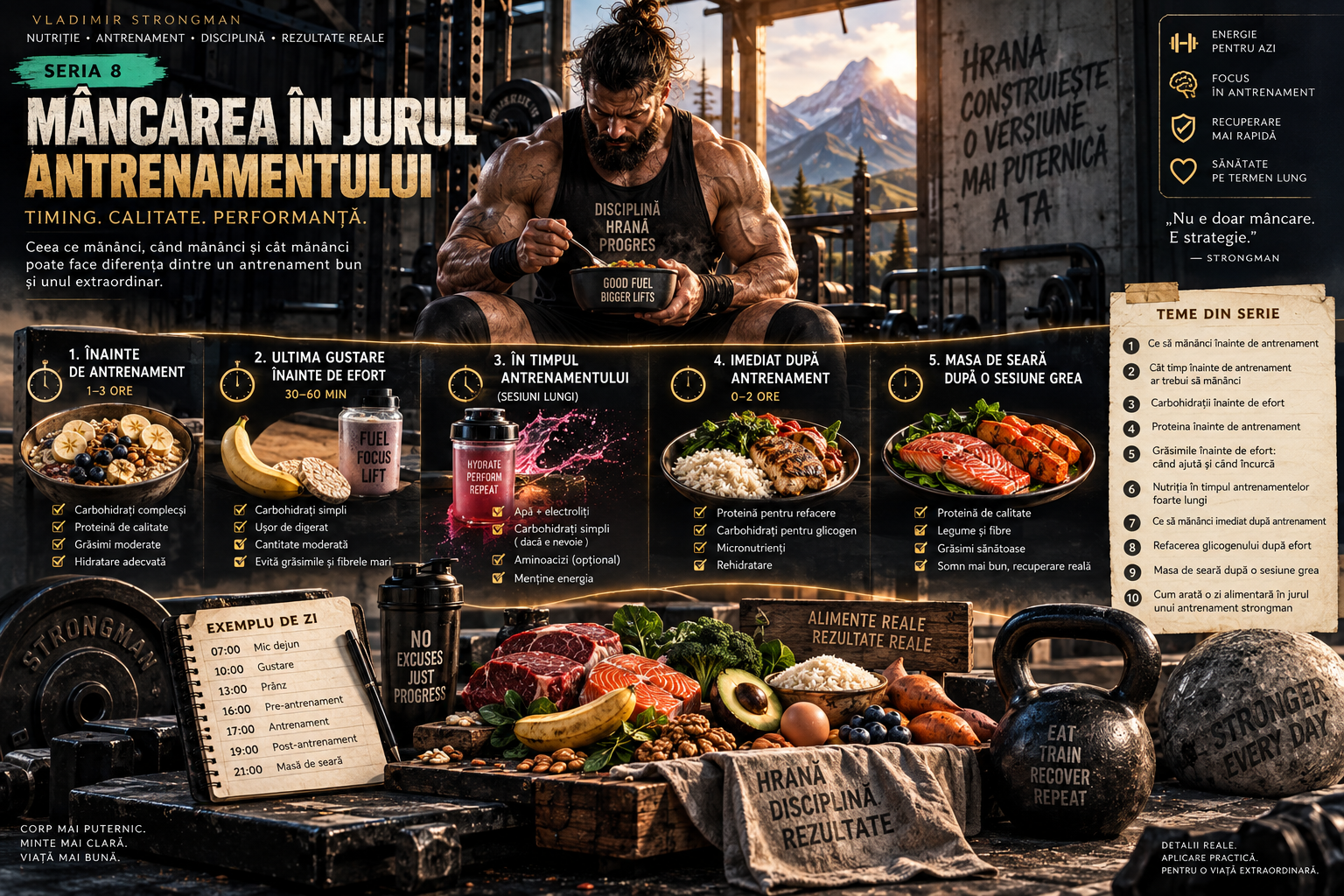
A 45-60 minute workout and a three-hour strongman session do not create the same fueling, hydration and performance-maintenance demands.
As the session becomes longer, available glycogen declines, fluid and sodium losses accumulate, and the ability to maintain intensity may begin to erode.
For this reason, intra-workout nutrition becomes relevant mainly when duration, volume and work density are high enough that the pre-workout meal can no longer support the entire session by itself.
1. When intra-workout nutrition starts to matter
For a relatively short strength session that was properly fueled beforehand, water is often enough.
As you approach 90-120 minutes of serious work, especially with many sets or events, carbohydrate and electrolytes may become more useful.
2. Duration is not the only criterion
Two hours with very long rest periods are not metabolically identical to two hours of medleys, carries and repeated sets.
Work density, the amount of muscle involved, environmental temperature and sweating substantially change intra-session needs.
3. Glycogen becomes increasingly important
Repeated sets, higher-repetition work and dynamic events use muscle glycogen faster than a session built around a few singles and long rest periods.
As available stores decline, perceived energy and the ability to repeat high-quality efforts may suffer.
4. Carbohydrate during training
Carbohydrate consumed during exercise can help maintain blood glucose and provide additional fuel as the session becomes longer.
It does not replace daily nutrition or the pre-workout meal, but complements them when session duration justifies it.
5. How much carbohydrate?
For many long strength sessions, a practical starting point can be roughly 20-40 g of carbohydrate per hour.
Very long, dense sessions may justify more, but digestive tolerance and pre-workout intake should determine how high it makes sense to go.
6. Why you should not copy endurance protocols
A strongman does not have the same demands as a cyclist riding continuously for five hours.
Very high hourly carbohydrate targets from endurance sports should not be transplanted automatically into strength training.
7. Carbohydrate drinks
Liquid carbohydrate is often the simplest option during a long session because it can be dosed gradually while also supplying fluid.
A drink that is too concentrated can become hard on the stomach, especially when consumed quickly.
8. Glucose, maltodextrin and other sources
Glucose, maltodextrin, sugar or mixed carbohydrate sources can all work if tolerated.
In practice, differences between sources matter less than total amount, drink concentration and individual tolerance.
9. Solid food during the session
During extremely long sessions, some athletes tolerate bananas, rice cakes, white bread or simple bars well.
Others do better with liquids only, especially when events involve running, carries or high abdominal pressure.
10. Hydration is the foundation
Even the best carbohydrate strategy can work poorly if dehydration progressively develops.
The goal is not one fixed fluid amount for everyone, but to limit excessive fluid loss without overdrinking.
11. Sweat rate varies enormously
A heavy athlete training in summer heat may lose far more fluid than someone powerlifting in a cool gym.
Body weight before and after training can provide a practical estimate of fluid loss.
12. Sodium during training
Sweat contains not only water but sodium, and losses can be meaningful in athletes who sweat heavily.
During long, hot sessions, sodium from drinks or foods can help support hydration.
13. How much sodium is needed?
There is no universal dose because sweat sodium concentration varies widely between individuals.
For a heavy sweater, an electrolyte drink and normally salted diet may be more useful than obsessively avoiding salt.
14. Potassium and other electrolytes
Potassium, magnesium and other electrolytes have important physiological roles, but acute sodium loss is usually more relevant in sweat.
A useful drink does not need spectacular doses of every mineral.
15. Temperature changes the strategy
The same session performed in a cool winter gym and in 30°C summer heat may require very different strategies.
In heat, fluids and sodium may become more important than extra carbohydrate itself.
16. Strongman combines strength and conditioning
Yoke, farmers, sandbag, sled, medleys and loading challenge strength, the cardiovascular system and glycogen stores at the same time.
During a long event day, fueling between segments can matter far more than during a simple bench press session.
17. Two- to three-hour sessions
When training contains multiple events and technical breaks, small repeated intakes are often more effective than one large dose.
Small portions of fluid and carbohydrate reduce fullness and keep fueling more consistent.
18. Avoid a full stomach before heavy events
A liter of fluid consumed quickly before yoke or deadlift can be as uncomfortable as an oversized meal.
Spread fluid across the session instead of suddenly trying to replace everything you failed to drink in the previous hour.
19. Fiber is not the intra-workout priority
Fiber is valuable in the daily diet, but it is not what you are looking for when you need easily digested energy between events.
Large amounts of fiber during training can increase bloating and slow gastric emptying.
20. Fat during the session
Fat provides energy, but it digests slowly and is not the most efficient choice for rapid fueling during a long workout.
A small amount is not a problem, but fatty meals between events tend to be harder to tolerate.
21. Protein during training
If you ate a protein-containing meal before training, sipping amino acids or protein throughout the entire session is not mandatory.
In extremely long sessions, a modest amount can be used, but carbohydrate and fluids are usually the more immediate priorities.
22. Caffeine does not replace fuel
Another caffeine dose halfway through training may mask fatigue, but it does not restore glycogen or correct dehydration.
Repeated doses, especially in the evening, can trade today's performance for tomorrow's sleep and recovery.
23. Signs that your strategy may be insufficient
A sudden drop in pace, headache, intense thirst, dizziness or repeated performance collapse deserves attention.
These symptoms can have many causes, but inadequate fueling and hydration are among the first practical factors to review.
24. Train the gut too
Tolerance to carbohydrate and fluid during exercise can improve with repeated practice.
Do not test a highly concentrated drink or large carbohydrate intake for the first time on an important competition day.
25. A practical formula for a very long session
Start well fueled and hydrated, drink regularly, and if the session extends beyond roughly 90-120 minutes while remaining intense, gradually add carbohydrate and electrolytes as needed.
The ideal strategy is simple enough to repeat: steady energy, a calm stomach, controlled thirst and as little performance decline as possible near the end.
Intra-workout nutrition should not be used to compensate for a disorganized diet, but to support situations in which duration and volume exceed what the pre-workout meal can comfortably cover.
During a very long training session, a few simple decisions made early can separate a productive final hour from one spent merely surviving the remaining sets.
More From The Journal

Training
The Science of Strongman Training - Episode X: Competition Programming
How to build a complete Strongman competition preparation block: calendar, events, volume, intensity, specificity, simulations, autoregulation, tapering and fatigue management.

Training
The Science of Strongman Training - Episode IX: Peaking
Peaking in Strongman: how to turn months of training into maximal competition performance by reducing fatigue, preserving adaptations and managing specificity.