
Nutrition
Series: Food Around Training - Episode 4: Protein Before Training
September 11, 2026
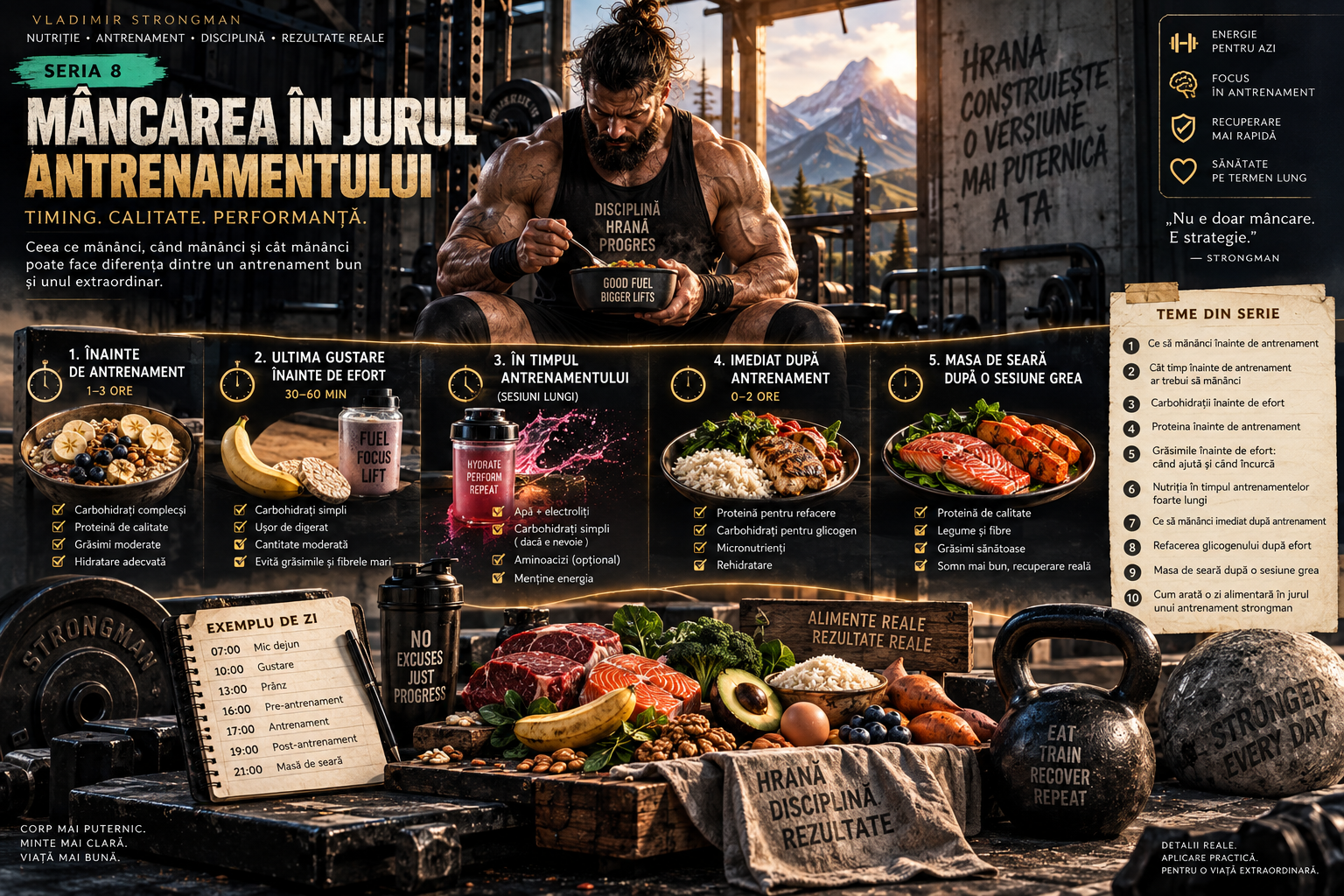
Protein before training matters, but not because the body requires a shake exactly 30 minutes before the first set.
Its role is to support amino-acid availability and total daily protein intake without turning the pre-workout meal into a digestive burden.
For a strength athlete, the useful question is not only “how many grams?”, but also which source you choose, how long before training you eat it and how well you tolerate the meal under effort.
1. Why protein before training matters
Protein eaten before exercise provides amino acids that can remain available during and after training, supporting muscle repair and remodeling.
Its main role is not to provide rapid energy like carbohydrate, but to contribute to daily protein balance and amino-acid availability around the session.
2. There is no minute-by-minute anabolic window
The idea that protein must be consumed immediately before or immediately after the final set is too rigid. The anabolic response to protein feeding and resistance exercise extends across several hours.
If you ate a protein-containing meal one or two hours before training, you do not suddenly become amino-acid deficient when the first set begins.
3. Daily protein intake remains the priority
The most important variable is total protein intake across the day, followed by how that intake is distributed between meals.
A well-designed pre-workout meal helps, but it cannot compensate for a diet that is consistently too low in protein.
4. One to three hours before is a practical window
For most athletes, a protein-containing meal roughly one to three hours before training offers a useful balance between digestion and amino-acid availability.
This window allows solid foods, dairy products or shakes depending on tolerance and meal size.
5. Three to four hours before
If the meal is large and contains meat, eggs, dairy, carbohydrate and fat, three to four hours may be more comfortable before a hard session.
Protein does not become useless simply because the meal was eaten earlier. Digestion and absorption from a mixed meal continue for a long period.
6. Less than 60 minutes before
When training is close, liquid protein or easily digested foods may be more practical than a large serving of meat.
A whey shake, low-fat yogurt or a small serving of milk can provide protein without the volume and digestion time of a large solid meal.
7. How much protein before training?
For many athletes, roughly 20-50 g of high-quality protein before training is a practical range, depending on body size, daily diet and meal size.
More does not automatically mean a better muscle response. Once a meal provides sufficient essential amino acids, progressively larger servings produce diminishing returns.
8. Very heavy athletes should not scale every meal mechanically
A 130-160 kg strongman does not necessarily need 70-90 g of protein at every meal simply because total body mass is high.
Lean mass, total intake, meal frequency and digestive tolerance matter more than mechanically applying a per-kilogram formula to every meal.
9. Protein quality and essential amino acids
Proteins differ in amino-acid profile, digestibility and the amount of essential amino acids they provide.
High-quality sources such as dairy, eggs, meat, fish and well-designed plant combinations can effectively support muscle protein synthesis.
10. Leucine is a signal, not the whole story
Leucine plays an important role in signaling muscle protein synthesis, but it does not work alone. Muscle also needs the other essential amino acids to build new protein.
That is why a complete protein source is more useful than treating leucine as a magical on-switch.
11. Animal versus plant protein
Animal proteins tend to provide a high density of essential amino acids with good digestibility, making them convenient before training.
Plant proteins can work very well too, although a slightly larger serving or a combination of sources may sometimes help provide a robust amino-acid profile.
12. Whey: fast and practical, but not mandatory
Whey protein is popular before training because it digests relatively quickly, is rich in essential amino acids and is easy to consume when time is short.
Whey is not magically superior to a complete meal. Its greatest advantage is often practicality.
13. Milk, yogurt and other dairy foods
Dairy foods provide high-quality protein along with carbohydrate, minerals and fluid, which can make them useful before exercise.
Yogurt with cereal or milk with a carbohydrate source can be a simple pre-workout meal, especially for athletes who tolerate lactose well.
14. Meat and fish
Lean meat and fish are excellent pre-workout protein sources when enough digestion time is available.
Two to three hours before training, moderate portions are usually more comfortable than very fatty cuts or enormous meals.
15. Eggs before training
Eggs provide complete protein and micronutrients, while the yolk also adds fat, which can slow digestion when the serving is large.
Several hours before exercise, eggs can be an excellent choice; very close to training, some athletes tolerate leaner or liquid sources better.
16. Fat in the protein meal changes digestion
Protein amount is not the only factor. A fatty steak, high-fat cheese or many whole eggs may remain in the stomach longer than whey or lean meat.
The fattier the meal, the more sensible it is to place it farther from training, especially before squats, deadlifts or yoke.
17. Meal volume and fiber
A meal containing 40 g of protein can feel light or extremely heavy depending on what else it contains. Legumes, large salads and very high-fiber grains increase volume and may change tolerance.
For an athlete with a sensitive stomach, simplifying the pre-workout meal may matter more than choosing a supposedly perfect protein.
18. Protein and carbohydrate work well together
Before strength training, protein is often most logically paired with a carbohydrate source.
Carbohydrate supports glycogen and session energy, while protein supplies amino acids for muscle remodeling. There is no need to choose one against the other.
19. Strongman-specific considerations
Strongman combines maximal strength, aggressive bracing, loaded movement and high-heart-rate events. An overly large or fatty protein meal can become a mechanical problem.
For log press, deadlift, yoke, farmers or sandbag, a moderate meal two to three hours before is often more useful than an enormous serving close to training.
20. Early-morning training
If you train shortly after waking, there is no need to force down a large meal of meat and rice.
A protein shake, yogurt or milk with an easy carbohydrate source may be enough, especially if protein intake the previous day was adequate.
21. Evening training
For evening training, protein distribution across the day matters more than one enormous meal before the gym.
If breakfast and lunch already contained enough protein, a moderate meal one to two hours before training can complete the day very well.
22. Training fasted
Training completely fasted is not automatically disastrous, but it may be less practical for long and demanding sessions, especially when the last meal was many hours earlier.
A small serving of protein and carbohydrate before training can be a simple solution if hunger, energy or session quality suffer.
23. Pre-workout protein during a calorie deficit
During a calorie deficit, protein becomes especially important for preserving lean mass, and distributing it around training may help manage hunger and maintain diet quality.
A protein-rich pre-workout meal can be very useful, but total daily intake remains the determining factor.
24. Pre-workout protein during a calorie surplus
In a calorie surplus, total protein is usually easier to reach, and excessive food volume before training can become the bigger problem.
There is no need to turn the pre-workout meal into a protein feast. Distributing protein across several meals is often more comfortable and equally effective.
25. The practical formula
For a normal meal, aim for a sufficient serving of high-quality protein roughly one to three hours before training, adjusted to your body and the rest of the day.
If time is short, use a more easily digested source; if the meal is large and fatty, move it earlier. Then judge performance and digestion, not only the numbers.
In practice, pre-workout protein works best when it is sufficient, familiar and integrated into a coherent diet rather than treated as a mandatory gym ritual.
The best choice is the one that provides amino acids without reminding you of the meal during every brace, deadlift and step under the yoke.
More From The Journal

Training
The Science of Strongman Training - Episode X: Competition Programming
How to build a complete Strongman competition preparation block: calendar, events, volume, intensity, specificity, simulations, autoregulation, tapering and fatigue management.
Training
The Science of Strongman Training - Episode IX: Peaking
Peaking in Strongman: how to turn months of training into maximal competition performance by reducing fatigue, preserving adaptations and managing specificity.