
Nutrition
Series: Food Around Training - Episode 2: How Long Before Training Should You Eat?
September 11, 2026
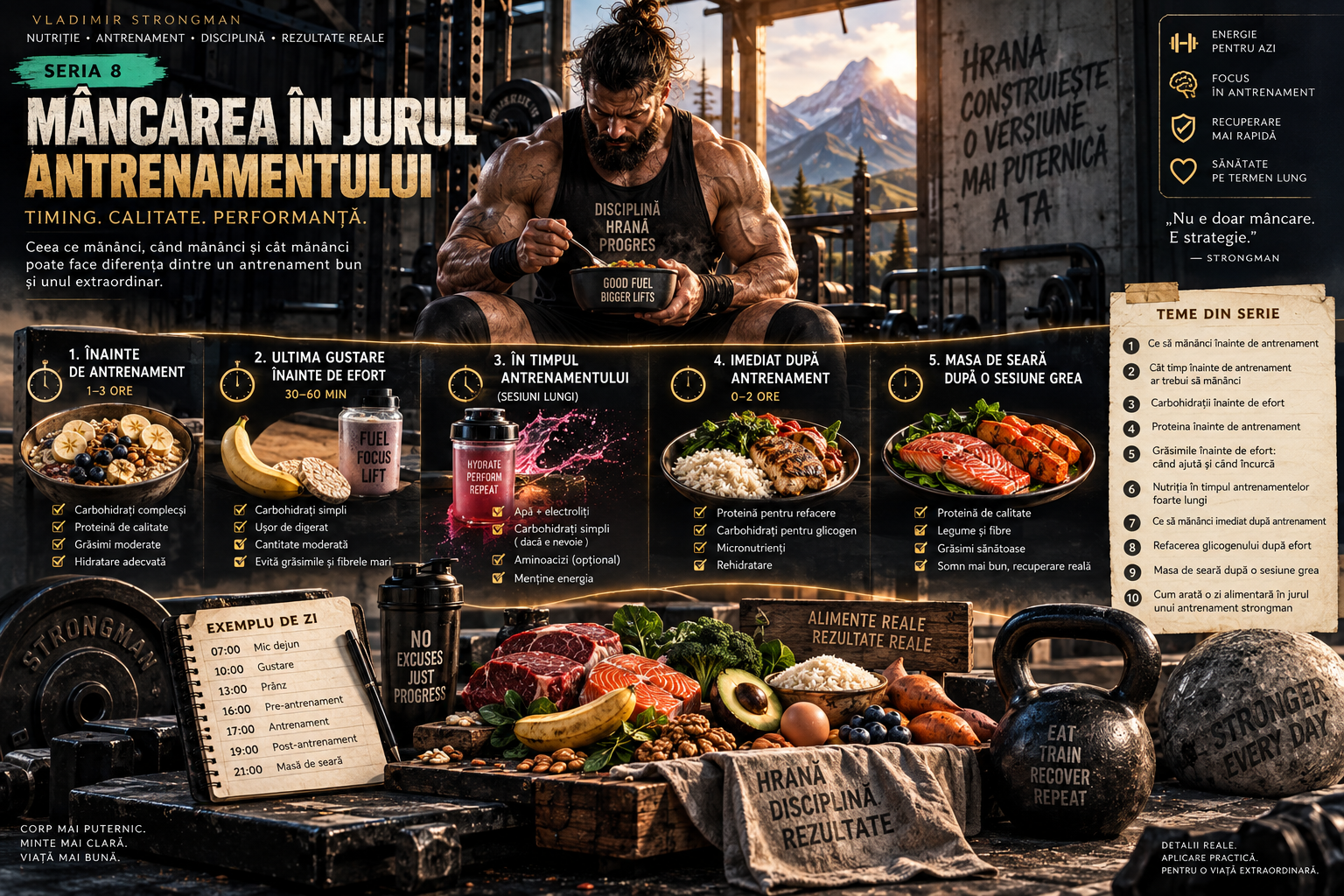
The timing of the pre-workout meal can change how you feel under the bar, but there is no universal number of minutes that works for everyone.
For most strength athletes, a useful window is roughly one to four hours before training, depending on the size and composition of the meal.
The basic rule is simple: the larger, fattier and higher in fiber the meal is, the farther from training it should usually be placed.
1. There is no magic time
The body does not start a countdown after the final bite. Digestion is continuous, and nutrient absorption overlaps with the hours after a meal.
For this reason, recommendations should be viewed as practical windows rather than rigid rules such as “you must eat exactly 90 minutes before training.”
2. The classic window: two to three hours before
For many athletes, two to three hours before training is the best compromise between available energy and a stomach that is sufficiently settled.
This window usually allows a normal meal containing carbohydrate, protein, some fat and a moderate amount of fiber.
3. Three to four hours before
If the meal is large, calorie-dense or contains fatty meat, a lot of vegetables, legumes or heavy sauces, three to four hours is often more comfortable.
For a very heavy strongman athlete, a large meal may remain in the stomach for a long time, and abdominal pressure from the belt and bracing can turn fullness into a disadvantage.
4. One to two hours before
With one to two hours remaining, the meal should usually become smaller and simpler.
Easy-to-digest carbohydrate, a moderate amount of protein and relatively little fat are often more suitable than a large mixed meal.
5. Less than 60 minutes before
If less than an hour remains before training, the goal is no longer a complete meal but a quick top-up.
Fruit, white bread, rice cakes, low-fat yogurt, a shake or a carbohydrate drink can be easier to tolerate than bulky foods.
6. Fifteen to thirty minutes before
In this window, large solid meals make little sense for most people.
If extra energy is needed, carbohydrate-containing fluids or a very small snack may be more practical, especially before a long session.
7. Meal size changes everything
A 200-300 kcal snack and a 1,000 kcal meal cannot be treated the same simply because they were eaten at the same time.
The larger the amount, the greater the chance of fullness, reflux, belching and discomfort during exercise.
8. Fat slows the meal
Dietary fat is not bad, but it can slow gastric emptying and prolong the sensation of a full stomach.
A high-fat meal may work perfectly several hours before training but feel uncomfortable if eaten too close to squats, deadlifts or yoke.
9. Fiber also needs time
Fiber supports digestive health, but large amounts before exercise can increase intestinal bulk, fermentation and the urge to use the bathroom.
The closer training gets, the more sensible it becomes to reduce very large servings of bran, legumes, raw salads or extremely high-fiber cereals.
10. Protein does not need to be left until the final minute
Protein eaten one to three hours before training can provide circulating amino acids during and after the session.
There is no clear advantage to forcing down an enormous protein serving immediately before the first set if you have already eaten enough earlier.
11. Carbohydrate close to training
Carbohydrate can often be consumed closer to exercise than meals rich in fat or fiber, especially in easy-to-digest forms.
The longer, denser or more event-heavy the session is, the more useful a carbohydrate top-up before or during training may become.
12. Early-morning training
If you train 30-60 minutes after waking, you do not need to wait three hours just to obey a rule.
A small snack, fluids and an adequate dinner the night before can support a good session, while the full meal can come after training.
13. Training after lunch
If you train in the afternoon, lunch eaten two to three hours beforehand can work very well as the pre-workout meal.
In that situation, an additional snack is not mandatory if you are not hungry and your energy feels good.
14. Evening training
For evening sessions, what you ate during the first part of the day matters almost as much as the final meal.
A solid lunch and a snack one to two hours before training may be more comfortable than a huge dinner immediately before the gym.
15. Strongman needs more digestive space
Log press, yoke, farmers, deadlift, sandbag and medleys can involve high abdominal pressure, movement and positions that may promote reflux.
For that reason, many strongman athletes tolerate large meals better three to four hours before training and smaller snacks closer to the session.
16. Powerlifting versus bodybuilding
A powerlifting session with long rest periods may be tolerated differently from a bodybuilding session with many sets, supersets and a faster pace.
The greater the movement, density and duration, the more distracting a full stomach can become.
17. Very long sessions
If you know you will train for two to three hours, you do not need to force all your energy intake in before the session.
A meal two to three hours before, followed when needed by carbohydrate and fluids during training, may work better.
18. Training after a long fast or very little food
If you have gone many hours without eating, a last-minute snack cannot completely rebuild the energy context of the day.
In that situation, a more complete meal two to three hours before is usually more useful than arriving hungry and trying to fix everything with sugar before the warm-up.
19. If you have reflux
People with reflux may need a longer interval between eating and training, especially before exercises that require aggressive bracing.
Very large, fatty, spicy or acidic meals may be more problematic when quickly followed by squats, deadlifts or pressing.
20. If you bloat easily
Bloating can turn a theoretically correct timing window into a poor one for you.
Instead of obsessing over the clock, notice which food combinations and portion sizes let you start training without uncomfortable abdominal pressure.
21. Liquids can be used closer to exercise
Liquids generally leave the stomach faster than solid meals, although the composition of the drink still matters.
This makes water, carbohydrate drinks and simple shakes useful when there is no longer enough time for a complete meal.
22. How close is too close?
It is too close when the meal worsens your session: nausea, reflux, cramps, sleepiness, pressure under the belt or an urgent need to use the bathroom.
This definition is more useful than a universal rule because individual tolerance can vary greatly.
23. How far away is too far?
If you eat four to five hours before training and then arrive extremely hungry, low in energy or unable to focus, the interval may be too long for you.
A small snack closer to training can bridge the gap without overloading digestion.
24. Test it in training, not in competition
Competition day is not the time to discover whether you tolerate a large meal 90 minutes before a truck pull or deadlift.
Use normal training sessions to test timing, portion sizes and foods, then repeat what works when the stakes are higher.
25. The practical formula
For a large meal, start with roughly three to four hours; for a normal meal, two to three hours; for a snack, about 60-90 minutes; and for a very small top-up, even 15-45 minutes may be enough.
These windows are not laws. They are starting points that should be adjusted according to digestion, time of day, training type and the amount of food.
In the end, the right timing is the one that lets you start the first set fueled, hydrated and without feeling the meal sitting in your stomach.
A good timing plan becomes almost invisible: you do not think about digestion during training because the food was placed early enough to do its job.
More From The Journal

Training
The Science of Strongman Training - Episode X: Competition Programming
How to build a complete Strongman competition preparation block: calendar, events, volume, intensity, specificity, simulations, autoregulation, tapering and fatigue management.
Training
The Science of Strongman Training - Episode IX: Peaking
Peaking in Strongman: how to turn months of training into maximal competition performance by reducing fatigue, preserving adaptations and managing specificity.