
Physiology
Bones, Tendons and Ligaments: Structures That Must Withstand Force - Episode 9: Tendon Injuries: Mechanisms and Recovery
September 6, 2026
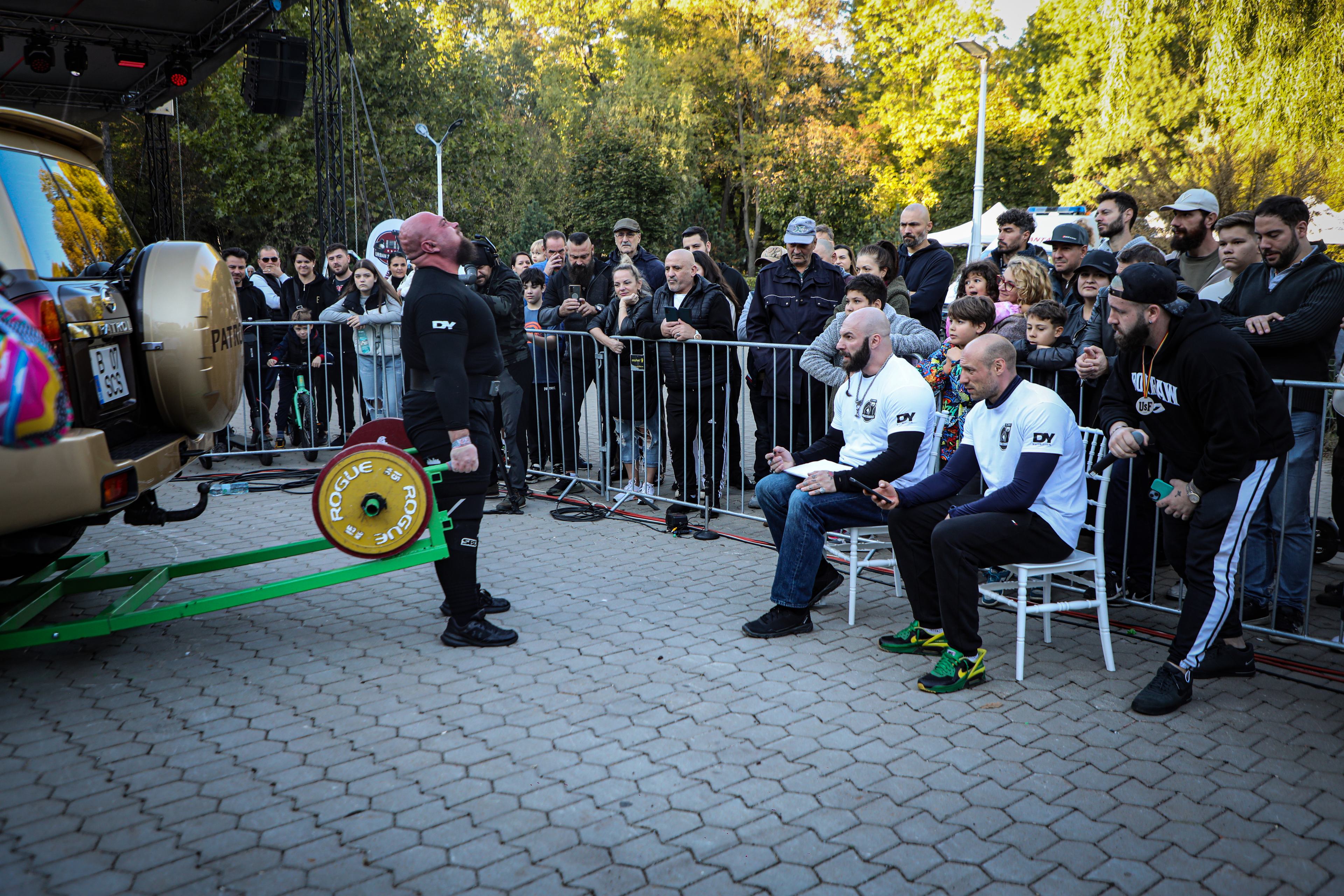
Episode 9: Tendon Injuries - Mechanisms and Recovery
In Strongman, a tendon is not merely a cable that transmits force. It is living tissue that handles repeated tension, stores and releases energy, and adapts to mechanical loading. When demand exceeds the tissue's current capacity, the result can range from pain and tendinopathy to partial injury and complete rupture. Tendon injuries have different mechanisms, and recovery depends on injury type, location, severity, involved tissues, and how loading is reintroduced.
The literature describes tendon healing as overlapping phases of inflammation, proliferation, and remodeling. However, healed tendon does not always reproduce the mechanical properties and architecture of intact tendon. This creates an important principle for athletes: pain resolution is not synonymous with full recovery of maximal load-bearing capacity.
1. What is a tendon injury?
A tendon injury is an alteration in the continuity, structure, composition, or function of the tissue. The spectrum is wide. At one end are the pain and structural changes associated with tendinopathy; at the other is rupture, where part or all of the fiber bundle can no longer transmit force normally. Between these extremes are many partial and interstitial tears.
2. Why can tendons become injured?
The central mechanism is a mismatch between mechanical demand and tissue capacity. This mismatch can arise from increases in intensity, volume, speed, range of motion, or frequency that outpace adaptation. Fatigue, previous injury, technique, body mass, movement profile, and previous exposure to loading also matter.
3. Acute overload
Acute overload occurs when a tendon is exposed to a very large mechanical demand over a short interval. Sprinting, jumping, explosive pushing, lifting a heavy object from a poor position, or a violent contraction can produce rupture even without a long period of preceding pain. Research on rupture shows that tissue can fail under a major acute load or on a background of pre-existing changes.
4. Repetitive overload
Repetitive loading is not inherently pathological. Tendons need loading to adapt. Problems arise when the stimulus is too large, too frequent, or poorly matched to current recovery capacity. Under these conditions, repeated cycles of loading and recovery can become unbalanced and the extracellular matrix can change its organization.
5. Microdamage, remodeling, and tendinopathy
The term microdamage is useful only if it is not turned into a simplistic explanation. Tendon is constantly remodeled by loading, and a certain amount of degradation and repair is part of normal biology. In tendinopathy, however, more persistent changes can occur in extracellular matrix, collagen organization, cellularity, vascularity, and local sensitivity. Modern models therefore treat tendinopathy as a continuum of response to load rather than a single linear inflammation process.
6. Why not every tendon pain means rupture
Tendon pain reflects an interaction among tissue, nervous system, loading, and context. A tendon can be painful without a major structural tear, while some athletes can have substantial structural changes with relatively few symptoms. Diagnosis therefore should not rely on pain alone or on imaging alone.
7. When a tendon fails in rupture
Rupture occurs when loading and local stress concentration exceed the tissue's capacity to transmit force. In a tendon with non-uniform properties, vulnerable regions can become points of stress concentration. Rupture can be partial or complete, and exact location matters for treatment and prognosis.
8. The role of stress and strain
External force alone does not tell us how demanding the load is for the tendon. Stress, meaning force relative to cross-sectional area, and strain, meaning relative change in length, are also important. Two tendons can experience the same external force and still experience different levels of stress and strain.
9. Why hard exercise can cause symptoms without rupture
A heavy session can temporarily increase sensitivity, stiffness, or pain without producing a tear. The 24- to 48-hour response, changes in function, and tolerance of subsequent loading are informative. In rehabilitation, this response is more useful than the rigid idea that any pain during exercise means tissue is tearing.
10. The muscle-tendon unit
The tendon does not function in isolation from muscle. Strong muscle contraction can rapidly increase the tension transmitted through the tendon. Contraction velocity, muscle length, and joint position also change system mechanics. In Strongman, where slow heavy efforts coexist with explosive actions, these transitions matter.
11. The myotendinous junction and enthesis
Injury does not occur only in the tendon body. The myotendinous junction or the tendon-bone insertion, called the enthesis, can also be involved. These regions have distinct mechanical and biological characteristics and may require different rehabilitation strategies.
12. Tendinopathy is not the same as rupture
Tendinopathy is a tendon disorder associated with pain and structural or functional changes, whereas rupture represents disruption of fiber continuity. They can coexist or one can occur on a background of the other, but management should not be conflated. Tendinopathy is largely a problem of capacity and load tolerance, while a major rupture may require immobilization, surgery, and strict staging.
13. The first phase of healing
After an acute injury, the biological response includes an inflammatory phase in which cells and mediators coordinate clearance of debris and initiation of repair. Inflammation is necessary for healing, even though prolonged inflammation is not synonymous with good healing.
14. The proliferative phase
During proliferation, tendon cells and surrounding tissues contribute to production of new matrix. Initially this matrix is more disorganized and mechanically weaker than mature tendon. The body first builds a repair bridge, not an instant replica of the original tendon.
15. Remodeling
During remodeling, fibers and extracellular matrix become progressively reorganized and the tissue becomes more oriented and resistant. Mechanical loading contributes to this process through mechanotransduction. Even so, a repaired tendon can remain different from intact tendon long after the initial healing period.
16. Why complete rest does not solve the long-term problem
Reduced loading may be necessary during the acute phase, but tendon needs mechanical stimulation to maintain and develop capacity. Prolonged complete rest can reduce load tolerance, making the gap between current capacity and the demands of heavy training even larger when the athlete returns.
17. The principle of progressive loading
Exercise-based rehabilitation aims to provide enough loading to stimulate adaptation while remaining compatible with current tolerance. Progression can occur through increases in load, repetitions, range of motion, velocity, or specificity. These variables do not all need to increase at the same time.
18. Isometrics
Isometric contractions can be useful for controlled exposure to loading and for symptom modulation in some athletes. Evidence is stronger for selected tendinopathies than as a universal solution for all tears. Their use should depend on the stage of rehabilitation and the exact diagnosis.
19. Heavy slow resistance
Exercises using adequate resistance at a controlled pace can improve muscle capacity and tendon tolerance to tension. Programming should start from the load the tissue can tolerate now, not from the number the athlete wants to lift at the end of rehabilitation.
20. Eccentric and concentric loading
Eccentric exercise has been extensively studied in tendinopathy, but there is no single mandatory contraction type for every tendon injury. In many settings, a combination of concentric and eccentric loading becomes useful as capacity improves. After a surgically repaired rupture, exercise selection and timing should follow the medical rehabilitation plan.
21. Recovery after surgical repair
After surgical repair, the tendon initially needs protection followed by progressive movement and loading. Protocols differ by tendon and surgical technique. For Achilles rupture, research and consensus recommendations emphasize staged progression of weight bearing, range of motion, and strength, without confusing biological healing with full return to sport.
22. How long does recovery take?
There is no universal number of weeks. Tendinopathies may improve over months, while complete ruptures can require many months before return to sport. Time depends on injury type, treatment, performance level, response to loading, and objective progression criteria.
23. Recovery is not just absence of pain
An athlete may walk normally and still not be ready for a maximal deadlift, a stone run, or a yoke carry. Return should assess function, strength, control, volume tolerance, and the ability to repeat effort without a disproportionate increase in symptoms.
24. Practical return-to-training criteria
Criteria may include sufficient range of motion, strength close to the uninjured side, tolerance of specific exercises, stable technique across repetitions, and an acceptable next-day response. For high-level athletes, criteria should become progressively more specific to actual event demands.
25. Why returning too quickly is risky
Muscle and the nervous system can regain performance faster than tendon. The athlete may feel strong enough to produce a powerful contraction before the tendon has restored comparable mechanical capacity. This mismatch is central to tendon injury management.
26. Fatigue changes mechanics
As fatigue develops, technique and force distribution can change. A tendon may receive loads different from those planned, especially during heavy repetitions performed with reduced control. Training volume should therefore be evaluated not only by repetition count but by movement quality and actual mechanical demand.
27. Why warm-up does not repair an injured tendon
Warm-up can increase tissue temperature and temporarily alter stiffness, sensation, and performance, but it does not turn an injured tendon into a healed one. Using warm-up to mask a structural problem can delay recognition of injury.
28. Nutrition and recovery
Healing requires energy, protein, micronutrients, and adequate sleep. Low energy availability and inadequate recovery can reduce the body's ability to support remodeling. Supplements do not replace progressive loading and correct treatment, and evidence for specific nutritional strategies is less robust than evidence for general nutrition and recovery principles.
29. Collagen, gelatin, and vitamin C
Some studies suggest that ingesting gelatin or collagen with vitamin C before activity can increase markers of collagen synthesis. This is biologically interesting, but it should not automatically be translated into the claim that a supplement reliably accelerates healing of a clinical rupture. The evidence is still less robust than the evidence for load management.
30. Diagnosis: clinical examination remains central
Clinicians assess injury mechanism, pain, strength, deformity, function, and region-specific tests. Ultrasound or MRI can clarify the extent of injury in selected cases. Imaging should still be interpreted in clinical context because structural findings alone do not determine athletic function.
31. Ultrasound and MRI
Ultrasound can be useful for dynamic assessment and for some superficial tears, while MRI provides detailed anatomy and can define the extent of selected injuries. The choice depends on the body region, the clinical question, and availability.
32. What if pain disappears very quickly?
Rapid pain improvement is a positive sign for tolerance, but it does not prove complete mechanical recovery. The nervous system can adapt to the stimulus, symptoms can fall before tissue remodeling is complete, and maximal capacity can remain below the previous level.
33. What if pain persists?
Persistent symptoms do not automatically mean the tissue is being destroyed, nor do they always mean every exercise should stop. The diagnosis, loading dose, technique, recovery, and other symptom drivers should be reassessed.
34. The tendon and the kinetic chain
A problem in one tendon can change load distribution across neighboring joints. After injury, an athlete may compensate through other segments, increasing stress elsewhere. Complete rehabilitation should therefore consider the entire kinetic chain, not only the painful site.
35. Return to Strongman should be specific
A tendon may tolerate a controlled gym exercise and still not be ready for a competition event involving unstable objects. Return should progress from predictable loading to specific movements and then toward competition-level intensity.
36. Example: deadlift after a tendon injury
For a relevant extensor tendon injury, progression may start with controlled ranges and loads, continue with greater volume, and then introduce higher intensities. Transitioning to very heavy repetitions should be the final stage, not the first evidence that the athlete feels good.
37. Example: pull-ups and elbow flexors
After an injury involving elbow flexor structures, pull-ups, rows, curls, and heavy carries can represent very different stress doses. Intelligent return changes muscle length, joint angle, grip, speed, and load progressively.
38. Example: pectoral tendon
Pectoral tendon injuries matter in strength sports because they can occur when the shoulder is positioned in extension and abduction while the muscle produces high force. Return should address range of motion, scapular control, strength, and progressive exposure to pressing movements.
39. Example: Achilles tendon
The Achilles tendon can experience high loads during sprinting, jumping, and repeated propulsion. After rupture, rehabilitation requires a long period of rebuilding plantar-flexor strength and the ability to produce and absorb force. Return to running and sport should not be based on elapsed time alone.
40. Internal versus external load
The same external weight can create different internal loading depending on technique, position, and fatigue. For the tendon, what matters is the tension and strain it experiences, not simply the number written on the plates.
41. Why tempo matters
A slow controlled movement and an explosive movement using the same weight can create different mechanical contexts. Velocity changes muscle-tendon interaction, which means rehabilitation programming should eventually include speed, not just load.
42. Why one-repetition maximum is not enough
A one-repetition maximum can show that an athlete can produce a large force in one context. It does not necessarily show tolerance to volume, repeated effort, or technical changes under fatigue. Return-to-sport testing is better served by a battery of measures than by one peak number.
43. Reinjury risk
A previously injured tendon may remain structurally and functionally different. This does not mean an athlete is destined to reinjure the tissue, but it supports a strategy of maintaining capacity and progressing carefully after return.
44. Medication and symptoms
Analgesics and anti-inflammatory drugs can alter symptom perception, but they should not be used to force loading through tissue that is not ready. Medication choices should be discussed with a clinician, especially for acute injuries and postoperative cases.
45. When rapid medical assessment is needed
Sudden pain with a pop, obvious loss of strength, deformity, major swelling, inability to use the limb normally, or abrupt functional change should prompt medical evaluation. When rupture is suspected, continuing to train to see whether the tendon warms up is not a good strategy.
46. What does good recovery mean?
Good recovery is not simply absence of symptoms. It means the tendon can progressively tolerate the athlete's demands, strength has been restored, movement is controlled, volume is tolerated, and exposure to sport-specific loading does not create a disproportionate symptom response.
47. Common mistakes in strength-athlete rehabilitation
Common errors include returning based only on time, increasing all variables at once, repeatedly testing maximal strength, ignoring fatigue, and moving too quickly to competition movements. Another common error is treating a good day as proof that tissue is fully healed.
48. How progression can be structured
A practical model can use five overlapping stages: symptom and load control; restoration of movement; rebuilding strength; introducing speed and higher loads; then sport-specific exposure. The exact sequence depends on the injury and may overlap rather than follow rigid boundaries.
49. Monitoring the next-day response
One of the most useful autoregulation methods is monitoring the response over the next 24 to 48 hours. If pain, stiffness, or function clearly and repeatedly worsen after progression, the dose may be too high. If the response is stable, loading can be maintained or increased gradually.
50. Practical Strongman summary
For the Strongman athlete, tendon injury should be viewed as a tissue, mechanical, and load-management problem. Reducing pain is not enough. The athlete must rebuild the capacity to absorb, transmit, and repeat force. Intelligent return starts with controlled loading and gradually reaches the real demands of competition.
51. Extended conclusion
Tendon adapts slowly, yet it can become remarkably resilient when loading is dosed well. Injury occurs when capacity and demand separate far enough that the tissue can no longer manage the task. Sometimes the separation is sudden and produces rupture. At other times it develops gradually through a spectrum of matrix and pain-related changes. Healing is active and staged, but repaired tendon does not automatically return to its original state. Rehabilitation therefore needs to be more than rest: it is a progressive reconstruction of mechanical capacity.
For an athlete who wants to return to maximal strength, the key question is not “can I lift it?” but “how much load can I tolerate, repeat, and absorb without the tendon falling behind?”. That distinction changes how recovery should be approached. Final performance must be rebuilt, not assumed.
Selected bibliography
1. Thomopoulos S, Parks WC, Rifkin DB, Derwin KA. Mechanisms of tendon injury and repair. Journal of Orthopaedic Research. 2015;33:832-839. DOI: 10.1002/jor.22806.
2. Darrieutort-Laffite C, et al. Biology and physiology of tendon healing. Joint Bone Spine. 2024. DOI: 10.1016/j.jbspin.2024.105696.
3. Tarantino D, Palermi S, Sirico F, Corrado B. Achilles Tendon Rupture: Mechanisms of Injury, Principles of Rehabilitation and Return to Play. Journal of Functional Morphology and Kinesiology. 2020;5:95. DOI: 10.3390/jfmk5040095.
4. Maffulli N, et al. The Achilles tendon: fundamental properties and mechanisms governing healing. Muscles, Ligaments and Tendons Journal. 2014.
5. Shaw G, Lee-Barthel A, Ross ML, Wang B, Baar K. Vitamin C-enriched gelatin supplementation before intermittent activity augments collagen synthesis. American Journal of Clinical Nutrition. 2017;105:136-143.
6. Rio E, Kidgell D, Purdam C, et al. Isometric exercise induces analgesia and reduces inhibition in patellar tendinopathy. British Journal of Sports Medicine. 2015;49:1277-1283.
More From The Journal

Training
The Science of Strongman Training - Episode X: Competition Programming
How to build a complete Strongman competition preparation block: calendar, events, volume, intensity, specificity, simulations, autoregulation, tapering and fatigue management.
Training
The Science of Strongman Training - Episode IX: Peaking
Peaking in Strongman: how to turn months of training into maximal competition performance by reducing fatigue, preserving adaptations and managing specificity.