
Physiology
The Strongman Laboratory: What We Can Learn About an Athlete from Inside the Body - Episode 5: Estradiol and Prolactin
September 7, 2026
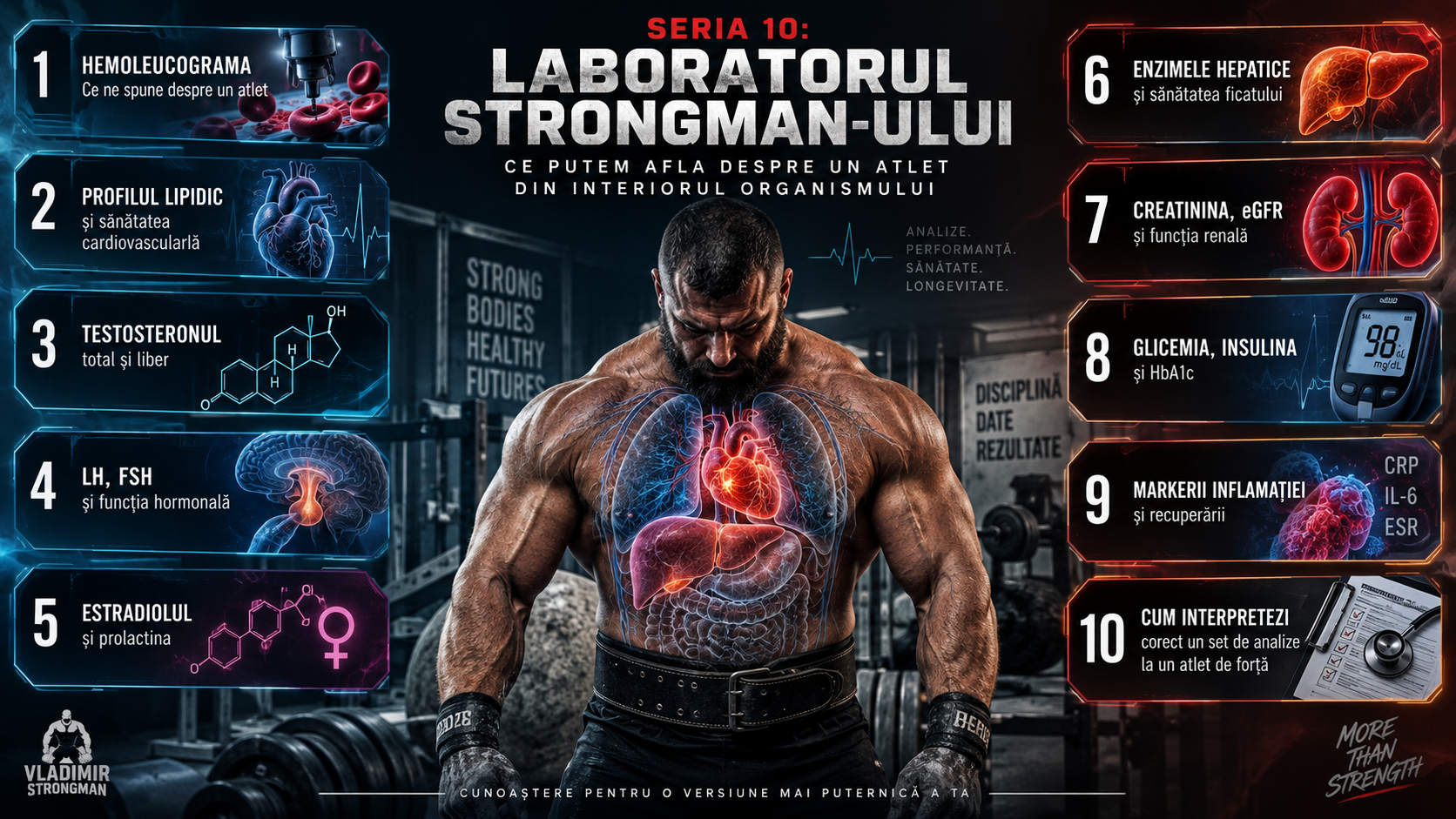
Episode 5: Estradiol and Prolactin, Two Hormones Often Misunderstood
After total and free testosterone, LH and FSH, the next logical step is to look at two hormones that can change the interpretation of an endocrine profile: estradiol and prolactin. In gym culture, both are sometimes reduced to simplistic stories. Estradiol becomes “the estrogen that must be eliminated,” while prolactin is treated as the explanation for almost every sexual problem. Both ideas are too simple.
Estradiol is an important estrogen in men, while prolactin is a pituitary hormone with multiple functions. Both need to be interpreted in relation to symptoms, testosterone, SHBG, treatments, medical history and sampling conditions.
1. What is estradiol?
Estradiol, also called E2, is one of the major estrogens in the body. In men, an important proportion is produced by conversion of androgens through the aromatase enzyme, which is expressed in tissues including adipose tissue.
Being a male strength athlete does not make estradiol useless. Estrogens contribute to bone health, sexual function and other physiological processes. The issue is not the existence of estradiol, but the context in which its level is too low, too high or altered relative to the rest of the hormonal axis.
2. Aromatase: the bridge between testosterone and estradiol
Aromatase converts certain androgens into estrogens. Therefore, when testosterone exposure increases, there may also be more substrate available for estradiol production. The final concentration depends on tissues, enzymes, body composition and individual context.
Adipose tissue matters because it expresses aromatase. This does not mean that every gram of fat produces a fixed amount of estradiol, but meaningful changes in body composition can influence the hormonal environment.
3. Estradiol is not the “bad hormone”
One of the most important messages for athletes is that very low estradiol is not a trophy. Estrogen has physiological roles in men, and excessive suppression can be associated with health problems.
Bone health and sexual function, in particular, depend on an appropriate hormonal environment. The idea that estradiol should be driven as close to zero as possible is therefore medically misguided.
4. When is estradiol worth measuring?
Estradiol is not necessarily a test that every person needs automatically. In men with testosterone deficiency, the AUA recommends measuring estradiol particularly when breast symptoms or gynecomastia are present, including before starting testosterone therapy in those circumstances.
In other settings, a clinician may order it based on symptoms and treatment history. The value is useful when it answers a clinical question.
5. Gynecomastia: when breast tissue becomes a signal
Gynecomastia is proliferation of glandular breast tissue in a male. It can have multiple causes, and estrogen is only one component of the hormonal balance involved.
A breast lump or change should not be diagnosed from an isolated E2 result. Clinical examination, history and sometimes additional testing clarify the problem.
6. Low estradiol: why can it matter?
Very low estradiol can occur in settings where androgen-to-estrogen conversion is reduced or gonadal hormone production is impaired. In men, estrogens contribute to bone mineralization, so excessive suppression should not be treated as harmless.
For a strongman, bone health is not decorative. Bones are the infrastructure that supports years of mechanical loading.
7. Estradiol assay matters
Estradiol measurement in men can be challenging at low concentrations. The laboratory method matters, and results should not be compared without considering the assay and units.
An unexpected result, especially one that does not match symptoms, may need repeat testing and clinical interpretation rather than an immediate reaction.
8. What is prolactin?
Prolactin is produced by the pituitary and has multiple functions. In male reproductive physiology, elevated prolactin can suppress the hypothalamic-pituitary-gonadal axis and contribute to low testosterone, reduced libido and sexual dysfunction.
That is why prolactin enters the evaluation of a man with low testosterone and low or low-normal LH.
9. Why can prolactin vary?
Prolactin can be influenced by stress, sleep, physical activity, nipple stimulation, certain medications and other medical conditions. Therefore, a mild elevation should not automatically become a dramatic diagnosis.
The AUA recommends repeating prolactin when the first result is elevated to confirm that the elevation is real. Persistent elevation then warrants more detailed evaluation.
10. Prolactin and secondary hypogonadism
When testosterone is low and LH is low or inappropriately normal, the question becomes whether the hypothalamic-pituitary signal is insufficient. Prolactin is one of the pieces that can contribute to this pattern.
However, prolactin is not the only possible cause. Medications, obesity, chronic illness, low energy availability and hypothalamic or pituitary disorders can produce related patterns.
11. High prolactin does not automatically mean prolactinoma
A prolactinoma is a pituitary tumor that produces prolactin and is usually benign. But elevated prolactin can have many other causes. Medications, hypothyroidism, kidney and liver disease and other endocrine problems can change prolactin.
That is why interpretation should proceed step by step. Sometimes the test is repeated, medications are reviewed and other explanations are considered before imaging.
12. When does pituitary MRI enter the picture?
In certain clinical patterns, pituitary imaging may be appropriate. The AUA recommends considering pituitary MRI in men with total testosterone below 150 ng/dL combined with low or low-normal LH even when prolactin is not elevated.
This is a medical decision, not a scan an athlete should order independently after seeing one hormone value.
13. Estradiol and prolactin during exogenous androgen use
When testosterone or other androgens are administered externally, feedback on the hormonal axis changes. Endogenous production may be suppressed, while conversion toward estrogens can alter estradiol.
Prolactin must also be interpreted in the context of medications and substances. A hormonal profile obtained during exogenous androgen use cannot be compared simplistically with the profile of an athlete without those interventions.
14. Why “blocking estrogen” is not the goal by itself
In performance culture, the idea circulates that any rise in estradiol must immediately be blocked. Medical treatment is not decided by a number alone. Symptoms, the reason the level is elevated, current treatments and individual risks all matter.
Excessive estrogen suppression can create problems of its own. More importantly, a laboratory value without symptoms is not automatically a disease that needs treatment.
15. Prolactin and sexual function
Elevated prolactin can be associated with reduced libido, sexual dysfunction and infertility. But the same symptoms can occur with hypogonadism, depression, sleep deprivation, stress, medications and other diseases.
Again, the laboratory provides one puzzle piece. It is not the whole puzzle.
16. Estradiol, prolactin and fertility
Fertility depends on a functioning hormonal axis and normal sperm production. Serum testosterone alone is not enough to establish whether spermatogenesis is normal, and estradiol and prolactin can become relevant in selected contexts.
For athletes who want children, the history of hormonal treatment should be discussed openly with a clinician. Exogenous testosterone can suppress gonadotropins and spermatogenesis.
17. The relationship with SHBG
SHBG influences the free testosterone fraction and can change how the hormonal profile is interpreted. Therefore, total testosterone, free testosterone, SHBG, LH, FSH, estradiol and prolactin may form a much more useful picture when there is a clinical indication.
This does not mean every athlete needs all of these tests. It means each test should answer a real question.
18. What does high estradiol with high testosterone mean?
This pattern can occur in settings involving exogenous androgens, but it cannot be interpreted without history. Aromatase conversion is one explanation, but there are other possible reasons for altered estradiol.
Before considering a pharmacological solution, the clinician should determine whether symptoms are present and what the likely cause is.
19. What does mildly elevated prolactin mean?
It means that a laboratory result needs context. Stress, sampling conditions, exercise, medications and other factors can contribute. Repeating the measurement may be more informative than making a dramatic conclusion from the first sample.
If prolactin remains elevated and no obvious cause is found, endocrinology evaluation becomes important.
20. What symptoms deserve attention?
Persistent loss of libido, erectile dysfunction, infertility, gynecomastia, nipple discharge, breast pain or changes, persistent headache and visual disturbances can change how carefully a hormonal profile should be evaluated.
These symptoms do not identify a single hormonal culprit. They indicate that a proper diagnosis deserves attention.
21. Sleep and prolactin
Sleep and circadian timing can influence hormone secretion. For an athlete with an irregular schedule, travel and short nights, sampling time and physiological state can matter for interpretation.
That does not mean every elevated prolactin is “from poor sleep.” It means the result should not be removed from its context.
22. Estradiol and bone health
Estrogens play an important role in bone health in men as well. For a strongman, whose skeleton supports repeated high mechanical loads, bone health is part of performance infrastructure and should not be sacrificed for an imaginary hormonal aesthetic.
Chronically driving estradiol too low is not a health goal and should not be pursued merely because an athlete fears gynecomastia.
23. Example: low testosterone, low LH, elevated prolactin
This profile raises the possibility of a central problem and makes prolactin particularly relevant. The clinician may repeat prolactin, review medications, assess other causes and decide whether additional testing is needed.
It does not automatically mean prolactinoma. It means there is a lead that deserves investigation.
24. Example: exogenous testosterone, high estradiol, low LH and FSH
Here the context explains much of the pattern: an androgen administered externally can suppress LH and FSH, while some testosterone may be converted through aromatase. Interpretation and management still depend on the product, dose, sampling time, symptoms and medical goals.
Such a profile should be discussed medically rather than adjusted according to a forum or a standardized gym protocol.
25. The laboratory as a control system
In the previous episodes, we built the map step by step: testosterone shows the circulating result, SHBG helps explain transport, LH and FSH show the pituitary commands, and now estradiol and prolactin add two more layers.
An athlete does not need the highest possible hormone number. The goal is a coherent biological system and appropriate medical evaluation when the system shows warning signs.
26. Conclusion
Estradiol and prolactin are important hormones, but neither should be turned into a universal enemy. Estradiol contributes to essential functions, including bone health, while prolactin can provide clues about pituitary and reproductive-axis function.
For a strongman, the lesson is the same as in the previous episodes: a good laboratory assessment is not a collection of numbers but a coherent story. Tests should be ordered for real questions, repeated when appropriate, and interpreted together with symptoms, treatments and the rest of the hormonal profile.
Quick glossary
Estradiol (E2): an important estrogen, also present in men. Aromatase: an enzyme that converts certain androgens into estrogens. Prolactin: a pituitary hormone that can influence reproductive-axis function. Gynecomastia: proliferation of glandular breast tissue in a male. Prolactinoma: a prolactin-secreting pituitary tumor. SHBG: a transport protein that binds sex hormones.
Editorial note: this article is educational and does not replace individualized medical care. Estradiol, prolactin and hormonal treatments should be interpreted by a clinician in the context of symptoms, history and appropriate testing.
More From The Journal

Training
The Science of Strongman Training - Episode X: Competition Programming
How to build a complete Strongman competition preparation block: calendar, events, volume, intensity, specificity, simulations, autoregulation, tapering and fatigue management.

Training
The Science of Strongman Training - Episode IX: Peaking
Peaking in Strongman: how to turn months of training into maximal competition performance by reducing fatigue, preserving adaptations and managing specificity.