
Physiology
The Strongman Laboratory: What We Can Learn About an Athlete from Inside the Body - Episode 4: LH, FSH and Hormonal Function
September 7, 2026
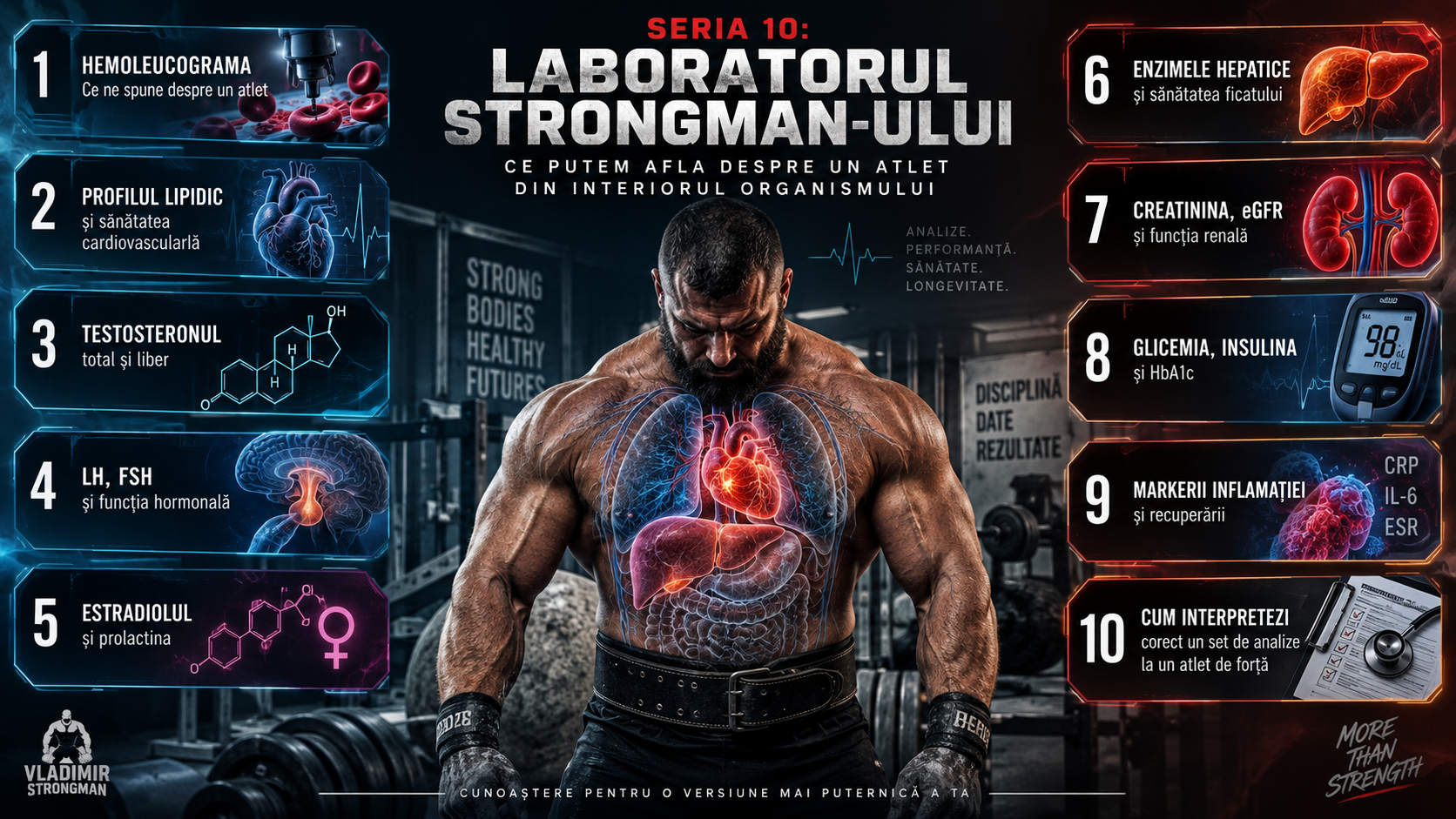
Episode 4: LH and FSH, the conductors that help us understand the hormonal axis
After discussing total and free testosterone in the previous episode, the next logical question is: who tells the body to produce testosterone, and how can we tell where a problem may originate when hormone results are not as expected? This is where LH and FSH enter the story, two pituitary hormones that signal the gonads and provide important clues about the hypothalamic-pituitary-gonadal axis.
In endocrine practice, LH and FSH are not two independent numbers. They should be interpreted together with testosterone, symptoms, medical history and, in selected situations, prolactin, SHBG and fertility assessment. The Endocrine Society recommends using LH and FSH to distinguish primary hypogonadism of testicular origin from secondary hypogonadism of hypothalamic or pituitary origin. citeturn726204search0
1. The hormonal axis: where does the command begin?
The male reproductive system operates as a feedback circuit. The hypothalamus releases GnRH in pulses, the pituitary responds by releasing LH and FSH, and these hormones act on the testes. LH stimulates Leydig cells to produce testosterone, while FSH, together with intratesticular testosterone and Sertoli cells, supports spermatogenesis.
This means that a problem can occur at several points in the circuit. Sometimes the testis does not respond adequately even though the pituitary sends a strong signal. At other times, the hypothalamus or pituitary does not send enough signal and the testis receives a weak command. LH and FSH help distinguish these situations.
2. LH: what is it and what does it tell us?
LH stands for luteinizing hormone. In men, its main role is to stimulate Leydig cells in the testes, which produce testosterone. When testosterone is low, we want to know whether LH is high, normal or low.
High LH in the presence of low testosterone suggests that the pituitary is trying to push the testis to produce more, but the testicular response is insufficient. This is the classic pattern of primary, or hypergonadotropic, hypogonadism.
Low or inappropriately low-normal LH in the presence of low testosterone suggests that the command signal itself is insufficient and raises the possibility of secondary, or hypogonadotropic, hypogonadism. The AUA describes this logic in its testosterone-deficiency evaluation algorithm. citeturn726204search24turn726204search25
3. FSH: why is it not simply the second LH?
FSH stands for follicle-stimulating hormone. In male physiology it is essential for Sertoli-cell function and sperm production. FSH therefore becomes particularly important when the question is not only “what does testosterone look like?” but also “what does reproductive function look like?”
Elevated FSH can point toward impairment of the testicular compartment responsible for spermatogenesis. However, a normal FSH does not guarantee normal fertility. The AUA/ASRM male-infertility guideline emphasizes that the relationship between FSH and spermatogenesis is complex and that a value within the laboratory reference range does not exclude a problem. citeturn726204search26
4. Why must LH and FSH be read together with testosterone?
Imagine three patterns. In the first, testosterone is low and LH is high. In the second, testosterone is low and LH is low or at the lower end. In the third, testosterone is normal and LH is normal. These three patterns tell different endocrine stories.
In the first pattern, the pituitary appears to be sending a strong command, but the testis is not responding adequately. In the second, the problem may be higher in the circuit, at the hypothalamic-pituitary level or in functional factors that reduce the hormonal drive. In the third, those two values do not provide an obvious sign of gonadal deficiency, although symptoms and the broader clinical picture still matter.
5. Primary versus secondary hypogonadism
Primary hypogonadism starts in the testis. Testosterone is low and LH and usually FSH tend to be elevated because the pituitary is trying to compensate. Causes can include testicular disease, some treatments, trauma, certain genetic conditions and other medical disorders.
Secondary hypogonadism results from a problem in the hypothalamus or pituitary. Testosterone is low, but LH and FSH are low or inappropriately normal. Causes may include pituitary disorders, hyperprolactinemia, some medications, obesity, chronic illness, severe energy deficiency and other conditions.
The distinction matters because the cause determines the next investigations. A testis that does not respond adequately to stimulation is not the same problem as a pituitary that fails to provide the appropriate stimulation.
6. Pulsatile hormones: why can one value mislead?
LH and FSH are secreted in pulses, and levels can vary. For this reason, clinicians do not interpret a number in isolation. The result is considered alongside testosterone, symptoms and the timing of the sample.
Testosterone also follows a circadian rhythm, so evaluation of possible deficiency relies on morning and, when indicated, repeated measurements. The Endocrine Society recommends confirming low testosterone with repeat morning testing and assessing the underlying cause. citeturn726204search0turn726204search2
7. LH and FSH in a strongman: what does sport change?
Strength training does not turn LH and FSH into magical tests, but the strongman context can include factors that affect the hormonal axis: very high training load, energy restriction, rapid weight loss, insufficient sleep, psychological stress, illness or use of hormonal substances.
That means an abnormal value has to be placed into the athlete’s story. It is not enough to know that the athlete trains five days per week. We also need to know the phase of preparation, sleep, energy intake and what medicines or substances are being used.
8. Energy deficiency and the hormonal axis
When the body receives too little energy relative to its needs, physiological systems considered less immediately essential can be downregulated. The reproductive axis is sensitive to energy availability and physiological stress.
For a strongman, this can occur during fat-loss phases, aggressive weight cutting or preparation for competition. Low testosterone in this setting should not automatically be interpreted as a permanent disease, and LH and FSH can help orient the evaluation.
9. Sleep, stress and the pituitary
Insufficient sleep and physiological stress can affect endocrine function. For an athlete accumulating short nights, travel, hard training and competition pressure, a hormone test taken during an unusual period may reflect the current context rather than the baseline state.
The Endocrine Society recommends that hypogonadism evaluation be performed under appropriate clinical conditions, avoiding premature interpretation during acute illness or other situations that can temporarily lower testosterone. citeturn726204search1
10. Prolactin: why does it enter the story?
Prolactin is produced by the pituitary and, when elevated, can suppress reproductive-axis function. In a man with low testosterone and low or low-normal LH, prolactin testing may be an important step in looking for the cause.
The AUA recommends measuring prolactin in men with low testosterone and low or low-normal LH; if prolactin remains elevated, additional endocrine evaluation may be needed. citeturn726204search24turn726204search25
11. When does the pituitary enter the conversation?
If a man has very low testosterone associated with low or low-normal LH, a pituitary cause may be considered. In selected cases, especially when prolactin remains elevated or other clinical signs are present, pituitary imaging may become appropriate.
This does not automatically mean a pituitary tumor. It means that the pattern deserves evaluation and the clinician decides the next step.
12. FSH and fertility: the part athletes sometimes forget
An athlete may focus almost entirely on testosterone, muscle mass and performance and forget that the hormonal axis also has a reproductive role. FSH is one of the central pieces of that story.
Exogenous testosterone can suppress LH and FSH and reduce intratesticular testosterone and sperm production. Therefore, a good blood testosterone concentration during exogenous androgen use does not mean that testicular function and fertility are normal.
The AUA/ASRM guideline recommends reproductive-health evaluation in men with testosterone deficiency who are interested in fertility and includes FSH in the evaluation of relevant situations. citeturn726204search26
13. Exogenous testosterone, low LH and low FSH
This is an example where the laboratory can look confusing without context. An athlete may have high total testosterone while LH and FSH are very low. That is not a contradiction. In the presence of an exogenous androgen, negative feedback can reduce hypothalamic and pituitary stimulation of the gonads.
That is why the clinician needs an accurate history of treatments and substances. Without it, the result can be interpreted incorrectly.
14. LH and FSH are not tests of “masculinity”
In gym culture, hormones can sometimes be turned into status scores. But LH and FSH do not measure how “masculine” an athlete is. They are physiological signals that help clinicians understand how an endocrine axis is functioning.
A high LH is not automatically good and a low LH is not automatically bad. Their meaning appears only in relation to testosterone, FSH, symptoms and context.
15. Practical example: low testosterone + high LH
Suppose a strongman has symptoms consistent with androgen deficiency and repeatedly low total testosterone. LH is high. In this situation, the body appears to be sending the command, but the testis is not responding adequately.
That pattern directs the investigation toward a testicular problem and may lead to further evaluation depending on age, history and physical examination. The final diagnosis is not made by LH alone.
16. Another example: low testosterone + low LH
In another scenario, testosterone is low but LH is low or inappropriately normal. The question moves higher up the axis. Prolactin, medication history, sleep, energy deficiency, obesity, chronic illness and possible neurological symptoms may become relevant.
This does not automatically mean a pituitary tumor. It simply means that the pattern deserves investigation and the clinician determines the next step.
17. Elevated FSH: what might it say about the testis?
If FSH is elevated, particularly in the setting of fertility concerns, there may be impairment of spermatogenesis or Sertoli-cell function. It is a clue, not a verdict about fertility.
Fertility is assessed from a larger set of data, and semen analysis may be needed to answer the direct question about sperm production.
18. SHBG and interpretation of the hormonal axis
SHBG, discussed in the previous episode, affects how much testosterone remains free in circulation. A fuller hormone profile can therefore include total testosterone, SHBG and, in selected situations, free testosterone.
LH and FSH tell the story of the command signal. Testosterone tells us about the circulating end result. SHBG helps explain transport. Together, these values are much more informative than any one of them alone.
19. Why is the reference range not enough?
A laboratory supplies reference ranges, but medical diagnosis does not rest only on whether a value falls between two limits. Symptoms, context, repeat testing and relationships among hormones matter.
An asymptomatic athlete with a slightly unusual result is not automatically ill. Another athlete with suggestive symptoms and repeatedly abnormal results may need evaluation even if one isolated result appears “almost normal.”
20. What tests can complete the picture?
Depending on the situation, a clinician may consider total and free testosterone, SHBG, prolactin, estradiol, TSH and other hormones or markers. For fertility, evaluation may include semen analysis and physical examination. For specific concerns, imaging can become appropriate.
The important idea is that there is no universal “strongman hormone panel” that replaces individualized medical assessment.
21. How does age affect interpretation?
Hormonal function changes with age, but that does not mean every symptom in a mature adult should automatically be blamed on “low testosterone.” The Endocrine Society emphasizes that diagnosis requires compatible symptoms and clearly and repeatedly low testosterone values. citeturn726204search2
For athletes, the same discipline is useful: do not treat an isolated number and do not assume every fall in performance is hormonal.
22. What does normal LH and FSH mean in a strongman?
Normal LH and FSH are reassuring only in the right context. They do not automatically guarantee an ideal testosterone level, normal fertility or perfect health.
At the same time, if testosterone is normal, symptoms are absent and the broader evaluation is reassuring, there is no reason to turn every hormone test into an endless investigation.
23. What does a clinician do differently from a laboratory calculator?
A calculator sees numbers. A clinician sees a patient: symptoms, medications, fertility goals, illnesses, physical examination, sampling time and the trajectory of results over time.
That is the difference between reading a lab report and interpreting a biological function. LH and FSH are valuable precisely because they sit inside a network of physiological relationships.
24. When should an athlete seek medical assessment?
Persistent symptoms such as reduced libido, sexual dysfunction, infertility, unexplained fatigue or declining physical function without another clear explanation justify medical discussion, especially when laboratory abnormalities are present.
New neurological symptoms, persistent headache, visual changes or other signs that could suggest pituitary disease should be evaluated medically rather than simply blamed on hard training.
25. The laboratory as a map of hormonal command
In strongman, we see the final result: the bar moves or it does not. In the laboratory, we can see part of the command chain supporting androgenic and reproductive function. LH and FSH show us how strong the pituitary signal is and, together with testosterone, can indicate where a problem may deserve attention.
The hormonal axis is like a coordinated pulling team: the hypothalamus sends the impulse, the pituitary gives the commands, the testis executes, and feedback tells the system when to reduce or increase the signal. When one segment breaks, randomly changing another component does not repair the system.
26. Conclusion
LH and FSH are among the most useful laboratory markers for understanding where a gonadal-function problem may originate. LH helps evaluate the signal to Leydig cells and testosterone production, while FSH is essential to understanding Sertoli-cell function and spermatogenesis.
For a strongman, the lesson is simple: do not interpret testosterone alone. When low values or compatible symptoms appear, LH and FSH can turn an isolated number into a map of the problem. That map becomes more useful when read together with prolactin, SHBG, fertility, medical history, sleep, energy availability and the rest of the clinical picture. Diagnosis should be based on context and appropriate measurement, not a single result. citeturn726204search0turn726204search1turn726204search26
Quick glossary
LH: luteinizing hormone, produced by the pituitary, stimulating Leydig cells to produce testosterone. FSH: follicle-stimulating hormone, involved in Sertoli-cell function and spermatogenesis. GnRH: hypothalamic hormone controlling pulsatile LH and FSH secretion. Primary hypogonadism: gonadal deficiency of testicular origin. Secondary hypogonadism: gonadal deficiency caused by a hypothalamic-pituitary disorder. Prolactin: pituitary hormone that can influence reproductive-axis function.
Editorial note: this article is educational and does not replace individualized medical care. Interpretation of LH, FSH, testosterone and other hormones should be performed by a clinician in the context of symptoms, history and repeated results.
More From The Journal

Training
The Science of Strongman Training - Episode X: Competition Programming
How to build a complete Strongman competition preparation block: calendar, events, volume, intensity, specificity, simulations, autoregulation, tapering and fatigue management.

Training
The Science of Strongman Training - Episode IX: Peaking
Peaking in Strongman: how to turn months of training into maximal competition performance by reducing fatigue, preserving adaptations and managing specificity.