
Physiology
The Strongman Laboratory: What We Can Learn About an Athlete from Inside the Body - Episode 2: Lipid Profile and Cardiovascular Health
September 7, 2026
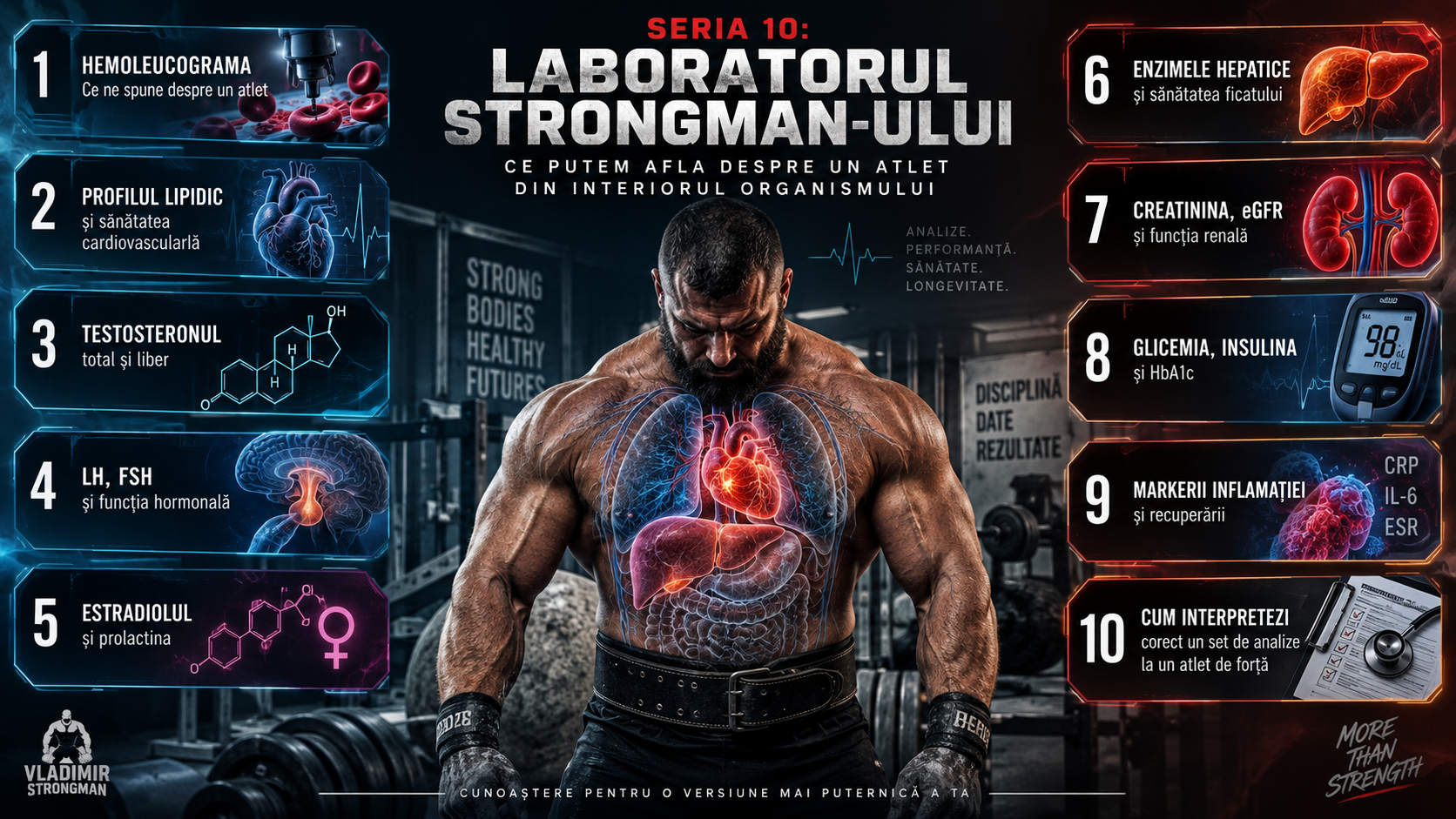
Episode 2: When Cholesterol Enters the Strongman Laboratory
A strongman can push, pull and lift weights that make the floor complain, but the heart and blood vessels do not receive an exemption from biology. The lipid profile is one of the windows through which we can examine this less visible side of performance: how cholesterol and triglycerides circulate, how much atherogenic lipoprotein exposure may be present, and which factors can shape cardiovascular risk over the long term.
In 2026, the ACC/AHA dyslipidemia guideline placed renewed emphasis on LDL-C and non-HDL-C treatment goals and expanded risk assessment with markers such as lipoprotein(a) and apolipoprotein B in selected situations. The key message for athletes is not that every laboratory number should be obsessed over, but that a result becomes useful when it is interpreted in the context of the whole risk profile.
1. What is a lipid profile, really?
A lipid profile is a set of measurements describing the main lipid fractions in the blood. The standard panel usually includes total cholesterol, LDL cholesterol, HDL cholesterol and triglycerides. Non-HDL cholesterol can be calculated or reported from these values, and when the clinical question calls for it, ApoB and lipoprotein(a) can add further information.
For a strongman, the panel should be viewed as a photograph, not a verdict. A single result can be influenced by diet, alcohol, body weight, carbohydrate and fat intake, hydration, intercurrent illness, medication and, in some situations, substances that alter lipid metabolism.
2. Total cholesterol: useful, but incomplete
Total cholesterol adds together cholesterol carried by several lipoprotein particles. That is why it can be a starting point but cannot, by itself, tell us how much cholesterol is being carried in atherogenic particles or how it is distributed among LDL, HDL and other fractions.
An athlete may have a seemingly acceptable total cholesterol while still having a profile worth discussing, for example if LDL-C or triglycerides are elevated, non-HDL-C is high, there is a strong family history, or other cardiovascular risk factors are present.
3. LDL-C: the number that deserves the most attention
LDL cholesterol is carried in LDL particles. Higher concentrations and longer exposure to atherogenic lipoproteins are associated with cholesterol accumulation in the arterial wall and the development of atherosclerosis. Current guidelines place LDL-C at the center of evaluation and cardiovascular risk reduction.
For a strongman, a high LDL-C does not become harmless because the athlete is muscular, well trained or capable of lifting enormous loads. Muscular performance and atherosclerotic risk are different biological questions.
Cardiovascular risk is also cumulative. Exposure to elevated LDL over many years matters, which is why a persistent abnormal result deserves explanation and follow-up rather than being dismissed as a laboratory curiosity.
4. HDL-C: good cholesterol is not a shield
HDL cholesterol is often called good cholesterol because higher concentrations have been associated epidemiologically with lower cardiovascular risk. However, HDL-C is not a treatment target on its own, and a high value does not cancel out elevated LDL-C or other risk factors.
This is a classic interpretation trap: seeing a favorable HDL result and concluding that the whole lipid profile must be favorable. Cardiovascular biology does not have a single green switch and a single red switch.
5. Triglycerides: energy moving through the bloodstream
Triglycerides are the main form of circulating fat and an important way the body transports and stores energy. They can be influenced by energy intake, refined carbohydrates, alcohol, visceral adiposity, insulin resistance and certain diseases or medications.
In strength sports, a high calorie intake can be strategically useful during mass-gain phases, but not every calorie surplus is metabolically neutral. Persistently elevated triglycerides can appear in settings where energy balance, insulin sensitivity and diet quality need to be reassessed.
Very high triglycerides create another, distinct issue beyond atherosclerotic risk: the risk of pancreatitis. Extremely elevated values are therefore not a cosmetic laboratory finding.
6. Non-HDL-C: a simple but useful number
Non-HDL cholesterol represents cholesterol carried by all atherogenic lipoproteins and is generally calculated as total cholesterol minus HDL-C. It can provide a broader picture than LDL-C, especially when triglycerides are elevated and more triglyceride-rich remnant particles are present.
For athletes, the conceptual advantage is straightforward: instead of focusing on one lipoprotein family, you look at the total cholesterol carried by particles considered atherogenic.
7. ApoB: particle number can matter
Apolipoprotein B, or ApoB, is the main protein component of several atherogenic lipoproteins. In selected situations, ApoB can add information beyond LDL-C because it better reflects the number of atherogenic particles when particle composition varies.
The 2026 ACC/AHA guideline notes that ApoB can be useful particularly in people with elevated triglycerides, diabetes, established cardiovascular disease, or situations where LDL-C and non-HDL-C do not fully capture residual risk.
8. Lipoprotein(a): the genetic piece a standard panel can miss
Lipoprotein(a), or Lp(a), is strongly influenced by genetics and can contribute independently to cardiovascular risk. Unlike triglycerides, it is generally not something you can dramatically normalize simply by changing your diet or adding more cardio.
The 2026 ACC/AHA update recommends measuring Lp(a) at least once in adulthood because a standard lipid panel may not capture this component of cardiovascular risk.
9. Why does the lipid profile matter to a strongman?
Strongman is a sport with major demands on the musculoskeletal and cardiovascular systems. Events combine high force production, handling large loads, sustained bracing, dynamic work, intense sympathetic activation and, at times, heat exposure or dehydration.
An unfavorable lipid profile does not mean that one training session suddenly becomes dangerous. The issue is accumulated cardiovascular risk over time. That is why heart health should be treated as a long-term project rather than a check performed only before competition.
10. Muscle mass does not automatically protect the arteries
One of the most persistent myths in strength sports is that a large, strong and well-trained body is automatically cardiovascularly healthy. Muscle mass can come with excellent physical capacity, but it does not erase genetic predisposition to hypercholesterolemia, hypertension, diabetes or atherosclerosis.
Being able to deadlift a massive weight and having favorable LDL-C are two different achievements. Ideally, an athlete pays attention to both.
11. Genetics: when the laboratory tells a family story
A family history of premature cardiovascular disease can change how a lipid profile is interpreted. Familial hypercholesterolemia is an important example: some people begin life with much higher LDL-C because of a genetic predisposition, regardless of how disciplined their training is.
For a strongman, this is one reason not to reduce the entire issue to diet. Nutrition matters, but a persistently abnormal profile can require a more detailed medical assessment.
12. Bulking nutrition and the lipid profile
Mass-gain phases can involve very high calorie intake, frequent meals and sometimes large amounts of saturated fat, ultra-processed foods or desserts. There is no universal strongman menu that is automatically good or bad, but diet composition can influence the lipid profile.
In practice, it is worth paying attention to fat sources, fiber intake, vegetables and fruit, fish and minimally processed foods, as well as the proportion of highly energy-dense foods. A chronic and very large calorie surplus can worsen other cardiometabolic markers as well, not just body weight.
13. Cardio and the paradox of the very strong athlete
A strongman does not need to become a distance runner to care about the heart. Still, aerobic capacity and regular physical activity have their own importance for cardiovascular health. Conditioning can support cardiometabolic health, recovery between events and tolerance of repeated efforts.
Strength work and cardiovascular conditioning are not enemies. In a well-designed program they can coexist, each solving a different physiological problem.
14. Blood pressure belongs next to the lipid profile
The lipid profile does not exist in isolation. Blood pressure, smoking, diabetes, kidney function, family history, age and other cardiometabolic conditions all influence total risk. That is why two people with the same LDL-C do not necessarily have the same cardiovascular risk.
In strength sports, blood pressure deserves special attention because heavy lifting can produce very large acute pressure responses. That does not mean every training session is automatically dangerous, but it highlights the value of medical assessment when abnormal resting values persist or symptoms are present.
15. What changes when body weight changes?
Weight gain or weight loss can change triglycerides and other metabolic markers. In a strongman, body weight should be interpreted alongside body composition, season phase and the athlete's performance objective.
An athlete can have impressive muscle mass while also carrying more visceral fat or developing an unfavorable metabolic profile. That is why the scale alone is not enough to evaluate health.
16. Substances and the lipid profile
Some medicines and substances with hormonal or metabolic effects can significantly alter lipid measurements. In performance sports, a complete history matters because a high LDL-C or low HDL-C can have different interpretations depending on the context.
Transparency with the clinician is therefore essential. Without an accurate history, the laboratory provides numbers while the clinician is forced to guess the story behind them.
17. Do you need to fast for a lipid profile?
Whether fasting is needed depends on the laboratory protocol, the clinical situation and what other tests are being drawn at the same time. Many modern lipid assessments can be interpreted without prolonged fasting, while in some settings, especially when triglycerides are markedly elevated, a clinician may prefer a standardized fasting sample.
For long-term comparisons, keeping the testing conditions reasonably consistent can be more useful than constantly changing the protocol.
18. One test or the trend over time?
The trend is often more informative than an isolated snapshot. If LDL-C, non-HDL-C or triglycerides remain abnormal across repeated measurements, that provides much stronger information than a single unexpected result.
For an athlete, it can be useful to relate laboratory results to the training phase: off-season, mass gain, fat-loss phase, pre-contest period and periods of high conditioning volume.
19. An interpretation exercise in three scenarios
Imagine three athletes with similar total cholesterol. The first has elevated LDL-C, normal triglycerides and a strong family history. The second has moderate LDL-C but elevated triglycerides and evidence of insulin resistance. The third has broadly favorable standard lipids but a high Lp(a).
These three profiles do not tell the same story, even if the total cholesterol number looks similar. Modern risk assessment therefore moves from one headline value toward an integrated model.
20. What does high LDL-C mean for performance?
High LDL-C does not automatically mean that strength will drop tomorrow or that an athlete cannot compete. It is primarily a signal about long-term cardiovascular health and the need to evaluate the cause and overall risk.
The goal of preventive health is not to sacrifice athletic performance, but to build the longest and healthiest athletic career possible and reduce the chance of a problem that could remove the athlete from the sport before the muscles do.
21. When should a lipid profile be discussed with a doctor?
Medical assessment is especially appropriate when values remain abnormal, when there is a family history of premature cardiovascular disease, when LDL-C is very high, when triglycerides are very high, or when additional risk factors such as hypertension, diabetes or kidney disease are present.
Symptoms such as chest pain, unusual shortness of breath, fainting, persistent palpitations or an unexplained drop in exercise tolerance should not be attributed to cholesterol. They require appropriate clinical evaluation.
22. The lipid profile and modern cardiovascular prevention
The ACC/AHA guideline published in 2026 recommends a more personalized and earlier approach to dyslipidemia. For adults, risk assessment can integrate cholesterol, blood pressure and other personal factors, while selected cases may benefit from Lp(a), ApoB and coronary artery calcium scoring to refine risk.
The lesson is relevant to athletes as well: excellent physical performance does not eliminate the need for prevention. Sometimes an athlete looks outstanding on the outside while the laboratory identifies a risk factor that can be addressed years before a clinical problem appears.
23. What does smart monitoring look like for a strongman?
Good monitoring does not mean repeating random tests. It means tracking relevant markers under reasonably comparable conditions and relating them to body weight, blood pressure, diet, training, recovery and personal history.
For some athletes, periodic testing may include total cholesterol, LDL-C, HDL-C and triglycerides. Depending on clinical context, non-HDL-C, ApoB, Lp(a), glucose, HbA1c, kidney function, liver enzymes and other markers may be useful.
24. What not to do when you get the results
It is not useful to turn one abnormal value into a diagnosis or to start supplements or medication based on gym-floor advice. It is equally unhelpful to ignore a persistent abnormality simply because you feel strong and train hard.
When a result is abnormal, the better questions are: why is it abnormal, how persistent is it, and how does my overall risk change if it stays that way?
25. The laboratory as the backstage crew
A strongman sees the bar, the log, the stones, the bags and the clock. The laboratory sees the less glamorous machinery: lipid transport, metabolism, organ function and biological signals that can point to future risk long before symptoms become visible.
The lipid profile is one member of that backstage crew. It does not decide on its own whether an athlete is healthy, but it can show us where a closer look is warranted.
26. Conclusion
For a strongman, cardiovascular health does not have to be the enemy of performance. The lipid profile offers an accessible way to track an important part of long-term risk: LDL-C, HDL-C, triglycerides and non-HDL-C, with ApoB and Lp(a) adding information when appropriate.
The most important principle is context. A result should be interpreted alongside blood pressure, family history, body weight and composition, glucose metabolism, nutrition, physical activity and, when relevant, pharmacological or medical factors. Muscles can be spectacular; arteries still follow their own rules.
Quick glossary
LDL-C: cholesterol carried in LDL particles. HDL-C: cholesterol carried in HDL particles. Triglycerides: the main form of circulating fat. Non-HDL-C: total cholesterol minus HDL-C. ApoB: marker of the number of atherogenic particles. Lp(a): a lipoprotein with a strong genetic component that is associated with cardiovascular risk.
Editorial note: this article is educational and does not replace individualized medical care. Lipid targets and treatment decisions should be based on overall cardiovascular risk and applicable clinical guidelines.
More From The Journal

Training
The Science of Strongman Training - Episode X: Competition Programming
How to build a complete Strongman competition preparation block: calendar, events, volume, intensity, specificity, simulations, autoregulation, tapering and fatigue management.

Training
The Science of Strongman Training - Episode IX: Peaking
Peaking in Strongman: how to turn months of training into maximal competition performance by reducing fatigue, preserving adaptations and managing specificity.