
Physiology
The Strongman Laboratory: What We Can Learn About an Athlete from Inside the Body - Episode 1: The Complete Blood Count and What It Tells Us
September 7, 2026
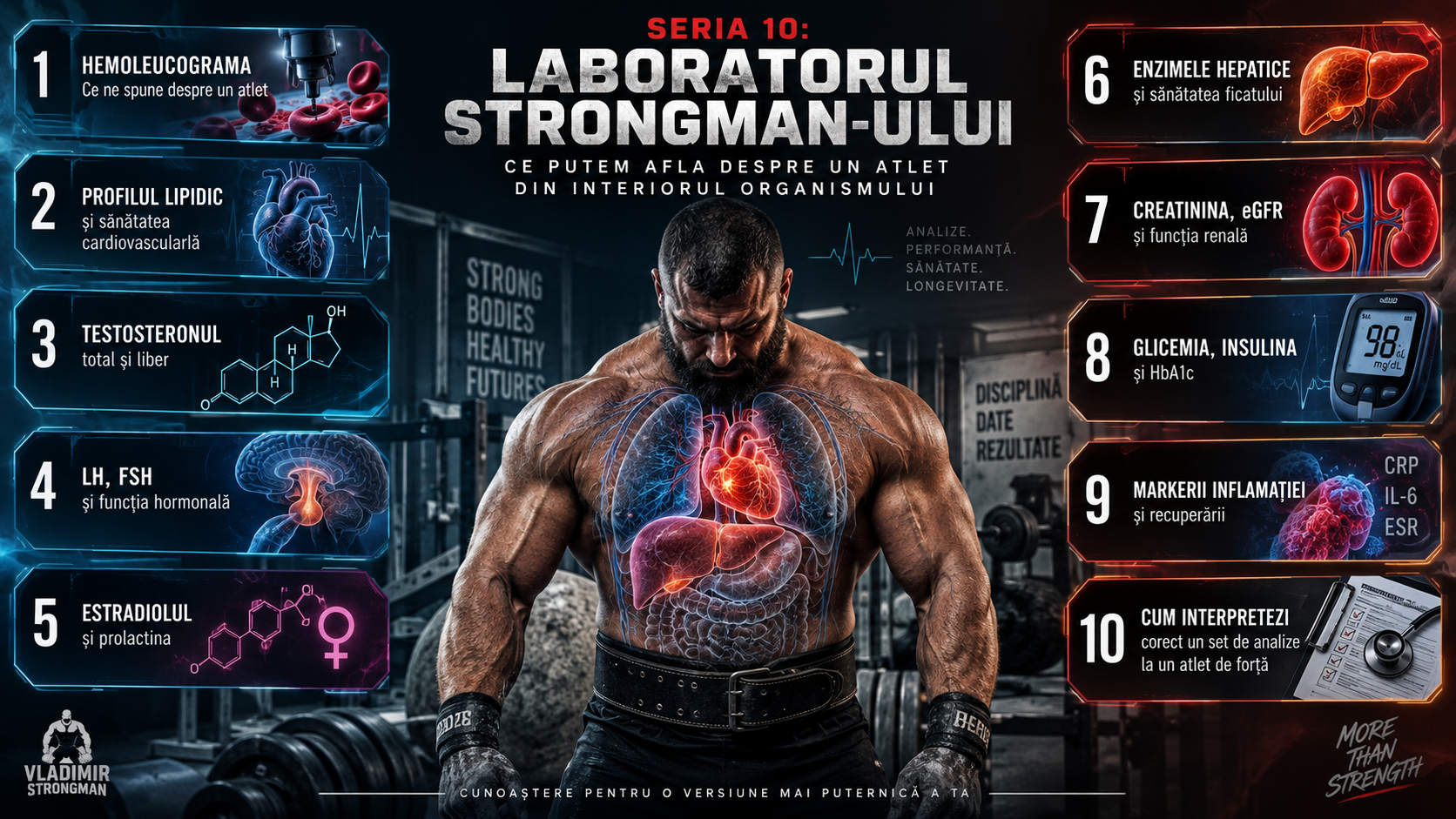
Introduction: the laboratory begins before the result
An athlete can look perfectly healthy when he walks into the gym, lift enormous weights and perform at an elite level, while a blood test can show that the body is operating in a different internal context. The complete blood count is one of the simplest windows into that hidden environment. It cannot tell you who will win a competition and it cannot measure conditioning by itself, but it can provide information about blood cells and raise important questions about oxygen transport, immune response, bleeding, inflammation and general health.
In strongman, interpretation requires even more context. Training volume, high body mass, sweating, nutrition, sleep, travel and competition stress can temporarily shift some values. An isolated number may be insignificant, may reflect a physiological response or may point toward an issue worth investigating. Good interpretation starts by understanding what each component measures and why context matters.
What is a complete blood count?
A complete blood count, commonly called CBC, measures the main populations of cells in the blood. Depending on the laboratory and the panel, it usually includes red blood cell count, hemoglobin, hematocrit and red-cell indices, total white blood cell count and often a differential count. Platelets are also an essential part of the assessment.
Blood is more than a fluid that circulates. It transports oxygen, carbon dioxide and nutrients, participates in immune defense, helps control bleeding and distributes heat. That is why a CBC provides a cellular view of a system that supports all of these functions.
Red blood cells: vehicles for hemoglobin
Red blood cells are the cells that carry hemoglobin. They circulate through the vascular system and allow oxygen captured in the lungs to reach tissues. For a strongman, this matters because working muscle needs oxygen for oxidative metabolism and tissues must handle demand and recovery between efforts.
Red-cell count should not be interpreted alone. A high count does not automatically mean better performance, and a low count does not by itself explain why an athlete is tired. Hemoglobin, hematocrit, red-cell volume and hydration status provide complementary information.
Hemoglobin: one of the key numbers
Hemoglobin is the protein that binds oxygen inside red blood cells. When discussing oxygen transport, hemoglobin concentration is one of the most important values in a CBC. A low value can occur in anemia, and the cause can be very different: iron deficiency, blood loss, inflammation, other disease or a combination of factors.
In a strength athlete, hemoglobin should be interpreted alongside symptoms and other tests. A hemoglobin concentration within the laboratory reference range does not guarantee that an athlete is optimal in every respect, and a mildly abnormal value does not establish a diagnosis by itself. Reference ranges differ among laboratories and populations.
Hematocrit: how much of the blood is red cells?
Hematocrit expresses the proportion of blood volume occupied by red blood cells. It can change with red-cell mass and plasma volume. This is crucial for athletes because the same amount of cells can produce different measured concentrations depending on whether the blood is more concentrated or more diluted.
Dehydration can temporarily concentrate the blood and raise some measured values without suddenly creating new red blood cells. Conversely, plasma-volume expansion can make some values appear lower. For a strongman who sweats heavily, trains hard or is tested under unusual conditions, timing and hydration can matter.
MCV, MCH and MCHC: indices that add meaning
MCV describes the average volume of a red blood cell. MCH gives the average amount of hemoglobin per red cell, while MCHC describes the average hemoglobin concentration within red cells. These values are not just laboratory jargon. They help clinicians recognize patterns and decide which causes of anemia or other red-cell abnormalities should be considered.
For example, anemia with a low MCV can point the investigation toward iron deficiency, but it is not enough to prove that cause. Other combinations may have different explanations. Interpretation should be combined with ferritin, iron studies, inflammation markers or other tests when appropriate.
RDW: how different are the red cells from one another?
RDW reflects variation in red-cell size. A wider distribution can occur in certain nutritional deficiencies or during periods when the red-cell population is changing. It is a good example of why a CBC should be read as a pattern rather than a list of independent numbers.
Anemia in a strength athlete
Anemia is essentially a reduced oxygen-carrying capacity related to insufficient hemoglobin or red-cell mass for the body’s needs. An athlete may notice fatigue, reduced exercise tolerance, unusually difficult breathing or performance decline, but these symptoms are nonspecific.
Iron deficiency is one important cause, but not every athlete with low hemoglobin is iron deficient. Blood loss, inflammation, kidney disease and other conditions can affect red-cell production or survival. For that reason, iron supplementation should not be started simply because an athlete sees a frightening CBC result.
Iron: the CBC can raise the question, not close the case
A CBC can suggest possible iron deficiency when several results form a particular pattern, but assessing iron stores usually requires additional tests. Ferritin is commonly used to assess iron stores, but it also needs context because it can rise with inflammation.
For a strongman, high calorie intake does not automatically protect against deficiency. A large diet can still provide too little iron for an individual athlete’s needs. History of blood loss, medical procedures or other personal factors may also matter.
White blood cells: a window into immunity
White blood cells are involved in immune defense and many inflammatory processes. Total white blood cell count can rise temporarily after physiological stress, intense exercise or infection, and an abnormal result does not automatically mean the athlete is ill.
After a very hard training session, the white-cell response can differ from that of a quiet morning. For this reason, blood sampling should be standardized when the goal is to track trends. Comparing tests collected under very different conditions can produce misleading conclusions.
White-cell differential: neutrophils, lymphocytes, monocytes, eosinophils and basophils
The white-cell differential breaks the total count into different cell types. Neutrophils are important in responses to infection and physiological stress, lymphocytes participate in adaptive immune functions, monocytes contribute to immune responses and tissue cleanup, while eosinophils and basophils can be relevant in settings such as allergy and specific diseases.
Again, there is no simple rule that more cells are better. An abnormal differential requires interpretation alongside symptoms, history, medications and other laboratory findings.
Platelets: more than clotting
Platelets participate in clot formation and control of bleeding. They are also involved in tissue repair processes. A low or high platelet count can have many causes and should not be treated as a direct performance marker.
In a sport involving repeated contact with heavy implements, minor trauma and substantial mechanical stress, platelet findings can become clinically relevant. However, a CBC alone cannot tell whether a tendon or muscle is healing properly.
What can a CBC tell us about recovery?
Indirectly, a CBC can contribute to the search for reasons why recovery is going poorly. Anemia can limit oxygen transport, white-cell abnormalities can raise questions about infection or inflammatory stress, and platelet abnormalities may require additional assessment. But a CBC is not a recovery score.
An athlete can have a completely normal CBC and still be exhausted because of poor sleep, inadequate energy intake, badly managed training, endocrine problems or simply a large accumulated stress load. Laboratory data provide pieces of the puzzle, not the whole picture.
What is the connection between a CBC and oxygen transport?
Oxygen transport depends on several links: the lungs must load the blood, hemoglobin must carry oxygen, the heart must provide cardiac output and the vascular system must deliver blood to tissues. A CBC evaluates only one important part of that chain, especially the red-cell component.
For strongman, this distinction is essential. Good hemoglobin does not automatically compensate for a cardiopulmonary problem, and a higher hematocrit does not automatically mean an athlete uses oxygen more efficiently at the muscle.
Why hydration can change interpretation
Plasma volume influences blood concentrations. When an athlete is dehydrated, some values may appear higher because of hemoconcentration. After rehydration, values can shift without a true change in red-cell mass.
This does not mean dehydration explains every abnormal result. It means that the collection context matters: timing, hydration, recent exercise, recent illness and general conditions all belong in the interpretation.
The effect of hard training on the CBC
Acute exercise can temporarily alter some blood components through redistribution, mobilization of cells from storage compartments and changes in plasma volume. A CBC taken immediately after a brutal session should therefore not be treated as identical to one collected after a standardized rest period.
For monitoring, consistency is valuable. If the goal is to follow trends, collect samples under comparable conditions and record the relevant training and recovery context.
What can a high hemoglobin value mean?
High hemoglobin can have different explanations, including hemoconcentration from dehydration, adaptation to altitude or other medical conditions. There is no universal single explanation.
In sport, interpretation is especially important when values stay elevated over time or occur with symptoms or other abnormalities. This is where the answer is evaluation, not a quick conclusion.
What can a low hemoglobin value mean?
Low hemoglobin can indicate anemia, but the cause must be investigated. Red-cell indices can guide the next questions, while diet history, blood loss, chronic disease and other tests can help clarify the situation.
For a strongman, a persistent drop in performance together with low hemoglobin deserves attention. Still, it is not prudent to assume iron deficiency automatically or begin treatment without appropriate evaluation.
CBC and muscle mass: a common misunderstanding
A large athlete does not automatically need higher values for every blood component. Muscle mass, body weight and body size do not turn the CBC into a leaderboard. Laboratory values have reference intervals and clinical meaning, not performance targets based on the number on the scale.
CBC and immunity during high-volume training
Periods of high training volume, frequent travel, reduced sleep and competition stress can influence illness risk, but a CBC cannot measure how „good” the immune system is by itself. It can identify some white-cell changes, but their meaning must be established in context.
A mildly elevated total white-cell count in an athlete who just completed intense exercise does not necessarily have the same significance as the same value in someone with fever and respiratory symptoms. Context changes the story.
A CBC does not directly measure inflammation
Some white-cell changes may occur with inflammation, but the CBC is not a specific inflammation marker. Questions about inflammation may require other tests, such as C-reactive protein or ESR, depending on the clinical context.
A CBC does not tell you how strong you are
This may be the most important point. You can have an excellent CBC and a modest deadlift. You can have impressive athletic performance and still have a medical problem. Laboratory testing does not replace measured performance in the gym or a clinical examination.
The purpose of the test is different: it can identify signals worth following and contribute to a broader assessment of health.
How should a strongman read a CBC?
A sound approach begins with three questions. First, is there a true deviation from the laboratory reference interval? Second, does the deviation persist over time? Third, are there symptoms or other results that support the same story?
For example, a mildly different hemoglobin value on a single blood draw does not carry the same weight as the same change across several standardized tests, especially if performance and general well-being move in the same direction.
Why a trend can be more useful than a snapshot
One blood test is a snapshot. Several standardized tests over time can become a film. For an athlete monitoring health, trends are useful because they can show whether a change is transient or persistent.
Even a trend is not enough without context. A change may coincide with a new diet, a recent infection, a very high-volume phase, altered sleep or another factor.
Which tests can complement a CBC?
Depending on the clinical question, a clinician may order additional tests. When iron deficiency is suspected, ferritin and other iron studies can be useful. Kidney and liver function require other markers. Metabolic, endocrine and inflammatory questions require their own tests.
The central idea is simple: do not order every test just because a laboratory can run it. Choose tests that answer concrete questions. A useful result is one that helps a decision, not simply a long page of numbers.
When should a strongman discuss a result promptly?
Severely abnormal values, clear changes from personal history or results associated with symptoms such as fainting, unusual shortness of breath, bleeding, persistent fever or marked weakness require medical assessment. Performance sport does not provide immunity from illness.
It is especially important not to interpret one isolated number as a diagnosis and not to change medications or supplements based on one result without medical advice.
Interpretation example: low hemoglobin + low MCV
This pattern can suggest microcytic anemia, and iron deficiency is one common cause. But the CBC does not close the diagnosis. A clinician may check ferritin, dietary history, possible blood loss and other causes.
Another example: high hemoglobin + high hematocrit
This profile can occur with hemoconcentration, altitude adaptation or other conditions. To decide what it means, hydration, history and persistence of the abnormality matter.
Another example: elevated white blood cells after competition
Exercise and physiological stress can temporarily alter white blood cell counts. If the athlete is asymptomatic and the value normalizes, interpretation may be different from a case in which leukocytosis persists or occurs alongside fever and other signs.
What does all this mean for athlete monitoring?
A CBC is useful as one part of health monitoring, not as a stand-alone performance optimization tool. A sensible protocol includes reasonably standardized blood draws, preservation of previous results and correlation with sleep, performance, body weight, nutrition and general well-being.
In other words, the number should not make the decision by itself. It should join the rest of the data in the conversation.
Simple model: the CBC as the backstage crew
Imagine a competition as a show. Muscles are the stage, while the CBC gives you a look at several of the teams backstage. Red blood cells carry hemoglobin, white blood cells belong to the defense system and platelets participate in bleeding control and repair.
A good-looking stage does not automatically mean every backstage team is perfect. But when one team sends a clear signal, it deserves a closer look. That is the real value of the CBC.
Conclusion
For a strongman, the CBC is a useful window into the body’s internal state, but it is not a performance test. Red blood cells, hemoglobin and hematocrit provide important information about the blood component of oxygen transport. MCV, MCH, MCHC and RDW help interpret red-cell patterns. White blood cells and their differential provide clues about immune function and some responses to stress or illness. Platelets add information about hemostasis and repair.
Good interpretation does not mean searching for the perfect number. It means understanding what each value measures, comparing results over time and relating them to the athletic and clinical context. The laboratory does not tell you directly how strong you are. It can tell you whether parts of the system deserve a closer look.
Quick glossary
Complete blood count: a test assessing major blood-cell populations. Red blood cell: the cell that carries hemoglobin. Hemoglobin: the protein that binds oxygen. Hematocrit: the proportion of blood volume occupied by red blood cells. MCV: mean red-cell volume. MCH: mean hemoglobin amount per red cell. MCHC: mean hemoglobin concentration in red cells. RDW: variation in red-cell size. White blood cell: a cell involved in defense. Platelet: a cellular element important in clotting and repair. Anemia: a state of reduced oxygen-carrying capacity related to available hemoglobin and red-cell mass.
Editorial note: this material is educational and does not replace medical evaluation, interpretation of laboratory results by a clinician or individualized diagnostic and treatment advice.
More From The Journal

Training
The Science of Strongman Training - Episode X: Competition Programming
How to build a complete Strongman competition preparation block: calendar, events, volume, intensity, specificity, simulations, autoregulation, tapering and fatigue management.
Training
The Science of Strongman Training - Episode IX: Peaking
Peaking in Strongman: how to turn months of training into maximal competition performance by reducing fatigue, preserving adaptations and managing specificity.