
Training
History of Strongman - Episode X: Where Is the Sport Going?
September 26, 2026
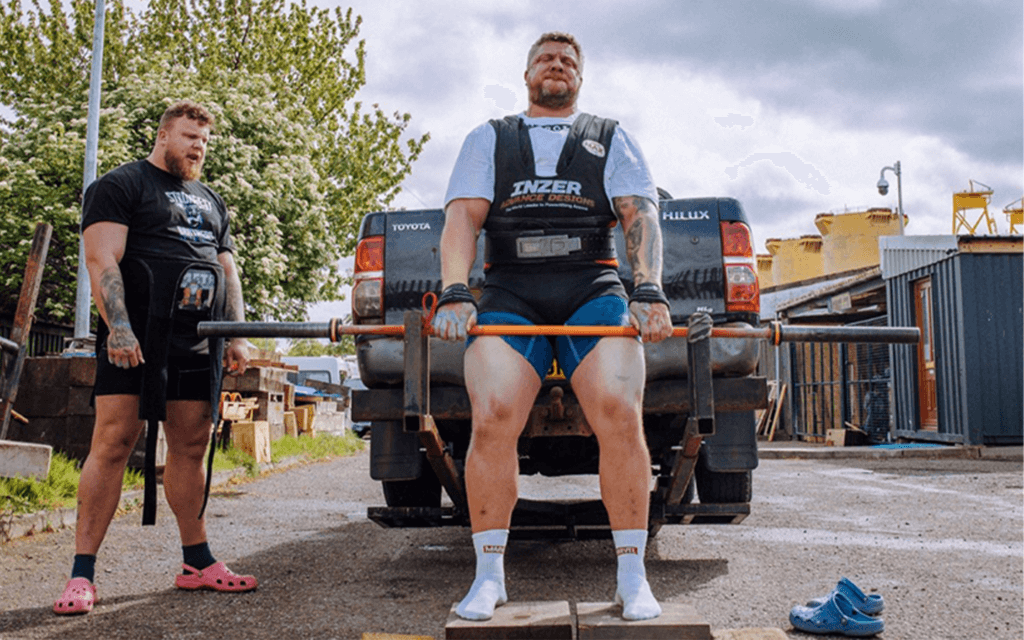
If the previous episodes of this series followed the road from the circus strongman to the modern athlete, Episode X asks the natural question: what comes next? Strongman is no longer a young discipline. It has international championships, professional circuits, live broadcasts, databases, multiple divisions and a generation of athletes who treat preparation as a profession.
But sport becoming mature does not mean its direction is already decided. Quite the opposite. The most interesting questions appear now: will Strongman become more standardized or preserve its unpredictability? Will records matter more, or overall standings? Will sports science become more influential? Will the sport become more accessible to women, weight classes and Masters? And perhaps most importantly, how far can the human body be pushed before the cost becomes too high?
1. The future will not look exactly like the present
There is no single mandatory direction for Strongman. The sport is shaped by the interaction of promoters, athletes, fans, sponsors, media and rules. When one of these components changes, the sport changes with it.
Still, current trends allow some cautious predictions. Strongman appears to be moving toward better-produced competitions, more complete athletes, smarter use of data and a global audience. In 2026, the Giants Live circuit continues to combine major arenas, online broadcasts and the qualifying role for World's Strongest Man, while Official Strongman provides competitions, online qualifiers and a video library. These are signs of an ecosystem that no longer depends on one annual contest.
2. The athlete of the future will be even more complete
The direction of the sport favors the athlete with as few holes in his profile as possible. Maximal strength remains mandatory, but differences can be decided by speed, mobility, technique, conditioning, grip and the ability to recover.
The current competitive level provides a useful example. At the 2026 World's Strongest Man, Mitchell Hooper won the title through consistency: he did not win a final event, but remained high enough in the standings and finished decisively in the Atlas Stones. This shows that modern excellence is not necessarily a collection of extreme specializations, but the ability to limit weaknesses.
3. Events will become smarter
Strongman has an interesting problem: event unpredictability is one of its defining qualities. Yet professional competition needs clear rules, accurate measurement and comparable outcomes.
The likely future is not eliminating creativity, but designing events more carefully. Promoters can control weight, distance, height, time and order more precisely while keeping the awkward objects that make Strongman recognizable. Standardization can therefore improve fairness without turning the sport into a copy of powerlifting.
4. Technology will measure what we once only observed
Video is already an essential part of Strongman. The next step is quantification. Force platforms, inertial sensors, high-speed cameras and software analysis can measure speed, acceleration, contact time, joint positions and technical changes under fatigue.
This does not mean every training session should become a laboratory. Technology has value when data change a decision. If an athlete discovers that he loses time through short steps in the Farmer's Walk or through a slow transition between phases of an event, measurement becomes useful because it can change training.
5. Strongman science will grow, but remain behind established Olympic sports
Biomechanical research on Strongman has grown, but the evidence base remains small. A systematic review identified only 11 eligible articles for biomechanical analysis of events such as the Farmer's Walk, Yoke Walk, Tire Flip, Log Lift and Atlas Stones and highlighted major knowledge gaps.
That gap can become an opportunity. Future studies can compare elite athletes, track long-term adaptations and analyze relationships among technique, load, fatigue and injury. As the sport becomes more professional, the questions become more precise.
6. Load management will become a competitive weapon
In the past, training hardness was often confused with training effectiveness. Modern sport increasingly separates the two. International sports-medicine consensus statements recommend monitoring training and competition load, well-being, fatigue and recovery because rapid changes in load and congested calendars can increase health problems.
For Strongman, this principle is especially important. An athlete must prepare multiple systems at once and repeatedly expose the body to very high loads. The future will likely favor athletes who can identify earlier when a session should be reduced, when an event should be simulated and when recovery must be protected.
7. Health will become part of performance, not its enemy
Available Strongman injury data show why this shift is necessary. In a retrospective study of 213 athletes, 82% reported an injury that modified or interrupted training or competition. The lower back, shoulder, biceps and knee were among frequently affected regions, while muscle and tendon injuries were common.
The future of elite sport cannot be measured only by records. Longevity becomes a competitive quality. An athlete who remains available for training and competition over more years accumulates experience, technique and adaptation. Prevention does not mean becoming less Strongman. It means being able to remain a Strongman for longer.
8. Divisions will continue to diversify
One of the most important changes already visible is the expansion of participation. Modern Strongman includes women, lightweight and Masters competitors, while current competitions increasingly use multiple weight and age divisions.
The 2026 Official Strongman Games online qualifiers, with men's and women's categories and multiple weight and age classes, show how the sport can become both more global and more accessible. This direction can create a larger athlete base, more competitions and, over time, a higher level in each division.
9. Strongman will become even more digital
Television built the legend. The internet builds the community. Today, competitions can be watched live, replayed on demand and consumed in short clips on social platforms. Official Strongman provides streams and video archives, while Giants Live competitions are promoted as live spectacles watched both in arenas and online.
This change will also influence how events are built. An event must not only be difficult, but visually understandable. Time, distance, weight and direct athlete-versus-athlete competition work well for spectators. The future of Strongman will likely also be a competition for digital attention.
10. The record will remain important, but the overall standings will matter more
Strongman has a special relationship with records. A huge log lift, enormous deadlift or rapid Atlas Stone series can become viral. But the world title belongs to the athlete who solves the entire contest.
One possible future direction is a clearer separation between specialist record holder and general champion. An athlete can hold a spectacular record without being the best competitor of his generation. A champion, by contrast, can win through consistency, adaptability and good decisions. Hooper's 2026 victory, achieved without a final-event win, is an unusually clear modern example of this distinction.
11. Globalization will continue to raise the level
Strongman is no longer the property of one region. The official World's Strongest Man site explicitly describes the sport as global, and the 2026 top five included athletes from Canada, South Africa, the United States, Ukraine and the Czech Republic.
At the same time, the international calendar continues to expand. Strongman Archives lists autumn 2026 competitions including Summit of Strength Women, SCL Portugal, SCL Florida and the Giants Live World Tour Finals. As more regions enter the circuit, training methods meet and selection becomes harder.
12. The athlete of the future will be better informed
One of the most important revolutions will not be visible on the podium. It will happen in how athletes think. Access to research, video analysis, competition data and international experience reduces the information advantage once held by a small number of teams or champions.
A young Strongman can now watch a champion's technique, compare executions, learn about load management and recovery, and enter qualifying competitions without being physically present at the same contest. Information moves faster than ever. When information moves, the average level rises.
13. But the sport must resist becoming too complicated
There is also a danger. As Strongman becomes more professional, there can be a temptation to add more rules, technologies and scoring systems. If the spectator can no longer understand why an athlete wins, the sport loses one of its greatest strengths: clarity.
Strength must remain visible. A good event should be understandable even to someone watching Strongman for the first time. The future should not turn the simplicity of the spectacle into an equation that is impossible for the audience to follow.
14. The future limit will not be one single record
As performance rises, the question of limits becomes more interesting. There is probably not one single Strongman limit. There are different limits for strength, speed, grip, body mass, tissue tolerance, recovery, energy and health.
Therefore, the future will not be decided only by who can lift the greatest weight. It will be decided by who can combine these systems most effectively. As each component approaches its own ceiling, the advantage of one isolated quality decreases and integration becomes decisive.
15. Where is the sport going?
Most likely toward a more global, professional, better-measured and more competitive Strongman. Toward an athlete who is more complete and more intelligent in resource management. Toward competitions that preserve spectacular objects while using more precise rules and measurement. Toward broadcasts that make the sport accessible to a worldwide audience. And toward a culture in which health and longevity are treated as parts of performance.
But one thing is unlikely to change: Strongman will continue asking how much a human can do when weight, time and fatigue demand everything. Technology can measure. Science can explain. Promoters can standardize. Coaches can optimize. But at the center of the stage there will still be a person and an object that has to move.
16. Conclusion: the future of Strongman is more complex, not less brutal
The history of Strongman does not end here. From the perspective of this series, this is where past and future meet. The circus strongman left the legacy of spectacle. World's Strongest Man created the global stage. Great champions raised the standard. Event evolution built the sport. Equipment created its own biomechanical language. Professionalization built the industry. And the modern athlete turned all of these elements into a competitive system.
The next stage will not be about abandoning extremes. It will be about controlling them. More science, more precision, more technique, more information and, ideally, more longevity. The Strongman of the future can be more sophisticated than today's athlete without ceasing to be what made the sport famous: a discipline in which a human being tries to move what appears impossible to move.
Perhaps that is the sport's final direction: not to discover a human without limits, but to build athletes who understand limits and know exactly how close they can safely come to them.
Bibliography and sources
1. Hindle BR, Lorimer AV, Winwood PW, Keogh JWL. The Biomechanics and Applications of Strongman Exercises: a Systematic Review. Sports Medicine - Open. 2019;5:49. DOI: 10.1186/s40798-019-0222-z.
2. Hindle BR, Lorimer A, Winwood P, Keogh JWL. A systematic review of the biomechanical research methods used in strongman studies. Sports Biomechanics. 2020;19(1):90-119. DOI: 10.1080/14763141.2019.1598480.
3. Hindle BR et al. The Biomechanical Characteristics of the Strongman Yoke Walk. Journal of Strength and Conditioning Research. 2021. PMID: 33981993.
4. Hindle BR et al. The biomechanical characteristics of the strongman atlas stone lift. PeerJ. 2021;9:e12066. DOI: 10.7717/peerj.12066.
5. Winwood PW, Keogh JWL, Harris NK. Interrelationships between strength, anthropometrics, and strongman performance in novice strongman athletes. Journal of Strength and Conditioning Research. 2012;26(2):513-522. DOI: 10.1519/JSC.0b013e318220db1a.
6. Winwood PW et al. Retrospective injury epidemiology of strongman athletes. Journal of Strength and Conditioning Research. 2014;28(1):28-42. DOI: 10.1519/JSC.0b013e3182986c0c.
7. Soligard T et al. How much is too much? International Olympic Committee consensus statement on load in sport and risk of injury. British Journal of Sports Medicine. 2016;50(17):1030-1041. DOI: 10.1136/bjsports-2016-096581.
8. Bourdon PC et al. Monitoring Athlete Training Loads: Consensus Statement. International Journal of Sports Physiology and Performance. 2017;12(Suppl 2):S2161-S2170. DOI: 10.1123/IJSPP.2017-0208.
9. Kellmann M et al. Recovery and Performance in Sport: Consensus Statement. International Journal of Sports Physiology and Performance. 2018.
10. American College of Sports Medicine. Resistance Training Prescription for Muscle Function, Hypertrophy, and Physical Performance in Healthy Adults: An Overview of Reviews. Medicine & Science in Sports & Exercise. 2026.
11. The World's Strongest Man. Official historical, competition and athlete information, including 2026 results.
12. Giants Live. Official Strongman World Tour, event and qualification information, 2026.
13. Official Strongman. Competition, livestream, archive and online qualification information, 2026.
14. Strongman Archives. Historical results, records and international competition calendar.
More From The Journal
Training
The Science of Strongman Training - Episode X: Competition Programming
How to build a complete Strongman competition preparation block: calendar, events, volume, intensity, specificity, simulations, autoregulation, tapering and fatigue management.
Training
The Science of Strongman Training - Episode IX: Peaking
Peaking in Strongman: how to turn months of training into maximal competition performance by reducing fatigue, preserving adaptations and managing specificity.