
Training
History of Strongman - Episode VII: The Era of the Great Champions and the Definition of Excellence
September 19, 2026
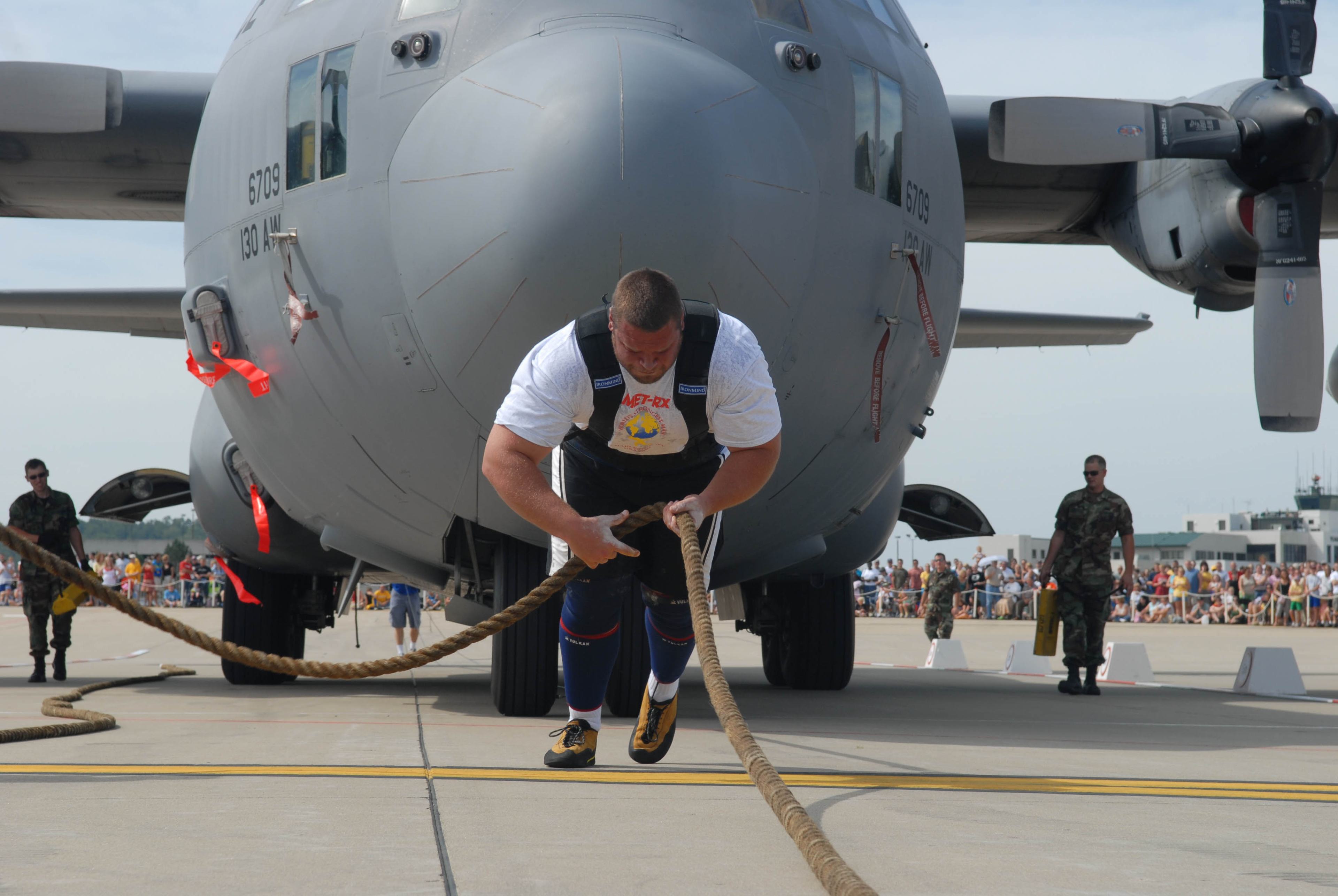
If the evolution of the athlete showed how the person competing in Strongman changed, the era of the great champions shows something even more interesting: how a few exceptional athletes can change the definition of the sport itself. Champions are not merely the winners of one edition. They become reference points. After them, the next generation does not simply try to win. It tries to reach the level they made possible.
In World's Strongest Man history, several names repeatedly appear in the record books: Bill Kazmaier, Jón Páll Sigmarsson, Magnús Ver Magnússon, Mariusz Pudzianowski, Žydrūnas Savickas and Brian Shaw. Together, these generations won 3, 4, 4, 5, 4 and 4 WSM titles respectively. But the numbers are only the surface. What matters more is what each champion represented for the sport.
1. What does an era of great champions actually mean?
An era is not defined only by a dominant champion. It appears when an athlete or group of athletes changes the competitive standard. After such a period, what once looked extraordinary becomes the minimum requirement.
In Strongman, this transformation is highly visible. One champion may bring greater absolute strength, another may introduce speed and conditioning, another may redefine pressing, and another may demonstrate the importance of consistency across a long career.
2. Bill Kazmaier: raw strength enters the mythology
Bill Kazmaier represents one of the first great reference points of the modern era. He won World's Strongest Man in 1980, 1981 and 1982 and accumulated 20 event victories in WSM finals, according to historical records.
Kazmaier's importance goes beyond his record. He became the image of a period in which absolute strength could create enormous differences. His style helped build Strongman's mythology: the man who could turn a feat of strength into an event.
Kazmaier established a benchmark. Later generations no longer competed in a vacuum. They competed in a sport where the public already knew that humans existed who could produce extraordinary levels of strength.
3. Jón Páll Sigmarsson: when the champion becomes a character
Jón Páll Sigmarsson won four World's Strongest Man titles, in 1984, 1986, 1988 and 1990. He made seven finals appearances and won 19 events in WSM finals.
But his impact cannot be measured by statistics alone. Jón Páll brought a combination of strength, personality, theatricality and national identity that turned the champion into a recognizable character. In a sport originally built around spectacular objects, he became part of the spectacle himself.
More importantly, his style contributed to the idea that a Strongman could be simultaneously extremely strong and highly competitive in events requiring speed, coordination and technique. In that sense, his generation prepared the ground for the modern athlete.
4. Magnús Ver Magnússon: consistency becomes a weapon
Magnús Ver Magnússon continued the Icelandic tradition and won four WSM titles, in 1991, 1994, 1995 and 1996. He made six finals appearances and six podium finishes during his WSM career.
At this stage, Strongman was already becoming more sophisticated. One extraordinary event was no longer enough. The athlete had to limit losses. Championships were won through accumulated results, and consistency became a form of strength.
Magnússon therefore represents an important stage: the complete champion, capable of remaining relevant in a program containing very different events and turning the absence of a major weakness into a competitive advantage.
5. The 1990s: Strongman becomes international
The 1990s brought clear diversification. Around WSM, other competitions and circuits appeared and strengthened, while athletes increasingly came from different countries. Magnus Samuelsson, Jouko Ahola, Svend Karlsen, Gerrit Badenhorst and others contributed to this transitional period.
Internationalization changed selection. Strongman was no longer a phenomenon dominated by a few strength cultures. It began to become a sport in which different sporting backgrounds could produce champions.
6. Mariusz Pudzianowski: speed moves to the center of the definition
Mariusz Pudzianowski won five World's Strongest Man titles, more than any other athlete in the WSM record books. He won in 2002, 2003, 2005, 2007 and 2008 and accumulated 23 event victories in WSM finals.
Pudzianowski changed the image of the champion. A Strongman did not need to be simply the heaviest man on the field. A relatively compact elite athlete, extremely muscular, fast and well conditioned, could turn speed into a decisive advantage.
This reveals one of the major lessons of sporting history: when events become more dynamic, body mass has to produce movement. Strength that cannot be expressed rapidly becomes a partially unused resource.
7. Žydrūnas Savickas: the total-strength revolution
Žydrūnas Savickas built a different champion model. He won four WSM titles, in 2009, 2010, 2012 and 2014, reached the podium ten times and won 18 events in WSM finals.
Savickas became synonymous with absolute strength and pressing ability. The Log Lift, in particular, became one of the areas where his dominance changed perceptions of the limits. WSM archives list him as the winner of the Max Log Lift at the 2010, 2012 and 2015 finals.
Perhaps his most important lesson was long-term consistency. He won his first WSM at age 34 and his last at almost 39, becoming the oldest WSM winner in the historical record. He demonstrated that sporting maturity can become an advantage when experience, technique and competition management compensate for some loss of explosiveness.
8. Brian Shaw: the era of the complete athlete
Brian Shaw won four WSM titles, in 2011, 2013, 2015 and 2016. He made 15 consecutive finals appearances from 2009 through 2023, an all-time record in the WSM archives, and has ten podium finishes.
Shaw represents a stage in which size, strength, carrying capacity, endurance and tactical experience were integrated into one profile. He was not simply a specialist. He was an athlete capable of remaining competitive across an enormous range of contexts.
His longevity is as important as his titles. Fifteen consecutive finals mean that his performance was not an accidental peak, but the result of an extraordinary ability to remain relevant in a sport that kept changing.
9. From dominant champion to complete champion
Looking at these generations together, the change is clear. Kazmaier raised the standard of raw strength. Jón Páll made the champion a symbol. Magnússon emphasized consistency. Pudzianowski demonstrated the value of speed. Savickas pushed total strength and pressing. Shaw combined nearly all of these qualities into an extremely complete profile.
This is the coevolution of the sport. Each generation does not start from zero. It inherits the previous generation's standard and must add something new.
10. Rivalry raises everyone's level
A great champion matters, but a great generation needs rivals. Competition pushes limits because every weakness becomes visible when other athletes are good enough to exploit it.
In Strongman, this pressure produced continuous specialization. If one athlete is extraordinary at deadlift, others must close the gap. If another dominates log pressing, opponents must find points elsewhere. The championship becomes a system of collective optimization.
11. Records do not tell the whole story
Statistics are useful, but they can mislead when removed from context. The number of titles depends on career duration, competition format, number of finals, opposition and event structure.
Therefore, comparisons across generations must be cautious. A victory in an event in the 1980s is not structurally identical to a victory in a modern final. What can be compared more robustly is the impact on the competitive standard.
12. Why great champions also change training
When a champion demonstrates that a quality produces points, that quality becomes a training target for the next generation. If speed decides a medley, athletes train it. If pressing becomes decisive, logs and axles receive more attention. If grip costs podiums, a new culture of forearm and finger training develops.
The champion becomes a living experiment. He does not only win with his method. He gives everyone else information about what is possible.
13. The champion as a biomechanical model
Another effect of great champions is the emergence of technical models. Athletes and coaches begin studying angles, positions, rhythm and object trajectory. What once looked like talent becomes analyzable.
Strongman biomechanics research confirms that performance differences can be related to parameters such as stride length and rate, ground contact time or the duration of specific phases of an event. The champion is not only strong. He is mechanically efficient.
14. Champions and the changing ideal body
There is no single champion body. History demonstrates the opposite. Some champions have been extremely tall and massive, while others have been more compact and faster. Height records include athletes over two meters, while champions such as Pudzianowski demonstrated that speed and muscularity can compensate for differences in size.
What matters is not size itself, but how well the athlete's anthropometry fits the event demands. Champions have demonstrated different biological solutions to the same competitive problem.
15. The era of the great champions is really a history of standards
Kazmaier made extreme strength a benchmark. Jón Páll made the champion a cultural figure. Magnússon showed the value of consistency. Pudzianowski changed the relationship between mass and speed. Savickas pushed absolute strength and pressing. Shaw showed how complete and durable an elite athlete could become.
Together, these champions raised the bar until modern Strongman became almost impossible to win through a single quality.
16. What does the next generation inherit?
The legacy of the great champions is not only their records. It is the standard. Modern athletes enter a sport knowing they must be strong, fast, technical, resilient, strategic and capable of repeated high-level performance.
That is why the era of the great champions is not a closed chapter in the past. Every new champion tries to solve the problem that the previous generation left unsolved.
17. Conclusion: champions do not only win the sport, they rebuild it
Strongman history can be read as a succession of people who made the impossible look normal. Bill Kazmaier raised the standard of strength. Jón Páll Sigmarsson turned the champion into a legend. Magnús Ver Magnússon made consistency a weapon. Mariusz Pudzianowski showed that speed can defeat mass. Žydrūnas Savickas redefined total strength and pressing. Brian Shaw showed how complete and durable the modern athlete can become.
Seen this way, the era of the great champions is not merely the history of the men who won World's Strongest Man. It is the history of how each generation moved the boundary of what a complete Strongman was considered to be. And the next champion does not inherit only the trophy. He inherits every standard built before him.
Bibliography and sources
1. Strongman Archives. Historical World's Strongest Man results, records, athlete appearances, podiums and event wins.
2. The World's Strongest Man. Official competition history and athlete/event information.
3. Hindle BR, Lorimer AV, Winwood PW, Keogh JWL. The Biomechanics and Applications of Strongman Exercises: a Systematic Review. Sports Medicine - Open. 2019;5:49. DOI: 10.1186/s40798-019-0222-z.
4. Winwood PW, Keogh JWL, Harris NK. Interrelationships between strength, anthropometrics, and strongman performance in novice strongman athletes. Journal of Strength and Conditioning Research. 2012;26(2):513-522. DOI: 10.1519/JSC.0b013e318220db1a.
5. Kraemer WJ et al. Body Composition in Elite Strongman Competitors. Journal of Strength and Conditioning Research. 2020;34(12):3326-3330. DOI: 10.1519/JSC.0000000000003763.
6. Balshaw TG et al. Muscle and tendon morphology of a world strongman and deadlift champion. Journal of Applied Physiology. 2024;137(4):789-799. DOI: 10.1152/japplphysiol.00342.2024.
7. Giants Live. Historical Strongman competition and athlete material.
8. Historical literature on physical culture, strength athletics and the development of professional Strongman.
More From The Journal
Training
The Science of Strongman Training - Episode X: Competition Programming
How to build a complete Strongman competition preparation block: calendar, events, volume, intensity, specificity, simulations, autoregulation, tapering and fatigue management.
Training
The Science of Strongman Training - Episode IX: Peaking
Peaking in Strongman: how to turn months of training into maximal competition performance by reducing fatigue, preserving adaptations and managing specificity.