
Training
History of Strongman - Episode III: World’s Strongest Man and the Transformation of the Sport
September 14, 2026
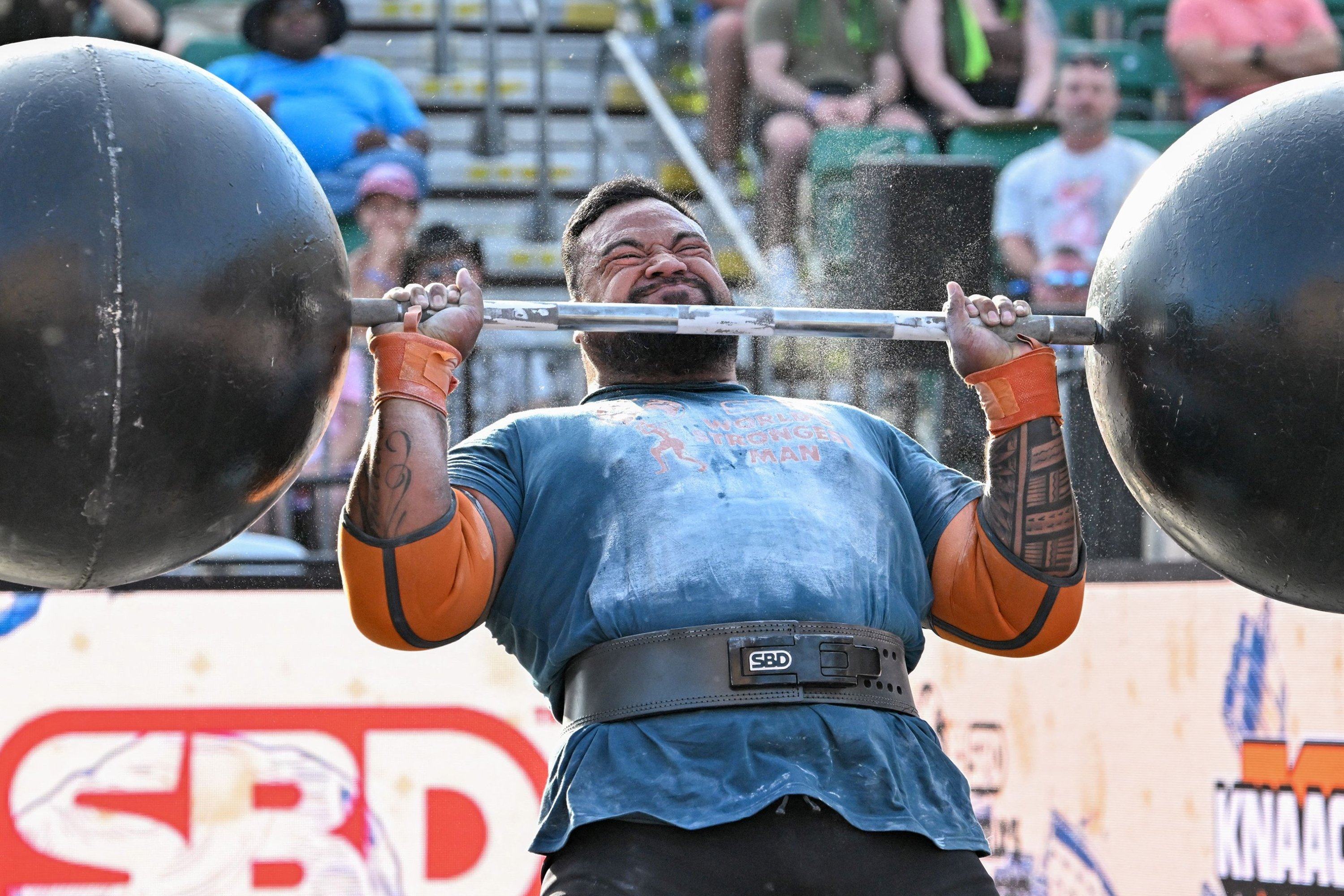
Some competitions appear within a sport. Others change the sport itself. World's Strongest Man did the latter. From 1977 onward, the question “Who is the World's Strongest Man?” became more than the title of a television program. It became an idea around which modern Strongman would build its identity.
The first episode followed the journey from circus strongmen to the modern athlete. The second examined the birth of modern competitions. Now we reach the point where those two stories meet: World's Strongest Man took the tradition of strength spectacle, placed it inside a competitive format and transformed it into a sporting product that could be watched, repeated, compared and broadcast to an international audience.
But WSM did not merely change the image of the sport. It changed athlete selection, event design, training, the value of television, the relationship between strength and entertainment and, eventually, even the body of the Strongman athlete. As the competition became more important, athletes began preparing specifically for its demands. The sport started producing its own type of man.
1. World's Strongest Man was more than a contest
World's Strongest Man appeared in 1977 at a time when television was looking for forms of sporting entertainment that could be understood instantly. The idea was simple and powerful: bring together very large and very strong athletes, ask them to solve tasks audiences rarely saw, and build a ranking.
The first edition was experimental. Athletes came from different disciplines, and the events did not yet form the standard repertoire associated with Strongman today. Bruce Wilhelm won the inaugural contest, demonstrating that a multi-event championship could produce a winner distinct from the traditional champions of weightlifting or bodybuilding.
This was the first major change. For the first time, audiences received a competitive answer to an ancient question. Not “who looks stronger?” but “who accumulates the best results across a series of events?”
The format was simple enough for the audience and complex enough for the athlete. The spectator could immediately see who moved the object, who finished first or who held the load longest. The athlete, meanwhile, had to solve very different biomechanical and energetic problems.
That combination was essential. Strongman now had a sporting story that could be told through images.
2. Television turned strength into a global spectacle
In traditional strength sports, audiences sometimes need technical knowledge to appreciate the differences between performances. In Strongman, the object itself explains the challenge. A giant stone, truck, barrel, log or loaded metal structure communicates heaviness before a commentator says a word.
This visual quality made WSM exceptionally suitable for television. Events could be presented as distinct moments, athletes could become characters and tension could be built easily. An athlete started, the clock began, the object moved or did not move, and the result was clear.
Television did more than broadcast the sport. It influenced how the sport was designed. Promoters needed spectacular events, contrasts between competitors and moments that worked narratively. Strongman learned to be both competition and spectacle.
This relationship was ambivalent. It made the sport internationally visible, but it could also encourage extreme or unusual events because what looks extraordinary on screen can be more compelling than what is perfectly standardized.
The tension between sport and spectacle would remain one of the permanent themes of Strongman history. Yet that tension also made the sport different from other strength disciplines.
3. The Bill Kazmaier era: when a champion becomes a standard
Bill Kazmaier became one of the first figures to demonstrate how much a champion can change a sport's identity. He won World's Strongest Man in 1980, 1981 and 1982 and became a reference point for multi-event dominance.
Kazmaier was compelling not simply because he was extremely strong. The audience could see the transfer of that strength from one event to another. In a competition, the advantage did not come only from a maximal lift. It came from remaining competitive almost everywhere.
The Kazmaier period reinforced the idea that a Strongman champion needed generalized strength. It was not enough to be “the best at something.” You needed as few weaknesses as possible.
That philosophy influenced later generations. Athletes began to treat every event as a potential hole in their score. If they could not win an event, they needed at least to limit the points they lost.
In modern terms, this is the emergence of profile thinking. A Strongman is not judged by his greatest quality, but by the combination of his qualities.
Kazmaier also helped change the public image of the athlete. The Strongman competitor was increasingly recognized as an elite sportsman rather than an exotic performer. Television turned results into memorable reference points, and rivalries became part of the sport's history.
4. Jón Páll Sigmarsson and the rise of the Strongman hero
If Bill Kazmaier represented dominant strength, Jón Páll Sigmarsson showed how important personality could become. Sigmarsson won World's Strongest Man four times, and his presence contributed enormously to turning the Strongman champion into a cultural figure.
Around him grew a recognizable image: a massive, explosive, charismatic and highly competitive Nordic athlete perfectly suited to the spectacle. His rivalry with Kazmaier gave television what every sport wants: two styles and two personalities that audiences could immediately distinguish.
This period demonstrated that Strongman was not only about numbers. It was also about story. A champion does not communicate only how many kilograms he lifted. He communicates an identity, a country, a style and a relationship with opponents.
For the sport, the effect was enormous. People began following not only “who wins,” but “who is the man who wins.” That accelerated the transformation of Strongman into a sport with heroes and generations.
This era also made the difference between standardized and applied strength clearer. An athlete could be extraordinary in a classic movement and still lose points when the object changed. Strongman forced champions to become versatile.
5. The events that changed Strongman
One of the most important effects of WSM was the creation and establishment of a new category of events. Instead of asking only how much a person could lift from the floor or overhead, Strongman could ask how quickly he could carry a load, how long he could hold it, how effectively he could manipulate an unstable object or how efficiently he could load a heavy implement.
The Farmer's Walk turned grip, trunk stability and locomotion into one problem. The Yoke Walk introduced a distinctive combination of axial loading, stabilization and movement. The Log Lift changed the relationship between pressing and the implement. Atlas Stones transformed lifting into a problem of positioning, embracing, extension and loading.
These events mattered because they could not be solved completely by simply transferring a method from another sport. A weightlifter had advantages, a powerlifter had advantages and a track athlete had advantages, but none automatically possessed the entire package.
Modern biomechanical research confirms this complexity. Available analyses show that Strongman events combine characteristics of lifting, carrying, sprinting, pulling and loading, while performance can depend on variables such as stride length and frequency, ground-contact time or the duration of specific movement phases.
In other words, WSM created a competitive laboratory in the open air. Every event was a different question asked of the same body.
6. Bigger and bigger: how competition changed the athlete's body
As Strongman became more competitive, the athlete's body began to change. Sporting selection favored individuals capable of producing enormous force, tolerating heavy loads and combining body mass with enough mobility for dynamic events.
This does not mean there is one ideal Strongman body. Different events favor different characteristics. But the development of the sport pushed elite body size and muscularity upward. An athlete competing with enormous loads needs a musculoskeletal system capable of supporting them and enough contractile mass to produce force.
Modern research provides an impressive picture of the extremes of this adaptation. A 2024 study of a World’s Strongest Man and deadlift champion reported lower-limb muscle volume approximately 96% greater than untrained controls, along with exceptionally high isometric force and power values. The findings do not define every Strongman athlete, but they illustrate how far elite adaptation can extend.
This change was not produced by genetics alone. It was produced by selection and training. When a sport repeatedly rewards certain combinations of strength, mass, technique and load tolerance, athletes and training methods adapt to what competition demands.
WSM therefore did not simply measure extremely strong bodies. It indirectly helped select and shape them.
7. From “strongest” to complete athlete
The title World's Strongest Man suggests a single quality: strength. The contest demonstrated that “strongest” is actually a composite construct. An athlete can be extraordinary at the deadlift and vulnerable in grip. He can be enormously strong and slow. He can be excellent at loading events and weak in static holds.
As contest level increased, differences between athletes became smaller. When everyone is extremely strong, the winner is often the athlete who loses the least in his vulnerable area.
This changed training. The modern Strongman cannot build everything around one lift. He has to manage maximal strength, relative strength, power, speed, grip, work capacity, technique and recovery.
The system becomes more important than the individual component. A 20 kg improvement in deadlift can be useless if the athlete loses the ability to finish the next event. An extra kilogram of muscle can help or become a cost if it affects mobility, breathing or locomotion. A very hard training session can create adaptation or consume recovery needed for competition.
In this sense, WSM made Strongman a sport of trade-offs. The champion is not the person who maximizes every variable separately. He is the person who finds the combination that produces the greatest total result.
8. Globalization: when Strongman no longer belonged to one country
In its early decades, Strongman had a strong Western and Nordic imprint. WSM helped build a truly international championship. Athletes came from Europe, North America, Australia, Asia and other regions, while the title became a reference point followed by communities around the world.
Globalization also changed competitive styles. Each region brought traditions of strength, training methods, sporting structures and cultures. Strongman began to circulate in both directions: champions influenced local communities, while local communities produced new champions.
Over time, strong national and continental ecosystems developed. Eastern Europe, the Nordic countries, the United Kingdom, the United States and other regions produced generations of athletes capable of competing at the highest level.
The official WSM site now describes Strongman as a global sport with worldwide participation and communities of fans following athletes and nations. That would have been difficult to imagine at the first edition, when organizers had to borrow athletes from other disciplines to build the field.
Globalization also created positive pressure on performance. When athletes compete against opponents from different systems, methods circulate faster. Effective techniques are copied, improved and adapted.
9. WSM, professionalization and the birth of the Strongman industry
A sport becomes an industry when enough spectators, athletes and competitions exist for services and products to form around them. WSM contributed decisively to this process.
Specialized equipment, Strongman-oriented gyms, qualifying competitions, sponsorships, media productions and, later, digital ecosystems emerged. The athlete was no longer only a competitor. He could also become a public figure, content creator, brand representative or coach for the next generation.
Professionalization also increased the cost of participation. As the level rises, travel, recovery, equipment, nutrition, medical support and access to infrastructure become increasingly important. A sport that once looked like a spectacle built around improvised objects eventually required a complex performance infrastructure.
New governance problems appeared as well. Multiple organizations, contest series and commercial interests sometimes meant cooperation and sometimes conflict. The formation of IFSA in 1995 and later separations among Strongman structures showed that sporting development is not only a story about performance. It is also a story about rights, promotion and organizational control.
Despite those administrative conflicts, the effect on the sport was clear: more opportunities for athletes and more visibility for audiences.
10. What did World's Strongest Man permanently change?
World's Strongest Man changed Strongman in at least five major ways. First, it turned the idea of the “strongman” into a recognizable championship with a recognizable title. Second, it turned unusual strength feats into sporting events. Third, it created champions and rivalries that audiences could follow. Fourth, it stimulated athlete specialization. Fifth, it made Strongman an international sport.
Perhaps the most important change is subtler. Before WSM, the strongman had to demonstrate that he could do extraordinary things. After WSM, the Strongman had to demonstrate that he could do extraordinary things inside a competitive system.
That distinction created the sport we know today. A modern athlete must be prepared for a sequence of problems, not one demonstration. He must build a body that produces force while learning how to conserve energy, manage grip, protect tissues and execute technically under fatigue.
In 1977, Strongman was an experiment. Today it is an international performance system. Competition archives record decades of WSM editions, while the sport includes champions from many countries and generations. Biomechanical research has begun to describe event mechanics, and studies of elite athletes show how extreme the body's adaptations can become.
WSM did not invent strength. It did not invent the strongman. It did something more important for sporting history: it gave these things a framework in which they could evolve together.
From that point onward, each generation could start from the previous one. Champions became models. Events became specializations. Equipment improved. Training methods became more precise. And the Strongman athlete became increasingly different from the circus strongman from whom the story began.
Yet the connection never disappeared. We still move objects that look impossible to move. We still use tasks audiences understand instantly. There is still that moment when a person approaches an enormous object and tries to make it move.
The difference is that now the moment has a rulebook, a referee, a clock, a ranking and a history.
That is the legacy of World's Strongest Man. It took the spectacle of strength and forced it to become a sport.
Bibliography and sources
1. The World's Strongest Man. About WSM. Official history of the competition and its development from 1977 to the present.
2. The World's Strongest Man. Official competition and athlete archives.
3. Strongman Archives. World's Strongest Man contest results and historical athlete records.
4. Hindle BR, Lorimer AV, Winwood PW, Keogh JWL. The Biomechanics and Applications of Strongman Exercises: a Systematic Review. Sports Medicine - Open. 2019;5:49. DOI: 10.1186/s40798-019-0222-z.
5. Hindle BR, Lorimer AV, Winwood PW, Keogh JWL. A systematic review of the biomechanical research methods used in strongman studies. Sports Biomechanics. 2020;19(1):90-119. DOI: 10.1080/14763141.2019.1598480.
6. Balshaw TG, Massey GJ, Miller R, McDermott EJ, Maden-Wilkinson TM, Folland JP. Muscle and tendon morphology of a world strongman and deadlift champion. Journal of Applied Physiology. 2024;137(4). DOI: 10.1152/japplphysiol.00342.2024.
7. Historical scholarship on Bill Kazmaier, Jón Páll Sigmarsson and the development of World's Strongest Man.
8. IFSA historical records concerning the formation and development of the International Federation of Strength Athletes.
9. Keogh JWL, Winwood PW. Historical and biomechanical scholarship on strongman training and competition.
10. Historical World's Strongest Man competition archives and contemporary sports records.
More From The Journal
Training
The Science of Strongman Training - Episode X: Competition Programming
How to build a complete Strongman competition preparation block: calendar, events, volume, intensity, specificity, simulations, autoregulation, tapering and fatigue management.
Training
The Science of Strongman Training - Episode IX: Peaking
Peaking in Strongman: how to turn months of training into maximal competition performance by reducing fatigue, preserving adaptations and managing specificity.