
Pharmacology
Series: Insulin, Metabolism and Hormonal Modulators - Episode 8: Aromatase Inhibitors
September 8, 2026
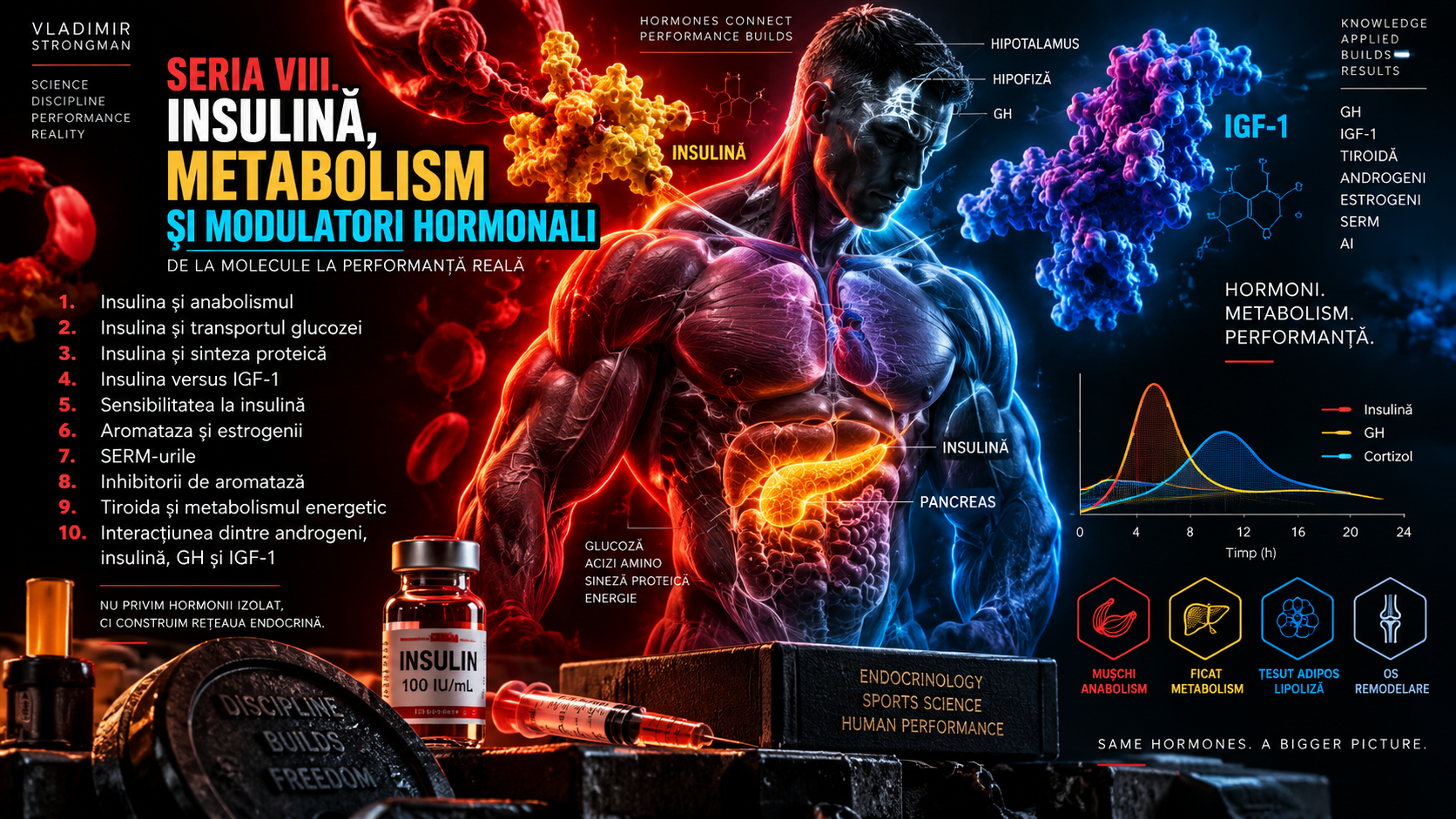
Aromatase inhibitors are among the most misunderstood drugs in the hormonal pharmacology of sport. They are often described with one sentence: “they lower estrogen.” The statement is true but incomplete. Aromatase does not produce a useless hormone, and blocking it does not merely erase a side effect. It changes a pathway that converts androgens into estrogens, with consequences for bone, brain, metabolism, sexual function and insulin sensitivity.
The previous episode explained SERMs, which alter estrogen-receptor responses without necessarily stopping estrogen production. Aromatase inhibitors do something different: they act upstream and reduce estrogen formation by inhibiting CYP19A1. This distinction is fundamental. A SERM changes interpretation of the signal; an aromatase inhibitor reduces the amount of signal available.
In medicine, aromatase inhibitors have well-defined indications, particularly in hormone-dependent oncology. In sport, non-medical use is far more problematic because estradiol can be pushed below physiological levels. This article explains mechanisms and risks without providing doses, regimens or self-medication protocols.
1. What is aromatase and why is it the final step in estrogen synthesis?
Aromatase is the CYP19A1 enzyme, a member of the cytochrome P450 family. It catalyzes conversion of C19 androgens into C18 estrogens. Testosterone becomes estradiol and androstenedione becomes estrone. Pharmacologically, this reaction is attractive because it represents the last specific step in estrogen biosynthesis. Blocking the enzyme lowers estrogen production without directly blocking estrogen receptors.
Aromatase uses a heme group and performs several oxidative reactions. This architecture explains why nonsteroidal triazole inhibitors can interact reversibly with heme iron, while steroidal inhibitors can mimic the natural substrate and inactivate the enzyme after being processed.
2. Two major pharmacological families
Modern aromatase inhibitors fall into two major classes. Type II nonsteroidal inhibitors such as anastrozole and letrozole bind reversibly to aromatase and interact with the enzyme's heme group. Type I steroidal inhibitors such as exemestane resemble the androgen substrate and produce irreversible enzyme inactivation, which is why they are sometimes called aromatase inactivators.
This distinction is not merely academic. Reversibility, chemical structure, metabolism and the time required for aromatase activity to recover differ. Anastrozole, letrozole and exemestane should therefore not be treated as three names for the same intervention.
3. Anastrozole
Anastrozole is a nonsteroidal, selective and reversible aromatase inhibitor. It was developed to reduce estrogen production in hormone-dependent breast cancer, particularly after menopause, when a large proportion of estrogen comes from peripheral aromatization. It does not block the estrogen receptor and is not a SERM.
In men, aromatase inhibition can lower estradiol and reduce estrogen-mediated feedback on the hypothalamic-pituitary axis, sometimes increasing LH, FSH and endogenous testosterone. This does not make anastrozole a universal “testosterone booster.” The response depends on a functioning axis, and the biological cost may be reduction of an essential hormone.
4. Letrozole
Letrozole is also a potent nonsteroidal reversible inhibitor. Like anastrozole, it binds aromatase through an azole interaction with the enzyme's heme. In oncology it is used for systemic estrogen suppression. Differences in potency and pharmacokinetics mean that its real-world effects are not identical to anastrozole.
In sport, depth of estradiol suppression can be confused with “effectiveness.” A more powerful inhibitor is not automatically safer or more useful. If the biological goal is preservation of a functional estradiol range, deeper suppression can amplify the exact risks an athlete is trying to avoid.
5. Exemestane
Exemestane is a type I steroidal inhibitor. Its structure resembles the natural aromatase substrate, and the enzyme processes it in a way that leads to irreversible inactivation of that enzyme molecule. Recovery of activity therefore requires synthesis of new aromatase molecules rather than simple dissociation of the drug.
Being steroidal does not make exemestane an anabolic steroid in the sports sense. It is a drug designed to inhibit aromatase. Its metabolic and metabolite profile differs from triazole inhibitors, and those differences matter for pharmacology and interactions.
6. Reversible inhibitor versus irreversible inactivator
When a reversible inhibitor is eliminated, the occupied enzyme can become functional again. With an irreversible inactivator, the affected aromatase molecule must be replaced through new protein synthesis. This difference contributes to persistence of effect and to the way the body returns toward estrogen balance after exposure ends.
7. Aromatase is not found only in adipose tissue
Adipose tissue is an important site of peripheral aromatization, but CYP19A1 is also expressed in bone, brain, gonads and other tissues. Reducing aromatase to “the enzyme in fat” is an oversimplification. Estradiol can be produced locally and act in an autocrine or paracrine manner before a relevant amount appears in blood.
Local production explains why a serum measurement does not perfectly describe estrogen signaling in every organ. A systemic inhibitor, however, modifies aromatase activity across multiple compartments, not only adipose tissue.
8. What happens to estradiol when aromatase is inhibited?
The most direct effect is reduced conversion of androgens into estrogens and therefore lower estradiol and estrone. In men, this can reduce estrogen-mediated negative feedback at the hypothalamus and pituitary. If the axis is functional, gonadotropin secretion may rise.
But every reduction in feedback has a peripheral consequence: tissues receive less estrogen signal. If estradiol falls too far, bone, brain, sexual function and metabolism may be affected. This is the difference between manipulating a number and managing an endocrine system.
9. Aromatase inhibition and the HPG axis
Estradiol participates in negative feedback on GnRH, LH and FSH. Lowering it can increase gonadotropin signaling. In a man with functioning testes, endogenous testosterone production may rise. In primary testicular failure, where LH can already be elevated, the response is limited because the defect lies in the target organ.
For this reason, aromatase inhibitors have been studied in selected forms of male infertility or hypogonadism, but they are not universal solutions. Altering the testosterone-to-estradiol relationship does not guarantee improvement in symptoms, spermatogenesis or fertility.
10. Why estradiol is vital for male bone
Some of the strongest evidence for estrogen's role in men comes from bone. Congenital aromatase deficiency and estrogen-receptor defects can produce unfused epiphyses, osteopenia, high bone turnover and abnormal skeletal maturation. In experimental studies, reducing testosterone aromatization diminished benefits on bone mineral density.
For a Strongman, this is essential infrastructure. Heavy mechanical loading stimulates bone, but it does not cancel bone endocrinology. A structure supporting hundreds of kilograms needs mechanical adaptation, nutrition and appropriate hormonal signaling.
11. Bone mineral density and long-term use
In oncology, loss of bone mineral density and fracture risk are recognized concerns during prolonged aromatase-inhibitor therapy. The basic physiology is the same: reduced estrogen signaling increases bone resorption and changes remodeling balance. Severity depends on age, hormonal state, calcium and vitamin D status, physical activity and other factors.
Athletes should not assume that great muscular strength provides automatic protection. Strength is an output of muscle and nervous system; skeletal structural integrity is a different system influenced by hormones and remodeling.
12. Joint pain and musculoskeletal symptoms
In oncology, aromatase inhibitors are frequently associated with musculoskeletal symptoms including arthralgia, stiffness and pain. A 2025 systematic review summarized proposed mechanisms and biomarkers, confirming that this syndrome is real and multifactorial. Not every painful joint, however, represents direct structural damage caused by low estrogen.
In a strength athlete, symptoms can be amplified by extreme loading, high training volume, repetitive trauma and inadequate recovery. Very low estradiol can add a hormonal stressor to an already heavily loaded system.
13. Aromatase inhibitors and insulin sensitivity
One of the most relevant experiments for this series is a randomized crossover study in healthy men who received anastrozole or placebo and underwent a hyperinsulinemic-euglycemic clamp. Aromatase inhibition reduced peripheral glucose disposal during insulin stimulation, indicating lower peripheral insulin sensitivity.
The result matters because it demonstrates that estradiol actively contributes to male metabolism. A drug used to “control estrogen” can alter skeletal muscle's response to insulin. The relationship between sex hormones and metabolism is experimentally measurable, not a metaphor.
14. Normal glucose does not exclude altered insulin sensitivity
A reduction in insulin sensitivity does not have to produce immediate hyperglycemia. The pancreas can compensate by secreting more insulin. Normal fasting glucose therefore does not prove that estrogen manipulation is metabolically neutral. Understanding the difference between glucose concentration and the amount of insulin required to control it remains essential.
This observation directly connects the episode to insulin sensitivity: a sex hormone can alter the efficiency of glucose transport and utilization before classic markers become obviously abnormal.
15. Lipids and the cardiovascular system
Estrogens influence lipoprotein metabolism and vascular function. Effects of aromatase inhibitors on LDL, HDL and triglycerides vary according to population, molecule and context. There is no simple equation in which lower estradiol automatically produces a better lipid profile.
In a very large athlete, cardiovascular profile is shaped simultaneously by blood pressure, hematocrit, sleep, apnea, body mass, diet, aerobic fitness, glucose and lipids. Aromatase inhibition is only one variable and cannot compensate for the others.
16. Very low estradiol and sexual function
Male libido and sexual function depend on testosterone, estradiol, prolactin, nervous-system state, sleep and vascular health. Hormonal-manipulation studies show that estrogen participates in male sexual function. Raising testosterone while suppressing estradiol very deeply therefore does not guarantee better sexual function.
This is one of the ironies of hormonal pharmacology: an intervention intended to “optimize” a system can worsen the desired outcome if it removes a required component.
17. Brain and mood
The brain expresses aromatase and estrogen receptors. Local conversion of testosterone to estradiol contributes to sexual behavior, endocrine feedback and some neural functions. Mood or energy changes reported when estradiol is very low are nonspecific, but the physiology is plausible.
Sleep deprivation, stress, depression and overtraining can produce similar symptoms. Subjective sensations therefore cannot measure estradiol or independently select a pharmacological intervention.
18. Body fat and aromatization capacity
Adipose tissue expresses aromatase, and greater fat mass can increase total capacity to convert androgens into estrogens. The relationship is not perfectly linear. Local inflammation, fat distribution, genetics and available androgen concentrations all influence the result.
In Strongman, high body mass can include enormous muscle mass and a variable amount of visceral fat. Scale weight alone cannot tell us how much active aromatase is present or whether estradiol is a clinical problem.
19. Why “more body fat means you need an aromatase inhibitor” is wrong
The presence of aromatase in adipose tissue does not justify preventive inhibition. One person may have high fat mass without symptoms or laboratory findings requiring treatment, while another may have a complex endocrine picture driven primarily by hypogonadism, liver disease, medication or another cause.
The correct approach is evaluation of cause. Pharmacology built on stereotypes can turn a presumed risk into real estrogen deficiency.
20. Why aromatase inhibitors are not SERMs
SERMs and aromatase inhibitors often appear in the same conversation because both modify estrogen biology, but they intervene at different points. A SERM binds the receptor and changes tissue response. An aromatase inhibitor reduces ligand synthesis. The consequences for bone, pituitary, breast and metabolism are therefore different.
Saying both classes simply “lower estrogen” is wrong for SERMs and insufficient for aromatase inhibitors. Pharmacology should be described by mechanism, not slogan.
21. Measuring estradiol in men
Circulating estradiol in men is present at much lower concentrations than in many female physiological contexts. Some routine immunoassays can therefore perform less well in the male range and may be affected by interference. Liquid chromatography–mass spectrometry methods can provide better specificity when available and properly validated.
For the athlete, the lesson is straightforward: differences between two tests do not always reflect biology alone. Method, laboratory, timing and hormonal context can change the result. A pharmacological decision based on one number without knowing how it was measured rests on a fragile foundation.
22. Total estradiol, SHBG and the free fraction
Estradiol circulates largely bound to proteins including SHBG and albumin. The free fraction is small, and changes in SHBG can alter the relationship between total concentration and biological availability. The same total estradiol can occur in different endocrine contexts when SHBG is very low or high.
Neither total estradiol nor an estimate of the free fraction perfectly describes local estrogen exposure in brain, bone or muscle. A blood test is a circulating indicator, not a direct measurement of every receptor in the body.
23. What does “high estradiol” actually mean?
A value above the reference interval should be interpreted together with testosterone, SHBG, symptoms, body composition, liver function and medications. Reference intervals are statistical and do not represent a universal line at which adverse effects automatically appear.
When circulating androgens are far above natural physiology, substrate availability for aromatization is also different. Interpreting that situation with the reference range of an eugonadal man becomes more complicated. A high value alone does not prove that an inhibitor is necessary.
24. What does excessively low estradiol mean?
Very low estradiol can be associated with reduced libido, musculoskeletal discomfort, mood changes, impaired bone remodeling and lower insulin sensitivity. None of these symptoms is specific, but together with accurate testing they can suggest that suppression has moved beyond the physiological zone.
The important concept is a functional range. The goal of endocrinology is not the lowest possible number but preservation of function. In many hormonal systems, deficiency and excess create different problems.
25. Gynecomastia is not synonymous with high estradiol
Gynecomastia is proliferation of male breast glandular tissue and develops when estrogenic influence sufficiently exceeds androgenic influence at the breast. Causes include changes in estrogens and androgens, medications, liver disease, endocrine disorders and other conditions. It is not a simple reading of serum estradiol.
Chest adipose tissue can mimic gynecomastia and create pseudogynecomastia. Duration, fibrosis and cause matter. An aromatase inhibitor cannot automatically be considered the solution for every tender area or breast lump.
26. Water retention: why estrogen is often blamed too quickly
Fluid balance depends on kidney function, sodium, carbohydrate, glycogen, the renin-angiotensin-aldosterone system, vascular pressure, inflammation and multiple hormones. Estradiol can influence some of these systems, but water retention is not a specific biomarker of estrogen.
A Strongman can fluctuate by several kilograms through changes in glycogen, salt intake, hydration and training volume. Treating every weight fluctuation with an estrogen-lowering drug risks correcting an imaginary cause.
27. Aromatase inhibitors and male fertility
By reducing estrogen feedback, aromatase inhibitors can increase LH and FSH in some men and have been studied in selected forms of infertility associated with particular hormonal profiles. Evidence for improvement in final fertility outcomes is less robust than evidence for simply increasing gonadotropins.
Spermatogenesis cannot be evaluated through testosterone, LH and FSH alone. Semen analysis and investigation of the cause of infertility are essential. An apparently “better” testosterone-to-estradiol ratio does not guarantee a better reproductive outcome.
28. Exogenous testosterone and substrate availability for aromatase
When an aromatizable androgen rises far above natural physiology, more substrate becomes available to CYP19A1. Estradiol production may therefore increase. The magnitude varies among individuals according to aromatase expression, fat mass, liver function, genetics and the actual circulating androgen concentration.
This explains why two people exposed to the same androgen can have different estrogen results. It does not justify preventive inhibitor use before a demonstrated problem exists. Pharmacological prevention without assessment can create estrogen deficiency in someone who would not otherwise have had it.
29. Not every androgen can be aromatized
Aromatase recognizes specific steroid structures. Testosterone and androstenedione are classic physiological substrates, but simply being anabolic-androgenic does not mean a molecule becomes estradiol. Each compound must be analyzed individually.
Lack of aromatization does not mean a molecule cannot alter the estrogen environment indirectly. HPG-axis suppression, SHBG changes, hepatic effects or interactions with other steroids can shift hormonal balance without direct conversion to estrogen.
30. Aromatase inhibitors do not automatically “restart” the hormonal axis
Reducing estrogen feedback can increase LH and FSH in an axis capable of responding, but this does not mean every form of hormonal suppression is simply reversed by an inhibitor. Recovery after exogenous hormones depends on duration and intensity of suppression, drug pharmacokinetics, pituitary and testicular function, and individual variability.
The informal term “PCT” is not a diagnosis and does not turn a combination of medicines into a universal medical protocol. In a real clinical situation, the cause and function of the axis need to be assessed rather than assumed.
31. What happens after an inhibitor is stopped?
After a reversible inhibitor is cleared, aromatase can become available again as the drug dissociates and is eliminated. After an irreversible inactivator, recovery depends more on synthesis of new enzyme. In both cases, estradiol recovery is influenced by androgen substrate availability, CYP19A1 activity and the state of the endocrine axis.
There is no identical rebound in everyone. The course depends on the molecule, duration of inhibition and what is happening simultaneously with androgen levels. Fixed rules applied to everyone ignore pharmacokinetics and individual variability.
32. Why oncology is the classic medical context
In estrogen-receptor-positive breast cancer, lowering estrogen can reduce proliferative stimulation of tumor cells. In postmenopausal women, peripheral aromatization is an important estrogen source, which is why anastrozole, letrozole and exemestane have become standard therapies in many oncological settings.
In this setting, anticancer benefit can justify risks such as bone loss or musculoskeletal symptoms, which are medically monitored and managed. In a healthy athlete, the benefit-risk calculation is entirely different because there is no comparable disease requiring estrogen suppression.
33. Aromatase inhibitors in male hypogonadism
Aromatase inhibitors have been studied in selected forms of functional male hypogonadism, particularly when aromatization is increased and the axis can respond. Reduced estrogen feedback may raise LH and endogenous testosterone. However, a higher hormonal marker does not automatically mean better symptoms, fertility or skeletal health.
A treatment can raise testosterone while lowering estradiol into an unfavorable range. Medicine follows function and clinical outcomes, not merely movement of one number in a desired direction.
34. Body composition and the estrogen paradox
Male estrogen deficiency does not automatically improve body composition. Hormonal-suppression models show that when testosterone is maintained but aromatization is blocked, lack of estradiol can contribute to greater body-fat accumulation. The relationship between adipose tissue and estrogen therefore runs in both directions.
Adipose tissue produces estrogen through aromatase, while estrogen influences fat distribution, appetite and metabolism. Reducing the equation to “less estrogen means leaner” ignores this biological loop.
35. Muscle, mitochondria and metabolic flexibility
Estrogen signaling, particularly through ERα, participates in mitochondrial function, substrate oxidation and insulin sensitivity. Healthy muscle must shift between lipid and carbohydrate use according to workload and energy availability. Excessive estrogen suppression may impair some components of this flexibility.
For a strength athlete, metabolic flexibility influences glycogen restoration, tolerance of high energy intake and recovery between sessions. It is not controlled by a single hormone, but estradiol is part of the network.
36. Liver, SHBG and estrogen metabolism
The liver metabolizes sex hormones, produces SHBG and coordinates a large part of lipid and glucose metabolism. Liver disease can alter estradiol, testosterone and SHBG, and an unusual hormonal profile may sometimes reflect a broader hepatic or metabolic problem.
Before concluding that aromatase is the cause, triglycerides, transaminases, steatosis, waist size and insulin sensitivity should also be considered. Hormones are part of the picture, not the entire picture.
37. Lipid profile should be measured, not inferred from estradiol
If cardiovascular risk is the question, total cholesterol, LDL, HDL and triglycerides should be measured directly. Estradiol cannot substitute for a lipid panel. Effects of aromatase inhibitors on lipoproteins vary between people and clinical contexts.
The same principle applies to glucose, blood pressure and hematocrit. Target markers should be assessed directly, while hormones provide context for interpretation.
38. Aromatase inhibitors and performance
There is no universal estradiol value that maximizes strength. Performance depends on muscle mass, nervous-system function, technique, glycogen, sleep, recovery and tissue health. Estrogen contributes to biological infrastructure but is not a direct dial for kilograms lifted.
If estradiol suppression causes joint pain, reduced libido, poorer sleep or lower insulin sensitivity, the indirect effect on training may be negative even if the laboratory value appears more “controlled.”
39. Strongman: high body mass changes the equation
In the Open class, very high body mass can simultaneously mean enormous muscle mass, visceral fat, high energy requirements and substantial cardiovascular load. All of these can alter aromatization, insulin sensitivity, blood pressure and sleep. Symptoms should not automatically be attributed to estrogen.
The further physiology is pushed from the general population, the more important systemic assessment becomes. Aromatase is one road on a map with many intersections, not the center of the entire metabolic system.
40. Which tests may make sense in medical evaluation?
Depending on the question, a clinician may interpret estradiol alongside total and free testosterone, SHBG, LH, FSH, prolactin, glucose, HbA1c, lipid profile, liver function and blood pressure. Not all are required in every case, and the list should not become an automatic protocol.
Testing is useful when it answers a clinical question. Repeating tests without context or using one result for self-medication can create more noise than information.
41. Formestane, testolactone and older aromatase inhibitors
The history of aromatase inhibitors did not begin with anastrozole. Formestane is an older steroidal inhibitor, while testolactone was used in endocrine and oncological settings before modern generations. Aminoglutethimide is another historical example but has less selective effects on steroidogenesis.
Development of the class aimed to improve selectivity and efficiency against CYP19A1. This history helps show that “aromatase inhibitor” is a pharmacological category, not one molecule with one profile.
42. Supplements and hidden aromatase inhibitors
The supplement market has included products promoted as “estrogen blockers,” some containing pharmacologically active compounds or precursors. For a tested athlete, the issue is not only endocrine effect but also anti-doping risk. A supplement label does not guarantee absence of prohibited substances.
The 2026 WADA List added 2-phenylbenzo[h]chromen-4-one, also known as α-naphthoflavone or 7,8-benzoflavone, as an example of an aromatase inhibitor after it was found in supplements. This is a strong illustration of how thin the boundary between “supplement” and pharmacological agent can become.
43. Myth: an aromatase inhibitor is a safety net
An inhibitor does not automatically protect against every effect of an altered androgen environment. It does not correct hypertension, hematocrit, lipid disruption, fertility suppression, hepatic risk or sleep problems. It modifies one pathway and adds its own risks.
The word “preventive” can create a false sense of security. In pharmacology, preventive treatment makes sense only when a well-defined risk exists, evidence shows the intervention reduces it, and the benefit-risk ratio is favorable. Reflexive inhibitor use does not automatically meet those conditions.
44. Myth: estradiol should be kept as low as possible
Evidence from congenital aromatase deficiency, bone studies and insulin-sensitivity experiments directly contradicts this idea. Men require estradiol for bone, metabolism, brain and sexual function. Chasing the lowest number turns a physiological hormone into an imaginary enemy.
The real problem is imbalance, not the existence of estrogen. In healthy physiology, testosterone and estradiol do not compete for victory; they operate within the same endocrine network.
45. Myth: if testosterone rises, the intervention succeeded
In some men, aromatase inhibition can increase endogenous testosterone by reducing estrogen feedback. But the outcome must be judged in context. If testosterone rises while bone density, joint comfort, libido or insulin sensitivity deteriorate, biochemical success is not necessarily clinical success.
Endocrinology is not a ranking of hormones. A higher value is not automatically better, and a lower value is not automatically safer.
46. Bone monitoring during medical use
During prolonged medical treatment, bone-risk assessment may include fracture history, densitometry, calcium and vitamin D status and other risk factors. The need for monitoring demonstrates how profoundly estrogen influences the skeleton. It is not a decorative hormone.
The message for athletes is not to copy oncology monitoring but to understand the principle: chronic estrogen reduction has biological consequences that can accumulate slowly even if short-term gym strength appears unchanged.
47. Why the testosterone-to-estradiol ratio is not a magic number
The testosterone-to-estradiol ratio is used in some fertility research and endocrine discussions, but no universal ratio defines performance, health or the need for an inhibitor. Measurement units can even change the numerical ratio, showing how easily it can be overinterpreted.
Receptors in bone, brain and muscle do not read a ratio printed on a report. They respond to local concentrations, receptor density, cofactors and metabolic context. A ratio can summarize two measurements but cannot replace physiology.
48. WADA 2026: aromatase inhibitors are prohibited at all times
The 2026 WADA Prohibited List classifies aromatase inhibitors under S4.1, Hormone and Metabolic Modulators. They are prohibited at all times, both in and out of competition. Examples include anastrozole, exemestane, letrozole, formestane, testolactone, aminoglutethimide, arimistane and 6-oxo.
For a tested athlete, legitimate medical use does not automatically mean anti-doping permission. Applicable rules and any Therapeutic Use Exemption process must be checked through the relevant anti-doping organization and official documents.
49. What should a Strongman remember?
First, aromatase is not a biological error. Second, anastrozole, letrozole and exemestane lower estrogen production through different mechanisms and are not equivalent to SERMs. Third, estradiol supports bone, metabolism and sexual function, and excessive suppression can carry real costs.
Fourth, fluid retention, high body weight and gynecomastia cannot be reduced to one laboratory value. Fifth, long-term performance depends on healthy infrastructure: bone, tendon, metabolism, sleep and cardiovascular function. A “pretty” hormonal number cannot compensate for deterioration in these systems.
50. Conclusion: blocking one enzyme changes the whole network
Aromatase inhibitors perfectly illustrate the difference between simplified pharmacology and real physiology. On a diagram the mechanism looks direct: block CYP19A1 and estradiol falls. In the body, that same arrow branches toward pituitary, bone, brain, muscle, adipose tissue, liver, sexual function and glucose metabolism.
This is why the idea of using an inhibitor simply to “keep estrogen under control” is too small for the size of the system being modified. In medicine, these drugs are valuable when indication and monitoring exist. Outside that framework, an intervention designed to solve one problem can create several others, some of them initially less visible.
51. Pharmacokinetics is not the same as intensity of effect
Half-life, affinity for aromatase and reversible versus irreversible binding are different properties. A drug can persist in plasma for a certain period while its biological effect lasts longer or shorter depending on enzyme binding and the rate at which new aromatase is synthesized. Comparing half-lives alone therefore does not fully describe pharmacodynamics.
Anastrozole and letrozole are reversible, while exemestane inactivates the enzyme. This distinction can influence how quickly CYP19A1 activity returns after the drug disappears. For risk assessment, total exposure and depth of estrogen suppression are often more informative concepts than one pharmacokinetic number.
52. The estrogen receptor remains present
An aromatase inhibitor does not occupy the estrogen receptor. ERα and ERβ remain in tissues but receive less ligand because less estradiol is produced. This fundamentally distinguishes the class from SERMs and pure estrogen antagonists. The receptor is not “switched off”; the hormonal environment around it is changed.
This distinction explains why local estradiol production matters. In a tissue using aromatase for autocrine or paracrine signaling, systemic inhibition can change function even without an immediately obvious symptom or serum signal.
53. Endothelium and vascular function
Estrogens influence nitric-oxide production, vascular inflammation and endothelial function through genomic and rapid mechanisms. In men, the exact clinical effect of lowering estradiol on cardiovascular risk depends on age and context, but the assumption that estrogen suppression is completely neutral for blood vessels is not biologically plausible.
For Strongman, the endothelium operates in an environment of large blood-pressure spikes, high body mass and sometimes limited aerobic conditioning. Sleep, apnea, lipids and glucose carry enormous weight in this equation. Estrogen manipulation belongs inside this cardiovascular system rather than outside it.
54. Tendon, collagen and connective tissue
Estrogen receptors are present in connective tissues, and estrogens can influence collagen turnover and tendon properties. Effects differ by sex, age and tissue, so there is no simple formula in which higher or lower estradiol automatically means a better tendon.
In Strongman, tendons and insertions are exposed to forces near structural limits. An endocrine change layered onto microtrauma, incomplete recovery and rapid strength gains can alter sensations and tolerance to loading. This is one reason musculoskeletal discomfort emerging after profound estrogen suppression should not simply be dismissed.
55. Sleep and recovery can dominate the hormonal picture
Insufficient sleep can reduce insulin sensitivity, increase sympathetic activity, change appetite and impair recovery. Obstructive sleep apnea is particularly relevant in very large athletes. If an athlete is tired, retaining fluid and has low libido, estradiol is only one of many possible explanations.
An aromatase inhibitor does not treat apnea, sleep deprivation or training overload. If symptoms arise from those causes, estrogen suppression can add a new problem without solving the original one. Differential diagnosis is more valuable than a pharmacological reflex.
56. Metabolic inflammation and aromatase
Hypertrophied adipose tissue is an endocrine and immune organ. Inflammatory cytokines, adipokines, fatty-acid flux and insulin signals interact with steroidogenic enzymes. Aromatase belongs to this environment but is not the sole cause of metabolic dysfunction associated with visceral fat.
Lowering estradiol without changing prolonged energy surplus, poor sleep and visceral fat does not automatically resolve inflammation. It may even remove a metabolically useful estrogenic component. Interventions should target the real mechanism rather than the most visible hormone on a laboratory sheet.
57. Laboratory trends are often more useful than a snapshot
An isolated value can be influenced by laboratory, assay and timing. A series of results obtained under comparable conditions can show whether estradiol, testosterone, SHBG or metabolic markers are moving persistently in one direction. Trends do not replace clinical interpretation, but they reduce the risk of overreacting to one abnormal result.
This principle is especially important for athletes, where hard training, competition, travel and dietary changes can temporarily move biomarkers. Standardizing collection conditions increases the value of the information.
58. Symptoms cannot be used as a titration instrument
Fluid retention, breast tenderness, libido, mood and joint pain are real but nonspecific symptoms. They can occur with high, normal or low estradiol depending on cause. Using symptoms alone to increase or decrease inhibitor exposure turns pharmacology into guesswork.
A better sequence is to ask: what symptom exists, which mechanisms can produce it, what data can distinguish the causes, and which intervention is medically meaningful? This slows the reflex to treat a hypothesis before it has been demonstrated.
59. Therapeutic suppression and sports “optimization” are different goals
In oncology, the goal may be profound estrogen suppression to reduce stimulation of a tumor. Bone and musculoskeletal costs can be accepted against the oncological benefit. In an athlete without such disease, there is no equivalent reason to pursue deep suppression. The same drug can have a radically different benefit-risk ratio in two contexts.
This is one of the most important pharmacological lessons of the series: a drug's effect cannot be separated from its indication. The fact that a molecule efficiently lowers estrogen does not prove that lowering estrogen is the correct objective for the person using it.
60. The complete picture: androgen, estrogen, insulin and energy
Testosterone, estradiol and insulin do not function in independent compartments. Androgens provide substrate for aromatization, estradiol influences muscle and bone metabolism, and insulin manages glucose and nutrient fluxes. Energy surplus and adipose tissue change all of these axes simultaneously.
For the strength athlete, the useful question is not “how do I lower one hormone?” but “what does the system look like?” Body composition, sleep, blood pressure, glucose, lipids, liver health, performance and symptoms need to be viewed together. That is where applied endocrinology truly begins.
61. Local aromatase in muscle and intracrine signaling
Skeletal muscle is not merely a passive target for circulating hormones. Modern research shows that muscle expresses enzymes and receptors capable of modifying the local steroid environment. Aromatase and estrogen receptors can participate in local signaling, and estradiol produced near the muscle fiber may influence metabolic processes without being perfectly represented by the serum concentration.
This concept of intracrinology explains why systemic CYP19A1 inhibition can produce effects that are not reducible to “the estradiol number on the test.” Muscle simultaneously reads insulin, androgen, estrogen, energy-availability and mechanical signals. When one pathway is profoundly suppressed, the resulting adaptation depends on the entire biological context rather than one isolated hormone.
62. Why there is no universal estradiol target for athletes
An optimal value cannot be separated from age, SHBG, testosterone, body composition, laboratory method and clinical context. Reference intervals are not performance targets, and values observed in eugonadal men cannot automatically be converted into goals for people whose physiology has been pharmacologically altered.
A useful result is one that integrates with function: healthy bone, stable metabolism, sexual function, absence of relevant symptoms and an acceptable cardiovascular profile. When the question changes from “what number should I have?” to “how is the system functioning?”, endocrinology becomes less dramatic but substantially more accurate.
In practice, the most important protection against error is refusing to turn one enzyme into a universal explanation. Aromatase can be relevant, but correct interpretation requires hormonal, metabolic and clinical context. The stronger the pharmacological intervention, the stronger the evidence supporting it should be, especially when long-term bone, metabolic and cardiovascular health are part of the equation.
Main sources
Rochira V, Madeo B, Zirilli L et al. Estrogens, Male Reproduction and Beyond. Endotext. Updated 2023.
Gibb FW, Homer NZM, Faqehi AMM et al. Aromatase Inhibition Reduces Insulin Sensitivity in Healthy Men. Journal of Clinical Endocrinology & Metabolism. 2016;101(5):2040-2046.
Brodie A et al. Aromatase inhibitors: mechanism of action and role in the treatment of breast cancer. Review of steroidal and nonsteroidal aromatase inhibition.
Bhutani K et al. The current landscape of aromatase inhibitors for the treatment of estrogen receptor-positive breast carcinoma. Journal of Steroid Biochemistry and Molecular Biology. 2025.
Kellett C et al. Mechanisms and biomarkers for musculoskeletal signs and symptoms in patients treated with aromatase inhibitors: a comprehensive systematic review. Cancer Treatment Reviews. 2025.
Endotext. Age-Related Changes in the Male Reproductive System. Sections on testosterone aromatization, estradiol and male bone mineral density.
World Anti-Doping Agency. 2026 Prohibited List, S4.1 Aromatase Inhibitors; Summary of Major Modifications and Explanatory Notes 2026.
Editorial note: this material is educational and does not constitute medical advice, diagnosis or an administration protocol for anastrozole, letrozole, exemestane or other aromatase inhibitors. Inappropriate pharmacological alteration of estrogen signaling can affect bone, metabolism, sexual function and other systems.
More From The Journal

Training
The Science of Strongman Training - Episode X: Competition Programming
How to build a complete Strongman competition preparation block: calendar, events, volume, intensity, specificity, simulations, autoregulation, tapering and fatigue management.

Training
The Science of Strongman Training - Episode IX: Peaking
Peaking in Strongman: how to turn months of training into maximal competition performance by reducing fatigue, preserving adaptations and managing specificity.