
Pharmacology
Series: Insulin, Metabolism and Hormonal Modulators - Episode 6: Aromatase and Estrogens
September 8, 2026
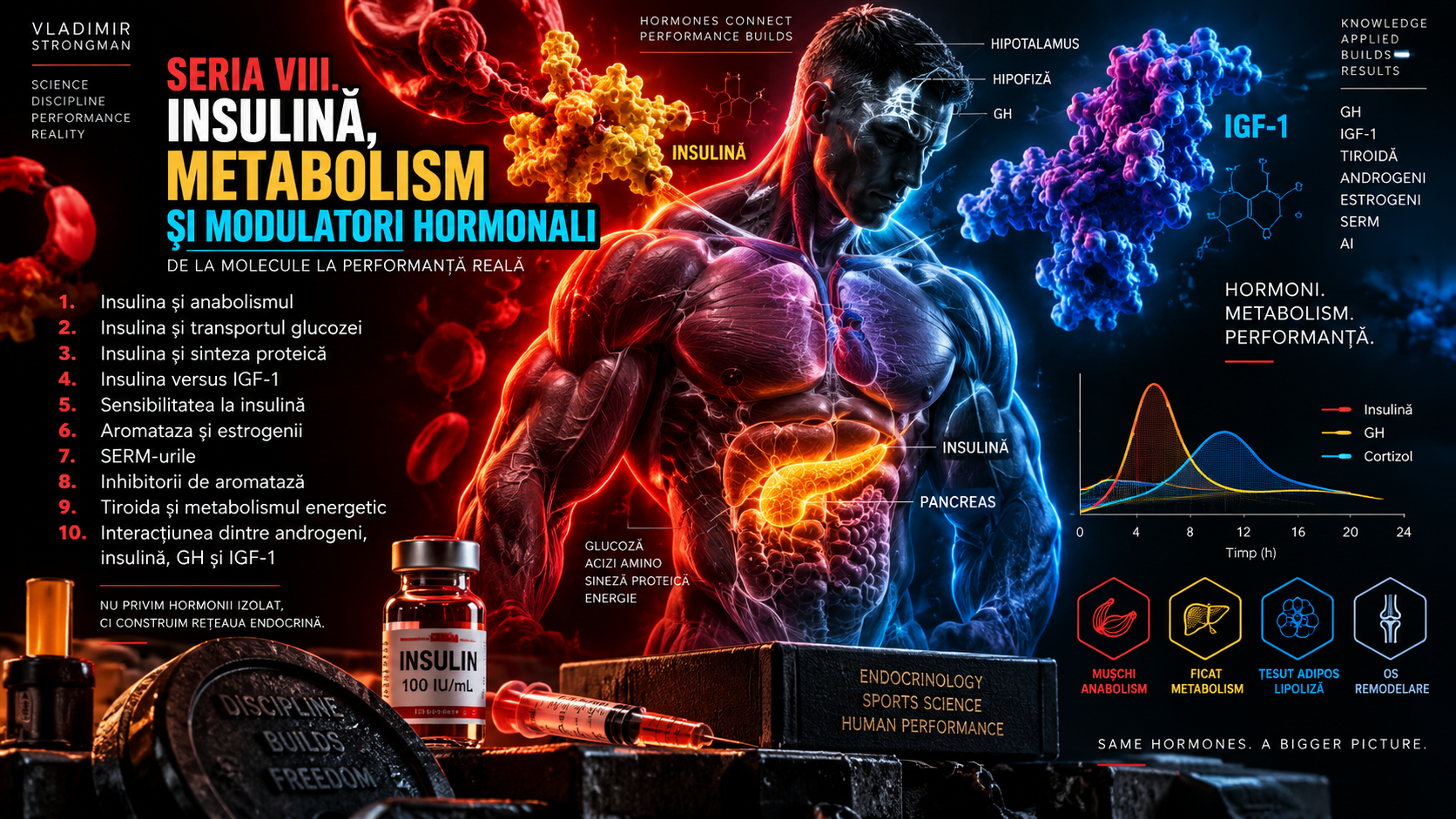
In strength sports, estrogens are often treated as hormones that should simply be “eliminated,” while aromatase is portrayed as an enzyme that only creates problems. That picture is biologically wrong. Estradiol is essential in the male body as well, contributing to bone health, sexual function, hypothalamic-pituitary-gonadal feedback, energy metabolism, vascular function and probably part of skeletal muscle's response to insulin and exercise.
Aromatase, the enzyme encoded by CYP19A1, is one of the bridges that transforms androgen signaling into a broader hormonal system. Testosterone can be converted to estradiol and androstenedione to estrone. In men, a large proportion of circulating estrogens arises from extragonadal aromatization, meaning that adipose tissue, bone, brain and other tissues are not only hormonal targets but also sites where hormones can be transformed locally.
This episode follows aromatase and estrogens without the simplistic reflex of “high versus low.” We will examine why excess can create problems, but also why excessive suppression of estradiol can affect bone, joints, libido and metabolism. Most importantly, we connect estrogen biology to the central theme of this series: insulin sensitivity and the way sex hormones change glucose and lipid handling.
1. What is aromatase?
Aromatase is a member of the cytochrome P450 enzyme family, also known as CYP19A1. Its major role is conversion of C19 androgens into C18 estrogens. Chemically, the reaction involves several oxidative steps and aromatization of the steroid A ring. The result is conversion of testosterone into 17β-estradiol and androstenedione into estrone.
This reaction is not a metabolic accident or an unimportant secondary pathway. It is a mechanism by which the body diversifies androgen action. Testosterone can directly activate the androgen receptor, but part of its biology occurs after conversion to estradiol and activation of estrogen receptors. In some tissues, this second route is indispensable.
2. Where is aromatase found?
Aromatase is expressed in numerous tissues. In men, relevant sites include adipose tissue, bone, brain, gonads and, under certain conditions, skeletal muscle and other peripheral compartments. Local importance cannot be inferred only from serum estradiol because estradiol produced inside a tissue may act in an autocrine or paracrine manner before entering the circulation.
This distribution explains why aromatization is not uniform throughout the body. Two people with the same testosterone concentration may have different estrogen production depending on aromatase expression, amount and type of adipose tissue, age, genetics and hormonal environment. Tissue exposure to estradiol is also not necessarily identical simply because the serum result is the same.
3. Estradiol, estrone and estriol: there is no single estrogen
The three classic endogenous estrogens are estradiol, estrone and estriol. In adults, 17β-estradiol is the most physiologically relevant form for many tissues and has high affinity for estrogen receptors. Estrone is less potent and can function as part of a metabolically interconvertible reservoir with estradiol. Estriol is much more important during pregnancy and is far less relevant to adult male physiology.
In sports language, “high estrogen” is often used as though it described a single signal. In reality, we need to know which molecule was measured, by what method, what SHBG looks like, what hormonal context exists and what symptoms or signs are present. One isolated value does not describe the entire estrogen system.
4. Where does estradiol come from in men?
In men, a major fraction of circulating estradiol comes from peripheral aromatization of androgens. The testes contribute, but extragonadal conversion is highly important. Endotext notes that in eugonadal men most circulating estradiol is derived through extratesticular aromatization. This completely changes the notion that estrogen is simply a “female hormone” accidentally present in males.
Local production matters as well. A tissue can transform androgens into estradiol and use that estradiol in its immediate environment. Serum concentration is therefore a useful photograph but not a complete map of estrogen signaling throughout the body.
5. Estrogen receptors ERα and ERβ
Estradiol acts mainly through estrogen receptors ERα and ERβ, which are encoded by different genes. They are nuclear receptors capable of changing gene transcription after ligand binding. Their distribution differs among tissues, and the final effect depends on receptor dominance, transcriptional cofactors and the metabolic state of the cell.
Estrogens also produce rapid non-genomic effects through membrane-associated receptors and signaling pathways that do not initially require changes in gene expression. This combination of slow and rapid actions explains why estradiol can influence long-term development and remodeling while also altering cellular processes within minutes.
6. ERα and glucose metabolism
ERα has an important role in metabolic homeostasis. Experimental and observational evidence links estrogen signaling in muscle to insulin sensitivity, mitochondrial function and substrate use. This does not mean estradiol substitutes for insulin. It means the estrogen environment can influence how effectively tissue responds to an insulin signal.
A relevant example comes from studies in men using pharmacological aromatase inhibition. Lowering estradiol was associated with reduced peripheral insulin sensitivity measured by a hyperinsulinemic-euglycemic clamp. This result matters because it demonstrates that estradiol is not merely a by-product of testosterone but can actively participate in regulation of glucose metabolism in men.
7. Aromatase and insulin sensitivity
The relationship between aromatase and insulin sensitivity should not be interpreted as “more estrogen is always better.” Physiology operates within a range. Severe estrogen deficiency can impair metabolism, but estrogen excess arising in contexts such as visceral obesity, gonadal dysfunction or other endocrine disturbances can be part of an unfavorable metabolic picture.
Rare cases of congenital aromatase deficiency are instructive. In men they have been associated with skeletal and metabolic abnormalities, and some reports show improved insulin-sensitivity markers after estradiol restoration. These “experiments of nature” contributed decisively to recognition of estrogen functions in male physiology.
8. Adipose tissue: a peripheral estrogen factory
Adipose tissue expresses aromatase and contributes to conversion of androgens into estrogens. As fat mass increases, total aromatization capacity can rise, although the relationship is not a simple mathematical proportion. Fat distribution, local inflammation, age and regulation of CYP19A1 expression all matter.
This relationship can become part of a metabolic loop. Excess adipose tissue promotes inflammation, insulin resistance and changes in sex hormones, while hypogonadism and altered androgen-estrogen balance can influence body composition. Aromatase should not be identified as the sole cause. It is one component in a larger endocrine network.
9. Visceral fat is not simply “extra weight”
Visceral fat has metabolic importance out of proportion to its mass. It is associated with greater fatty-acid flux toward the liver, inflammation, insulin resistance and altered hepatic metabolism. In a very large strength athlete, the distinction between high muscle mass and visceral fat accumulation becomes essential: two people at the same body weight can have radically different metabolic profiles.
Estradiol should therefore be interpreted together with body composition, testosterone, SHBG, glucose, insulin, triglycerides and waist circumference. A laboratory test cannot see fat distribution, and a single hormone value cannot replace the broader metabolic picture.
10. Estradiol and the male skeleton
One of the best-demonstrated roles of estradiol in men is maintenance of skeletal health. Men with congenital aromatase deficiency or severe defects in estrogen signaling have provided striking evidence: unfused epiphyses, high bone turnover and osteopenia. These observations changed male endocrinology by showing that testosterone alone is not sufficient for normal skeletal maturation and maintenance.
For the strength athlete, bone is the infrastructure supporting every muscular adaptation. Excessive and prolonged estrogen suppression is not neutral for the skeleton. The fact that an athlete lifts heavy weights and produces osteogenic stimuli does not mean hormonal bone physiology can be ignored.
11. Estrogens, cartilage and connective tissue
Estrogen receptors are also present in connective tissues. Estradiol can influence collagen turnover, cartilage homeostasis and tendon biology, although responses vary by sex, tissue and hormonal context. The sensation of “dry joints” sometimes reported with very low estrogen should not be mistaken for a direct measurement of cartilage structure, but neither should it be dismissed as entirely devoid of physiological context.
In Strongman, tendons and insertions are exposed to enormous forces and rapid changes of direction. Balanced endocrine physiology does not eliminate injury risk, but the hormonal environment is part of tissue biology. This is another reason why “as little estrogen as possible” is not a physiological goal.
12. Estrogens and the brain
Aromatase is expressed in the brain, where local conversion of testosterone to estradiol contributes to neural effects. Estradiol participates in regulation of sexual behavior, endocrine feedback, mood and aspects of cognition. Not every action of testosterone in the nervous system is mediated exclusively through the androgen receptor.
This becomes relevant when interpreting symptoms such as reduced libido, altered mood or low energy in a context of very low estradiol. Such symptoms are nonspecific and require evaluation, but physiology explains why extremely low estrogen can be problematic just as obvious excess can be.
13. Estradiol and male libido
Male libido is not controlled by one hormone. Testosterone, estradiol, prolactin, dopamine, psychological state, sleep and vascular health all contribute. Hormonal-manipulation studies in men show that both androgens and estrogens participate in sexual function. Increasing testosterone while aggressively suppressing aromatization therefore does not guarantee better sexual function.
This is an excellent example of integrated physiology. The body does not aim to maximize one hormone. It operates through ratios, receptors, feedback and adaptation. Estradiol is one of the signals required for normal functioning of the male system.
14. Estradiol and the cardiovascular system
Estrogens influence endothelial function, vascular tone, inflammation and lipid metabolism. Effects are complex and context-dependent. In men there is no simple rule in which a higher or lower estradiol result directly predicts cardiovascular risk. Nevertheless, near-complete elimination of estrogen signaling cannot be considered physiologically neutral.
For a very heavy athlete, this nuance matters. Blood pressure, hematocrit, sleep apnea, body mass, lipids and insulin sensitivity all influence cardiovascular physiology simultaneously. Estradiol belongs inside this network rather than serving as a universal explanation for fluid retention, blood pressure or performance.
15. Estradiol and blood lipids
Estrogen signaling can influence lipoprotein metabolism, but the observed effect in an individual depends on the entire hormonal and metabolic configuration. Aromatase-inhibitor studies do not always show identical lipid changes, demonstrating that the system is not controlled by one mechanism. Diet, body weight, liver function and androgen status can all modify the result.
A real metabolic profile must be followed with direct measurements such as total cholesterol, LDL, HDL, triglycerides, glucose and HbA1c. Assuming lipids are good or bad from estradiol alone turns one hormone into a mirror that cannot reflect the whole landscape.
16. Aromatization and hormonal-axis feedback
Estradiol participates in negative feedback at the hypothalamus and pituitary. Part of testosterone's effect on LH and FSH secretion occurs after aromatization. This helps explain why androgen and estrogen systems cannot be completely separated: they are feedback loops that communicate continuously.
In natural physiology, this feedback contributes to reproductive-axis stability. In the presence of exogenous hormones, feedback mechanisms are profoundly altered and laboratory interpretation differs from that of an eugonadal man. These mechanisms are discussed for understanding, not to design hormonal-manipulation regimens.
17. What does “high estradiol” actually mean?
The phrase “high estradiol” must be interpreted relative to the assay, laboratory range, androgen concentration, SHBG, age and clinical context. A value above a laboratory range does not by itself explain why it is elevated or whether every biological effect is excessive. Reference intervals describe populations and methods, not a universal threshold at which symptoms automatically appear.
In men with unusually high androgen levels, interpretation becomes even more difficult because substrate availability for aromatization differs from eugonadal physiology. Symptoms should therefore not automatically be blamed on estradiol simply because it is elevated. Fluid retention, blood pressure, libido and mood can each have several simultaneous causes.
18. What does excessively low estradiol mean?
At the opposite extreme, very low estradiol can be associated with reduced libido, musculoskeletal discomfort, mood changes, impaired bone turnover and, in some studies, lower insulin sensitivity. These symptoms are nonspecific and cannot diagnose estrogen deficiency by themselves, but the biology clearly shows that estrogen is not dispensable.
The important concept is a functional range rather than pursuit of the lowest possible value. In endocrinology many systems show U-shaped relationships with risk: both deficiency and excess can create problems through different mechanisms. Male estrogen physiology fits this logic far better than an equation in which “less” automatically means “better.”
19. Gynecomastia: estrogen matters, but the story is not one number
Gynecomastia is benign proliferation of male breast glandular tissue. The central mechanism is an imbalance between estrogenic and androgenic influence at the breast. That imbalance can arise through higher estrogens, lower androgens, a change in their ratio, medications, liver disease, endocrine disorders and other causes.
Not every tenderness or increase in chest volume is gynecomastia, and gynecomastia does not automatically mean “high estradiol.” Adipose tissue can create pseudogynecomastia, while clinical examination helps distinguish glandular tissue from fat accumulation. This is precisely where self-diagnosis from one hormone result breaks down.
20. Water retention is not synonymous with estrogen
Estradiol can influence systems involved in salt and water balance, but fluid retention is produced by integration among kidney function, sodium, the renin-angiotensin-aldosterone system, carbohydrate and glycogen intake, inflammation, blood pressure and other hormones. Reducing every kilogram of extracellular water to “estrogen” is an excessive simplification.
In a strength athlete, rapid weight fluctuations may reflect glycogen, salt intake, hydration, stress and training volume. If estradiol is blamed without evidence, there is a risk of suppressing a necessary hormone in an attempt to solve a problem that had another cause.
21. Why measuring estradiol in men is difficult
Estradiol concentrations in men are much lower than those seen in women during several phases of the menstrual cycle. Some routine immunoassays have limited performance at very low concentrations and can be affected by interference. Liquid chromatography–mass spectrometry methods, when available and properly validated, can offer better specificity in the male range.
This analytical issue is essential in sport. Apparently large differences between two tests may arise not only from biology but also from method, laboratory or timing. A trend measured by the same method and interpreted clinically is often more informative than chasing one supposedly perfect number.
22. Total estradiol, free estradiol and SHBG
Like testosterone, circulating estradiol is largely bound to plasma proteins, including SHBG and albumin. The free fraction is small. Changes in SHBG can alter the relationship between total concentration and biologically available fractions. Interpretation therefore becomes more complicated when SHBG is unusually low or high.
There is no single laboratory test that perfectly describes estrogen exposure in every tissue. Total estradiol remains useful, but it must be read within the broader hormonal context. The key methodological message is that a laboratory measures one component of a system, not the lived experience of receptors in every organ.
23. Aromatase inhibitors: what do they do in principle?
Aromatase inhibitors reduce CYP19A1 activity and therefore decrease conversion of androgens into estrogens. They have well-established medical uses, particularly in some forms of hormone-dependent breast cancer and selected endocrine settings. In sport, non-medical use can push estradiol below physiological levels and alter bone, lipids, sexual function and glucose metabolism.
Anastrozole, letrozole and exemestane are well-known examples, but this article provides no administration or titration schemes. The relevant biology is enough: blocking aromatase does not merely “erase a side effect”; it modifies an endocrine system involved in the function of multiple organs.
24. Aromatase inhibitors versus SERMs
Aromatase inhibitors and selective estrogen receptor modulators, SERMs, are different drug classes. The former reduce estrogen synthesis by blocking aromatase. SERMs bind estrogen receptors and can act as antagonists in one tissue and partial agonists in another. They are therefore not pharmacologically interchangeable.
This distinction matters for understanding endocrinology but is not an invitation to self-medicate. Tamoxifen or clomifene, for example, do not “lower estrogen” in the same way an aromatase inhibitor does. They change how estrogen receptors are activated in particular tissues and carry their own risks and indications.
25. Aromatase inhibition and insulin sensitivity
A randomized, double-blind crossover study in healthy men showed that aromatase inhibition with anastrozole reduced peripheral glucose disposal during a hyperinsulinemic-euglycemic clamp. This does not mean every medically indicated aromatase-inhibitor treatment causes diabetes. It does experimentally show that lowering estradiol can alter tissue insulin sensitivity.
For the theme of this series, the implication is major. If an athlete is tracking glucose, insulin and HOMA-IR, the sex-hormone environment can influence those values. Metabolism is not compartmentalized: manipulation of a sex-steroid enzyme can reverberate all the way to glucose transport in skeletal muscle.
26. Estradiol and skeletal muscle
Skeletal muscle expresses estrogen receptors and can respond to estradiol through pathways influencing metabolism, mitochondrial function and insulin signaling. Research on muscular estrogen biology is more developed in women, but the biological principle also applies to men: muscle is an endocrine-metabolic organ, not merely a mechanical engine.
A 2025 review summarized evidence on estrogen produced and metabolized locally in muscle, estrogen receptors and exercise-induced changes. This field shows why the relationship between sex steroids and performance cannot be reduced to testosterone. Muscle simultaneously reads androgenic, estrogenic, insulin, mechanical and energetic signals.
27. Estrogens, mitochondria and metabolic flexibility
Estrogen signaling, particularly through ERα, has been linked experimentally to mitochondrial function and substrate oxidation. A metabolically healthy muscle must switch between lipid and carbohydrate use according to availability and workload. This flexibility is one of the properties that deteriorates in insulin resistance.
Estradiol is not the only determinant of metabolic flexibility, but estrogen signaling belongs to the network supporting muscle metabolism. Exercise, mitochondrial density, energy intake, sleep and body composition remain much larger practical determinants.
28. Estrogens and metabolic inflammation
Hypertrophied, dysfunctional adipose tissue can release inflammatory cytokines and recruit immune cells. Estrogens can modulate some inflammatory responses through their receptors, although the effect depends on tissue and context. In obesity, estrogen, insulin, leptin, adiponectin and cytokines participate in the same network.
This perspective is useful in Strongman, where high body mass can be strategically valuable for performance. The metabolic problem is not the existence of one hormone but accumulation of an entire cluster: visceral fat, poor sleep, inflammation, high blood pressure, prolonged energy surplus and reduced oxidative capacity.
29. Estradiol and the liver
The liver is a central intersection among sex-steroid metabolism, SHBG, glucose and lipids. It metabolizes estrogens and produces transport proteins while simultaneously receiving fatty-acid flux from adipose tissue. Liver disease can change estrogen levels, and the hormonal environment can in turn influence hepatic metabolism.
An altered estradiol value accompanied by high triglycerides, abnormal transaminases or signs of steatosis should therefore not be read in isolation. In such a picture, the important question is not only “how much am I aromatizing?” but “what is happening to the entire hepatic and metabolic system?”
30. Sleep, apnea and the estrogen environment
Insufficient sleep and obstructive sleep apnea can worsen insulin sensitivity, increase sympathetic activity and alter endocrine axes. In very heavy athletes, sleep apnea is a metabolic factor powerful enough to dominate discussions about glucose, blood pressure and recovery. Estradiol should not become an explanation that hides these larger causes.
The hormonal environment is influenced by sleep, while sleep is influenced by body composition and respiratory health. In real physiology these arrows run in both directions. This is why strength-athlete endocrinology must be analyzed as a system rather than a collection of independent numbers.
31. Aromatase and aging
With age, body composition, testosterone, SHBG and tissue activity change. The proportion of adipose tissue may increase, while estrogen production and clearance can shift. The androgen-estrogen relationship of a 25-year-old therefore cannot simply be extrapolated to a 55-year-old.
At the same time, bone becomes more vulnerable to loss and the importance of estradiol for the skeleton becomes even clearer. Any long-term state of low estrogen must be understood in light of this biological cost, not only by its immediate subjective effects.
32. CYP19A1 genetics and individual variability
Aromatase expression is not identical in all people. CYP19A1 variants, tissue-specific promoter regulation and differences in body composition contribute to variability in aromatization. Two individuals exposed to the same androgen concentration can therefore have different estrogen profiles.
This variability argues against universal rules based on doses, ratios or stereotyped symptoms. Personal endocrinology must be measured and interpreted rather than inferred from what happened to another athlete.
33. Myth: estrogen is the “female hormone,” testosterone the “male hormone”
Both sexes produce androgens and estrogens. The differences lie in concentration, source, rhythm and context rather than presence versus absence. In men, estrogens are indispensable for bone, brain, sexual function and other systems; in women, androgens also have important physiological roles.
Simplified labels can help introductory conversation but become dangerous when transformed into biological strategy. A healthy man is not an organism “without estrogen.” He is an organism in which androgen and estrogen systems function together in a sex- and age-specific balance.
34. Myth: if estradiol is in range, everything is perfect
A result inside the reference interval does not exclude metabolic, skeletal, sexual or cardiovascular problems, just as a mildly out-of-range result does not prove disease. The range is statistical, while the person is a system. Symptoms, other laboratory values, medications, body composition and history all matter.
Results also need to be viewed dynamically. An abrupt change from someone's own baseline may be more informative than the exact position relative to a printed cutoff. This principle applies to estradiol just as it does to insulin, IGF-1 or testosterone.
35. Aromatization in the context of exogenous testosterone
When the concentration of an aromatizable androgen rises far above natural physiology, the amount of substrate available to CYP19A1 also increases. The result can be greater estradiol production, but the magnitude differs substantially among individuals. Body composition, aromatase expression, liver function and genetics influence the final result.
This explains why there is no perfectly linear relationship between a particular testosterone concentration and a particular estradiol concentration. It also does not justify preventive self-medication. If aromatase inhibition is applied without an indication and monitoring, correction of a presumed excess can become a real deficiency.
36. Not every androgen is converted into estradiol
Aromatase has precise structural requirements for its substrates. The fact that a molecule is anabolic-androgenic does not mean it can be aromatized. Testosterone and androstenedione are classic physiological substrates. This distinction matters in pharmacology because the estrogenic effects of a compound cannot be inferred simply from its membership in the androgen-steroid family.
At the same time, absence of aromatization does not mean absence of all effects on hormonal balance. Changes in the gonadal axis, SHBG, liver metabolism and other steroids can indirectly alter the estrogen environment. The system remains a network rather than a single chemical path.
37. Estradiol and body composition
Estrogens participate in regulation of fat distribution, appetite, energy metabolism and insulin sensitivity. In men, hypogonadism and sex-steroid imbalance are often associated with greater abdominal adiposity. Causality is bidirectional: more adipose tissue can alter hormones, while hormones can alter fat distribution.
For Strongman, the objective is not bodybuilding-level leanness but performance-useful mass. Yet the difference between a kilogram of muscle and a kilogram of visceral fat matters metabolically. Preserving work capacity, sleep, blood pressure and metabolic markers is more meaningful than trying to infer health from one hormone.
38. Estrogens and performance: direct effect or context?
There is no estradiol value that can be declared the “optimal performance level” for a Strongman. Maximal strength depends on muscle mass, nervous-system function, technique, energy, recovery and many other variables. Estrogens influence biological infrastructure through bone, metabolism, brain and connective tissue, but they do not function as a simple strength dial.
In practice, extremely low estradiol that impairs sleep, libido, joint comfort or metabolism can indirectly reduce training quality. Symptomatic excess or a value associated with an adverse metabolic context can carry other costs. Performance emerges within a zone of function, not at a hormonal extreme.
39. Which tests can help make sense of the picture?
In medical evaluation, estradiol may be interpreted alongside total and free testosterone, SHBG, LH, FSH and prolactin depending on the question. For metabolic context, fasting glucose, HbA1c, lipid profile, blood pressure and body composition are relevant, with fasting insulin or other tests used selectively when medically appropriate.
Not every person needs all of these tests and they should not become an automatic checklist. Estradiol is most useful when it answers a clinical question and is interpreted alongside the rest of the system. Compulsive testing without context can create more noise than information.
40. Why symptoms alone cannot measure estradiol
Low libido, fatigue, fluid retention, irritability, joint discomfort and erectile dysfunction are real but nonspecific symptoms. They can arise from poor sleep, depression, excessive training, energy deficit, hypertension, medications, prolactin, thyroid disease and many other causes. None functions as an exclusive biological sensor for estradiol.
A risky practice is treating an assumption before confirming the problem. If a symptom is automatically labeled “high estrogen,” pharmacological suppression of aromatization can worsen the situation when estradiol was normal or already low.
41. Why the testosterone-to-estradiol ratio is not a magic number
The testosterone-to-estradiol ratio can be useful in some research or clinical contexts, but there is no universal ratio defining health, fertility or performance. Measurement units can even alter the numerical ratio, illustrating how easily it can become a pseudo-indicator.
Receptors do not read a ratio printed on a laboratory report. They experience local ligand concentrations, receptor density, metabolites and tissue signals. A ratio can summarize two values, but it cannot replace biology.
42. Strongman: when very high body mass changes the equation
An Open Strongman can combine enormous muscle mass with a widely variable amount of body fat. This changes glucose flux, the amount of tissue expressing aromatase, cardiovascular load and energy requirements. Comparisons with a sedentary 75-kg adult or a bodybuilding athlete in contest condition can therefore be misleading.
A very large athlete needs a wider lens: waist circumference, cardiovascular fitness, blood pressure, sleep, glucose, lipids, liver health and performance. Estradiol matters, but it should not become the center of a metabolic map with dozens of other roads.
43. Myth: an aromatase inhibitor is a safety net
An aromatase inhibitor is not a universal safety net against androgen-related effects. It does not automatically protect the cardiovascular system, liver, kidneys, fertility or glucose control. Instead it adds its own endocrine modification and can create estrogen deficiency when used inappropriately.
The word “preventive” can be misleading in pharmacology. An intervention makes sense when there is an indication, mechanism, assessment and benefit-risk calculation. Without those, a drug that solves a problem in one context can create another in a different context.
44. Myth: aromatase is testosterone's enemy
Aromatase does not pathologically “steal” testosterone. Conversion of a small portion of androgens into estrogens is a normal function that extends testosterone's biological repertoire. Without this pathway, real skeletal and metabolic abnormalities appear. The body retained aromatase because the resulting estradiol performs indispensable functions.
Problems arise when the system shifts too far in one direction, not because the enzyme exists. In physiology, the mechanism that seems inconvenient in one context may be exactly the mechanism protecting another organ.
45. Aromatase, estrogens and anti-doping
The 2026 WADA Prohibited List classifies aromatase inhibitors under S4.1, Hormone and Metabolic Modulators, prohibited at all times both in and out of competition. The list includes anastrozole, exemestane, letrozole, formestane, aminoglutethimide and other substances with aromatase-inhibiting effects.
WADA separately lists anti-estrogenic substances and SERMs under S4.2. For a tested athlete, the fact that a substance has a legitimate medical use does not make it automatically permitted. Anti-doping rules and any TUE process must be checked through official sources applicable to the athlete.
46. What should a Strongman remember?
First, estradiol is a relevant male hormone, not a contaminant. Second, aromatase links androgen physiology to bone, brain, metabolism and sexual function. Third, adipose tissue, especially at very high body mass, can alter the aromatization environment and must be understood together with insulin sensitivity.
Fourth, both excessively high estradiol in certain contexts and excessively low estradiol can be unfavorable. Fifth, symptoms, fluid retention or one laboratory result do not automatically justify pharmacological manipulation. For long-term performance, endocrine balance is infrastructure rather than decoration.
47. Conclusion: aromatase is not a biological mistake
Aromatase is a fundamental enzyme converting androgens into estrogens and allowing testosterone to generate biological effects beyond the androgen receptor. The resulting estradiol supports skeletal maturation and maintenance, participates in sexual and brain function, influences metabolism and interacts with insulin sensitivity. When this pathway is absent, male physiology becomes clearly abnormal.
In sport, the temptation is to turn every hormone into a lever: raise it if it seems anabolic and lower it if it seems inconvenient. Aromatase shows why that thinking fails. The body is not a mixer with independent knobs. It is a network in which the same molecule can protect bone, alter glucose handling, influence the brain and change another hormone's effects. Understanding estradiol means understanding balance, not pursuing its disappearance.
48. How are estrogens metabolized and eliminated?
Estradiol production is only half of the equation. Estrogens undergo hepatic and extrahepatic enzymatic transformation into hydroxylated, methylated, glucuronidated or sulfated metabolites that can then be eliminated through bile and urine. The speed of these processes depends on liver function, enzyme expression and other individual characteristics.
An elevated estradiol concentration therefore reflects not only how much is produced through aromatization but also how quickly it is metabolized and cleared. Liver, kidneys and enterohepatic circulation contribute to the final balance. In liver disease, for example, estrogen interpretation differs from that of a healthy athlete.
49. Exercise can modify the estrogen system too
Exercise changes more than glucose, AMPK and GLUT4. It alters gene expression, blood flow, inflammation and the endocrine environment of muscle. Recent literature describes the possibility that exercise influences enzymes involved in local estrogen production and estrogen-receptor signaling inside skeletal muscle.
This does not mean training simply “raises estrogen” in a predictable way. It means active muscle changes its molecular environment. For the strength athlete, adaptation emerges from the overlap of mechanotransduction with insulin, androgen, estrogen and energetic signals rather than the isolated action of one axis.
50. Serum estradiol versus local estradiol
An important concept in modern endocrinology is the difference between hormone measured in blood and hormone produced locally inside a tissue. Aromatase can generate estradiol in bone, brain, adipose tissue or other compartments, and the molecule can act locally before becoming diluted in the systemic circulation.
Two people with the same serum result are therefore not necessarily exposed to identical estrogen signaling intensity in every organ. This distinction among endocrine, paracrine and intracrine action is one reason biology cannot be reduced to a single laboratory number. Circulating estradiol matters, but it is not the entire estrogen landscape.
Main sources
Rochira V, Madeo B, Zirilli L, Caffagni G, Maffei L, Carani C. Estrogens, Male Reproduction and Beyond. Endotext. Updated 2023.
Endotext. Androgen Physiology, Pharmacology, Use and Misuse. Sections on testosterone aromatization and the role of estradiol in male physiology.
Gibb FW et al. Aromatase Inhibition Reduces Insulin Sensitivity in Healthy Men. Journal of Clinical Endocrinology & Metabolism. 2016.
Rochira V et al. Oestradiol replacement treatment and glucose homeostasis in two men with congenital aromatase deficiency. Diabetic Medicine. 2007.
Vanderschueren D et al. Literature on aromatase activity and male bone metabolism, including reviews of aromatase deficiency and estrogen signaling.
Hevener AL et al. Literature on skeletal-muscle estrogen receptor ERα, metabolic homeostasis and insulin sensitivity.
Estrogen in skeletal muscle: metabolism, mechanisms, and exercise-induced changes. Review, 2025.
World Anti-Doping Agency. 2026 Prohibited List, S4.1 Aromatase Inhibitors and S4.2 Anti-estrogenic substances.
Editorial note: this material is educational and does not constitute medical advice, diagnosis, or a protocol for aromatase inhibitors, SERMs or hormones. Inappropriate pharmacological alteration of estrogen signaling can affect bone, metabolism, sexual function and other systems.
More From The Journal

Training
The Science of Strongman Training - Episode X: Competition Programming
How to build a complete Strongman competition preparation block: calendar, events, volume, intensity, specificity, simulations, autoregulation, tapering and fatigue management.

Training
The Science of Strongman Training - Episode IX: Peaking
Peaking in Strongman: how to turn months of training into maximal competition performance by reducing fatigue, preserving adaptations and managing specificity.