
Pharmacology
Series: Insulin, Metabolism and Hormonal Modulators - Episode 5: Insulin Sensitivity
September 8, 2026
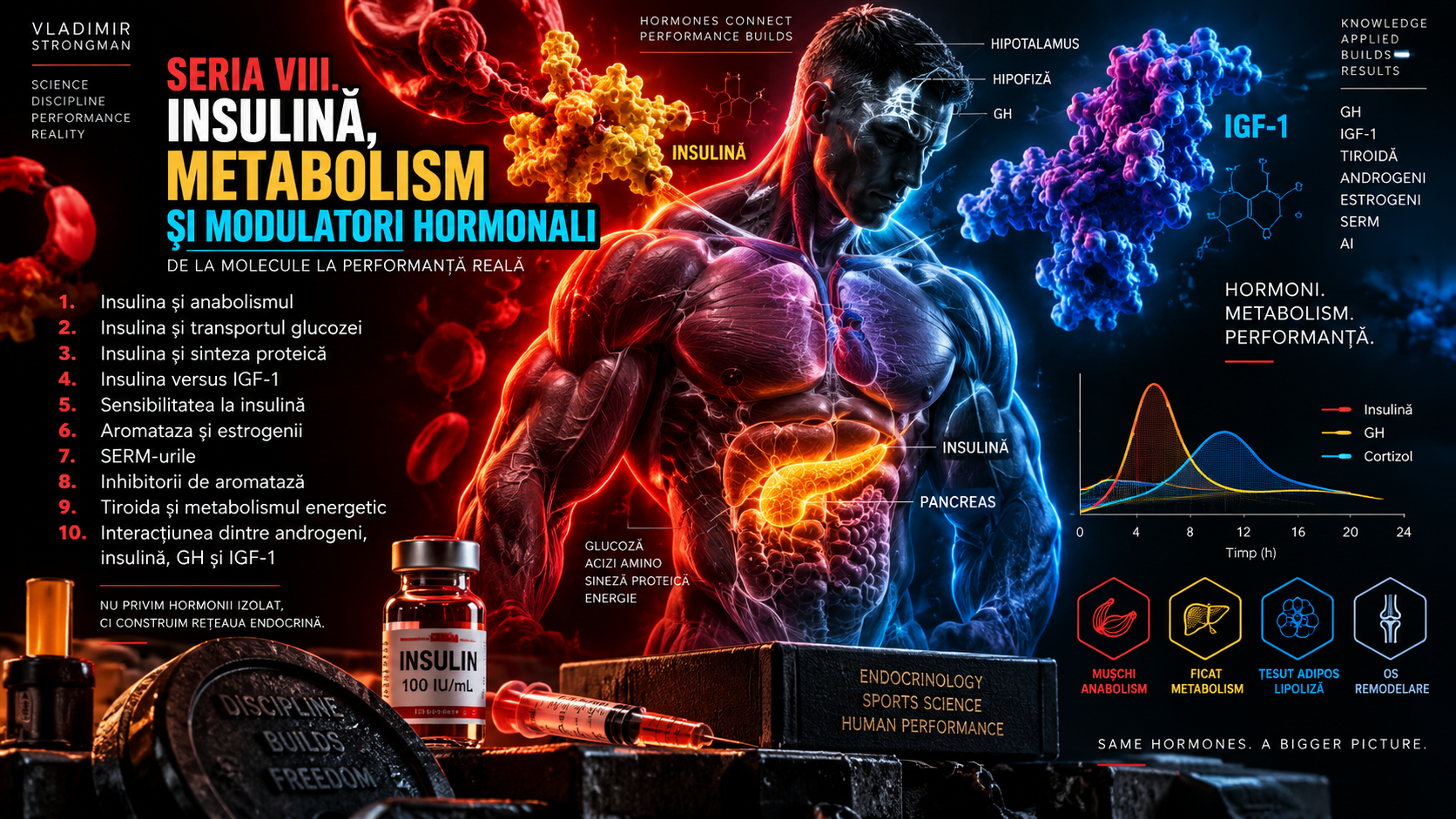
Insulin sensitivity is one of those terms that sounds simple until we try to define it precisely. In gym language, it is often reduced to the idea that “the body handles carbohydrates well.” Physiology is considerably more complex. Insulin sensitivity describes how strongly a tissue responds to a given amount of insulin, and that response may mean glucose uptake, suppression of hepatic glucose production, inhibition of lipolysis, or modification of other metabolic fluxes.
There is therefore no single insulin sensitivity value that completely describes the organism. Skeletal muscle, liver and adipose tissue can display different degrees of responsiveness to insulin. Sensitivity also changes from day to day according to physical activity, sleep, energy intake, glycogen, stress, inflammation and fat distribution. This episode maps those differences and explains why insulin resistance is a process rather than a binary label.
1. What does insulin sensitivity actually mean?
A tissue is insulin-sensitive when a relatively small concentration of the hormone produces a substantial metabolic response. In muscle, this may mean increased GLUT4-mediated glucose uptake and glycogen synthesis. In the liver, efficient insulin action means suppression of endogenous glucose production and a shift toward storage. In adipose tissue, it includes inhibition of lipolysis and reduced release of fatty acids into the circulation.
Insulin resistance is the opposite situation: more insulin is required to obtain the same response, or the metabolic effect at a given insulin concentration is smaller. The pancreas may compensate for a period by secreting more insulin, leaving blood glucose apparently normal. This is why normal glucose does not automatically demonstrate optimal insulin sensitivity. Sometimes normal glucose is being defended by compensatory hyperinsulinemia.
2. Insulin sensitivity is not the same thing as normal blood glucose
Blood glucose is a concentration measured in circulation. Insulin sensitivity is a functional property of the system maintaining that concentration. Two people can have the same fasting glucose while one requires far more insulin to maintain it. Metabolically, these situations are not identical. One may reflect an efficient system, while the other reflects a system compensating through greater pancreatic output.
This difference explains why evaluation of carbohydrate metabolism cannot be reduced to one glucose value. HbA1c, fasting glucose, postprandial glucose, fasting insulin, the response to an OGTT and, in research, the hyperinsulinemic-euglycemic clamp describe different parts of the same system. Each has strengths and limitations. Interpretation becomes meaningful when results are placed in clinical, body-composition and physical-activity context.
3. Skeletal muscle: the major site of insulin-stimulated glucose disposal
After a meal, skeletal muscle is a major site for insulin-stimulated glucose disposal. Insulin activates the insulin receptor, IRS, PI3K, Akt and TBC1D4, and GLUT4 is translocated to the sarcolemma and T tubules. The fiber's capacity to take up glucose from the interstitial space rises. Some glucose is oxidized and some is directed toward glycogen. When this pathway responds poorly, less glucose is removed from blood for a given insulin concentration.
Muscle is more than a collection of receptors and transporters. Insulin must reach the capillaries, cross the endothelial barrier and enter the interstitial space. Glucose must also be delivered effectively. Membrane transport and intracellular phosphorylation then need to function. Muscle insulin sensitivity is therefore the result of a sequence of steps: vascular delivery, signaling, GLUT4 translocation, transport and intracellular metabolism.
4. The liver: insulin sensitivity without GLUT4
The liver responds strongly to insulin, but not through the same GLUT4-dominant mechanism used by muscle. The main hepatic actions of insulin involve control of metabolic fluxes: reduction of gluconeogenesis and glycogenolysis, stimulation of glycogen storage and coordination of lipid metabolism. During fasting, the liver maintains blood glucose by releasing glucose. After a meal, insulin signals it to reduce that output. In hepatic insulin resistance, endogenous glucose production remains too high for the insulin concentration present.
This hepatic resistance can contribute to elevated fasting glucose because the liver continues exporting glucose when it should respond more strongly to insulin. At the same time, some branches of hepatic metabolism can remain relatively active, leading to the concept of selective insulin resistance. Liver physiology shows why it is insufficient to describe an entire person as simply insulin-sensitive or insulin-resistant.
5. Adipose tissue: insulin sensitivity also means control of lipolysis
Adipocytes are highly sensitive to insulin's antilipolytic effect. After a meal, insulin reduces release of fatty acids from triglyceride stores. When this metabolic brake works well, fatty-acid flux toward liver and muscle falls during periods when the body is using carbohydrate. When adipose tissue becomes insulin-resistant, lipolysis remains too active in the presence of insulin and circulating fatty acids may remain elevated.
The consequences extend beyond adipose tissue. Excess fatty-acid delivery can increase lipid flux to liver and muscle and favor formation of lipid intermediates that interfere with insulin signaling. Adipose insulin resistance can therefore contribute to hepatic and muscular insulin resistance. Metabolism is a network: a defect in one compartment changes the substrates and signals received by the others.
6. The pancreas can hide the problem for years
The pancreatic beta cell is not a passive observer. When tissues respond less effectively to insulin, the pancreas can increase secretion to preserve glucose control. This compensatory process explains why insulin resistance can exist for years before obvious hyperglycemia appears. During this phase, the organism still manages glucose, but the hormonal cost of doing so is higher.
Progression toward type 2 diabetes does not occur simply because insulin sensitivity declines. The critical transition occurs when insulin secretion can no longer compensate sufficiently for the existing resistance. Insulin sensitivity and beta-cell function must therefore be considered together. One person can have substantial resistance and normal glucose with robust compensation, while another may develop hyperglycemia with less resistance if beta-cell reserve is limited.
7. The hyperinsulinemic-euglycemic clamp: the reference standard
In research, the reference method for directly evaluating metabolic insulin sensitivity is the hyperinsulinemic-euglycemic clamp. The principle is elegant: insulin is administered in a controlled manner to create hyperinsulinemia, while glucose is infused at a variable rate to maintain euglycemia. The amount of glucose required to maintain this balance reflects how effectively tissues respond to insulin.
In a highly insulin-sensitive person, insulin strongly stimulates glucose disposal, so more glucose must be infused to prevent blood glucose from falling. In an insulin-resistant person, the effect of the same hyperinsulinemia is smaller and the glucose infusion requirement is lower. The clamp is precise but requires time, staff, monitoring and infrastructure, which is why it is not a routine test for most people.
8. HOMA-IR: useful, simple and easy to overinterpret
HOMA-IR estimates insulin resistance from fasting glucose and fasting insulin. It is useful in epidemiological research and group comparisons because it is far simpler than a clamp. Conceptually, higher fasting insulin required to maintain a given glucose concentration suggests lower system efficiency. But HOMA-IR remains a mathematical model, not a direct measurement of glucose uptake by skeletal muscle.
An important limitation is the absence of a universal cutoff that applies to every population, laboratory and insulin assay. Age, sex, ethnicity, body composition and laboratory methodology can change the distribution of values. HOMA-IR is most useful as one piece of a metabolic picture rather than an isolated verdict. It should be interpreted alongside glucose, HbA1c, lipids, history, waist size, blood pressure, physical activity and, when appropriate, medical evaluation.
9. OGTT: not only how high glucose rises, but how the whole system responds
The oral glucose tolerance test follows glucose dynamics after a standardized glucose load. When insulin is also measured at several time points, the test can reveal not only whether glucose returns efficiently toward normal but how much insulin is required to make that happen. Two similar glucose curves can conceal very different insulin responses, providing information about pancreatic compensation and peripheral sensitivity.
Indices derived from the OGTT attempt to capture insulin sensitivity in a dynamic context closer to ordinary physiology than fasting. They still share the basic limitations of indirect indices: intestinal absorption, insulin secretion, insulin clearance, body size and the chosen formula all influence the result. The OGTT can be clinically valuable, but it does not turn metabolism into a perfect equation.
10. Fasting insulin: useful, but not sufficient on its own
Fasting insulin can provide an indirect picture of how hard the pancreas is working to maintain resting glucose. A persistently elevated value, interpreted with glucose and clinical context, may suggest compensatory hyperinsulinemia. Circulating insulin, however, depends on more than pancreatic secretion. The liver extracts a substantial fraction during first pass, and hepatic and renal clearance influence the concentration that is measured.
A single sample can also be affected by incomplete fasting, training on the previous day, sleep, acute stress, illness, energy intake and biological variation. Fasting insulin should therefore not be turned into an absolute score of metabolic health. It is useful information, but it makes most sense when placed beside the rest of the metabolic picture.
11. HbA1c tells a different story from insulin sensitivity
Glycated hemoglobin reflects average glycemic exposure over the preceding weeks and is highly useful in diagnosis and monitoring of diabetes. But HbA1c does not directly measure insulin sensitivity. A person can have normal HbA1c while maintaining that average glucose through increased insulin secretion.
Conversely, altered red-cell lifespan, anemia, hemoglobin variants and other conditions can influence HbA1c independently of metabolic sensitivity. Using HbA1c as a synonym for insulin resistance is therefore incorrect. It answers the question “what was glycemic exposure?” rather than “how much insulin was required to achieve that glucose control?”.
12. Insulin secretion and clearance: two sides of the same concentration
Peripheral insulin concentration is the result of how much the pancreas secretes and how quickly the body removes it. Much of endogenous insulin first travels through the portal vein to the liver, where a fraction is extracted. The remainder enters systemic circulation and is further metabolized by liver, kidney and other tissues. A higher insulin value therefore does not automatically mean proportionally greater pancreatic secretion.
This distinction matters in research and test interpretation. C-peptide is secreted in equimolar amounts with endogenous insulin but has different clearance and can help assess pancreatic secretion. Insulin sensitivity, secretion and clearance form a metabolic triangle. Looking at only one side can distort the interpretation of the whole system.
13. Exercise can increase glucose uptake even without insulin
Muscle contraction activates glucose uptake through mechanisms that do not depend on the same insulin receptor–IRS–PI3K–Akt sequence. Signals related to ATP use, calcium, AMPK, CaMKII and other systems converge on GLUT4 trafficking. Even muscle with impaired insulin signaling can therefore increase glucose uptake during exercise. It is one of the most elegant redundancies in energy physiology.
This effect explains why physical activity can reduce blood glucose and increase glucose utilization without a corresponding rise in insulin. The story continues after exercise: muscle becomes temporarily more responsive to insulin, particularly when glycogen has been used. Exercise attacks the problem from two directions, with insulin-independent uptake during activity and greater sensitivity afterward.
14. The post-exercise period is a phase of increased metabolic sensitivity
After exercise sufficient to alter energetic state and glycogen stores, muscle responsiveness to insulin can remain elevated for hours and sometimes longer depending on exercise type, volume and intensity. TBC1D4 and other signaling nodes retain a molecular memory of contraction, while the need to restore glycogen favors glucose uptake.
This increased sensitivity does not mean there is a tiny “anabolic window” after which nutrients become useless. It means trained tissue temporarily has greater capacity to use and store glucose. For an athlete who trains frequently, repeated episodes of this sensitization contribute to better metabolic homeostasis over time.
15. Resistance training and insulin sensitivity
Resistance training is not only a tool for hypertrophy and strength. Meta-analyses show that it can improve markers such as fasting insulin and HOMA-IR, including in people with overweight or type 2 diabetes. Mechanisms include greater active muscle mass, increased GLUT4 expression, improved oxidative capacity and the repeated contraction-mediated stimulation of glucose uptake.
Not every program produces the same effect. Volume, frequency, muscle mass involved, rest intervals, intensity and training status matter. A single maximal repetition has a different metabolic cost from a session containing multiple sets and large muscle groups. In Strongman, dynamic events and medleys can create far greater glycolytic demand than one maximal log-press attempt.
16. Muscle glycogen changes the response to insulin
Muscle with reduced glycogen after exercise has a metabolic priority: restoring the store. In this setting, insulin sensitivity and glycogen synthesis are favored. As glycogen is replenished, the drive for supercompensation declines. The same carbohydrate-rich meal can therefore have different metabolic destinations after demanding training compared with a sedentary day when glycogen is already full.
This does not mean glycogen depletion is required for insulin sensitivity or that extreme depletion should be deliberately created. It simply means energy stores are one of the variables changing tissue response. Insulin sensitivity is dynamic precisely because the body adjusts nutrient flow to the real needs of the cell.
17. Physical inactivity can reduce sensitivity surprisingly quickly
Metabolic sensitivity is not a permanent reward earned through years of sport. A sudden reduction in activity and daily steps can reduce glucose utilization and promote positive energy balance before body weight changes substantially. Muscle is built to receive frequent contractile signals, and the absence of those signals rapidly changes energy flux.
This is practically relevant for an injured athlete. A period in which training drops sharply while energy intake remains at heavy-preparation levels can quickly alter the metabolic environment. Injury itself does not simply “cause insulin resistance”; the combination of inactivity, energy surplus, disrupted sleep, stress and possible fat gain changes the picture.
18. Sleep is a metabolic regulator, not merely a break for the brain
Controlled studies and meta-analyses show that sleep restriction can reduce insulin sensitivity. Effects can appear after relatively short periods and involve changes in sympathetic activity, cortisol, circadian rhythms, appetite and tissue responsiveness to insulin. An athlete can have a carefully designed diet and training plan while chronic short sleep pushes metabolism in the opposite direction.
Sleep quality cannot be judged only by hours. Fragmentation, obstructive sleep apnea and circadian misalignment can alter the metabolic quality of the night. In athletes with very large body mass and neck circumference, sleep-disordered breathing deserves medical attention because it can simultaneously affect recovery, blood pressure, oxygenation and metabolic control.
19. Circadian timing changes how we respond to nutrients
Insulin sensitivity and glucose tolerance display circadian variation. Molecular clocks in liver, muscle, pancreas and adipose tissue coordinate metabolic gene expression with the light–dark cycle and habitual feeding times. Very late meals, night shifts and irregular sleep can create misalignment between nutrient signals and the internal program of metabolic tissues.
This does not turn a nighttime meal into a metabolic poison, but repeated chronic misalignment may contribute to a less favorable profile. Competitions, travel and work schedules can make perfect routines impossible for athletes. The useful message is not rigidity, but that regularity of sleep and meals is a real metabolic variable.
20. Visceral fat matters more than scale weight alone suggests
Two people with the same body weight and even similar estimated body-fat percentages can have different metabolic profiles depending on fat distribution. Visceral adipose tissue is metabolically active and delivers substrates and signals to the liver differently from peripheral subcutaneous fat. Greater central adiposity is commonly associated with insulin resistance and hepatic fat accumulation.
Subcutaneous adipose tissue can also play a protective role when it stores surplus energy efficiently. Trouble emerges when safe expansion capacity is exceeded or adipocytes become dysfunctional. Fatty acids and triglyceride-derived substrates are then redirected toward liver, muscle and other organs. Insulin resistance therefore relates not only to how much fat exists, but where it is and how effectively it can be stored.
21. Ectopic fat and lipid intermediates
Triglyceride stored in a tissue is not always itself toxic. The problem is subtler and involves lipid flux and formation of bioactive intermediates. In the liver, accumulation of certain diacylglycerol species can activate PKCε and reduce insulin-receptor efficiency. In muscle, other DAG species, ceramides and their subcellular localization are studied as mediators of impaired signaling.
This corrects the popular idea that “fat inside muscle causes insulin resistance.” The relationship is not that simple. Lipid type, storage compartment, oxidation rate, turnover and training status all matter. Endurance athletes can carry substantial intramuscular lipid while remaining highly insulin-sensitive, a phenomenon known as the athlete's paradox.
22. Inflammation can amplify insulin resistance
In metabolically unhealthy obesity, adipose tissue can become infiltrated by immune cells and produce a different cytokine profile. Inflammatory signals can modify IRS phosphorylation and other parts of insulin signaling. Inflammation is not the single cause of insulin resistance and should not become a magic word explaining everything, but it can amplify defects produced by energy surplus, lipotoxicity and adipocyte dysfunction.
Acute inflammation after training is a different phenomenon. It is part of normal adaptation and is not equivalent to chronic low-grade inflammation associated with metabolic disease. Confusing the two produces bad conclusions. A hard training session can temporarily raise inflammatory markers while, over the long term, improving insulin sensitivity.
23. The athlete's paradox: high intramuscular lipid with high insulin sensitivity
In sedentary people with obesity, greater intramyocellular lipid content is often associated with insulin resistance. Endurance athletes can show an apparently contradictory combination: substantial intramuscular triglyceride stores coexist with high insulin sensitivity. The explanation is that these lipids are organized and used differently in muscle with high mitochondrial density, strong oxidative capacity and rapid lipid-droplet turnover.
The paradox shows why total tissue fat is not sufficient to predict insulin signaling. A deposit can function as a useful metabolic reservoir or be part of dysfunctional lipid flux. Cellular context creates the difference. The same principle explains why metabolic biomarkers should not be interpreted without information about physical activity and body composition.
24. Large muscle mass is an advantage, not metabolic immunity
More muscle provides a larger reservoir for glucose and glycogen and can support greater substrate utilization. Developing muscle through resistance training is therefore generally favorable for metabolic control. A very muscular body, however, is not automatically protected from insulin resistance if accompanied by chronic energy surplus, substantial visceral fat, fatty liver, poor sleep and low activity outside training.
This distinction is essential in open-weight strength sports where absolute body mass can become very large. Kilograms of muscle and kilograms of adipose tissue do not have the same metabolic effect, but neither do they operate in completely separate compartments. An athlete can be strong and active while accumulating metabolic risk if body size becomes extreme and recovery is poor.
25. Chronic energy surplus can reduce sensitivity before dramatic weight gain
When energy intake repeatedly exceeds expenditure, tissues must handle increasing fluxes of glucose, fatty acids and amino acids. At first, storage expands and oxidation adapts. If surplus persists, liver and muscle may accumulate ectopic lipid while adipocytes become hypertrophic and less efficient. Insulin resistance can therefore emerge as part of systemic energy overload.
No single food instantly switches on this process. Energy balance, macronutrient distribution, food quality, duration of surplus, individual predisposition and physical activity all matter. During a mass-gain phase, the difference between a moderate surplus and a very large one can become important because the body has no unlimited ability to direct additional nutrients exclusively toward muscle.
26. Weight loss can improve sensitivity before dramatic visual changes
In people with excess adiposity and insulin resistance, reduction in body mass can improve metabolic control relatively quickly, sometimes before the visual change is dramatic. Lower hepatic fat and reduced fatty-acid flux can improve hepatic insulin action, while training preserves or expands muscle's capacity to use glucose. The effect is not simply the result of being lighter but of reorganizing energy flows.
For strength athletes, the goal is not automatically to become as lean as possible. Performance may require high body mass and energy intake. There can nevertheless be a point where additional weight provides too little performance benefit for its metabolic, cardiovascular and locomotor cost. Insulin sensitivity is one variable that can indicate this balance is changing.
27. Carbohydrates raise insulin, but they are not synonymous with insulin resistance
The rise in insulin after carbohydrate is a normal physiological response. Confusing secretion with insulin resistance means confusing the operation of the system with its failure. Insulin-sensitive muscle responds precisely by taking up glucose efficiently and restoring glycogen. In an athlete with high training volume, carbohydrate can support performance and recovery without being, by itself, a cause of insulin resistance.
Problems emerge when total energy intake, inactivity, visceral adiposity and predisposition create a context in which tissues no longer respond efficiently. Diets with different macronutrient compositions can support metabolic health when energy balance, food quality, body mass and activity are well managed. Reducing physiology to “carbohydrates raise insulin, therefore carbohydrates cause resistance” is too crude.
28. Dietary fat, circulating lipids and energy overload
Fatty acids are normal and essential fuels. During chronic energy excess, however, lipid flux can exceed the capacity of tissues for oxidation and safe storage. Experimental elevations of circulating fatty acids can acutely impair insulin-stimulated glucose uptake in muscle. Over longer periods, dietary composition interacts with energy balance, fat distribution and physical activity.
This does not mean dietary fat should be demonized. The body needs lipids for membranes, steroid hormones and absorption of fat-soluble vitamins. The metabolic message is more refined: when energy inflow persistently exceeds utilization and safe storage capacity, substrates can be redirected to compartments where their intermediates interfere with signaling.
29. Cortisol, stress and insulin sensitivity
Cortisol supports energy availability during stress and fasting, including by promoting glucose production and opposing some insulin actions. This role is physiological. Problems arise when stress, sleep deprivation and circadian disruption maintain an unfavorable hormonal environment chronically. Not every cortisol increase is pathological; heavy exercise normally produces acute responses.
For an athlete, the difference between acute and chronic stress is crucial. A hard session can transiently raise catecholamines and cortisol, after which the body returns toward baseline and adapts. When training is layered onto inadequate sleep, demanding work, travel and poorly synchronized nutrition, recovery may remain incomplete and insulin sensitivity can be one of the affected functions.
30. Aging does not make insulin resistance inevitable
Insulin sensitivity tends to deteriorate with age in many populations, but much of that relationship is mediated by changes in body composition, lower activity, loss of muscle and increased visceral fat. Chronological age and metabolic age are not the same thing. Active older adults can retain much better metabolic profiles than younger sedentary adults.
Resistance training becomes increasingly valuable because it counters sarcopenia and preserves a major tissue for glucose disposal. Appropriate nutrition, sleep, adiposity control and aerobic activity complement the effect. Aging cannot be stopped, but many pathways linking age with metabolic decline are modifiable.
31. Genetics sets the terrain, not the whole destiny
Genetic differences influence insulin secretion, fat distribution, adipocyte expansion capacity, mitochondrial function and diabetes risk. Family history therefore matters. Predisposition, however, continuously interacts with environment. Physical activity, body composition and diet can strongly modify the metabolic phenotype.
This interaction explains why two people with similar lifestyles can have different values and why the same weight gain does not create the same degree of insulin resistance in everyone. Instead of searching for one cause, sensitivity is better understood as the output of an equation with many variables, some fixed and many modifiable.
32. Endothelium and blood flow are part of insulin action
For insulin and glucose to reach muscle fibers, microcirculation must distribute blood efficiently. Insulin has vascular actions and can promote microvascular recruitment through endothelial signaling. These responses can be impaired in insulin resistance, meaning the defect is not confined to the inside of the myocyte. Delivery of substrate to tissue can itself become a limiting step.
Exercise improves perfusion through contraction-dependent mechanisms and expands functional capillary exchange. This is one reason physical activity benefits extend beyond AMPK activation or GLUT4 translocation. Trained muscle improves the infrastructure for nutrient delivery, membrane transport and utilization at the same time.
33. BCAAs and insulin resistance: association is not automatically causation
Higher concentrations of several branched-chain amino acids and their metabolites are frequently associated with obesity and insulin resistance. This has encouraged the idea that BCAAs directly cause the problem. The relationship is bidirectional and complex: altered amino-acid metabolism can be a consequence, marker and possible contributor in certain contexts.
For an athlete, the correct conclusion is not that dietary protein or leucine should be avoided to protect insulin sensitivity. Protein is essential for muscle remodeling. Biomarkers must be interpreted in relation to intake, muscle mass, hepatic and renal function and energetic state. Amino-acid metabolism cannot be reduced to a single epidemiological association.
34. Strongman: a large body, huge energy flux and a distinctive metabolic context
Strongman combines apparently opposing factors. Athletes have large muscle mass, intense training and frequent episodes of contraction-stimulated glucose uptake. At the same time, open-weight competition may encourage very high body mass, large caloric intake, difficult sleep and periods of reduced mobility. Metabolic outcome cannot be predicted from being “very active” or “very heavy” in isolation.
An athlete can have good insulin sensitivity in trained muscle while still accumulating hepatic or visceral fat. Conversely, high body weight does not automatically prove insulin resistance. In strength sports, useful assessment combines waist circumference, blood pressure, lipids, glucose, HbA1c, fasting insulin, family history, sleep quality and the trajectory of body mass.
35. Competition and recovery can temporarily change laboratory values
A Strongman competition can combine maximal effort, glycolytic work, dehydration, high catecholamines, short sleep and unusual feeding. Blood tests taken immediately after such a weekend may capture an acute state rather than ordinary metabolism. For longitudinal comparisons, collection conditions should be as similar as possible.
The same applies after very demanding training. Exercise can improve muscle insulin sensitivity while acute stress, altered hydration and food intake separately affect glucose and insulin. A single value is less informative than a trend obtained under standardized conditions. In metabolic medicine, the pre-analytical context matters enormously.
36. How should a strength athlete's metabolic tests be read?
There is no single blood test that answers “am I insulin-sensitive?”. Fasting glucose reflects resting homeostasis. HbA1c describes glycemic exposure over time. Fasting insulin can suggest compensation, while HOMA-IR combines two variables into an index. OGTT shows dynamics after a challenge. Lipids, liver enzymes and anthropometry add important context.
When results disagree or major risk factors exist, medical interpretation is more valuable than forcing all data into one score. Sensitivity is a continuum and can differ among organs. Laboratory methods also vary. Following trends in the same laboratory under similar conditions is often more informative than obsessively comparing one result with a cutoff found online.
37. Common myths about insulin sensitivity
Myth one: normal glucose excludes insulin resistance. False, because hyperinsulinemia can compensate. Myth two: one universal HOMA-IR cutoff automatically defines disease. False, because cutoffs differ among populations and methods. Myth three: eating carbohydrate raises insulin and therefore “damages sensitivity.” False, because the postprandial response is physiological.
Myth four: an athlete cannot become insulin-resistant. False; activity is protective but does not erase every other factor. Myth five: one supplement or “hack” can repair sensitivity independently of sleep, activity, energy intake and body composition. The strongest evidence favors the large, unglamorous interventions: regular movement, appropriate adiposity, sufficient sleep and a sustainable diet.
38. What genuinely improves insulin sensitivity?
The most robust strategy is regular physical activity, combining acute effects with chronic adaptations. Resistance training increases muscle mass and metabolic capacity, while aerobic activity develops oxidative and cardiorespiratory fitness. Reducing excessive visceral fat, matching energy intake to needs, obtaining sufficient sleep and treating conditions such as sleep apnea can complement these effects.
Perfect behavior is not required, and insulin does not need to be kept permanently low. A healthy organism must be able to raise insulin after a meal and return toward baseline, use glucose when available and mobilize fat during fasting and activity. Good sensitivity is essentially the flexibility to respond appropriately to changes in energetic state.
39. Why exogenous insulin is not a method for “improving sensitivity”
Administering insulin does not automatically make receptors more sensitive. Exogenous insulin can lower blood glucose by increasing the hormonal signal, but that is different from improving tissue responsiveness. Outside medical indications, insulin manipulation can cause severe hypoglycemia, loss of consciousness, seizures and death. The physiology discussed here should not be converted into a use protocol.
For an athlete, the healthy objective is for tissues to respond efficiently to insulin produced normally by the body. That capacity is built through activity, functional muscle mass, energy-flow control, sleep and metabolic health. When prediabetes, diabetes or substantial insulin resistance is suspected, investigation and treatment belong to medicine, not self-experimentation.
40. Conclusion: insulin sensitivity is a property of the whole system
Insulin sensitivity is not a metabolic medal won or lost permanently. It is a dynamic property of tissues continuously shaped by muscle contraction, energetic state, visceral fat, sleep, age, genetics, inflammation and organ function. Muscle can become more responsive after exercise, liver can become resistant through lipid accumulation, and adipose tissue can lose its ability to suppress lipolysis.
For the strength athlete, the central message is simple without being simplistic: muscle mass and training are powerful allies but do not provide immunity. Robust metabolism can handle large nutrient loads when demand exists, return toward equilibrium and avoid requiring progressively higher insulin concentrations to maintain the same glucose. Good sensitivity is metabolic efficiency, not the absence of insulin.
41. Metabolic flexibility: sensitivity also means switching to the appropriate fuel
A metabolically flexible organism can move efficiently between predominantly fat oxidation during fasting and rest and greater carbohydrate use after meals or during intense exercise. Insulin is one of the signals organizing this transition. When sensitivity is high, a postprandial rise in insulin can suppress lipolysis and rapidly direct tissues toward glucose use and storage. When sensitivity is reduced, this switch can become slower and require a greater hormonal signal.
Metabolic flexibility is not the same as being able to function without carbohydrate or keeping insulin permanently low. In Strongman, rapid carbohydrate utilization is valuable for glycolytic events, while fat oxidation supports rest and lower-intensity activity. Metabolic health is the ability to change fuel according to demand rather than remain loyal to one substrate.
42. Triglycerides, fatty liver and hepatic insulin sensitivity
Elevated triglycerides, the triglyceride-to-HDL relationship and evidence of hepatic steatosis can add context to metabolic assessment, although none directly measures insulin sensitivity by itself. Metabolic fatty liver is frequently associated with hepatic insulin resistance, and intrahepatic lipid accumulation can alter insulin-receptor signaling through intermediates such as diacylglycerol and PKCε. The relationship is strong at population level but not absolute in every individual.
For an athlete with large body mass, normal liver enzymes do not completely exclude steatosis, while elevated enzymes do not automatically prove insulin resistance. Hard training can also modify several enzymes. History, imaging when clinically indicated, the lipid profile and glycemic data therefore need integrated medical interpretation. One marker rarely describes an organ as central to metabolism as the liver.
43. Standardizing blood collection: the detail that can change the comparison
When the goal is to follow fasting insulin, glucose or HOMA-IR over time, collection conditions should be as reproducible as possible. Fasting duration, time of day, previous-night sleep, recent training, alcohol, acute illness and energy intake can alter results. An athlete comparing a sample obtained after two rest days with one drawn the morning after a demanding competition is, in reality, comparing two different physiological states.
Standardization cannot remove biological variability, but it reduces noise and makes trends more credible. Using the same laboratory can be helpful because insulin assays are not perfectly interchangeable. When a result is unexpected, repeating it under controlled conditions may be more informative than drawing dramatic conclusions from one value. Metabolism is better measured as a movie than a photograph.
44. Peripheral and hepatic insulin sensitivity can move in different directions
One of the most important concepts is that insulin responsiveness can be dissociated among organs. An active person can have muscle that takes up glucose efficiently while the liver accumulates lipid and incompletely suppresses glucose production. Conversely, defects can begin predominantly in one compartment before becoming evident elsewhere. This is why a fasting index and a measure of peripheral glucose disposal do not assess exactly the same phenomenon.
This heterogeneity explains some apparently contradictory findings in studies and clinical practice. HOMA-IR is strongly influenced by the fasting liver–pancreas relationship, while a sufficiently hyperinsulinemic clamp largely evaluates peripheral glucose disposal, particularly in skeletal muscle. The correct question is not only “how insulin-sensitive am I?” but also “which tissue and which action of insulin am I trying to measure?”.
45. Good sensitivity does not mean permanently low insulin
An insulin-sensitive system does not avoid insulin; it responds efficiently to it. After a meal, an increase in insulin is normal and useful. Metabolic trouble appears when progressively larger amounts are required for the same effect or tissues can no longer switch appropriately between storage and mobilization. The goal is not “zero insulin” but a hormonal response proportional to physiological need and an efficient return toward baseline afterward.
Main sources
Petersen MC, Shulman GI. Mechanisms of Insulin Action and Insulin Resistance. Physiological Reviews, 2018. Richter EA, Bilan PJ, Klip A et al. A comprehensive view of muscle glucose uptake: regulation by insulin, contractile activity, and exercise. Physiological Reviews, 2025. DeFronzo RA and colleagues: development and application of the hyperinsulinemic-euglycemic clamp for quantifying insulin sensitivity.
Endotext. Assessing Insulin Sensitivity and Resistance in Humans. Reviews of adipose-tissue insulin sensitivity and lipolysis. Meta-analyses examining resistance training effects on fasting insulin and HOMA-IR. Systematic reviews and meta-analyses of controlled sleep-restriction studies and insulin sensitivity.
Editorial note: this material is educational and does not constitute diagnosis, medical advice or an insulin-use protocol. Metabolic laboratory results should be interpreted in clinical context. Inappropriate insulin use can cause severe hypoglycemia and death.
More From The Journal

Training
The Science of Strongman Training - Episode X: Competition Programming
How to build a complete Strongman competition preparation block: calendar, events, volume, intensity, specificity, simulations, autoregulation, tapering and fatigue management.

Training
The Science of Strongman Training - Episode IX: Peaking
Peaking in Strongman: how to turn months of training into maximal competition performance by reducing fatigue, preserving adaptations and managing specificity.