
Pharmacology
Series: Insulin, Metabolism and Hormonal Modulators - Episode 3: Insulin and Protein Synthesis
September 8, 2026
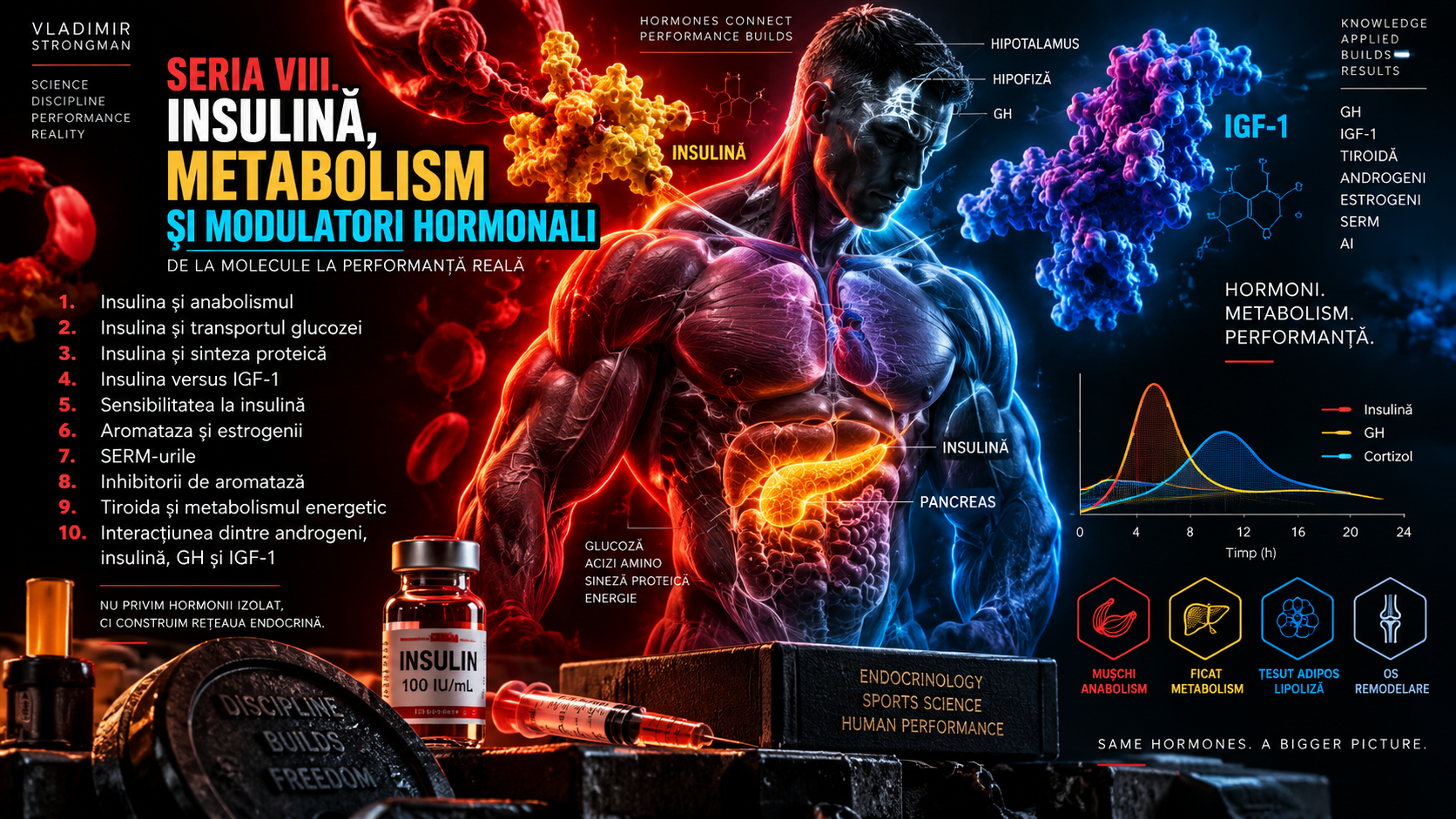
Insulin has an almost mythological reputation in strength sports. It is frequently called “the most anabolic hormone,” and from that phrase comes an apparently logical conclusion: if insulin is anabolic, then more insulin should automatically mean more muscle protein synthesis. Human physiology is considerably more interesting than that equation. In skeletal muscle, insulin's effect on protein metabolism depends on amino acid availability, blood flow, energetic state, training and the tissue's capacity to respond to the signal.
Evidence from stable-isotope tracer studies and meta-analyses shows a nuanced picture. Insulin has a robust effect on reducing muscle protein breakdown and improves net protein balance. Direct stimulation of muscle protein synthesis, however, is much more dependent on maintaining or increasing amino acid availability. In other words, insulin can create a more favorable environment for construction, but it cannot manufacture muscle proteins from nothing.
This episode explains exactly where insulin fits into the hypertrophy equation. We will separate synthesis from breakdown, signaling from substrate availability, acute responses from long-term adaptation, and physiology from gym folklore. Molecular mechanisms will not be turned into an insulin-use protocol. The goal is to understand protein metabolism and how training and nutrition produce adaptation.
1. What does muscle protein synthesis actually mean?
Muscle is not an inert structure that is built once and then remains unchanged. Its proteins are continuously degraded and resynthesized. Muscle protein synthesis, abbreviated MPS, is the process by which amino acids are incorporated into new proteins. Muscle protein breakdown, MPB, is the opposite process in which existing proteins are dismantled and amino acids are released.
What matters for tissue accumulation is not one isolated rate but the difference between these flows. If synthesis exceeds breakdown for enough time, net protein balance is positive. If breakdown exceeds synthesis, it is negative. Long-term hypertrophy emerges from repeatedly creating periods in which protein balance and remodeling favor accumulation of contractile protein, not from one isolated “anabolic spike” after a meal.
2. Synthesis and breakdown are not opposite ends of one switch
A common mistake is assuming that any factor that raises synthesis automatically lowers breakdown by the same amount. The two processes are regulated through partly distinct mechanisms. Essential amino acids, especially leucine, are powerful stimuli for protein synthesis. Insulin, in human physiology, has a particularly clear effect on suppressing proteolysis. Resistance exercise can increase overall turnover, accelerating both construction and remodeling.
This separation is essential for understanding insulin. A hormone can improve net protein balance without doubling synthesis, simply by slowing protein loss. In an accounting analogy, the balance can improve by increasing income or by reducing expenses. Protein metabolism operates on a similar principle, although the underlying biology is far more complex.
3. Why insulin is called an anabolic hormone
Anabolic describes processes that favor synthesis and conservation of biological structures. Insulin deserves this label because it stimulates glycogen storage, inhibits lipolysis, suppresses proteolysis and activates signaling pathways associated with cell growth. But anabolic does not automatically mean “hypertrophic at every concentration and in every context.”
In human muscle, anabolic systems work by integrating several signals. Insulin tells the cell that energy and nutrients are available. Amino acids provide both the physical material from which proteins are built and their own signals toward mTORC1. Muscle contraction and mechanical tension provide another type of input. When these converge, the cell has energetic permission, raw material and a mechanical reason for remodeling.
4. The insulin receptor and the beginning of anabolic signaling
Insulin binds to the insulin receptor, a transmembrane tyrosine kinase. Receptor activation produces autophosphorylation and recruitment of IRS proteins, which transmit the signal toward PI3K. PI3K generates signaling lipids at the membrane, enabling activation of PDK1 and Akt, also known as protein kinase B. Akt is one of the major intersections between metabolic and growth signaling.
The same Akt pathway that contributes to GLUT4 translocation also has branches influencing protein metabolism. Akt can inhibit the TSC1/TSC2 complex and modify PRAS40, facilitating mTORC1 activation through Rheb. At the same time, Akt can phosphorylate FoxO transcription factors and reduce expression of genes associated with proteolysis. Thus, one receptor launches signals that touch both protein construction and conservation.
5. mTORC1: an integration center, not a “muscle mass button”
mTORC1, mechanistic target of rapamycin complex 1, is one of the most important nodes regulating protein translation and cell growth. It integrates information about growth factors, amino acids, energy, oxygen and mechanical stress. For that reason, phosphorylation of one protein in this pathway is not equivalent to guaranteed hypertrophy. Signaling must be interpreted together with actual synthesis flux and long-term adaptation.
When mTORC1 is active it can phosphorylate targets such as p70S6K1 and 4E-BP1. These changes favor translation initiation, recruitment of messenger RNA to ribosomes and the cell's capacity to produce proteins. But mTORC1 does not independently decide which proteins are constructed, and it cannot compensate for the absence of essential amino acids. It is closer to an air-traffic control tower than the factory itself.
6. Amino acids are both building material and signal
To synthesize muscle protein, the cell needs all indispensable amino acids required for the protein sequence being assembled. A complete protein cannot be built when an essential component is missing. Therefore, a powerful hormonal signal cannot replace substrate. This limitation helps explain why systemic hyperinsulinemia does not automatically produce large increases in MPS when circulating amino acid concentrations fall.
Amino acids also function as signals. Leucine is the best-known example. Through sensors such as Sestrin2 and the Rag-GTPase systems, leucine availability contributes to recruitment and activation of mTORC1 at the lysosomal surface. Arginine and other amino acids have their own sensing systems. Protein nutrition is therefore not only delivery of “bricks”; it also carries molecular information that raw material is available.
7. Leucine and insulin do not do the same job
Leucine is often described as a trigger for protein synthesis because increased leucine availability activates amino-acid sensors and facilitates mTORC1 signaling. Insulin can activate mTORC1 from a different direction through Akt, TSC and Rheb. These signals meet at the same integration center, but they are not redundant. One indicates that amino acids are available; the other indicates a hormonal environment favorable to nutrient use and conservation.
This helps explain the synergistic effect of a protein-rich meal in a healthy person. Amino acids rise and provide substrate, while physiological insulin secretion contributes to reduced breakdown and organizes the metabolic response. Every signal does not need to be maximal. Biological systems often operate through thresholds and saturation, not a linear relationship in which twice as much hormone produces twice as much protein.
8. Essential amino acids matter more than the mere presence of BCAAs
Leucine can initiate a signal, but new protein requires a complete range of essential amino acids. Therefore, selectively raising branched-chain amino acids does not guarantee sustained stimulation of synthesis. A human study combining insulin with elevated BCAA concentrations, without increasing all essential amino acids, did not find additional stimulation of MPS, although whole-body proteolysis was reduced.
The message is simple: signaling and construction are different stages. Leucine can ring the factory bell, but if the warehouse does not contain all required parts, production cannot continue indefinitely. High-quality dietary proteins deliver leucine together with the other essential amino acids, which is why the effect of a complete protein cannot be reduced to one amino acid.
9. Blood flow can determine how much substrate reaches muscle
Insulin has vascular effects that can increase microvascular recruitment and muscle blood flow. This matters because an adequate amino acid concentration in blood is not sufficient if delivery to tissue is limited. In a classic study in healthy young adults, stimulation of protein synthesis by physiological hyperinsulinemia was closely associated with increased blood flow and phenylalanine delivery to muscle.
This detail explains some differences between experiments. Locally administered insulin, which can increase perfusion without severely lowering systemic amino acids, may produce a different result from systemic insulin administration. That is not a contradiction. It is an example of the same molecule producing different outcomes when substrate availability and hemodynamics are simultaneously changed.
10. The hyperinsulinemia paradox: circulating amino acids can fall
When insulin inhibits protein breakdown across several tissues, fewer amino acids are released into circulation. In experiments where insulin is increased systemically without amino acid replacement, plasma amino acid concentrations can fall. The result is an apparent paradox: Akt signaling may be strong while the raw material available for synthesis declines.
This explains why some studies find Akt activation without comparable activation of mTORC1, p70S6K and 4E-BP1, or without increases in muscle and mitochondrial protein synthesis. Hormonal signaling cannot be evaluated separately from amino acid concentrations. In the real organism, a mixed meal usually solves this problem because dietary protein supplies substrate at the same time.
11. What the human meta-analysis shows
A systematic review and meta-analysis of human research analyzed insulin's effect on muscle protein synthesis and breakdown separately. In the overall estimate, insulin did not significantly increase MPS. It did, however, clearly reduce MPB and improve net protein balance. When amino acid availability increased, the effect on synthesis became favorable.
This is probably the most important conclusion of the entire episode. Insulin is not irrelevant to protein synthesis, but its role is permissive and context-dependent. Amino acids and training play more direct roles in stimulating MPS, while insulin makes a decisive contribution to limiting losses and creating a favorable net balance.
12. Insulin's anti-proteolytic effect is much more robust
Muscle proteolysis is necessary for remodeling, but excessive breakdown pushes protein balance toward negative values. Insulin reduces amino acid release from muscle and other tissues by inhibiting components of proteolytic systems. In studies where amino acids were kept constant, relatively moderate increases in insulin were sufficient to reduce breakdown, and further increases in the hormone produced progressively smaller benefits.
This saturating relationship matters. Once the anti-catabolic effect is near maximal at physiological post-meal concentrations, raising insulin beyond that level does not automatically mean proportionally greater muscle protection. Biology does not provide an infinite ladder of benefits just because a hormonal signal becomes larger.
13. FoxO and the ubiquitin-proteasome system
One pathway through which insulin may reduce proteolysis is the Akt-FoxO axis. In the absence of insulin signaling, FoxO transcription factors can enter the nucleus and increase expression of genes involved in protein degradation. These include ubiquitin ligases such as MAFbx/atrogin-1 and MuRF1, especially familiar from research on muscle atrophy.
When Akt phosphorylates FoxO, its nuclear activity is reduced. Proteins are less strongly directed toward the ubiquitin-proteasome system. Human data are more complex than cell and animal models, however, and changes in molecular markers should not be treated as a direct measure of the entire proteolytic flux. Mechanism provides the explanation, while tracer studies reveal the physiological result.
14. Autophagy: breakdown is not the enemy of muscle
Autophagy is a cellular recycling system through which damaged components are delivered to lysosomes and degraded. Insulin and mTORC1 tend to suppress autophagy in the fed state, while energy deficit and AMPK activation can promote it. It is tempting to label every reduction in breakdown as beneficial, but that conclusion would be wrong.
Muscle needs turnover for quality control. Damaged proteins must be removed, organelles must be recycled and structures disrupted by exercise must be remodeled. Healthy adaptation does not mean permanently blocking degradation. It means an intelligent alternation among construction, conservation and recycling, which is one reason normal physiology oscillates between fasting and fed periods.
15. Net protein balance: the number that reunites the story
After a fasting period, muscle protein balance is usually negative because breakdown exceeds synthesis. A protein-containing meal raises essential amino acids, stimulates MPS and produces insulin secretion, which suppresses breakdown. The result is a shift toward a less negative or positive balance. This is the real anabolic effect of the meal, not simply the height of the insulin peak.
Over the long term, muscle accumulation requires repetition of these positive periods in the context of sufficient training stimulus. The body does not retain every protein synthesized during one meal, and every episode of MPS does not become hypertrophy. Some synthesis serves repair and remodeling, while the final adaptation depends on weeks, months and years of integrated balances.
16. Resistance exercise is an independent anabolic stimulus
Mechanical tension generated by resistance training can increase muscle protein synthesis without requiring a large insulin peak. Mechanotransduction involves integrins, focal adhesion kinase, phosphatidic acid, MAPK signaling and other pathways that converge on the translational machinery. This is an important difference from the simplistic model in which hypertrophy would merely be the result of one hormone.
In practice, training tells muscle what needs to adapt, while nutrition supplies material. Insulin participates in the metabolic context but does not replace mechanical tension. A muscle receiving nutrients without adequate loading has a different biological reason to build extra myofibrillar protein than a muscle repeatedly exposed to progressive resistance.
17. Mechanical signaling is not completely insulin-dependent
Some pathways activated by contraction and tension can reach mTORC1 without passing through the insulin receptor. Phosphatidic acid, FAK and components of Hippo and MAPK signaling can contribute to anabolic activation. This is one reason resistance exercise remains effective even when the post-meal insulin response is not dramatic.
Independence does not mean isolation. In the intact organism, signals overlap. After exercise, muscle becomes more sensitive to amino acids and to insulin. The important task is not identifying one “master switch,” but understanding how multiple inputs converge on the same translational and remodeling infrastructure.
18. After training, muscle responds differently to nutrients
A resistance session increases muscle sensitivity to amino acids for hours and, in some contexts, for more than a day. This is often described as sensitization of muscle protein synthesis. The same amount of protein can produce a more relevant anabolic response in recently trained muscle than in completely inactive muscle.
At the same time, exercise improves insulin sensitivity and glucose uptake. Recovery is therefore a context in which carbohydrate and protein metabolism become coordinated: glycogen can be restored efficiently, amino acids are directed toward remodeling and insulin contributes to lower breakdown. There is no single narrow “anabolic window,” but rather an extended period of altered sensitivity.
19. Post-training carbohydrate: glycogen and protein are different stories
Carbohydrate can be very important after exercise for glycogen restoration, especially when another session or competition follows soon. Increased insulin accelerates glucose uptake and glycogen synthesis. That benefit should not be confused with necessarily greater muscle protein synthesis when an adequate protein dose is already present.
In many situations, protein alone produces enough insulin for the relevant anti-proteolytic effect. Adding carbohydrate can raise insulin much higher without a proportional increase in MPS. That does not make carbohydrate useless. It means its primary role may be energetic and glycogen-related rather than “forcing” a protein-synthesis response that is already near saturation.
20. More insulin after a protein meal does not necessarily mean more MPS
The response to protein has a ceiling. Once essential amino acids and mTORC1 signaling are sufficient and insulin has reached the concentration required for relevant suppression of proteolysis, further increases in insulin may have very small effects on synthesis. This saturation principle appears across many hormonal systems.
For that reason, comparing meals solely by how much they “raise insulin” is biologically weak. One meal may produce a large insulin peak while containing few essential amino acids. Another may produce a moderate insulin response while delivering precisely the substrate required for muscle synthesis. For protein metabolism, the full nutrient composition matters more than one hormone.
21. Muscle protein metabolism versus whole-body protein metabolism
Studies may measure protein synthesis in one muscle, protein turnover across a limb, or whole-body protein metabolism. These outcomes are not interchangeable. Insulin may reduce proteolysis at the whole-body level through actions on several tissues while the change in MPS within a specific muscle remains small.
This distinction explains why two papers can appear to say different things. One may observe improved whole-body nitrogen or protein balance while another sees no significant rise in myofibrillar synthesis. There is not necessarily a conflict. Different compartments and different flows are being measured.
22. Not all muscle protein is myofibrillar
Muscle contains myofibrillar, sarcoplasmic and mitochondrial proteins, enzymes, transporters and structural proteins. Strength-oriented hypertrophy is especially associated with accumulation of contractile protein, but adaptation to training involves many other fractions. An increase in total synthesis does not automatically tell us which compartment increased.
Tracer studies can sometimes separate mixed, myofibrillar, sarcoplasmic or mitochondrial synthesis. During hyperinsulinemia without amino acid replacement, experiments have found Akt activation without increased mixed or mitochondrial muscle protein synthesis. This is another demonstration of the difference between signaling and actual construction flux.
23. The liver and splanchnic tissues change amino acid availability
After dietary protein is digested, amino acids pass through portal circulation and first reach the liver and other splanchnic tissues. A portion is retained and used there before amino acids enter peripheral circulation. Therefore, the amount of protein eaten is not identical to the amount of amino acid that actually reaches skeletal muscle.
Insulin and amino acids affect these compartments differently. Research shows that amino acids stimulate synthesis in both muscle and splanchnic tissues, whereas insulin's anabolic action in muscle is strongly related to suppression of breakdown. Post-meal metabolism is therefore a negotiation among organs, not a direct highway from plate to biceps.
24. Anabolic resistance with aging
With advancing age, muscle can respond less strongly to the same amino acid intake and training stimulus. This phenomenon is called anabolic resistance. Contributing factors include altered perfusion, mTORC1 signaling, physical activity, inflammation, insulin sensitivity and amino acid handling.
In this context, insulin may have a diminished effect on synthesis, and the vascular response may be attenuated. Resistance exercise remains important precisely because it can improve muscle sensitivity to amino acids. The message is not that aging “turns off” anabolism, but that the threshold and surrounding context change.
25. Insulin resistance also changes protein metabolism
Insulin resistance is best known for its effects on glucose, but insulin signaling also participates in protein metabolism. In obesity, type 2 diabetes and other metabolic states, vascular responses, Akt signaling and regulation of proteolysis can be altered. This may reduce the efficiency with which insulin coordinates the fed state.
Insulin resistance does not affect every pathway and every tissue identically. Some metabolic branches can become resistant before others. Therefore, measuring glucose or insulin alone does not completely describe the anabolic response of muscle. Body composition, physical activity and overall metabolic health need to be considered together.
26. Energy surplus does not replace the training signal
An energy surplus can support hypertrophy because it reduces energetic constraints on synthesis, helps restore glycogen and allows greater training volume. Excess energy does not independently decide where it will be stored, however. Without sufficient mechanical stimulus, a larger fraction of surplus can be directed toward adipose storage regardless of how “anabolic” insulin is.
Insulin is a signal of availability, not a perfect address label for muscle fiber. Trained muscle has an advantage because it captures glucose efficiently, has glycogen to restore and shows increased anabolic sensitivity to amino acids. Chronic excessive surplus, however, can promote fat accumulation, impaired insulin sensitivity and poorer metabolic quality.
27. Energy deficit changes the protein equation
During energy deficit, less energy is available for construction and protein balance can become more difficult to maintain. Insulin levels tend to be lower, lipolysis rises and energy-state signals including AMPK can exert greater pressure on mTORC1. Protein synthesis does not stop, but the environment becomes less favorable for accumulation.
Resistance exercise and adequate protein become even more important in this period. Post-meal insulin remains capable of suppressing proteolysis, but muscle is primarily preserved through the combination of mechanical tension, sufficient amino acids and a rate of weight loss that does not exceed recovery capacity.
28. Sleep, circadian rhythm and the anabolic response
Insufficient sleep and circadian disruption can impair insulin sensitivity, glucose metabolism and recovery. Sleep loss can also alter the hormonal environment and the response to training. For an athlete these effects overlap: if metabolic sensitivity falls and muscle recovery is compromised, optimizing one meal cannot fully compensate for the problem.
Protein metabolism is therefore connected to behaviors that seem distant from the gym. Sleep, meal distribution, daily activity and stress influence the environment in which insulin, amino acids and mechanical signaling operate. Hypertrophy is a whole-organism phenomenon, not merely one signaling pathway inside a muscle fiber.
29. Strongman: protein metabolism is a recovery problem, not only a mass problem
In Strongman, hypertrophy is not the only reason protein synthesis matters. Yoke, Farmer's Walk, deadlift, Log Press, Stones and medleys create mechanical stress across tissues and demand muscular remodeling. An athlete must repair affected structures, preserve contractile mass and adapt to large training volumes and varied implements.
Insulin participates in this recovery by coordinating the fed state, suppressing breakdown and restoring glycogen, but it cannot independently choose which proteins need rebuilding. Training specificity, protein intake and recovery time determine the direction of adaptation. For Strongman, “anabolic” also means maintaining the infrastructure capable of surviving the next heavy session.
30. Repeated competitions increase the cost of remodeling
A multi-event competition can simultaneously produce muscle damage, glycogen depletion, local inflammation and systemic fatigue. If another contest or heavy session follows quickly, recovery has to restore several components at once. In this context, carbohydrate and insulin matter for glycogen, while protein and amino acids are essential for structural remodeling.
Compressing this recovery into one hormonal variable is a mistake. An athlete may have a strong insulin response and still recover poorly when sleep is inadequate, protein intake is insufficient or mechanical trauma continues to accumulate. Insulin is one tile in the mosaic, not the whole image.
31. The myth that “insulin is more anabolic than every other hormone”
Ranking hormones on a simple “more anabolic” scale is pharmacologically weak. Insulin, testosterone, IGF-1, growth hormone and mechanical factors act through different receptors, tissues and mechanisms. Insulin has exceptional effects on nutrient control and proteolysis, while androgens modify gene expression through the androgen receptor and influence the muscular phenotype over longer periods.
Saying one is “more anabolic” without specifying the outcome being measured is like asking whether an engine is more powerful than a gearbox. They are different components of the system. For muscle, the relevant effect is the integrated result of hormones, nutrients, mechanics and recovery.
32. Akt or mTOR phosphorylation is not synonymous with hypertrophy
Molecular studies often measure phosphorylation of Akt, mTOR, S6K1 or 4E-BP1 minutes or hours after a stimulus. These measurements are valuable for understanding mechanisms but should not be converted directly into a prediction of muscle mass gained over months. Signaling is transient, while hypertrophy is the integrated result of countless episodes of synthesis and breakdown.
A pathway can sometimes be strongly phosphorylated without increased MPS when amino acids are insufficient. At other times, MPS may increase through mechanisms not perfectly reflected by one marker. Stable-isotope tracer studies, long-term muscle measurements and functional outcomes therefore need to be interpreted alongside molecular signaling.
33. Insulin is essential medicine, but hypoglycemia can be fatal
For people with diabetes who have a medical indication, insulin is an essential medicine and can be lifesaving. That medical reality should not be confused with nonmedical use in sport. Insulin administration can reduce blood glucose far below the physiological range when its effect is not properly matched to the body's needs.
Severe hypoglycemia can cause confusion, abnormal behavior, loss of coordination, seizures, unconsciousness, neurological injury and death. That acute risk is incomparably more important than any theoretical discussion of mTOR or protein synthesis. For this reason, the article explains mechanisms but provides no doses, combinations or administration protocols.
34. Anti-doping: insulin is prohibited by WADA
The 2026 WADA Prohibited List includes insulins and insulin-mimetics in section S4.4.2, Hormone and Metabolic Modulators. Substances in this category are prohibited at all times, in and out of competition, except where use is covered by a valid Therapeutic Use Exemption when the medical criteria are met.
For a tested athlete, anti-doping status is separate from the physiological question of whether a substance can modify metabolism. A molecule may have a legitimate medical use and simultaneously be prohibited in sport without a TUE. That separation must be preserved when discussing insulin, diabetes and performance.
35. What to remember about insulin and protein synthesis
Insulin is anabolic, but its effect on muscle protein is more sophisticated than the label suggests. In human physiology, its most consistent effect is suppression of protein breakdown. Stimulation of MPS becomes relevant mainly when amino acids are available and delivery to muscle is maintained. Amino acids, especially leucine within a complete essential-amino-acid profile, provide both signal and substrate.
Resistance exercise provides the mechanical signal that directs adaptation toward the loaded muscle. Insulin contributes to the fed-state environment, suppression of proteolysis, nutrient handling and glycogen restoration. Hypertrophy emerges when these processes are repeated and integrated over the long term. No single molecule can replace training, protein, energy and recovery.
36. Translation initiation: how protein production actually begins
Protein synthesis is not simply mTORC1 activation. For a protein to be produced, messenger RNA must be recruited to the ribosome, the initiation complex must assemble and translation must begin. 4E-BP1 is one important brake on this process. When hypophosphorylated, it binds eIF4E and limits formation of the eIF4F complex. mTORC1 activation promotes 4E-BP1 phosphorylation and releases eIF4E, facilitating mRNA recruitment.
Another component is eIF2B, which helps recycle eIF2 for translation initiation. Signaling from insulin, amino acids and exercise can influence different parts of this machinery. Therefore, saying “mTOR is active” describes only part of the process. Actual protein production depends on a much larger molecular machine, including messenger RNA, ribosomes, energy and amino acid availability.
37. Ribosomes: the production capacity of muscle
If mTORC1 and initiation factors regulate how quickly existing production lines work, ribosomes are the production lines themselves. Long-term hypertrophy depends not only on temporarily activating translation but also on the cell's capacity to produce and maintain enough ribosomes. The process that expands this capacity is called ribosomal biogenesis.
Resistance training can stimulate ribosomal RNA transcription and remodeling of translational machinery. Individuals showing larger hypertrophic responses may also display greater adaptations in this capacity. Insulin can support the energetic and signaling environment, but it cannot replace the repeated stimulus that justifies expanding the cellular “factory.” This shifts the discussion from a hormonal peak lasting hours to structural adaptations built over weeks and months.
38. Insulin and IGF-1: close relatives, not identical hormones
The insulin receptor and IGF-1 receptor belong to the same family of tyrosine kinases and can activate similar intracellular pathways, including PI3K-Akt-mTOR. Hybrid receptors containing subunits from the two systems also exist. This molecular proximity explains why insulin and IGF-1 are often grouped in discussions of anabolism, but their physiological actions are not identical.
Insulin is primarily a rapid regulator of the fed state and nutrient distribution. The IGF-1 system is more closely tied to growth, development and tissue adaptation and interacts with growth hormone. The fact that two pathways converge on Akt or mTORC1 does not make the hormones interchangeable. Receptor context, concentration, exposure duration and tissue all change the biological outcome.
39. The “muscle full” effect: why synthesis cannot remain maximal forever
After a protein meal, MPS rises for a period and then begins returning toward baseline even while blood amino acids may remain elevated. This is described by the “muscle full” concept. Muscle becomes temporarily refractory to continuing the anabolic response, likely through a combination of signaling feedback, translational control and limits imposed by the need for remodeling.
This concept matters for insulin because it shows why continuously maintaining an “anabolic” environment does not produce continuous growth. Cells have their own rhythms of construction and repair. Exercise can alter sensitivity and extend the response to amino acids, but even after training synthesis does not remain infinitely elevated. Adaptation requires alternation between stimulus, response and recovery.
40. Protein distribution matters more than chasing insulin peaks
If MPS is a transient response, the next question is how meals should be viewed across a day. Physiologically, repeated exposures to sufficient high-quality protein make more sense than trying to maintain very high insulin continuously. Each protein-containing meal supplies amino acids and normally produces an insulin response as well.
For an athlete, total daily protein, protein quality, reasonable distribution and the relationship of meals to training are more important variables than the isolated insulin index of a food. Physiological postprandial insulin is part of the normal mechanism; it does not need to become a separate nutritional target detached from the meal that produces it.
41. Protein synthesis has an energetic cost
Peptide-bond formation and operation of translational machinery consume ATP and GTP. Ribosomal biogenesis, amino acid transport, protein folding and tissue repair also have energetic costs. The cell therefore cannot completely separate the decision to build protein from its energetic state. AMPK acts as an energy-deficit sensor and can inhibit mTORC1 through TSC2 and Raptor when energy is limited.
This relationship explains why insulin, even though it signals abundance, cannot completely cancel the energetic reality of the cell. In severe underfeeding, exhaustion or major metabolic stress, priorities change. After feeding and during recovery, however, available energy and amino acids allow insulin and mechanical signals to be converted more effectively into remodeling.
42. How to read a study about “anabolism”
When a study says an intervention is “anabolic,” check what was actually measured. Did phosphorylation of one kinase rise? Did fractional synthesis rate increase for two hours? Did breakdown fall? Did net balance improve? Did muscle mass increase after twelve weeks? These outcomes sit at different biological levels and cannot be treated as synonyms.
For insulin, this caution is crucial. The literature includes local and systemic studies, euglycemic clamps, amino acid infusions, young and older participants, insulin-resistant individuals and protocols with very different amino acid availability. The correct conclusion appears only after these contexts are separated. The best synthesis of evidence does not say insulin “does not matter.” It says its anabolic effect is largely anti-proteolytic and permissive for synthesis when substrate is available.
43. Protein quality determines which amino acids enter the equation
Two meals containing the same amount of protein are not necessarily identical for muscle synthesis. Digestibility, the essential-amino-acid profile, leucine content and the speed at which amino acids appear in circulation all matter. Complete, highly digestible proteins tend to provide a profile better suited to stimulating MPS than sources in which one or more essential amino acids are limiting.
This again shows why insulin cannot be analyzed in isolation. A highly insulinogenic meal that is poor in indispensable amino acids does not supply the same raw material as a high-quality protein meal. Conversely, a protein-rich meal can generate enough insulin for the anti-proteolytic effect without requiring an extreme hormonal rise. Substrate and signal need to be considered together.
44. The insulin peak is a poor proxy for hypertrophy
A large plasma insulin peak shows that the pancreas responded strongly to nutrients, but it does not tell us how much myofibrillar protein will accumulate. To answer that question we would need to know amino acid availability, training stimulus, energy balance, tissue sensitivity, breakdown rate, recovery status and repeated responses over time. One hormone cannot compress all of those variables into a single number.
Nutritional strategies designed solely to maximize insulin therefore confuse a mediator with the goal. The athlete's goal is adaptation: sufficient protein, adequate energy, glycogen to support training, recovery and a progressive mechanical stimulus. Insulin will arise physiologically within that system whenever required. Chasing adaptation is far more useful than chasing the largest possible hormonal peak.
45. A sufficient threshold versus a maximal signal
A useful way to understand the entire system is to distinguish a sufficient concentration from a maximal one. For several insulin effects on protein metabolism, including suppression of breakdown, the response approaches saturation at concentrations that can occur physiologically after feeding. Once that threshold is reached, more signaling does not necessarily produce more outcome. This curve of diminishing returns is the opposite of the popular model in which anabolism would rise indefinitely as insulin becomes higher.
Main sources
Abdulla H et al. Role of insulin in the regulation of human skeletal muscle protein synthesis and breakdown: a systematic review and meta-analysis. Diabetologia. 2016;59:44-55. Trommelen J et al. Mechanisms in Endocrinology: Exogenous insulin does not increase muscle protein synthesis rate when administered systemically: a systematic review. European Journal of Endocrinology. 2015;173:R25-R34.
Fujita S et al. Effect of insulin on human skeletal muscle protein synthesis is modulated by insulin-induced changes in muscle blood flow and amino acid availability. American Journal of Physiology-Endocrinology and Metabolism. 2006;291:E745-E754. Greenhaff PL et al. Disassociation between the effects of amino acids and insulin on signaling, ubiquitin ligases, and protein turnover in human muscle. American Journal of Physiology-Endocrinology and Metabolism. 2008.
Biolo G et al. Physiologic hyperinsulinemia stimulates protein synthesis and enhances transport of selected amino acids in human skeletal muscle. Journal of Clinical Investigation. 1995;95:811-819. Rasmussen BB, Phillips SM. Contractile and nutritional regulation of human muscle growth. Exercise and Sport Sciences Reviews. 2003. Dickinson JM, Rasmussen BB. Amino acid transporters in the regulation of human skeletal muscle protein metabolism. Current Opinion in Clinical Nutrition and Metabolic Care.
Drummond MJ et al. Nutritional and contractile regulation of human skeletal muscle protein synthesis and mTORC1 signaling. Journal of Applied Physiology. 2009. Wackerhage H et al. An evidence-based narrative review of mechanisms of resistance exercise-induced human skeletal muscle hypertrophy. Sports Medicine. 2022. Wilkinson DJ et al. A focus on leucine in the nutritional regulation of human skeletal muscle metabolism in ageing, exercise and unloading states. Clinical Nutrition. 2023.
World Anti-Doping Agency. The 2026 Prohibited List, section S4.4.2: Insulins and insulin-mimetics. Consulted for insulin's anti-doping status.
Editorial note: this material is educational and does not constitute medical advice or an insulin-use protocol. Insulin is a vital medicine when medically indicated, but inappropriate use can cause severe hypoglycemia and death.
More From The Journal

Training
The Science of Strongman Training - Episode X: Competition Programming
How to build a complete Strongman competition preparation block: calendar, events, volume, intensity, specificity, simulations, autoregulation, tapering and fatigue management.

Training
The Science of Strongman Training - Episode IX: Peaking
Peaking in Strongman: how to turn months of training into maximal competition performance by reducing fatigue, preserving adaptations and managing specificity.