
Physiology
The Heart, Blood and Strongman - Episode 8: Dehydration and Its Effects on Strength
September 5, 2026
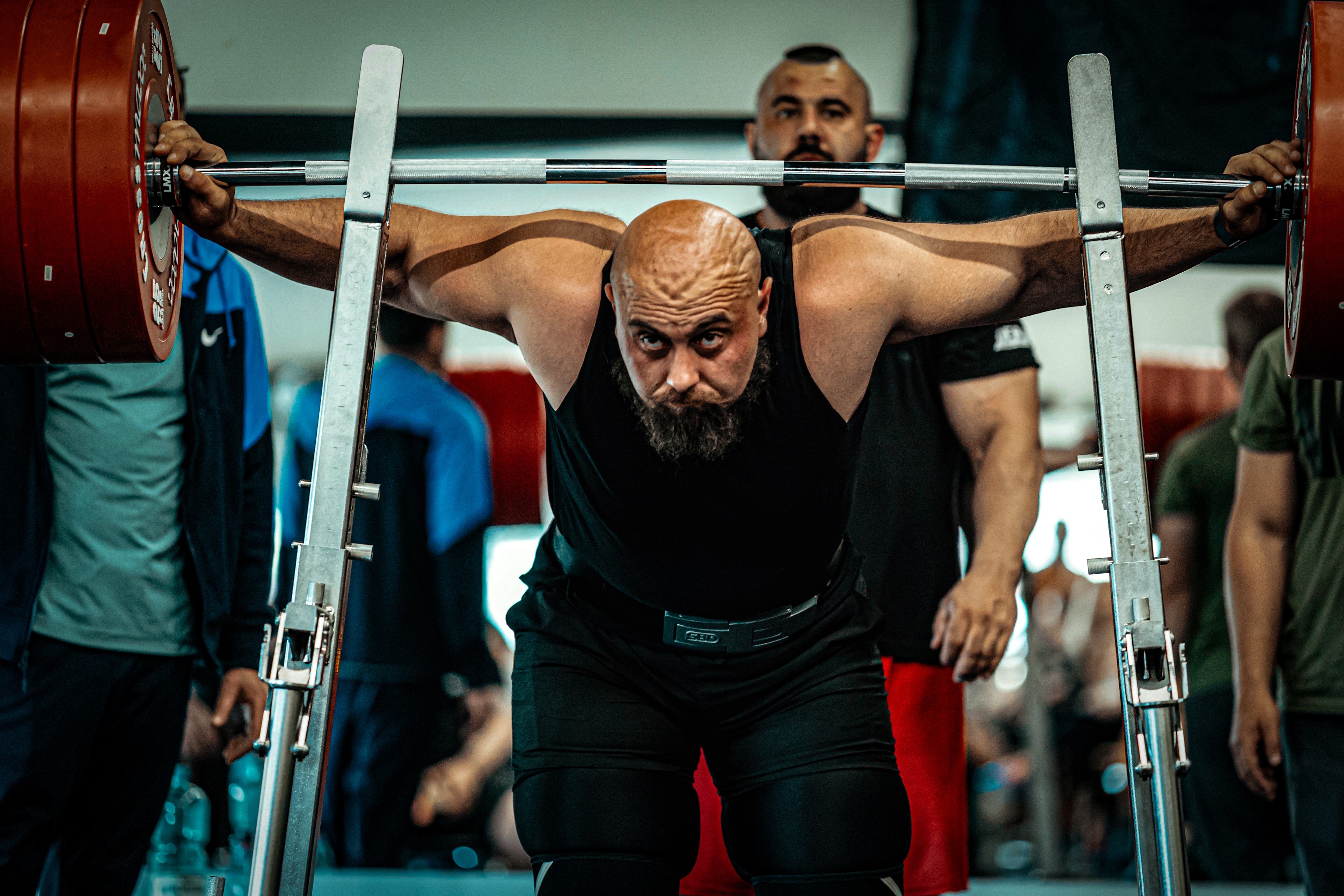
Dehydration is more than thirst
In Strongman, water is part of the performance system. It contributes to blood volume, thermoregulation, neuromuscular function and the environment in which muscle produces force. When the body loses more water than it replaces, hypohydration develops, and the consequences go beyond feeling thirsty.
Research shows that the effect of hypohydration on absolute strength is not identical across tests. Some studies find small or no effects on a single maximal contraction, while repeated performance, muscular endurance and some forms of power appear more vulnerable. A meta-analysis of 28 studies found significant reductions in muscle strength, muscle endurance and anaerobic power under hypohydration, with variation across protocols. PMID 26178327.
What does hypohydration actually mean?
Hypohydration describes a reduction in total body water. In sport it is often estimated through body-mass loss, but interpretation requires care because body mass can also change through glycogen, gastrointestinal contents and other acute shifts.
As water loss increases, plasma volume can fall, blood can become more concentrated, and the body must prioritize circulation and temperature control. These changes can increase cardiovascular strain, particularly in hot environments.
Why can strength decline?
There is no single mechanism. Strength may be influenced by a combination of plasma-volume changes, rising body temperature, altered neuromuscular function and greater perceived effort. Experimental research suggests that the relative contributions of central and peripheral mechanisms are not fully settled.
A classic study in resistance-trained men compared euhydration with approximately 2.5% and 5% body-mass loss. Maximal isometric force and peak power did not differ significantly, but performance during a multiset squat protocol declined with hypohydration. PMID 17909410.
One 1RM versus an entire Strongman day
This is where Strongman becomes different. A single-repetition test does not reproduce a competition with several events. In competition, the athlete must produce force, carry loads, move, recover and repeat efforts under changing conditions.
A modest decrease in performance on one isolated test can become much more meaningful when repeated across a full competition. The available meta-analysis suggests muscular endurance may be affected more clearly than peak strength, which is highly relevant to medleys, carries and events with longer time under tension.
Dehydration and the muscle that has to work again and again
During repeated effort, muscle must maintain membrane excitability, restore ion gradients, manage metabolites and receive adequate blood flow. Water loss can modify this environment through effects on circulation, temperature and fluid balance.
This does not mean every contraction suddenly becomes weaker. It means that as effort and heat accumulate, the system may have fewer reserves available to maintain the same quality of work.
Plasma volume: one of the first links to change
Sweating primarily removes water and electrolytes. As plasma volume falls, venous return and cardiac filling can be affected, while heart rate may rise to help support circulation.
Hemoconcentration can also temporarily increase hemoglobin and hematocrit without any new red blood cells being produced. A higher hemoglobin measured after heavy sweating should therefore not automatically be interpreted as a positive long-term hematological adaptation.
Heat makes the problem harder
Dehydration and heat can reinforce one another. As core temperature rises, the body must send blood toward the skin for heat loss and toward active muscle for exercise. Lower plasma volume can make that balance more difficult.
The negative effects of dehydration on endurance performance are well established and become more pronounced in the heat. For strength and power exercise, effects are more variable, but long, hot competitions create exactly the setting in which water loss becomes increasingly important.
Muscle temperature and force
Active muscle produces heat. If the body cannot dissipate that heat efficiently enough, core temperature rises. Heat can influence enzyme function, membranes, the nervous system and the perception of effort. Dehydration adds to this thermal burden by reducing available water for sweating and by altering circulation.
What happens to the nervous system?
An important hypothesis is that hypohydration can influence neuromuscular control. The evidence is not uniform. A recent systematic review of 23 articles found inconsistent results: some forms of maximal strength were relatively preserved, while other contraction modes and fatigue resistance were more affected. PMID 39047298.
For Strongman, it is therefore too simple to say that dehydration "shuts down the nervous system." More accurately, hypohydration may alter certain components of neuromuscular control depending on the degree of water loss, exercise type and environmental conditions.
Perceived effort: when the same weight starts to feel heavier
Dehydration can raise body temperature and cardiovascular strain, which can make the same exercise feel harder. In competition, that matters because the athlete must make decisions and execute technique under fatigue.
Dehydration does not affect every event equally
A maximal deadlift lasting a few seconds does not have the same physiology as a yoke carry, farmer's walk, medley or long loading event. Duration, muscle mass involved, heat, recovery time and sweat rate all change the impact of hypohydration.
For that reason, there is no single universal number that predicts exactly how much strength a Strongman will lose for a given percentage of body-mass loss. Studies are heterogeneous, and trained people can sometimes be less affected than untrained participants.
Dehydration and recovery speed between events
A Strongman contest is a sequence of stresses. After each event, the body must partially restore circulating volume, temperature, fluid balance and energy availability. If fluid losses accumulate, the athlete may enter the next event without having fully recovered.
The effect on strength may therefore be indirect: not because water is "fuel," but because a more stressed cardiovascular and thermoregulatory system leaves less capacity for repeating performance at the same level.
Why water does not fix everything in five minutes
Rehydration after dehydration is not simply about drinking a large amount of water at once. Fluid distribution, sodium, gastric emptying, intestinal absorption and ongoing losses affect how quickly the body returns toward balance.
A systematic review of fluid intake after dehydration found clearer benefits for continuous exercise, particularly in the heat and over longer durations, while evidence for resistance exercise was less consistent. PMID 28316054.
Sodium and rehydration
Sodium helps maintain extracellular osmolality and supports water retention after sweat loss. In situations involving prolonged, heavy sweating, a strategy that considers sodium as well as fluid can be more effective than plain water alone in some contexts.
Even here, there is no universal dose for every Strongman. Sweat rate, sweat sodium concentration, temperature and competition duration all matter.
When does dehydration start to matter?
There is no single threshold for every type of performance. Some older reviews suggested effects on strength and power at relatively small losses, while newer experiments and meta-analyses present a more nuanced picture.
In a Strongman competition, it is more useful to monitor the trend: body-mass loss, sweat rate, pulse changes, temperature, thirst, work capacity and recovery. Percentages are reference points, not verdicts.
What happens at 2-3% body-mass loss?
This range is commonly used in research to study hypohydration. The exact effect on strength varies. In some resistance-exercise studies, multiset performance declines, while an isolated maximal test changes very little.
In one meta-analysis, mean muscle-strength reduction was about 5.5%, but the authors showed that effects depended on how hypohydration was induced and that trained individuals had, on average, a smaller decrease than untrained participants.
Why that percentage should not simply be copied into competition
Research protocols do not perfectly reproduce Strongman. Some studies use heat, others exercise, sauna or fluid restriction. Some test isometric contractions, others isokinetic exercise or loaded repetitions. The results are valuable for physiological principles, not as an exact calculator for every athlete.
Dehydration and technique
As fatigue and thermal stress rise, maintaining technical quality can become harder. In events where trunk position, step rhythm, grip or force transfer are critical, loss of control can produce a performance decline larger than the change in muscle force alone.
Strongman and outdoor competitions
Outdoor competitions can combine sunshine, high temperature, variable rest periods and several hours of effort. Under these conditions, water loss becomes cumulative. An athlete may start the contest perfectly hydrated and reach the final events in a very different physiological state.
When dehydration becomes a medical problem
Severe dehydration can cause dizziness, marked weakness, confusion, impaired coordination, fainting and altered general condition. In heat, heat illness must also be considered. These symptoms are not a sign that the athlete simply needs another electrolyte drink.
Confusion, altered consciousness, collapse or suspected heat illness require prompt medical assessment and intervention.
Dehydration and muscle building
Acute dehydration does not "melt" muscle within a few hours. It does reduce body water and can change muscle appearance, plasma volume and the ability to train or repeat effort. Over time, adequate hydration is part of the physiological environment in which recovery and training can function normally.
A simple Strongman framework
Think about dehydration through four questions: how much water are you losing, how much heat must you dissipate, how long must you continue exercising, and how many events remain? As losses and duration increase, planned hydration becomes more important.
Most importantly, the strategy should be tested in training and adapted to the athlete's own sweat profile. Competition day is not the time for major experiments with water, salt or new products.
Conclusion
Dehydration can affect strength, power and especially the ability to repeat effort, but the effect is not identical in every situation. Degree of hypohydration, temperature, event duration, contraction type and training status all change the response.
For Strongman, the main issue is not necessarily losing a single percentage of strength on one repetition. It is the degradation of the whole system across the day: lower plasma volume, higher temperature, cardiovascular strain, neuromuscular fatigue and slower recovery.
A well-hydrated Strongman does not automatically become stronger. But when water, electrolytes and thermoregulation are managed appropriately, the body has a better chance of preserving strength and work quality from the first event to the last.
Selected bibliography
Judelson DA, Maresh CM, Anderson JM, et al. Hydration and muscular performance: does fluid balance affect strength, power and high-intensity endurance? Sports Med. 2007;37(10):907-921. PMID 17887814.
Judelson DA, et al. Effect of hydration state on strength, power, and resistance exercise performance. Med Sci Sports Exerc. 2007;39(10):1826-1833. PMID 17909410.
Savoie FA, Kenefick RW, Ely BR, Cheuvront SN, Goulet EDB. Effect of Hypohydration on Muscle Endurance, Strength, Anaerobic Power and Capacity and Vertical Jumping Ability: A Meta-Analysis. Sports Med. 2015;45(8):1207-1227. PMID 26178327.
Hayes LD, et al. The effects of progressive dehydration on strength and power: is there a dose response? Eur J Appl Physiol. 2009. PMID 19908058.
Does acute dehydration affect the neuromuscular function in healthy adults? Systematic review. 2024. PMID 39047298.
The Effect of Fluid Intake Following Dehydration on Subsequent Athletic and Cognitive Performance: A Systematic Review and Meta-analysis. PMID 28316054.
More From The Journal

Training
The Science of Strongman Training - Episode X: Competition Programming
How to build a complete Strongman competition preparation block: calendar, events, volume, intensity, specificity, simulations, autoregulation, tapering and fatigue management.
Training
The Science of Strongman Training - Episode IX: Peaking
Peaking in Strongman: how to turn months of training into maximal competition performance by reducing fatigue, preserving adaptations and managing specificity.