
Physiology
The Heart, Blood and Strongman - Episode 5: Hemoglobin, Hematocrit and Oxygen Transport
September 5, 2026
Why talk about hemoglobin when we talk about performance?
In the previous episode we saw how blood volume connects the heart, vessels and muscle into one system. At the center of that network is the red blood cell, and inside it, hemoglobin. For a Strongman athlete, hemoglobin matters not because it „creates energy,” but because it allows blood to transport a large share of the oxygen required by tissues.
Oxygen moves from the alveoli into the blood, binds predominantly to hemoglobin, circulates to the tissues and is then released where metabolic demand is high. The chain is longer than that, and any link can become limiting: the lungs, hemoglobin, cardiac output, microcirculation or the muscle's ability to use oxygen.
Hemoglobin: the oxygen carrier
Hemoglobin is a protein inside red blood cells made of four subunits, each containing a heme group that can bind oxygen. A small amount of oxygen is dissolved directly in plasma, but the overwhelming majority of blood oxygen is carried bound to hemoglobin.
For that reason, hemoglobin concentration has a direct relationship with the oxygen-carrying capacity of blood per unit volume. As a physiological principle, arterial oxygen content can be approximated from oxygen-bound hemoglobin plus a small dissolved fraction. In practice, this means that two athletes with normal oxygen saturation can carry different amounts of oxygen if their hemoglobin concentrations differ.
Hemoglobin concentration, red-cell mass and total hemoglobin are different things
It is essential not to confuse hemoglobin concentration with total hemoglobin mass in the body. Concentration tells you how much hemoglobin is present in a given volume of blood. Hemoglobin mass describes the total amount of hemoglobin in the circulation.
When plasma volume expands, blood can become more diluted. Hemoglobin concentration and hematocrit can fall even when red-cell mass and total hemoglobin mass have not fallen. This is a recognized exercise-physiology phenomenon and explains why a slightly lower hemoglobin value on a blood count does not automatically mean a real loss of oxygen-carrying capacity.
What is hematocrit?
Hematocrit is the proportion of blood volume occupied by red blood cells. It is useful, but indirect. It does not directly measure total hemoglobin mass and it does not tell us, by itself, how much oxygen reaches muscle.
A higher hematocrit can occur because there are more red cells, because plasma volume is lower, or through a combination of both. Conversely, a lower hematocrit can result from plasma expansion, reduced red-cell mass, or other medical causes.
That is why interpretation should include hemoglobin, red-cell indices, iron status, athletic context and the clinical picture.
More hematocrit does not automatically mean more performance
At first glance the logic seems simple: more red cells mean more hemoglobin, therefore more oxygen. Within a physiological range, increasing red-cell mass can increase oxygen-carrying capacity. But blood is not simply a hemoglobin reservoir.
As hematocrit rises, blood rheology also changes, including blood viscosity. This can alter resistance to flow and cardiovascular workload. Physiologically, there is a balance between the oxygen-carrying capacity of blood and how easily that blood can move through the circulation.
That is why a high hematocrit is not a biological trophy. It can occur in normal contexts, but it can also appear with dehydration, chronic hypoxia, medical disorders or pharmacological interventions. Repeatedly elevated values deserve professional medical interpretation.
The oxygen dissociation curve: hemoglobin must also release oxygen
Hemoglobin is not just a storage tank. It must bind oxygen in the lungs and release it in tissues. The relationship between oxygen pressure and hemoglobin saturation is sigmoidal because of cooperative binding.
In the lungs, where oxygen pressure is high, hemoglobin favors oxygen loading. In active tissues, where temperature is higher, carbon dioxide is increased and pH is lower, oxygen affinity can decrease, facilitating oxygen unloading. This is part of the Bohr effect.
What happens in a Strongman's working muscle?
During demanding exercise, muscle produces heat, CO2 and hydrogen ions while increasing its oxygen demand. These changes favor oxygen unloading from hemoglobin. Blood not only needs to reach muscle, it must be able to release oxygen where that oxygen is being used.
Red cells also have functions beyond simple oxygen carriage. Exercise physiology literature describes roles in acid-base buffering and vascular signaling, including the release of mediators that may contribute to regulation of blood flow.
Oxygen transport is a chain, not a single number
A useful way to think about performance is to follow the whole oxygen pathway: inspired air, alveoli, diffusion into blood, hemoglobin, cardiac output, peripheral vessels, capillaries, interstitial space and finally the mitochondria.
A Strongman can have normal hemoglobin and still be limited by another part of the oxygen transport pathway. Conversely, low hemoglobin can reduce oxygen-carrying capacity even when the lungs are functioning normally. Real physiology cannot be reduced to one laboratory value.
Hemoglobin and cardiac output work together
The amount of oxygen delivered to tissues depends both on the oxygen content of blood and on how much blood the heart pumps each minute. In other words, hemoglobin and cardiac output are two parts of the same problem.
Adequate blood volume supports venous return and cardiac filling, and the heart can raise cardiac output by changing heart rate and stroke volume. If the blood carries a good amount of oxygen per liter but insufficient blood can reach muscle, total oxygen delivery remains limited. If flow is good but blood has reduced oxygen-carrying capacity, the same problem appears from another direction.
Why anemia can hurt performance
Anemia can reduce, depending on cause and severity, the oxygen-carrying capacity of blood. In athletes, this needs to be distinguished from physiological hemodilution associated with plasma-volume expansion. Not every slightly lower hemoglobin value means true loss of red cells or iron.
Iron deficiency is important because iron is essential for hemoglobin synthesis and several energy-related processes. An athlete may have depleted iron stores before developing overt anemia, so assessing iron status should not be reduced to the hemoglobin value alone.
Iron, ferritin and hemoglobin
Ferritin is commonly used as a marker of iron stores. It must be interpreted in context because inflammation can alter ferritin concentration. In sport, iron requirements may rise, while losses and absorption can be influenced by training, diet and the response to exercise.
For a Strongman with unusual fatigue, unexplained performance decline or repeated blood-count changes, it is not appropriate to assume that the problem is simply „poor conditioning.” Medical evaluation may identify anemia, iron deficiency or another cause.
Dehydration can raise hemoglobin and hematocrit without creating new blood
This is one of the most important concepts to understand. If plasma is lost through sweating, blood becomes more concentrated. Hemoglobin and hematocrit can rise temporarily even though total red-cell mass has not increased.
Therefore, a high value measured after hard training, after competition or while dehydrated should not automatically be interpreted as a long-term hematological adaptation. The sampling context matters.
What happens after training?
Exercise causes acute changes in plasma volume and fluid distribution. Depending on the type and duration of exercise, hemoconcentration can make hemoglobin and hematocrit rise temporarily. Later, fluid redistribution and plasma-volume restoration can move the numbers in the opposite direction.
These fluctuations are one reason why long-term trends are often more informative than a single isolated blood test when monitoring an athlete.
Strongman and oxygen demand
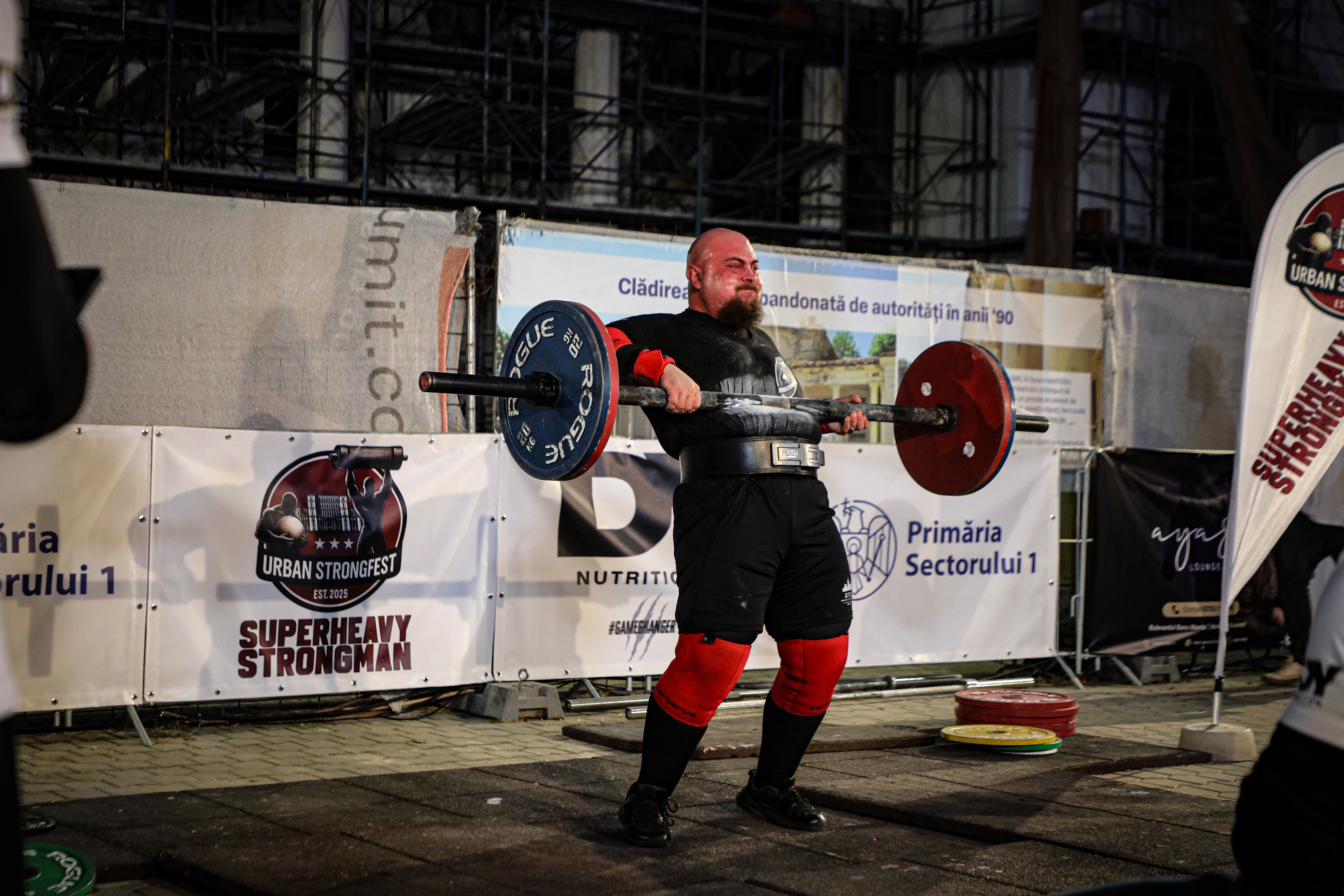
Strongman is strength-dominant, but it is not free of metabolic and cardiovascular demand. Carries, medleys, loading events and prolonged efforts can substantially increase oxygen consumption and blood-flow requirements. Between events, the ability to restore homeostasis becomes part of performance.
In a multi-event contest, efficient oxygen transport can contribute to faster recovery and the ability to sustain repeated efforts. It is not the only factor, but it is part of the system that allows an athlete to remain competitive from the first event to the last.
What role does large body mass play?
A very large athlete has a substantial amount of tissue to perfuse and must support a cardiovascular pump adapted to the demands of that body mass. That does not mean the athlete should have the highest possible hemoglobin. It means the whole system needs to be coherent: circulating volume, cardiac output, oxygen-carrying capacity and peripheral oxygen use.
Why you should not artificially chase hemoglobin or hematocrit
Artificially increasing red-cell mass with erythropoietin, transfusions or other methods can alter aerobic performance, but it does not automatically make an athlete better and is not risk-free. Interventions that raise hemoglobin and hematocrit can also increase blood viscosity and adverse-event risk.
In addition, substances or methods used to manipulate blood can violate anti-doping rules that apply to competition. In an educational physiology article, the key message is that blood should be understood, not „optimized” through improvised medical interventions.
How do you interpret a basic blood profile?
Hemoglobin, hematocrit and red-cell count provide important information, but they are only the beginning. Depending on context, mean corpuscular volume, mean corpuscular hemoglobin, mean corpuscular hemoglobin concentration, reticulocytes, ferritin and other markers may be relevant.
Timing also matters. A sample taken while hydrated, rested and several days after very heavy exercise may be easier to interpret than one drawn immediately after a hot competition.
A simple Strongman framework
Think of the system in four steps: how much blood is circulating, how much oxygen that blood can carry, how much blood reaches muscle and how effectively muscle uses the oxygen it receives.
Hemoglobin belongs mainly to the second step, hematocrit provides a clue about the proportion of red cells, and plasma volume influences how concentrated or diluted the blood appears. None of these values, by itself, defines performance.
Conclusion
Hemoglobin is one of the central components of oxygen transport, while hematocrit is a useful indicator of the relationship between red cells and plasma. In Strongman, the real performance picture comes from integrating these variables with blood volume, cardiac output, peripheral circulation and the muscle's ability to use oxygen.
A higher hematocrit is not automatically better, and a slightly lower hemoglobin value does not automatically mean anemia. Hydration, plasma expansion, iron status, training context and medical causes can all change the picture.
For a strength athlete, the goal is not the largest possible number. It is an oxygen-transport system that works efficiently, safely and in proportion to the demands of the entire competition.
Selected bibliography
Sawka MN, Convertino VA, Eichner ER, Schnieder SM, Young AJ. Blood volume: importance and adaptations to exercise. Sports Med. 2000;29(3):149-159.
Peeling P, Dawson B, Goodman C, Landers G, Trinder D. Athletic induced iron deficiency: new insights into the role of hepcidin. Sports Med. 2008;38(4):337-350.
Schumacher YO, Garvican LA. The Athlete's Blood. Sports Med. 2013;43(Suppl 1):S1-S3.
Mairbäurl H. Red blood cells in sports: effects of exercise and training on oxygen supply by red blood cells. Front Physiol. 2013;4:332. PMID 24273518.
Hoffman J. Blood volume and performance. In exercise physiology literature on cardiovascular and hematological adaptation.
Mairbäurl H, Weber RE. Oxygen transport by hemoglobin. Compr Physiol. 2012;2(2):1463-1489.
Iron deficiency in sports: definition, influence on performance and therapy. Swiss Med Wkly. 2015. PMID 26512429.
More From The Journal

Training
The Science of Strongman Training - Episode X: Competition Programming
How to build a complete Strongman competition preparation block: calendar, events, volume, intensity, specificity, simulations, autoregulation, tapering and fatigue management.

Training
The Science of Strongman Training - Episode IX: Peaking
Peaking in Strongman: how to turn months of training into maximal competition performance by reducing fatigue, preserving adaptations and managing specificity.