
Physiology
The Heart, Blood and Strongman - Episode 3: Cardiac Hypertrophy: Physiological Adaptation or Problem?
September 5, 2026
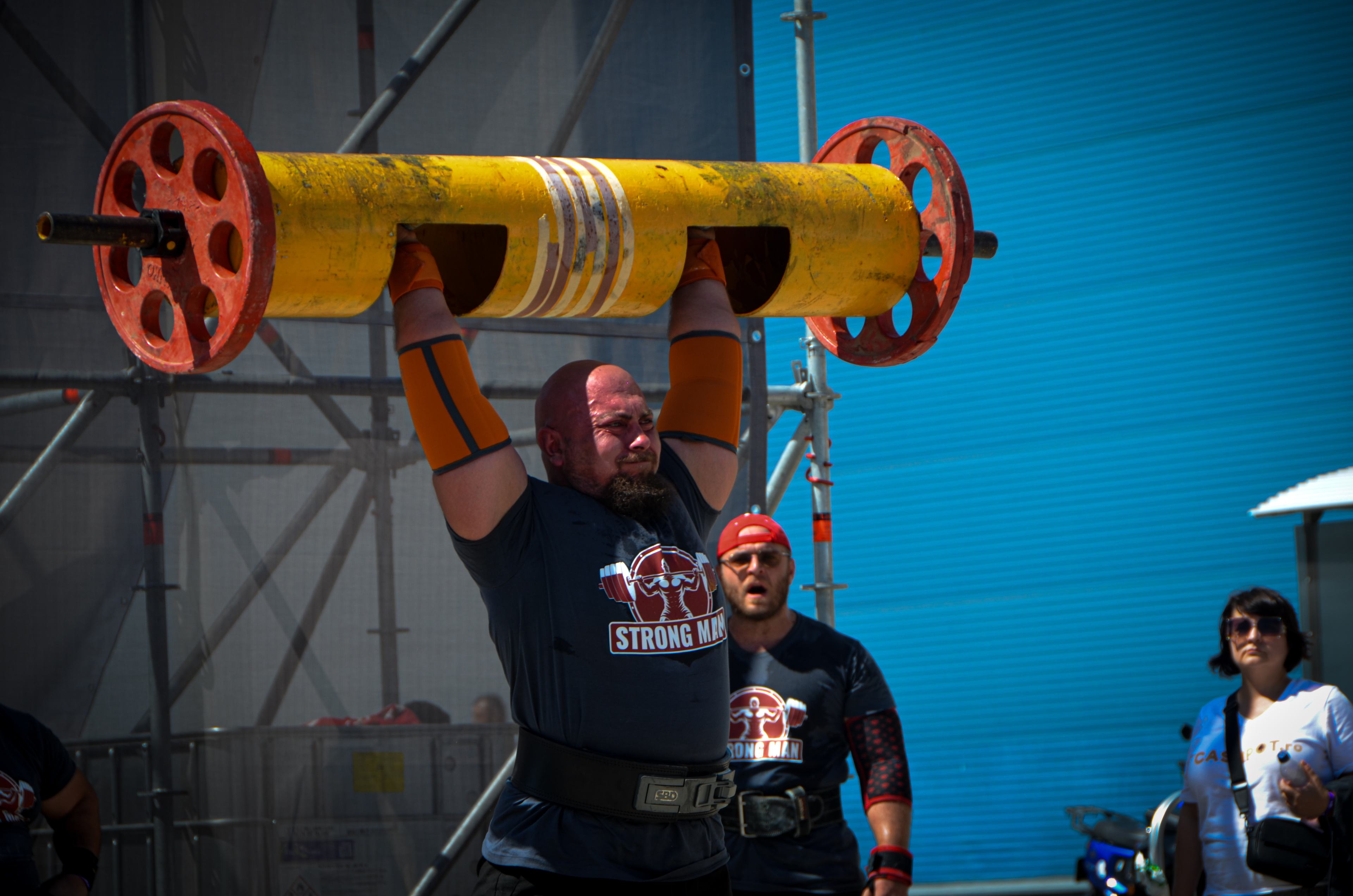
When is a larger heart an adaptation, and when does it become a problem?
Cardiac hypertrophy is one of the easiest changes in strength athletes to misinterpret. A thicker ventricular wall or greater cardiac mass does not automatically mean disease, but it should not automatically be labeled simply as an “athlete's heart” either. In a Strongman athlete, the correct interpretation requires context: training type, years of exposure, blood pressure, symptoms, family history and cardiac function.
Meta-analyses show that resistance-trained athletes can have larger cardiac dimensions than untrained adults, including greater wall thickness, without clear systolic or diastolic impairment in the healthy populations studied. A classic analysis of 59 studies and 1,451 athletes found greater relative left-ventricular wall thickness in strength-trained athletes. These findings support physiological remodeling, but they do not make every hypertrophic finding benign.
Cardiac hypertrophy is not a diagnosis
The term “hypertrophy” describes an increase in myocardial mass. It does not, by itself, explain why the mass increased or whether the process is physiological or pathological. In sport, remodeling is a response to repeated loading. In disease, the same structural change can occur together with dysfunction, fibrosis, obstruction or electrical instability.
For a Strongman athlete, the loading stimulus is distinctive: very heavy lifts, isometric contractions, bracing, carries, loading events and repeated efforts involving large muscle mass. These produce substantial acute hemodynamic demands, especially through increased vascular resistance and intrathoracic pressure during Valsalva-type efforts. This is one component of the remodeling stimulus.
The left ventricle is central to the discussion
The left ventricle pumps blood into the systemic circulation and carries the greatest pressure load. During strength training, brief periods of very high pressure alternate with recovery. Over time, repeated exposure can contribute to increased ventricular mass and changes in cardiac geometry.
Importantly, remodeling is not a rigid equation of “static sport equals concentric hypertrophy.” Research on resistance training has reported variable results, and the exact adaptation depends on the sport, program, duration, athlete level and individual characteristics.
The heart wall can become thicker
Strength-trained athletes can show greater septal and posterior-wall thickness in the left ventricle. In the classic athlete's-heart meta-analysis, strength athletes had the greatest relative wall thickness among the groups studied. However, wall thickness must be interpreted alongside chamber diameter, ventricular mass and cardiac function.
In healthy athletes, such a change can be part of physiological adaptation. The problem begins when the same image is separated from clinical context and treated automatically as either disease or proof of performance.
The chamber can change too
Cardiac remodeling is not only about thicker walls. Chamber dimensions can also change. A recent longitudinal study in healthy men reported increased left-ventricular mass and increased end-diastolic volumes of both ventricles after 20 weeks of resistance training, while systolic and diastolic function remained stable. This is another reason adaptation should be assessed as a whole and followed over time.
Why can the same thick heart mean different things?
Because a thickened ventricular wall can arise through different mechanisms. Training can cause physiological remodeling. Chronic hypertension can cause left-ventricular hypertrophy. Hypertrophic cardiomyopathy can produce hypertrophy without conditioning being the cause. Sometimes the phenotype is similar enough that additional testing is required.
Sports-imaging consensus recommends beginning evaluation with echocardiography and using cardiac magnetic resonance when echocardiography cannot adequately distinguish athletic remodeling from pathology.
Hypertrophic cardiomyopathy is a different category
Hypertrophic cardiomyopathy is a disease of the heart muscle in which ventricular hypertrophy cannot be explained simply by physiological conditioning. In the athlete, clinicians consider the pattern of hypertrophy, diastolic function, possible left-ventricular outflow obstruction, myocardial tissue characteristics, ECG findings, symptoms and family history.
The AHA/ACC guideline for hypertrophic cardiomyopathy emphasizes clinical assessment, ECG, echocardiography and, when appropriate, cardiac MRI, rhythm monitoring and family assessment.
Symptoms can completely change the interpretation
A Strongman athlete without symptoms and with preserved cardiac function is not in the same situation as an athlete who develops exertional chest pain, syncope or near-syncope, unexplained palpitations or disproportionate shortness of breath. These signs do not establish a diagnosis by themselves, but they increase the need for medical assessment.
Family history matters just as much. A relative with sudden death at a young age, cardiomyopathy or inherited arrhythmia can substantially lower the threshold for investigating a structural finding.
Chronic blood pressure can tell the same story
Pressure peaks during a maximal deadlift should not be confused with persistent hypertension. The first is an acute exercise response. The second is a chronic cardiovascular load and can contribute to left-ventricular hypertrophy.
Therefore, a strength athlete with repeatedly elevated resting blood pressure should not automatically diagnose an “athlete's heart.” A properly obtained series of resting measurements provides much more useful context for assessment.
AAS can alter the remodeling profile
In strength athletes, anabolic-androgenic steroid exposure is a separate factor from training. A recent meta-analysis of 35 studies involving 2,000 men associated AAS use with greater ventricular wall thickness, greater ventricular mass and lower ejection fraction and global longitudinal strain compared with strength-trained athletes who did not use AAS. These findings suggest that pharmacological remodeling can differ from remodeling associated with training alone.
What does healthy physiological remodeling look like?
It means that the body responds to repeated loading through remodeling without clear evidence of disease and with preserved cardiac function. A Strongman athlete's heart does not have to look identical to that of a sedentary adult. The body adapts to repeated demands.
But physiological does not mean unlimited. Healthy adaptation has coherence among training history, body size, blood pressure, symptoms, ECG, echocardiography and, when appropriate, cardiac MRI.
Why there is no single “magic number”
Because diagnosis cannot be made from a single wall-thickness measurement. Echocardiographic values must be interpreted in relation to body size, sport type and the rest of the cardiac phenotype. Two people with the same wall thickness can have completely different clinical situations.
In borderline cases, multimodality imaging can be decisive. Cardiac MRI can characterize morphology and myocardial tissue more precisely, while the clinical examination and athletic history put the imaging findings into context.
What should a Strongman athlete monitor?
Over time, useful elements include resting blood pressure, new symptoms, family history and cardiac assessments when clinically indicated. A repeat echocardiogram can provide substantially more information when it is compared with previous studies and with the evolution of training.
In Strongman, it is worth separating two questions: “is the heart adapted to the demands of the sport?” and “is the heart healthy?” The first is a physiology question. The second is a clinical question and cannot be answered solely by the idea of an athlete's heart.
Conclusion
Cardiac hypertrophy can be part of the physiological adaptation to strength training. In healthy athletes, research shows that heart walls and dimensions can be greater without clear deterioration in function. But the same hypertrophy can occur with hypertension, hypertrophic cardiomyopathy or contexts such as AAS exposure, in which the remodeling profile may be different.
For a Strongman athlete, the distinction between adaptation and a problem depends on the complete picture: symptoms, blood pressure, family history, ECG, echocardiography, cardiac function and, when needed, cardiac MRI. The central idea is simple: an adapted heart is not a heart that is as large as possible, but a heart that responds to workload while preserving function.
Selected bibliography
Pluim BM, Zwinderman AH, van der Laarse A, van der Wall EE. The athlete's heart. A meta-analysis of cardiac structure and function. Circulation. 2000;101:336-344. PMID 10645932.
Cardiac structure and function in resistance-trained and untrained adults: A systematic review and meta-analysis. PMID 36399498.
The multi-modality cardiac imaging approach to the Athlete's heart: an expert consensus of the European Association of Cardiovascular Imaging. PMID 25681828.
2024 AHA/ACC/AMSSM/HRS/PACES/SCMR Guideline for the Management of Hypertrophic Cardiomyopathy. PMID 38727647.
Echocardiography in Athletes: the Ever-Evolving Assessment of Physiology Versus Pathology. PMID 41546848.
Resistance training and cardiac hypertrophy: unravelling the training effect. PMID 12392444.
Anabolic-androgenic steroids on cardiac structure and function in resistance-trained athletes: A systematic review and meta-analysis. PMID 40945618.
More From The Journal

Training
The Science of Strongman Training - Episode X: Competition Programming
How to build a complete Strongman competition preparation block: calendar, events, volume, intensity, specificity, simulations, autoregulation, tapering and fatigue management.

Training
The Science of Strongman Training - Episode IX: Peaking
Peaking in Strongman: how to turn months of training into maximal competition performance by reducing fatigue, preserving adaptations and managing specificity.