
Physiology
Series: BODYWEIGHT: HOW DO YOU BUILD A STRONGMAN? - Episode 4: Muscle Mass Versus Fat Mass
September 11, 2026
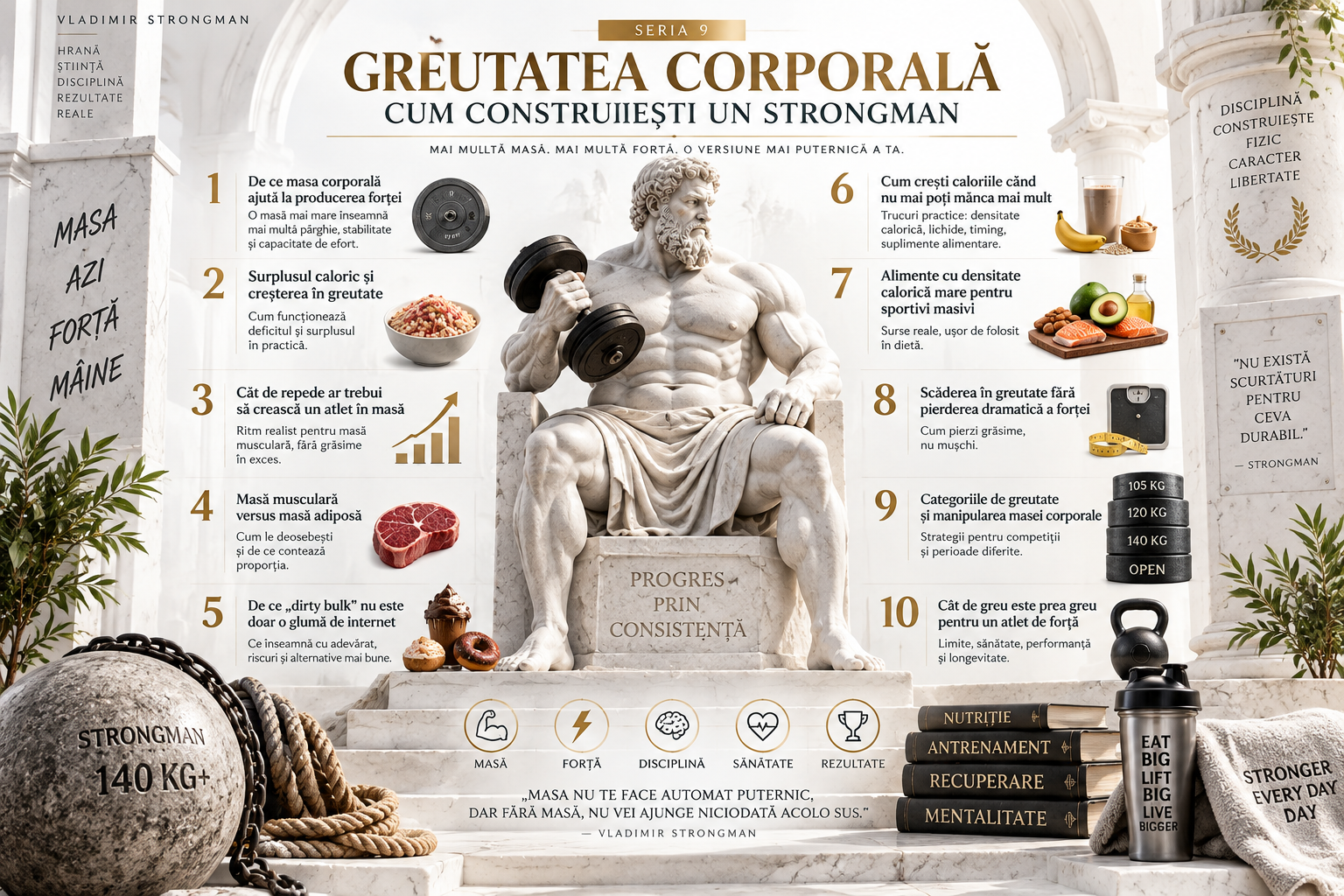
In strongman, the scale is tempting because it gives one number and seems to summarize everything. But 140 kg can mean very different things: more contractile tissue, more water and glycogen, more bone, more visceral or subcutaneous fat, or different combinations of all of them. Performance does not respond to a kilogram as an abstract unit; it responds to what that kilogram is and where it sits.
The useful question is therefore not only “how much does the athlete weigh?” but “how much of that weight directly contributes to force production, how much changes mechanics, and how much is mainly additional load the athlete must carry?”. This episode separates muscle mass from fat mass without turning the discussion into an aesthetic argument.
For strongman, the goal is not to become as lean as possible, but to maximize the ratio between performance-producing mass and the physiological cost of the total body. Sometimes greater body mass helps, but muscle and fat are not interchangeable. Muscle is the active engine; fat can alter inertia, geometry and sometimes contact with the ground, but it does not contract.
1. The scale does not tell you what you are made of
Bodyweight is the sum of several compartments: muscle, fat, bone, organs, water, glycogen and gastrointestinal contents. Two people at the same bodyweight can have very different amounts of muscle and fat. In strength sports this difference matters because the same number on the scale can hide very different force potential and movement capacity.
A move from 130 to 140 kg therefore cannot be judged simply by the fact that ten kilograms were added. If much of that gain is contractile tissue, the athlete may raise the ceiling for strength. If most of it is fat and water without a proportional strength increase, performance can stagnate or decline in moving events.
2. What muscle mass means
By muscle mass here we primarily mean skeletal muscle. Muscle fibers contain the contractile machinery built from actin and myosin, and their organization allows tension to be generated. Hypertrophy increases the amount of tissue capable of producing force, although an increase in size does not guarantee an identical increase in performance.
Muscle mass also matters in other ways: it stores glycogen, contributes to thermogenesis, stabilizes joints and helps transmit force between body segments. A large trunk, glutes, quadriceps, spinal erectors, lats and shoulder girdle are not only visual volume; they are architecture capable of tolerating and moving extreme loads.
3. What fat mass means
Fat mass is largely tissue used to store energy as triglycerides. It also has endocrine, thermal and mechanical roles, but adipocytes do not generate force by contraction as muscle fibers do. From the narrow perspective of active force production, one kilogram of fat is not equivalent to one kilogram of muscle.
That does not mean fat is irrelevant to performance. It contributes to total system mass and changes center of mass, body circumferences and inertia. In some events these effects may be neutral or occasionally favorable; in others every additional kilogram becomes load that must be accelerated, carried and thermally managed.
4. Lean mass is not the same as muscle
Body-composition research often uses the term lean mass. Lean mass is not identical to muscle. Depending on the method, it includes water, organs and other non-fat tissues, while DXA typically separates fat mass, lean soft tissue and bone mineral content. An increase in lean mass should therefore not automatically be interpreted as pure hypertrophy.
Glycogen and its associated water can change lean-mass estimates quickly, as can hydration status. For an athlete tracking a bulk, this matters: if DXA or BIA shows two extra kilograms of lean mass after only a few weeks, not all of those kilograms are newly built contractile protein.
5. Why muscle produces force
Muscular force begins with actin-myosin interaction and the number of sarcomeres acting in parallel. The larger a muscle’s physiological cross-sectional area, the greater its potential to generate force in general. This is why hypertrophy is an important structural component of absolute strength.
Final performance also depends on neural activation, technique, fascicle length, pennation angle, moment arms, tendon stiffness and intermuscular coordination. A bigger muscle gives you a bigger engine, but the transmission and chassis still matter. That is why two athletes with similar muscle mass can express different levels of strength.
6. Physiological cross-sectional area
Physiological cross-sectional area, or PCSA, attempts to estimate how much contractile tissue is aligned to produce force. It is more informative than simple arm or thigh circumference because two limbs with the same circumference can contain different proportions of muscle, fat and connective tissue. In practical terms, PCSA approximates the true size of the engine.
The specific-tension literature confirms that force is related to contractile area, while also showing that precise human measurement is difficult. The 2024 systematic review by Persad and colleagues proposed a central estimate of about 26.8 N/cm² for human muscle specific tension while emphasizing the large methodological variation across studies.
7. Muscle quantity and muscle quality
Muscle quantity and muscle quality are different concepts. Muscle quality often describes how much force a given amount of muscle can produce. An athlete may have a large amount of muscle, but if neural activation, architecture, lipid infiltration or technique are unfavorable, strength expressed per unit of muscle may be lower.
For strongman, the goal is not simply to accumulate centimeters, but to add tissue that can be recruited effectively in sport-specific positions. Muscle becomes truly valuable when paired with coordination, load tolerance, trunk stiffness, grip and the ability to produce force rapidly in the actual event.
8. Fat does not contract
Adipose tissue has no contractile apparatus capable of producing the force required to lift a log, carry a yoke or load an Atlas stone. When an athlete adds five kilograms of fat, they do not add five kilograms of engine. That is the fundamental distinction in any discussion about gaining bodyweight for performance.
Those five kilograms instead become part of the system the athlete must move. In a static deadlift the direct cost may be small; in a farmer’s walk, medley or ramp pull, body mass must be accelerated and decelerated repeatedly. The same fat mass can be nearly neutral in one context and clearly costly in another.
9. Adipose tissue is not inert
It is still wrong to describe fat as simple passive filler. Adipose tissue is an active endocrine organ that secretes adipokines and participates in regulation of energy metabolism, inflammation and insulin sensitivity. Effects depend heavily on amount and distribution, and excess visceral fat has a different physiological meaning from a moderate amount of subcutaneous fat.
For an athlete this matters because metabolic health influences recovery, blood pressure, sleep, exercise tolerance and the ability to sustain years of heavy training. A competitor can be exceptionally strong and still accumulate physiological costs that are not visible in the result of a single event.
10. Subcutaneous fat versus visceral fat
Subcutaneous fat is stored primarily beneath the skin, while visceral fat is stored inside the abdominal cavity around organs. The two compartments do not have the same metabolic significance. Waist circumference does not perfectly measure visceral fat, but it can be a useful practical signal when followed over time together with bodyweight and body-composition data.
In a sport where very large bodies are normalized, this distinction can easily be ignored. An athlete can possess enormous muscle mass and simultaneously carry a high amount of visceral fat. That may not show up in a single log press, but it can matter greatly for health and career sustainability.
11. What an elite strongman looks like
Data published by Kraemer and colleagues on 18 elite strongmen provide one of the most useful reference points available. The group averaged about 152.9 kg bodyweight, 118.0 kg lean mass, 30.9 kg fat mass and 18.7% body fat, with substantial individual variation. These athletes were extremely large, but they were not simply “obese” in the sense implied by BMI alone.
The profile shows that elite strongman combines an exceptional amount of lean tissue with a meaningful amount of fat. The message is not that 18-19% is a universal ideal, but that elite performance can occur in a body where muscle mass is enormous and fat is not minimized. The sport rewards a body architecture very different from bodybuilding or endurance sport.
12. Why BMI tells us very little here
BMI relates bodyweight to height squared and cannot distinguish muscle from fat. A strongman weighing 153 kg at 187 cm has a very high BMI, while a huge portion of that mass may be lean tissue. Using BMI alone to describe body composition in a strength athlete can therefore be seriously misleading.
That does not mean every high bodyweight becomes healthy simply because the athlete has a lot of muscle. High total mass still creates cardiovascular, respiratory and mechanical demands. BMI is a poor composition tool in this population, but a very heavy body remains a very heavy body regardless of how muscular it is.
13. Two 140 kg athletes can be completely different
Imagine two athletes at the same height and the same 140 kg bodyweight. One has 105 kg of lean tissue, the other 115 kg. Even in this simplified example, a ten-kilogram difference in the lean compartment can mean a much larger structural potential for force production, especially when that mass is concentrated in event-relevant regions.
The scale declares them equal; physiology does not. The athlete with more fat may have mechanical advantages in specific situations, but in general the athlete with more contractile tissue has a larger reservoir for absolute force. A performance-oriented bulk should therefore improve the composition of 140 kg, not merely reach the number.
14. Lean mass and absolute strength
Studies in powerlifters show consistent relationships between lean mass and absolute strength. In the DXA work by Ferland and colleagues, lean tissue correlated significantly with most strength measures, while other studies have reported strong relationships between skeletal muscle mass and squat, bench press or deadlift performance. These data alone do not prove causation, but they fit the biomechanics.
More muscle generally provides a larger structural base for absolute strength, provided the athlete can recruit it and has the technique to use it. In open-weight sports this matters enormously. Yet as bodyweight rises, the benefit must still be judged against the cost of moving a heavier body.
15. The distribution of muscle mass matters
Not every kilogram of muscle has the same value for every event. Mass in the hip and knee extensors, back, trunk, shoulders and arms plays different roles in yoke, deadlift, log or stones. Powerlifting research also shows that regional limb and trunk mass can relate differently to performance depending on the lift.
For strongman, hypertrophy becomes strategic when it fills the links demanded by the event. Ten kilograms of new mass distributed in a way that improves hip extension, trunk stabilization and pressing can be far more valuable than the same bodyweight increase coming from tissue that does not raise the performance ceiling.
16. What the strongman data show
Winwood’s study in athletes with strongman experience found moderate to very large relationships between several anthropometric measures, strength and strongman performance. Muscle mass and fat-free mass showed useful relationships with results, whereas body-fat percentage generally showed much weaker relationships with overall performance.
The sample was small and did not represent world champions, so the findings should not be stretched too far. Still, the direction is logical and compatible with other strength sports. Active mass and the ability to produce force appear more important than simply accumulating fat, even in a sport where high bodyweight can sometimes be advantageous.
17. The concept of system force
Winwood also used the idea of system force, combining body mass with squat strength. This measure showed a very strong relationship with overall strongman performance. The concept is useful because it captures something specific to the sport: the athlete does not apply force in a vacuum, but through a body with its own mass interacting with the ground, the implement and inertia.
System force does not mean every kilogram is equal. If body mass rises without sufficient increases in muscular force, the relationship between engine and chassis can deteriorate. The correct interpretation is that mass and strength work together, not that fat becomes equivalent to force.
18. Total mass can have mechanical effects
Total mass can alter mechanics even when part of it is fat. In pushing or pulling, a heavier body may be harder to accelerate in the opposite direction and may allow the athlete to use ground-reaction forces differently. In some contact, friction or counterbalancing situations, bodyweight can contribute to system behavior.
Those effects are contextual and should not be confused with active force production. They depend on position, surface, footwear, technique, angles and the implement. A kilogram that helps a little in a truck pull may be the same kilogram that slows a sixty-second medley.
19. When fat mass can appear useful
Strongmen may perceive a certain amount of fat as useful because it often arrives together with a calorie surplus, good hydration, high glycogen and increased muscle mass. It is easy to attribute all progress to fat when several body compartments changed at the same time.
A larger body can also feel more stable or change how an implement sits against the torso. But direct evidence that intentionally gaining fat improves performance is weak. It is safer to say that a moderate amount of fat can be tolerated and sometimes mechanically neutral without making fat gain itself a training target.
20. Static events tolerate fat better
In highly static events, the cost of fat mass is often smaller than in moving events. In a heavy deadlift or near-static press, the athlete does not have to carry the body across tens of meters. Under those conditions, the inertial disadvantage of additional bodyweight is less obvious.
But “less costly” does not mean beneficial. If the extra weight does not bring more strength, better technique or greater load tolerance, it remains a poor investment. Static events can hide unfavorable body composition more easily, but they do not change the fact that adipose tissue does not produce force.
21. The yoke demands a different compromise
The yoke combines absolute strength with locomotion under load. The athlete must stabilize an enormous implement while also accelerating their own body on every step. A large body may bring advantages in stiffness and stability, but mass that does not contribute to force production increases the cost of movement.
This is where the difference between being large and being functionally large becomes obvious. If two athletes have the same absolute strength, the one carrying less non-functional mass may have an advantage in speed, step frequency and technique. If the heavier athlete is also much stronger, the equation can reverse.
22. Farmer’s walk punishes unnecessary mass
Farmer’s walk is even more sensitive to the relationship between strength and body mass. The athlete must support the implements, generate enough vertical force and move quickly. Relevant muscle mass helps grip, extension and stabilization; fat mass adds weight the legs must accelerate without directly improving hand strength.
Biomechanical reviews of strongman show that better carry performance is associated with qualities such as stride length, stride frequency and reduced ground-contact time. Those qualities can become harder to maintain when body mass rises faster than the ability to produce and transmit force.
23. Truck pull: the whole body enters the equation
Truck pull is one of the events where total body mass can have a more visible mechanical effect. The athlete must transmit force through the ground, and traction, body angle and coordination of arms and legs are decisive. A heavier body can change interaction with the surface, but the advantage is not automatic and depends on friction and technique.
Truck pull is therefore the perfect example of why the slogan “fat never helps” is too simple. Body mass can help the system, but fat still does not produce force. If additional weight arrives together with stronger legs and better technique, performance may improve; if it arrives alone, the benefit is uncertain.
24. Log press and body mass
In log press, muscle mass in the trunk, deltoids, triceps and lower body is directly relevant to the clean, dip and drive. A larger body can provide a stable base and can alter the implement path, but these advantages come primarily from structure, technique and force-producing capacity.
Excess abdominal or thoracic fat can sometimes complicate positioning, breathing or efficient range of motion. There is no experimentally established ideal body-fat percentage for log press. The safest conclusion is that additional mass should be justified by more strength and at least equally good technique.
25. Atlas Stones and body geometry
Atlas Stones are strongly influenced by body geometry. Trunk circumference, arm length, the ability to create pressure between the body and stone, and hip-extension strength can all change technique. A large torso may provide a different support surface, while too much abdominal volume can make it harder to keep the stone close to the center of mass.
Fat therefore cannot simply be labeled an advantage or disadvantage. Geometry can help in one phase and hurt in another. What remains constant is that the force required for the lap, extension and load is produced by muscle rather than adipose tissue.
26. Relative strength still matters in open weight
Even without weight classes, relative strength still matters. Every time the athlete moves the body, lifts a leg, accelerates or changes direction, body mass becomes part of the load. Open weight removes the limit on the scale, but it does not remove physics.
This is why a very heavy athlete can dominate a deadlift and still lose time in a medley. Absolute and relative strength coexist. Good body composition for strongman does not necessarily mean low body fat, but it does mean a sufficiently strong relationship between the muscular engine and total mass.
27. Power and acceleration reveal the difference
Power depends on both force and velocity. When two athletes can produce similar force, the athlete who must accelerate less body mass may reach higher speeds. This becomes important in loading races, sandbag medleys, farmer’s, yoke or any event where seconds matter.
A kilogram of muscle therefore has a double potential: it can increase force-producing capacity and, if trained appropriately, power. A kilogram of fat increases the mass to be accelerated without directly increasing contractile capacity. The faster the event, the more visible this difference becomes.
28. The locomotor cost of fat
Additional body mass increases the energy required to move the body. In strongman, where efforts are short, the cost does not look like it does in a marathon, but it can matter enormously in a 45-90 second event with multiple transitions. Heart rate, ventilation and peripheral fatigue all rise in a heavier system.
A very heavy athlete can compensate with strength and conditioning, but compensation has a price. When a bodyweight increase does not bring faster yoke times, more log repetitions or better carry performance, it is reasonable to ask whether the new mass is truly functional.
29. Thermoregulation in the very large athlete
A very large body produces and retains more heat during exertion. Adipose tissue has insulating properties, and the surface-area-to-mass relationship becomes less favorable as body size increases. In hot competitions, this can become relevant even in relatively short events.
Thermoregulation is not determined by body fat alone; environment, hydration, clothing, intensity and conditioning also matter. Still, continued increases in body mass add another physiological problem the athlete has to manage. Bigger is never free.
30. The cardiovascular system pays the bill
A larger body requires greater cardiac output to supply tissues and dissipate heat. Large muscle mass has its own metabolic demands, and additional fat can add another layer of cost. For strongman, cardiovascular health is not separate from performance because it influences recovery between events and the ability to tolerate high training volumes.
That does not mean every athlete with higher body fat is automatically unhealthy. Risk is multifactorial and should be considered alongside blood pressure, lipids, glucose regulation, cardiorespiratory fitness, sleep and other markers. The central point is simply that fat mass cannot be judged only by the kilograms lifted.
31. Visceral fat and metabolic health
Visceral adipose tissue is more closely associated with insulin resistance, dyslipidemia and cardiometabolic risk than total fat mass alone. Two strongmen with the same body-fat percentage can therefore have different metabolic profiles if fat distribution differs.
For monitoring, waist circumference, metabolic bloodwork and family history can complement DXA or BIA. A strongman does not need a visually defined abdomen to perform, but does need a body capable of supporting years of heavy work without progress on the scale hiding deterioration in health markers.
32. Fat infiltration within muscle
Adiposity is not limited to visible fat depots. Lipids can also be stored between and within muscular structures, and research on muscle quality shows that greater adiposity can be associated with poorer force production per unit of muscle. This does not mean fat simply “turns into muscle,” but rather that muscle structure and metabolism can change.
Research in general populations and people with excess adiposity cannot be transferred perfectly to elite strongmen, but it still offers a useful warning: a large muscle is not automatically a high-quality muscle. Training, composition, conditioning and metabolic health remain interconnected.
33. Mobility and range of motion
Body size can limit range of motion through segment-to-segment contact. Very large thighs, a large abdomen or chest circumference can change the deadlift start position, the ability to wrap a sandbag or the position under a log. Some of that size is muscle and some may be fat.
Body composition should therefore also be judged through movement. If the athlete becomes heavier but hip mobility, stone position or breathing in the front rack deteriorate, the new mass may carry a technical cost. A strongman is not a statue; the large body still has to function in space.
34. DXA: useful, but not perfect
DXA is one of the most useful practical methods for separating fat mass, lean soft tissue and bone mineral. It was used in the elite-strongman study as well. Its main advantage is the ability to track both total and regional changes in lean and fat tissue over time.
DXA does not directly measure contractile protein and remains sensitive to hydration, glycogen and testing conditions. Very large athletes can also encounter physical limits related to scanner-table size and field of view. Repeated testing under similar conditions is more valuable than obsessing over a single decimal point.
35. BIA, skinfolds and waist circumference
BIA is accessible, but estimates can vary substantially with hydration, meals, temperature and device algorithms. Skinfolds can track subcutaneous-fat changes when measured consistently by a skilled practitioner, although they become more difficult in very large bodies and do not directly describe visceral fat.
Waist circumference is simple and imperfect, but very useful as a trend. Combined with seven-day bodyweight averages, event performance, standardized photographs and occasional DXA, it can show whether a bulk is producing mostly functional mass or whether the waist is outrunning strength.
36. How to monitor the quality of a bulk
A good bulk should never be judged with one tool. Track average bodyweight, waist circumference, relevant girths, body-composition estimates, absolute strength and times in moving events. If weight rises, strength rises and event times remain stable or improve, the new mass is probably more useful than when only the scale and waist increase.
Training tolerance is another indicator: recovery between sets, breathing, sleep, mobility and mechanical pain. The strongman has to be able to use the new mass. If every five kilograms gained requires more recovery while movement quality falls, the marginal return of the bulk may already be poor.
37. Should a strongman accept some fat gain?
Yes. To some extent, fat gain can be a normal side effect of an energy surplus aimed at hypertrophy. Trying to gain only muscle with no change in fat mass may be unrealistic over long periods. The issue is the proportion and rate of fat gain rather than its absolute existence.
What makes little sense is turning fat gain into a goal of its own. If the surplus produces mostly adipose gain while strength and performance do not respond, eating even more simply to become heavier is not a rational strategy. At that point maintenance or a recomposition phase may make more sense than continuing calorie momentum.
38. Final rule: maximize mass that produces performance
A strongman does not need the physique of a bodybuilder or the body-fat percentage of a runner. The sport rewards enormous bodies, and a meaningful amount of body fat can be perfectly compatible with elite performance. But compatible does not mean causal, and it certainly does not mean that unlimited fat gain is optimal.
The practical rule is simple: build as much useful muscle as possible, accept only as much fat as can be justified by the process, and continually verify whether the new bodyweight produces more force, more power or a real mechanical advantage. The scale is only the inventory. Performance decides the value of every kilogram.
References
[1] Kraemer WJ et al. Body Composition in Elite Strongman Competitors. J Strength Cond Res. 2020;34(12):3326-3330. PMID: 33235016. [2] Winwood PW, Keogh JWL, Harris NK. Interrelationships between strength, anthropometrics, and strongman performance in novice strongman athletes. J Strength Cond Res. 2012;26(2):513-522. PMID: 22233785. [3] Hindle BR et al. The Biomechanics and Applications of Strongman Exercises: a Systematic Review. Sports Med Open. 2019;5:49. PMID: 31820223. [4] McGill SM, McDermott A, Fenwick CMJ. Comparison of different strongman events: trunk muscle activation and lumbar spine motion, load, and stiffness. J Strength Cond Res. 2009;23(4):1148-1161. PMID: 19528856. [5] Ferland PM et al. The relationship between body composition measured by dual-energy X-ray absorptiometry and maximal strength in classic powerlifting. J Sports Med Phys Fitness. 2020;60(3):407-416. PMID: 31663317. [6] Ferland PM et al. Body Composition and Maximal Strength of Powerlifters: A Descriptive Quantitative and Longitudinal Study. Int J Exerc Sci. 2023;16(4):828-845. PMID: 37637239. [7] Ye X et al. Relationship between lifting performance and skeletal muscle mass in elite powerlifters. J Sports Med Phys Fitness. 2013;53(4):409-414. PMID: 23828289. [8] Maden-Wilkinson TM et al. What makes long-term resistance-trained individuals so strong? J Appl Physiol. 2020;128(4):1000-1011. PMID: 31873069. [9] Persad LS et al. Specific tension of human muscle in vivo: a systematic review. J Appl Physiol. 2024;137(4):945-962. PMID: 39169839. [10] Folland JP, Mc Cauley TM, Williams AG. Allometric scaling of strength measurements to body size. Eur J Appl Physiol. 2008;102(6):739-745. PMID: 18172672.
[11] Reya M et al. Factors Underlying Bench Press Performance in Elite Competitive Powerlifters. J Strength Cond Res. 2021;35(8):2179-2186. PMID: 30908368. [12] Maughan RJ, Watson JS, Weir J. Muscle strength and cross-sectional area in man: a comparison of strength-trained and untrained subjects. Br J Sports Med. 1984;18(3):149-157. PMID: 6487941. [13] Tomlinson DJ et al. The impact of obesity on skeletal muscle strength and structure through adolescence to old age. Biogerontology. 2016;17(3):467-483. PMID: 26667010. [14] Adiposity attenuates muscle quality and the adaptive response to resistance exercise in non-obese, healthy adults. Int J Obes. 2011. PMID: 21139562. [15] Influence of body adiposity on structural characteristics of skeletal muscle in men and women. Clin Physiol Funct Imaging. 2014. PMID: 23790255. [16] Potential contributions of skeletal muscle contractile dysfunction to altered biomechanics in obesity. Gait Posture. 2017. PMID: 28528004. [17] Chen X et al. Effects of various exercise types on visceral adipose tissue in individuals with overweight and obesity: a systematic review and network meta-analysis of 84 randomized controlled trials. Obes Rev. 2024. PMID: 38031812. [18] Lehmann S et al. Visceral fat mass dynamics in a 2-year randomized strength versus endurance training trial in people with obesity. Diabetes Obes Metab. 2024. PMID: 39014526. [19] Effects of 16 weeks of two different high-protein diets with either resistance or concurrent training on body composition, muscular strength and performance. Eur J Sport Sci. 2023. PMID: 37516903. [20] Body composition in male lifelong trained strength, sprint and endurance athletes and healthy age-matched controls. Front Physiol. 2023. PMID: 38022768.
More From The Journal

Training
The Science of Strongman Training - Episode X: Competition Programming
How to build a complete Strongman competition preparation block: calendar, events, volume, intensity, specificity, simulations, autoregulation, tapering and fatigue management.

Training
The Science of Strongman Training - Episode IX: Peaking
Peaking in Strongman: how to turn months of training into maximal competition performance by reducing fatigue, preserving adaptations and managing specificity.