
Physiology
Series: BODYWEIGHT: HOW DO YOU BUILD A STRONGMAN? - Episode 3: How Fast Should a Strength Athlete Gain Mass?
September 11, 2026
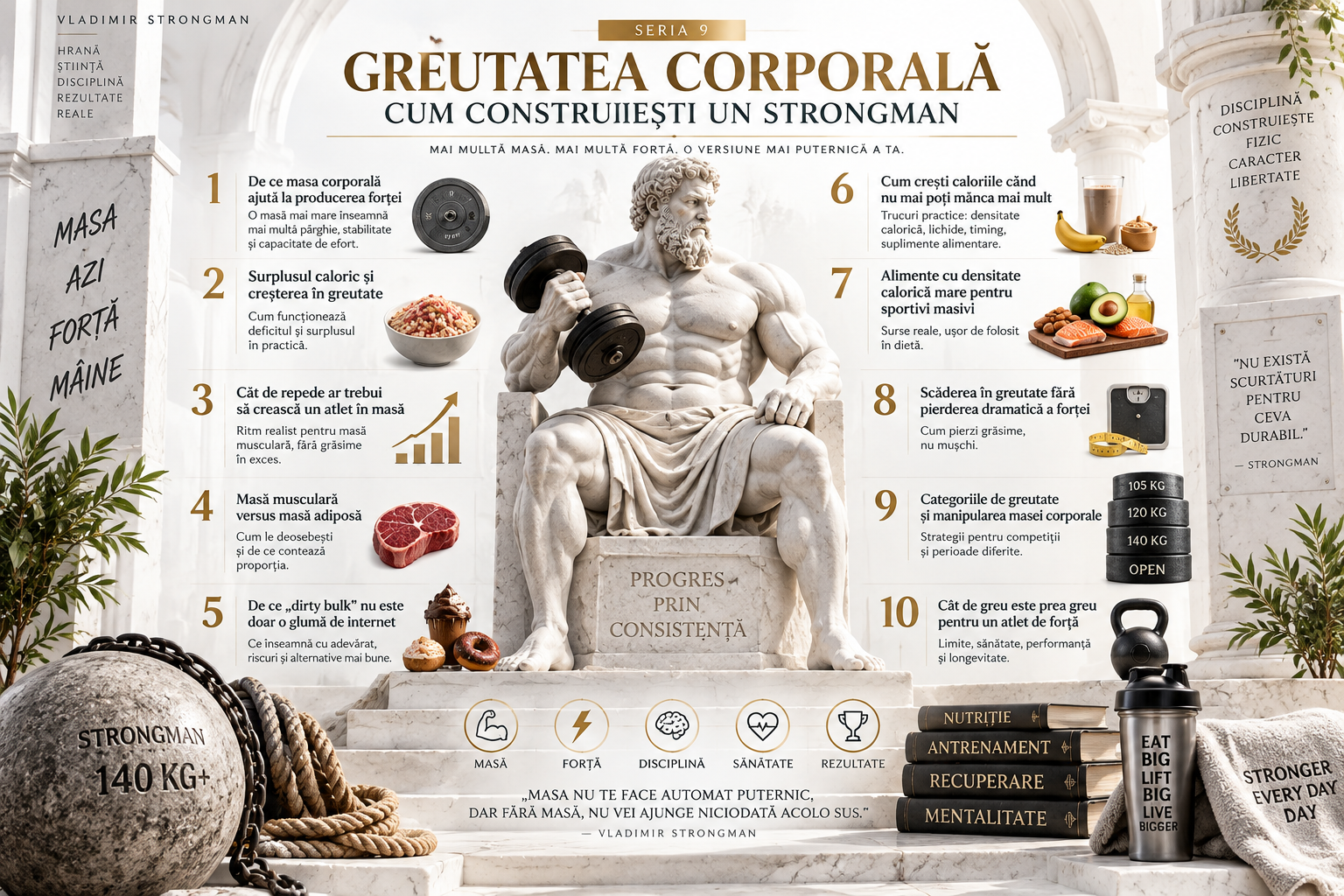
When a strength athlete wants to become bigger, the right question is not only whether bodyweight should increase, but how quickly. A rate that is too slow may mean that energy availability for recovery and hypertrophy is insufficient. A rate that is too fast can push the calorie surplus toward a disproportionate accumulation of fat, water and body mass without an equivalent improvement in performance.
In strongman, the issue is magnified by very high body mass and the variety of events. An 80 kg athlete and a 150 kg athlete cannot be given the same percentage recommendation mechanically without translating that percentage into kilograms. In an advanced athlete, only a few hundred grams per week may already be enough for progress, while the same formula used without context can produce an excessive bulk.
The current literature does not provide a magic number. There are applied recommendations, studies on energy surpluses and body-composition data, but there are no large long-term trials directly comparing several rates of gain in 120-160+ kg strongmen. This episode therefore separates direct evidence from practical inference and proposes a control system based on bodyweight, waist size, performance and health.
1. Rate matters more than enthusiasm
Mass gain is not a race against the clock. The objective is not to make the number on the scale rise as fast as possible, but to ensure that the greatest practical share of progress is associated with useful tissue, training adaptation and a greater capacity to produce force. The body can store energy as fat much faster than it can construct functional muscle tissue.
For strongman, this distinction has direct consequences. A new kilogram may help a heavy deadlift, log or static event if it comes with more contractile tissue and stability. The same kilogram may become a metabolic and mechanical cost in the yoke, farmers, loading or medleys if the athlete must accelerate more body mass without gaining enough strength and speed.
2. There is no universal speed
Reviews of energy surplus and hypertrophy show that the optimal energy requirement for maximizing muscle growth is not known precisely [1]. The response depends on training age, body mass, body-fat level, workload, protein intake, sleep and energy expenditure. Any percentage recommendation should therefore be treated as a starting point rather than a biological law.
Two athletes at the same bodyweight may respond very differently to the same surplus. A relatively new lifter may convert a favorable energy environment into lean mass more efficiently, whereas a highly advanced athlete has a narrower adaptive ceiling. In practice, the rate should be adjusted from real trends rather than defended simply because it appears in a popular table or formula.
3. Bodyweight is not the same as muscle
The scale measures total mass, not muscle tissue. A two-kilogram increase may contain a mixture of muscle, fat, glycogen, water, gut content and acute hydration changes. The rate of bodyweight gain therefore cannot be interpreted directly as the rate of hypertrophy. The more diet and hydration change, the noisier the scale signal becomes.
In strongmen, very large meals, high carbohydrate and sodium intake and frequent creatine use can produce rapid changes in scale weight. The literature on glycogen and hydration confirms that glycogen storage is associated with water, but the relationship is not stable enough to convert every new kilogram into an exact amount of glycogen or muscle [5,6].
4. The first weeks can be deceptive
After food intake rises, the first one or two weeks can show a dramatic increase on the scale. More carbohydrate raises glycogen stores, more sodium and fluid alter body water, and a larger food volume means more gastrointestinal content. If creatine is introduced at the same time, interpretation becomes even harder because measured lean mass can rise partly through intracellular water [5].
For this reason, week one should not be extrapolated across a 12- or 16-week block. An initial gain of 1-2 kg does not mean the athlete built 1-2 kg of muscle, nor that the same rate will continue. Once carbohydrate, sodium, hydration and food volume stabilize, the weekly trend becomes much more useful for decisions.
5. What studies with different surpluses show
A 2023 study in resistance-trained individuals compared strategies with smaller and larger planned energy surpluses. Although the final sample was small, the clearest result was that faster bodyweight gain was more strongly associated with increased skinfold thickness than with proportional advantages in hypertrophy or most strength measures [2]. The study does not establish a universal threshold, but it illustrates the cost of an aggressive surplus.
The message is not that a calorie surplus is useless, but that more is not automatically better. Adequate energy supports training, recovery and synthesis, while the capacity for hypertrophy remains limited by stimulus, biology and training status. Once those processes are adequately fueled, additional surplus may add mainly fat without an equivalent increase in contractile tissue.
6. Muscle has a limited construction rate
Hypertrophy is the progressive accumulation of contractile proteins and cellular structures, not a simple equation in which every extra calorie is converted into muscle. Resistance training provides the signal, dietary protein provides amino acids, and adequate energy reduces metabolic constraints. The rate of this process is nevertheless limited and becomes smaller as the athlete approaches an individual adaptive ceiling.
Protein meta-analyses show that adequate intake supports lean-mass gain, but neither protein nor surplus can make hypertrophy unlimited [4]. For an advanced athlete, the surplus should be large enough to remove insufficient energy as a limiting factor, not so large that scale weight clearly outruns the plausible rate of muscular adaptation.
7. Beginners can gain faster
An athlete early in training usually has a larger adaptive reserve. Strength can rise rapidly through neural, technical and muscular mechanisms, and muscle mass remains far from the individual ceiling. In this context, a moderately faster rate of bodyweight gain may be tolerated better, particularly when the athlete begins relatively lean and follows a well-designed training program.
Applied off-season bodybuilding recommendations often use roughly 0.25-0.50% of bodyweight per week, with the upper end more appropriate for less advanced athletes [3]. These figures are useful guides, but they are not experimentally proven physiological limits. The quality of progress remains more important than hitting an exact percentage.
8. The intermediate athlete needs more precision
As experience increases, the return from each month of training declines. The intermediate athlete can still add muscle at a visible rate, but no longer has the same margin as a beginner. A more conservative rate, such as roughly 0.20-0.35% per week as a practical starting range, can be useful before making individual adjustments from the athlete's actual data.
This range is a conservative extrapolation, not a rate experimentally proven to be optimal for every athlete. An intermediate lifter who is getting stronger, keeping waist gain controlled and tolerating training volume well may stay at the same intake. If weight rises faster than performance and body composition deteriorates, reducing the surplus is more logical than defending a rigid percentage target.
9. Advanced athletes should gain more slowly
At an advanced level, every new kilogram of muscle becomes harder to obtain. The athlete already has years of training, a large amount of muscle and adaptations closer to the individual ceiling. In this situation, roughly 0.10-0.25% of bodyweight per week can be a more prudent practical range than recommendations designed for beginners. This is not an experimentally validated threshold, but a strategy intended to reduce unnecessary fat gain.
The more advanced the athlete, the more important it becomes to track performance rather than mass alone. If squat, deadlift, log and work capacity improve while waist size remains relatively controlled, the rate may be appropriate. If bodyweight rises quickly while PRs do not appear and moving events deteriorate, the surplus is no longer producing the type of adaptation being targeted.
10. The very heavy strongman is a special case
At 120, 140 or 160 kg, percentages that look small can represent large absolute gains. A 140 kg strongman targeting 0.5% per week would need to add about 0.7 kg every week. Sustained for three months, that rate would produce more than 8 kg of gross weight gain, an amount for which there is no reason to assume that most would be new muscle tissue in an advanced athlete.
For this reason, roughly 0.10-0.20% per week is a more conservative practical inference for an advanced strongman above 120 kg. At 140 kg, that is approximately 0.14-0.28 kg per week. This article does not present the range as experimental truth, but as a rational strategy derived from the literature on energy surplus, body composition, training status and diminishing allometric returns.
11. Where the 0.25-0.50% per week rule comes from
The range of roughly 0.25-0.50% per week appears frequently in off-season recommendations for bodybuilding and strength athletes [3]. It is intended to provide enough energy for progress without encouraging a very large surplus. Its foundation is largely applied and synthetic, however. There is no set of trials demonstrating that 0.31% is superior to 0.22% for every athlete.
The rule becomes more problematic when transferred directly to elite strongmen. A percentage is only a scaling convention. At very high body masses, the same percentage creates a much larger absolute gain, while an advanced athlete generally has less capacity to build new muscle than a beginner. The percentage should therefore always be translated into kilograms.
12. Percentages must be converted into kilograms
A percentage can look abstract until it is converted into real weight. At 80 kg, 0.25% is 0.20 kg per week. At 100 kg it is 0.25 kg. At 140 kg it is 0.35 kg, and at 160 kg it reaches 0.40 kg. At the 0.50% end, all of these values double. This simple conversion shows why the same recommendation can be moderate for one athlete and aggressive for another.
For coaching, percentages are useful mainly as a common language. The final decision should be made in kilograms per week and per month, then compared with changes in waist size, speed and strength. If a formula requires an advanced strongman to add 3-4 kg per month simply to remain inside the target range, the problem is not the athlete but the rigid application of the formula.
13. Practical example for an 80 kg athlete
At 80 kg, a rate of 0.30-0.50% per week represents roughly 0.24-0.40 kg. For a beginner or early intermediate, this can be a reasonable zone if technical and muscular progress is rapid. Across 12 weeks, a median rate of 0.40% would mathematically produce about 4 kg of bodyweight gain, but that figure is an example of a trajectory rather than a prediction of muscle gain.
If waist size rises quickly and strength does not follow, even this range may be too high. If the athlete is very lean, recovers well and adds repetitions or load almost weekly, the upper end may be more tolerable. The same principle remains: the rate is validated by the body's response, not by mathematical compliance alone.
14. Practical example for a 100 kg athlete
At 100 kg, 0.20-0.35% per week equals roughly 0.20-0.35 kg. For an intermediate athlete, this is enough movement to be measurable over several weeks without turning the bulk into a race. A 0.25% average would equal about 250 g per week and around 3 kg over 12 weeks if the rate remained constant.
In reality, weight does not rise linearly. There will be flat weeks, jumps after larger meals, glycogen changes and digestive variation. The objective is therefore not to hit exactly 250 g every seven days, but to maintain an average trend that stays near the desired zone across several weeks and is accompanied by performance progress.
15. Practical example for a 140 kg strongman
At 140 kg, a conservative target of 0.10-0.20% per week equals roughly 0.14-0.28 kg. A median value of 0.15% would be about 210 g per week. Over 12 weeks, this would represent around 2.5 kg of bodyweight gain, enough to be clearly observable but much easier to evaluate than an 8-10 kg increase over the same period.
For a 140 kg strongman, the key question is whether those 2-3 kg make the athlete better. If log and deadlift improve, yoke and farmers remain fast, and waist size and health markers do not deteriorate rapidly, the gain may be functional. If moving events slow down, intake should be reconsidered even if static strength has increased.
16. Practical example for a 160 kg strongman
At 160 kg, even 0.20% is 0.32 kg per week. At 0.50%, the target becomes 0.80 kg per week, almost 10 kg over 12 weeks if sustained. For an advanced and already massive athlete, such an extrapolation is difficult to justify through hypertrophy and would make it increasingly likely that a large portion of the new weight is adipose tissue and water.
This is why percentage recommendations should become slower as body mass and experience increase. At 160 kg, even an average of 0.10-0.15% can create a visible monthly trend. Instead of chasing a spectacular bulk, the athlete can use longer and more controlled phases in which every new kilogram is tested through performance and physiological tolerance.
17. The calorie surplus is a test dose
The previous episode showed that a calorie surplus is a tool, not a guarantee. In practice, extra intake should be treated as an initial test dose. For many athletes, adding a few hundred kcal per day can be enough to alter the weight trend. If the rate remains too low after a stable period, intake can be adjusted gradually rather than doubled immediately.
The meta-analysis on energy deficiency shows that restriction can reduce lean-mass gains during resistance training and that a deficit around 500 kcal per day may on average prevent lean-mass gain [8]. This does not mean that a 500 kcal surplus is optimal. It only shows that insufficient energy can be a brake, not that unlimited excess accelerates hypertrophy.
18. NEAT can absorb part of the surplus
When energy intake rises, the body does not necessarily retain every additional calorie. Spontaneous physical activity, unconscious movement, thermogenesis and the cost of moving a heavier body can increase. This component, often discussed under NEAT, helps explain why two people can receive the same calculated surplus and still gain weight at very different rates.
Calories are therefore the input, while the bodyweight trend is the output that we measure. If an athlete adds 250 kcal per day and bodyweight remains stable for several weeks, that does not necessarily mean the calculations are wrong; adaptive energy expenditure may absorb part of the difference. Adjustments should be based on the observed response, not on the initial formula alone.
19. Protein supports growth but does not determine its speed
Adequate protein intake is one of the fundamental conditions for hypertrophy. The meta-analysis by Morton and colleagues found that benefits for fat-free mass tend on average to plateau around roughly 1.6 g/kg/day, with individual variation and statistical uncertainty that often justify a somewhat higher practical margin [4]. For many strength athletes, approximately 1.6-2.0 g/kg/day is sufficient.
More protein does not allow the body to build muscle at any speed. If training, sleep and adaptation time are limiting factors, another 50-100 g of protein cannot turn an aggressive bulk into a muscular bulk. In very heavy strongmen with higher body fat, expressing intake relative to lean mass or a target bodyweight can be more practical than multiplying total bodyweight without limit.
20. Carbohydrates can move scale weight quickly
Carbohydrates are important for high-volume training and repeated efforts, but changing carbohydrate intake can rapidly change bodyweight. Increased muscle and liver glycogen is accompanied by water, so an athlete moving from moderate to very high carbohydrate intake may see the scale rise before hypertrophy has had time to explain the difference [6].
This is why bodyweight after a high-carbohydrate weekend should not be treated as the body's new structural baseline. For monitoring a bulk, carbohydrate intake should be relatively consistent from week to week. Otherwise, glycogen fluctuations can hide a real rate that is too low or create the false impression that mass is rising too quickly.
21. Dietary fat and calorie density
In very large athletes, reaching the required energy intake can become a digestive challenge. Fat has a higher calorie density than protein and carbohydrate and can help raise energy intake without enormous food volume. This becomes especially useful when stomach capacity, appetite and the time available for meals become limiting factors.
Calorie density also makes it easier to overshoot the surplus. Oils, nut butters, cheeses and highly energy-dense foods can add hundreds of kcal without much change in food volume. In a controlled bulk, dietary fat is a useful tool, but intake should be tracked well enough that the planned surplus does not accidentally become twice as large.
22. Creatine complicates interpretation of the first weeks
Creatine has one of the strongest evidence bases among performance supplements. A 2024 meta-analysis reported that adding creatine to resistance training produced greater average gains in lean mass than resistance training alone [5]. Part of the early change in bodyweight may reflect intracellular water, however, rather than contractile tissue alone.
If an athlete starts creatine, raises carbohydrate intake and enters a calorie surplus at the same time, the first weeks become difficult to interpret. There is no need to avoid these interventions, but the athlete should recognize that they shift the baseline. It is more useful to allow weight to stabilize and then calculate the true rate of gain across several weeks.
23. Daily noise can be larger than true progress
Daily bodyweight can vary by one or more kilograms for reasons unrelated to new tissue: sodium, hydration, post-training inflammation, gut content, the timing of the last meal, sleep and bowel movements. In a 140-160 kg athlete, the amplitude of these fluctuations may be larger than the intended true gain for an entire week.
An isolated Monday morning weigh-in therefore says very little about the success of a bulk. Data become useful when conditions are repeatable: morning, after using the bathroom, before food and fluid, on the same scale. Even then, the individual value matters less than the average and the direction of the trend.
24. A seven-day average is more useful than one weigh-in
A practical method is to use the average of seven consecutive weigh-ins. It does not remove all noise, but it reduces the influence of an unusually salty meal or an abnormal hydration day. Comparing weekly averages provides a much more stable view of the trend than comparing two arbitrarily selected days.
For calorie adjustments, a two- to three-week window is usually more informative than reacting to a single week. This is a practical monitoring rule rather than a proven physiological threshold. The goal is simple: change intake only when there is enough signal to distinguish a true trend from normal fluctuation.
25. Waist size tells us what the scale cannot
Waist circumference does not directly measure visceral fat and is not perfect in a very muscular athlete, but it provides a useful second signal. If weight rises slowly, strength improves and waist size changes little, the bulk looks very different from a situation in which both weight and waist accelerate while performance remains almost unchanged.
Measurement should be standardized: the same anatomical location, posture, respiratory phase and, where possible, the same time of day. A single centimeter should not be overinterpreted. What matters is the direction across multiple weeks, especially when compared with bodyweight and training results.
26. Skinfolds, BIA and DXA all have limitations
No accessible method can state with absolute precision how much of a new kilogram is muscle and how much is fat. Skinfolds depend on assessor technique and landmark accessibility, BIA is sensitive to hydration, and DXA can be influenced by water, glycogen, body size and testing conditions. Very large strongmen may also encounter practical device-size limitations.
The value of these methods is mainly longitudinal. When repeated under similar conditions, they can complement the information from bodyweight and waist size. The athlete does not need to treat every scan as a verdict. It is more useful to ask whether the signals converge: more useful mass, better performance and fat gain that remains controlled.
27. Strength should rise with mass
If the purpose of gaining weight is performance, new mass must be judged by what it allows the athlete to do. Studies in powerlifters and strength athletes show strong relationships between skeletal muscle or lean mass and absolute strength [14,15]. This does not mean that every added kilogram automatically creates a PR, but a successful bulk should produce a favorable performance trend over time.
Monitoring should include more than 1RM. Repetitions with the same load, submaximal bar speed, volume tolerance, recovery between sets and performance in event-specific tasks can reveal progress before a maximal record is tested. If bodyweight rises for months without meaningful improvements in any of these areas, the strategy should be reconsidered.
28. Static events tolerate additional mass better
In predominantly static events or tasks with little body displacement, additional mass can carry a smaller locomotor cost. A maximal deadlift, hold or some pressing variations may benefit from more muscle, stability and favorable geometry. This is one reason athletes who specialize in absolute strength tend to be very large.
Fat tissue still does not become contractile tissue. Total mass may alter stability and geometry, but the main engine of force production remains muscle and neuromuscular capacity. A bulk should not be justified simply by assuming that every added kilogram will help a deadlift; it must be tested by whether the gained mass actually produces the desired effect.
29. Moving events punish unnecessary mass
Yoke, farmer's walk, loading medleys and other moving events require the athlete to accelerate not only the implement but also the body. Strongman biomechanics research shows that better performers use characteristics such as effective stride length and rate and reduced ground-contact time [11]. Greater body mass can help through strength and stability, but it also carries an acceleration cost.
This is why a bulk should also be judged by the stopwatch. If an athlete adds 5 kg but becomes slower with the same yoke, finds farmers more costly and recovers worse between segments, we cannot assume the mass was functional. Strongman is not merely static strength; it is a continuous negotiation between force, speed and body mass.
30. Relative strength still matters
Strongman primarily rewards absolute strength, but relative strength does not disappear. Whenever the athlete must move the body, accelerate, change direction or complete multiple repetitions within a short time, the relationship between force-producing capacity and total body mass becomes relevant.
Bodyweight gain is truly valuable when absolute strength rises enough to compensate for the cost of the extra mass. An athlete can become stronger in absolute terms while becoming weaker relatively. For some events that trade-off is worthwhile and for others it is not. The rate of gain should therefore reflect the competitive profile rather than the desire to become heavier for its own sake.
31. Allometry and diminishing returns
The relationship between body mass and strength is not linear. Allometric analyses describe how performance scales with body size. A very large 2026 analysis of more than 457,000 powerlifters found that scaling exponents become smaller at the highest performance levels, a phenomenon the authors described as allometric decay [7].
For strongman, this is not direct evidence about the yoke or log, but it supports the idea that more mass does not produce unlimited proportional strength gains. As the athlete becomes very large and advanced, every additional kilogram must justify a larger cost. A slower gain rate provides a better opportunity to detect those diminishing returns before excessive mass accumulates.
32. Health can become the limiting factor
An athlete can keep adding kilograms even after health begins to pay the price. In very large strength athletes, blood pressure, sleep, nocturnal breathing, blood lipids, glycemic control and fat distribution matter for career sustainability. Strongman-specific health data remain limited, and BMI cannot distinguish muscle from fat well in these athletes, so assessment must be broader [9,18].
A good bulk is not defined only by lifting more. If waist size accelerates, blood pressure rises, sleep deteriorates or exercise tolerance clearly worsens, the rate should be reconsidered. There is no universal body-fat percentage at which every strongman must stop gaining, but converging signals are enough to reject the idea that performance justifies any increase in body mass.
33. The digestive system can limit bulking speed
For a 140-160 kg strongman, maintenance alone may already require a very high calorie intake. An additional surplus increases food volume, meal frequency and sometimes gastrointestinal discomfort. Reflux, bloating, constant fullness, diarrhea or constipation can turn a theoretically correct strategy into one that cannot be sustained.
The optimal rate is therefore also the rate the digestive system can support without compromising sleep and training. Adding another 500 kcal does not always make the athlete more anabolic; it may create an athlete who sleeps poorly because of reflux and trains with an overloaded stomach. Calorie density, meal distribution and food selection become part of rate control.
34. When calories should be increased
Calories can be increased when average bodyweight remains below the intended range for two to three weeks, weighing conditions are stable, performance is not progressing enough and there is no sign that water fluctuation explains the plateau. A modest adjustment, such as 100-200 kcal per day, makes it possible to observe a new response without turning the diet into a drastic experiment.
Simple errors should also be checked: missed meals, large day-to-day variation, inaccurate portion estimates and changes in training volume. If energy expenditure has risen because of more event sessions or greater daily activity, the initial surplus may have disappeared even though the planned diet has not changed.
35. When intake should be held steady
If bodyweight is rising in the planned zone, performance is improving and body-composition signals remain acceptable, the best intervention may be no intervention at all. One of the most common bulking mistakes is over-correction: the athlete sees one flat week and immediately adds many calories, then responds to the weight jump with an equally abrupt reduction.
Stability creates interpretable data. Holding the same intake long enough makes it easier to separate real adaptation from noise. A controlled bulk should resemble fine adjustment of an instrument rather than constant movement of every control. The more stable the dietary variables, the easier it becomes to identify the effects of training and surplus.
36. When the rate should be slowed
The rate should be slowed when bodyweight persistently exceeds the target, waist size or skinfolds rise disproportionately, moving-event performance worsens, digestion and sleep become problematic or health markers deteriorate. No single sign is perfect, but several signals pointing in the same direction matter more than hitting an arbitrary number on the scale.
Sometimes reducing the surplus is enough. At other times, a period at maintenance allows performance to consolidate and digestion and bodyweight to stabilize. The goal is not to alternate compulsively between bulking and dieting, but to recognize when the cost of the next kilogram begins to exceed its likely benefit.
37. A practical 12-week model
A 12-week block can begin with one baseline week and one or two weeks of stabilizing calories, carbohydrate, sodium and creatine. From weeks 3-4 onward, average bodyweight can be compared with the target. At 6-8 weeks, strength, waist size and moving events can be audited, and at the end the complete data set can be compared with the starting point.
For an advanced 140 kg strongman, a prudent example would be an average target of roughly 0.15% per week, about 210 g. If after 12 weeks the athlete is around 2-3 kg heavier, stronger, equally fast in carries and stable in health markers, that result is far more valuable than gaining 8 kg merely to satisfy an aggressive rate.
38. Final rule: build functional mass
The best rate of gain is not the one that creates the largest difference on the scale, but the one that produces the best relationship between useful mass, performance and cost. Beginners may reasonably gain faster. Intermediates need greater precision. For a very heavy and advanced strongman, patience becomes a performance tool.
The approximate 0.10-0.20% per week range for advanced strongmen above 120 kg should be understood as a practical inference, not a number directly proven in a strongman trial. It comes from a principle stronger than any single percentage: as the athlete becomes larger and more advanced, every new kilogram must prove that it is worth carrying.
References
[1] Slater GJ et al. Is an Energy Surplus Required to Maximize Skeletal Muscle Hypertrophy Associated With Resistance Training? Front Nutr. 2019. PMID: 31482093. [2] Helms ER et al. Effect of Small and Large Energy Surpluses on Strength, Muscle, and Skinfold Thickness in Resistance-Trained Individuals. Sports Med Open. 2023. DOI: 10.1186/s40798-023-00651-y. [3] Iraki J et al. Nutrition Recommendations for Bodybuilders in the Off-Season. Sports. 2019. PMID: 31247944. [4] Morton RW et al. Protein supplementation and resistance training adaptations: systematic review and meta-analysis. Br J Sports Med. 2018. PMID: 28698222. [5] Desai I et al. The Effect of Creatine Supplementation on Resistance Training-Based Changes to Body Composition: systematic review and meta-analysis. J Strength Cond Res. 2024. PMID: 39074168. [6] Muscle Glycogen Assessment and Relationship with Body Hydration Status: A Narrative Review. Nutrients. 2023. PMID: 36615811. [7] Montenegro S et al. An allometric large-scale analysis of the observed performance limits and sex differences in elite powerlifting. Front Physiol. 2026. PMID: 42422363. [8] Murphy C, Koehler K. Energy deficiency impairs resistance training gains in lean mass: meta-analysis and meta-regression. Scand J Med Sci Sports. 2022. PMID: 34623696. [9] Kraemer WJ et al. Body Composition in Elite Strongman Competitors. J Strength Cond Res. 2020. PMID: 33235016. [10] Winwood PW et al. Interrelationships between strength, anthropometrics, and strongman performance in novice strongman athletes. J Strength Cond Res. 2012. PMID: 22233785. [11] Hindle BR et al. The Biomechanics and Applications of Strongman Exercises: a Systematic Review. Sports Med Open. 2019. PMID: 31820223.
[12] McGill SM et al. Comparison of different strongman events: trunk muscle activation and lumbar spine motion, load, and stiffness. J Strength Cond Res. 2009. PMID: 19528856. [13] Folland JP et al. Allometric scaling of strength measurements to body size. Eur J Appl Physiol. 2008. PMID: 18172672. [14] Ye X et al. Relationship between lifting performance and skeletal muscle mass in elite powerlifters. J Sports Med Phys Fitness. 2013. PMID: 23828289. [15] Ferland PM et al. Body Composition and Maximal Strength of Powerlifters. Int J Exerc Sci. 2023. PMID: 37637239. [16] Maden-Wilkinson TM et al. What makes long-term resistance-trained individuals so strong? J Appl Physiol. 2020. PMID: 31873069. [17] Persad LS et al. Specific tension of human muscle in vivo: a systematic review. J Appl Physiol. 2024. PMID: 39169839. [18] Chappell AJ, Simper T. Nutritional and health characteristics of very large strength athletes. 2020. [19] Hypercaloric 16:8 time-restricted eating during 8 weeks of resistance exercise in well-trained men and women. 2025. PMID: 40241374. [20] Predicting Adaptations to Resistance Training Plus Overfeeding Using Bayesian Regression. Sports Med Open. 2021. PMID: 33919267. [21] Comparison of two nutritional protocols in body re-composition of resistance-trained participants. 2026. PMID: 41940947. [22] Jäger R et al. International Society of Sports Nutrition Position Stand: protein and exercise. JISSN. 2017. PMID: 28642676.
More From The Journal

Training
The Science of Strongman Training - Episode X: Competition Programming
How to build a complete Strongman competition preparation block: calendar, events, volume, intensity, specificity, simulations, autoregulation, tapering and fatigue management.

Training
The Science of Strongman Training - Episode IX: Peaking
Peaking in Strongman: how to turn months of training into maximal competition performance by reducing fatigue, preserving adaptations and managing specificity.