
Nutrition
Series: Fats: Energy, Hormones and Structure - Episode 9: Why Extremely Low-Fat Diets Can Create Problems
September 10, 2026
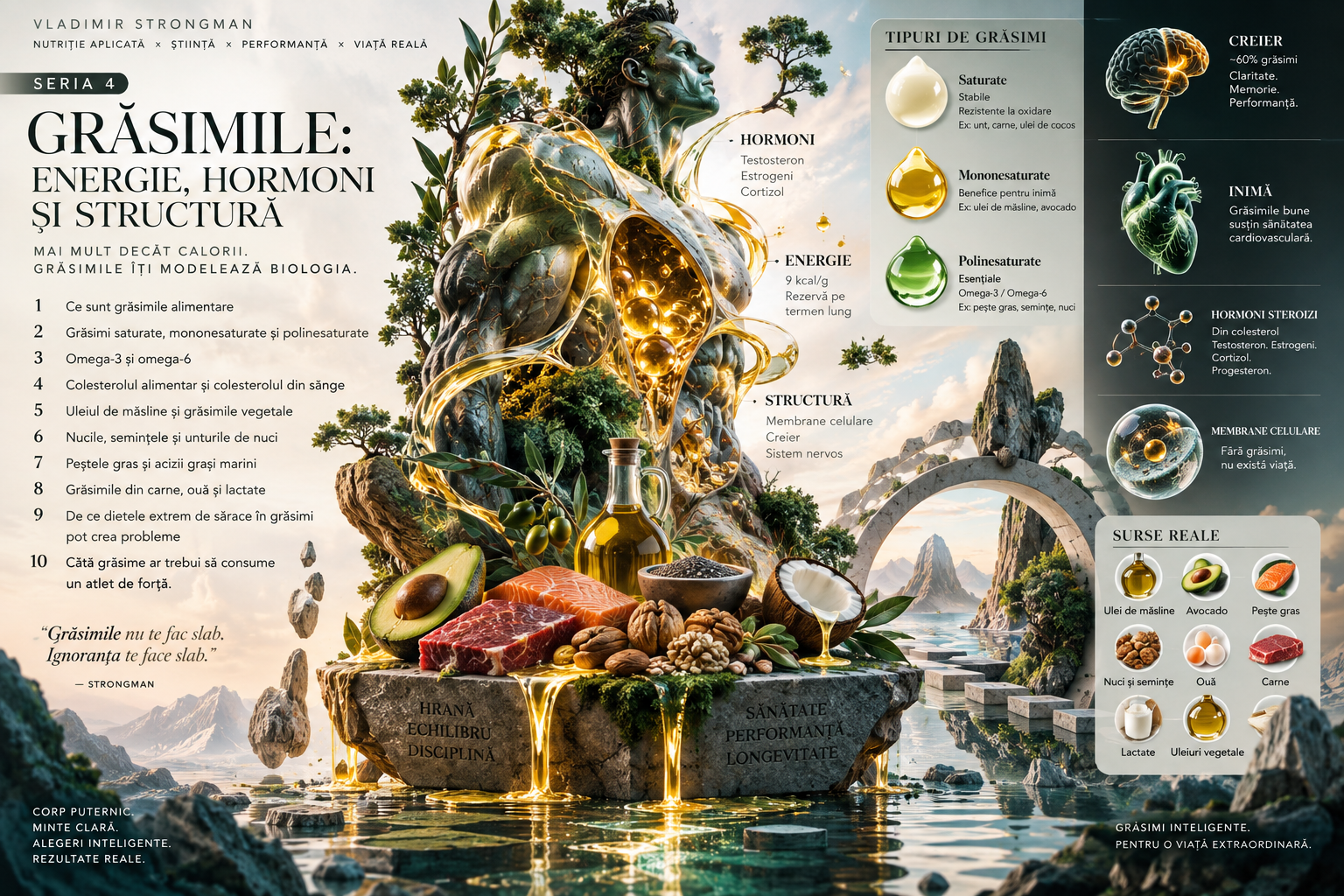
Dietary fat has gone through periods in which it was treated almost as the main enemy of nutrition. Reducing it can be useful in some contexts, especially when it lowers total calories or saturated fat intake, but there is a major difference between a moderately low-fat diet and one pushed to an extreme.
For a strength athlete, that difference matters. A strongman needs energy, protein, carbohydrate, essential fatty acids and micronutrients at the same time, and aggressively removing an entire macronutrient class can make the diet harder to sustain and can create nutritional gaps.
This episode does not argue that a low-fat diet is automatically unhealthy. It explains why very low intakes, especially when maintained for long periods and combined with severe energy restriction, can affect vitamin absorption, essential fatty-acid intake, hormonal function, satiety and an athlete's ability to meet energy needs.
1. “Low-fat” and “extremely low-fat” are not the same thing
In nutrition research, low-fat can describe very different diets. A diet providing 25-30% of energy from fat is not practically equivalent to one kept near 10-15% or even lower. As fat intake becomes extremely low, room for essential fatty-acid sources and foods carrying fat-soluble vitamins narrows, so planning has to become much more precise.
In practice, two diets carrying the same label can have very different consequences. A 25% fat diet rich in fish, olive oil and nuts should not be confused with an 8-10% fat regimen that excludes almost every fatty food. When discussing risks, the extreme must be defined instead of demonizing an entire nutrient class.
2. Fat is not merely fuel
Fat provides about 9 kcal per gram, but its role does not end with energy. Lipids are part of cell membranes, participate in signaling molecules, facilitate transport and absorption of fat-soluble vitamins and provide fatty acids that the body cannot synthesize in adequate amounts. Treating fat only as stored calories is an incomplete picture.
3. Linoleic acid and alpha-linolenic acid are essential
Linoleic acid from the omega-6 family and alpha-linolenic acid from the omega-3 family are considered essential because humans cannot insert certain double bonds into their carbon chains. They must therefore come from food. Other fatty acids can be synthesized from these precursors, but conversion to EPA and especially DHA is limited.
4. Essential fatty-acid deficiency is rare, but real
Clinical essential fatty-acid deficiency is uncommon in ordinary diets. It has been described mainly in inappropriate artificial nutrition, severe malabsorption or extreme restriction. Its rarity does not mean intake can be ignored: long before a clinical deficiency appears, a diet may simply become poorly balanced and provide too few useful omega-3 and omega-6 sources.
5. Cell membranes require lipids
Every cell is surrounded by a membrane built largely from phospholipids and cholesterol. The fatty acids incorporated into those phospholipids influence membrane fluidity and the function of membrane proteins. The body can adapt membrane composition to a degree, but diet remains one of the sources from which this microscopic architecture is built.
6. Fatty acids participate in cellular signaling
Fatty acids can serve as precursors for eicosanoids, resolvins, protectins and other signaling molecules. These systems participate in inflammation, vascular tone, platelet function and many additional processes. There is no simple division between “inflammatory fats” and “anti-inflammatory fats”; amount, fatty-acid type, tissue and metabolic context all matter.
7. DHA has an important structural role in the nervous system
DHA is concentrated in membranes of the nervous system and retina. The body can produce some DHA from ALA, but direct dietary sources, especially fatty fish and some algae products, are much more effective ways to increase intake. An extremely low-fat diet that also excludes these foods may become unnecessarily restrictive.
8. Vitamins A, D, E and K are fat-soluble
Vitamins A, D, E and K are called fat-soluble because their intestinal absorption and transport are linked to lipid digestion and micelle formation. This does not mean every meal must be high in fat, but a diet containing almost no lipid can reduce the efficiency with which some of these vitamins and their precursors are absorbed.
9. Some micronutrients are absorbed better when a meal contains fat
A moderate amount of fat in a meal can improve absorption of many fat-soluble compounds. This is relevant to carotenoid-rich vegetables, vitamin K in plant foods and fat-soluble supplements. Constantly eating salads with no source of fat may be less efficient than pairing them with olive oil, nuts, seeds, egg or another appropriate source.
10. Carotenoids show why meal context matters
Research on carotenoids illustrates the principle well. Adding fat to a vegetable-containing meal can improve carotenoid bioavailability because these compounds are incorporated into micelles before absorption. Fewer calories and greater micronutrient absorption are therefore not always the same problem and should be optimized separately.
11. Cholesterol and steroid hormones: a frequently oversimplified relationship
Cholesterol is a precursor for steroid hormones including testosterone, estrogens, cortisol and aldosterone. It does not follow that eating more cholesterol automatically produces more testosterone or that a low-fat diet shuts down hormone synthesis. The body synthesizes and tightly regulates cholesterol. The greater concern is when fat restriction is part of an overly aggressive energy and nutrient restriction.
12. Very low fat intake and testosterone
Controlled interventions and meta-analyses suggest that very low-fat diets may modestly reduce testosterone in some men compared with diets containing more fat. The effect is not large enough to turn dietary fat percentage into a universal hormonal switch. Fat type, total energy, body weight, sleep, stress and training all influence the hormonal axis at the same time.
For athletes, this nuance is essential. A slightly lower testosterone value in a study does not automatically mean loss of strength, infertility or disease, and individual responses differ. The useful message is to avoid unnecessary restriction and interpret hormones in the context of total energy intake, body composition and health.
13. Energy availability matters more than one isolated macronutrient
When an athlete eats too little relative to expenditure, the body receives a signal of limited resources. Low energy availability can affect hormones, reproductive function, bone, immunity and recovery whether the deficit was created by removing fat or by another strategy. Total energy availability is therefore often more important than the isolated percentage of dietary fat.
14. Reproductive function responds to the body's energy status
Reproductive function is sensitive to energy status, especially when restriction is severe and prolonged. Women may develop menstrual disturbances in low-energy-availability states, while men can show changes in the hypothalamic-pituitary-gonadal axis. These effects should not be attributed to fat alone, but an extremely low-fat diet can contribute if it also drives energy intake too low.
15. RED-S does not simply mean “too little fat”
Relative Energy Deficiency in Sport describes multisystem consequences of insufficient energy availability. It is not synonymous with a low-fat diet. However, athletes who aggressively remove fat to cut calories quickly can enter low-energy-availability territory more easily, especially when training volume remains high.
16. Leptin and signals about energy stores
Leptin is produced mainly by adipose tissue and helps communicate information about energy stores and nutritional status to the brain. During energy deficit and fat loss, leptin commonly falls. This change is not caused simply by fat grams on the plate, but severe dietary restriction can amplify the overall signal that resources are scarce.
17. Dietary fat stimulates the gallbladder
Fat entering the duodenum stimulates cholecystokinin release, which promotes gallbladder contraction and bile release. Bile helps emulsify lipids and supports their absorption. An extremely low-fat diet reduces post-meal gallbladder stimulation, which becomes especially relevant in the context of rapid weight loss.
18. Very low-fat diets and gallstones during rapid weight loss
Gallstone formation is multifactorial, but rapid weight loss and very-low-calorie diets are established risk factors. Extremely low fat intake may reduce gallbladder emptying and promote bile stasis. This does not mean every low-fat diet causes gallstones; it means the combination of severe restriction, rapid weight loss and reduced gallbladder stimulation deserves caution.
19. Fat changes gastric emptying and satiety
Fat generally slows gastric emptying and can prolong fullness. That can be an advantage or a disadvantage. During fat loss it may help some people control hunger, whereas immediately before hard training a very fatty meal may feel uncomfortable. The solution is not total elimination but intelligent distribution.
20. A diet containing almost no fat can become difficult to follow
Food palatability affects adherence. Fat carries flavor, changes texture and makes many foods more enjoyable. A moderately reduced-fat diet may be easy to follow, but an extreme version can turn every meal into an exercise in austerity. If the plan cannot be sustained, its theoretical advantage disappears no matter how elegant it looks on paper.
21. Fat is the most energy-dense macronutrient
At about 9 kcal per gram, fat provides more than twice the energy density of protein or carbohydrate. That is why reducing fat can be an effective way to cut calories. The same property is useful when energy requirements are high: oil, nuts, peanut butter or fatty fish can add substantial energy without enormous food volume.
22. For strongman, energy density can be an advantage
A strongman may go through phases of very high energy demand. If almost all calories have to come from protein and carbohydrate, food volume can become difficult to tolerate. A reasonable amount of fat makes the diet more compact and can reduce the feeling that the athlete has to eat continuously just to maintain body mass.
23. Gaining mass becomes harder when fat is cut aggressively
In a calorie surplus, near-elimination of fat forces the athlete to raise carbohydrate or protein substantially. Carbohydrate is crucial for glycogen and repeated work, but there is a practical limit to the volume of rice, pasta, bread or carbohydrate drinks a person can consume comfortably. Fat offers a third energy lever.
24. During fat loss, less fat does not automatically mean greater satiety
Reducing fat can help weight loss because it lowers energy density. But if intake is pushed too low, meals may become less satisfying for some people and foods such as nuts, seeds, eggs or full-fat yogurt may disappear unnecessarily. The best strategy is the one that maintains the calorie deficit with manageable hunger and nutritional adequacy.
Satiety is individual. Some people feel best on bulky, very low-fat meals, while others need a moderate amount of fat for meals to feel satisfying and sustainable. A good diet controls energy without turning every day into a permanent battle with hunger.
25. Cutting fat can push protein unnecessarily high
When fat is driven very low, some athletes compensate with enormous protein intakes. Beyond the amount useful for maintaining and building muscle, extra protein does not become automatically more anabolic. It can consume calories and digestive volume that might have been distributed more effectively between carbohydrate and fat.
26. Or it can push carbohydrate extremely high
In other cases, nearly all calories removed from fat are replaced by carbohydrate. That is not automatically harmful, especially in athletes with high training volume, but source quality matters. A diet based on whole grains, fruit, legumes and tubers is metabolically different from one based on sugar, sweetened drinks and refined products even if both are called low-fat.
27. Removing fat can also remove nutrient-dense foods
Fat often comes packaged with other nutrients. Fatty fish provides EPA, DHA, vitamin D and protein; nuts provide magnesium, fiber and phytosterols; eggs provide choline and carotenoids; dairy provides calcium and protein. If all of these foods are cut simply because they contain fat, the diet may lose much more than calories.
28. Nuts, seeds, fish, eggs and dairy are not just sources of fat
Foods should be evaluated as matrices, not as containers for one macronutrient. Nuts and seeds are not spoonfuls of solid oil, fish is not only omega-3 and an egg is not only cholesterol. In an extremely low-fat diet, removing entire foods can reduce diversity and make micronutrient adequacy more difficult.
29. Very low fat intake can reduce EPA and DHA intake
EPA and DHA occur in meaningful amounts mainly in fatty fish and other marine sources. If a person removes almost every fatty food, these sources may disappear. The body can convert plant ALA into EPA and DHA, but conversion is limited, especially toward DHA. A very low-fat diet therefore needs careful planning if fish is excluded.
30. Omega-6 does not need to be demonized to protect omega-3
Omega-6, especially linoleic acid, is essential and should not be reduced to the idea of inflammation. The problems of an overly restrictive diet are not solved by obsessively chasing an omega-6:omega-3 ratio. It is more useful to include adequate sources of both families with emphasis on whole foods and regular omega-3 intake.
31. Skin and biological barriers depend on lipids
Essential fatty acids contribute to skin barrier integrity and epidermal lipid structure. Severe clinical deficiency can cause dermatitis and altered skin function, although such cases are rare in ordinary nutrition. The practical lesson is not that the skin requires enormous fat intake, but that essential fatty acids should not be driven toward zero.
32. Inflammation cannot be explained by one fat percentage
Inflammation is a complex biological system. Body weight, visceral adiposity, sleep, smoking, infection, training and overall diet quality all influence inflammatory markers. The percentage of dietary fat alone cannot predict inflammatory status, and an extremely low-fat diet does not automatically become anti-inflammatory.
33. A well-designed low-fat diet can improve the lipid profile
Reducing saturated fat and replacing it with polyunsaturated fat or fiber-rich carbohydrate sources can improve LDL-C in many people. Well-designed low-fat diets can therefore have favorable cardiovascular effects. The criticism in this episode concerns extremes, not rational reductions in saturated fat or calories.
34. But very high refined carbohydrate intake can raise triglycerides
If a very low-fat diet is also very high in refined carbohydrate and total calories, triglycerides may rise in some people. The liver receives a large substrate flow and can increase triglyceride synthesis and VLDL secretion. The response depends on insulin sensitivity, energy balance, genetics and carbohydrate quality.
35. HDL-C may fall on some very low-fat diets
Some studies of high-carbohydrate, low-fat diets report lower HDL-C. HDL-C is not an isolated health score and should not be interpreted alone, but the observation shows again that changing macronutrients can reshape the entire lipid profile rather than only LDL-C.
36. LDL-C and ApoB depend on what replaces fat
Effects on LDL-C and ApoB depend heavily on the type of fat removed and what replaces it. Replacing saturated fat with unsaturated fat produces a different profile from replacing it with refined sugars. The better question is therefore not only “how much fat?” but also “what kind, and instead of which nutrient?”
ApoB is useful because it reflects the number of atherogenic particles rather than only the amount of cholesterol carried inside them. In a large strength athlete with elevated blood pressure or other risk factors, a complete lipid assessment is more informative than assuming a diet is healthy merely because it contains very little fat.
37. Insulin sensitivity is not controlled exclusively by fat
Insulin resistance is influenced by energy balance, visceral fat, physical activity, genetics and overall diet quality. Some low-fat diets improve insulin sensitivity when they facilitate weight loss. Others may be less suitable if they are hypercaloric and dominated by refined carbohydrate. Fat percentage alone does not tell the whole story.
38. Carbohydrate quality becomes critical as fat falls
When dietary fat falls, carbohydrate inevitably occupies a larger share of energy if protein remains reasonable. That makes carbohydrate quality even more important. Fiber, whole grains, legumes, fruit and tubers produce a very different nutritional pattern from sweetened drinks, desserts and highly refined flour products.
39. The liver can synthesize fat from excess carbohydrate
The liver can convert excess carbohydrate into fatty acids through de novo lipogenesis. In humans, this does not mean every gram of carbohydrate immediately becomes body fat, but the pathway can become more active in large energy surpluses and certain metabolic contexts. Removing dietary fat does not remove the body's ability to make and store lipids.
40. CCK, PYY and GLP-1 participate in appetite regulation
Fat in the intestine stimulates gastrointestinal signals such as CCK, while mixed meals also influence PYY and GLP-1. These signals contribute to satiety and coordination of digestion. The final appetite effect varies between people and depends on food volume, protein, fiber and energy density, not on fat alone.
41. Before training, too much fat can be uncomfortable
A very fatty meal immediately before yoke, farmers, log or deadlift training can slow gastric emptying and increase discomfort. That is an argument for timing rather than for eliminating fat across the whole day. Near training, many athletes tolerate carbohydrate and protein better, while fat can be shifted farther from the session.
42. Before competition, digestion takes priority over dogma
Competition-day meals should be familiar and easy to digest. Fat can be reduced in the hours before events to limit fullness or reflux, especially before moving events. But a short-term digestive strategy for competition should not be confused with the athlete's weekly or daily fat intake.
43. Daily intake matters more than the fat in one meal
A pre-workout meal can be low in fat while the total daily diet remains nutritionally adequate. Distribution matters. An athlete can consume more fat at breakfast, after training or in meals farther from hard sessions while keeping the immediate pre-competition window easier on the stomach.
44. Eliminating fat does not automatically fill glycogen stores
Muscle glycogen depends mainly on carbohydrate availability, but eliminating fat does not automatically maximize it. Once carbohydrate needs are met, additional intake must be considered within total energy requirements. A well-structured diet can support high glycogen stores and adequate fat intake at the same time.
45. Muscle also uses intramuscular triglycerides
Muscle stores intramuscular triglycerides that are used especially during prolonged and submaximal work. Their contribution is smaller during maximal strongman efforts, but an athlete's metabolism does not exist only during one repetition. Recovery, daily activity and long training sessions use multiple energy pathways.
46. Metabolic adaptation is not built from one fuel
The body adapts enzymes, transporters and mitochondria to patterns of diet and training. Higher carbohydrate availability favors rapid glucose use, while dietary fat serves other functions and provides dense energy. No single fuel can satisfy every physiological demand.
47. Strongman is neither marathon running nor bodybuilding
Strongman combines maximal strength, efforts lasting roughly 20-90 seconds, loaded movement and short recovery periods. Carbohydrate is extremely important, but the sport does not require fat elimination. The diet must support body mass, health, digestion and recovery between sessions, not only the energy of a single event.
48. Recovery also involves membrane remodeling
After training, muscle and other tissues repair structures, restore glycogen and remodel membranes. Phospholipids and fatty acids are part of that architecture. There is no evidence that an extremely high-fat diet accelerates recovery, but there is also no physiological reason to drive fat unnecessarily low when adequate intake is easy to maintain.
Recovery cannot be reduced to one nutrient. Sleep, total energy, protein, carbohydrate, micronutrients and training programming are dominant factors, with dietary fat completing the picture. A balanced diet provides the needed materials without turning one macronutrient into either a hero or a villain.
49. Connective tissues do not benefit from nutritional deficiencies
Tendons, ligaments and cartilage depend primarily on progressive mechanical loading, adequate protein, micronutrients and sufficient energy. Fat is not a tendon supplement. However, a severely restrictive diet that creates multiple deficiencies can compromise the overall recovery environment. Tissues do not rebuild efficiently during chronic energy insufficiency.
50. The immune system uses lipids as structural and signaling molecules
Immune cells use lipids in membranes and convert fatty acids into signaling mediators. Adequate essential fatty-acid intake is part of normal immune nutrition. This does not mean that more fat boosts immunity; it means that unnecessarily removing essential nutrients offers no advantage.
51. A very low-fat diet can become monotonous
When every fatty food is avoided, culinary variety can collapse: no oils, nuts, seeds, egg yolks, fatty fish, avocado or higher-fat dairy. Meals then tend to repeat the same combinations. Monotony is not merely boring; it can reduce micronutrient diversity and long-term adherence.
52. “Low-fat” on a label does not automatically mean healthy
The food industry can make biscuits, yogurts, cereals or desserts labeled low-fat that still contain substantial sugar, refined flour or calories. The label describes one nutrient, not the quality of the whole food. A healthy diet is not built by collecting products with the fewest possible grams of fat.
53. Sugar can replace fat in processed foods
When fat is removed from a product, flavor and texture may be compensated with sugar, starch, emulsifiers or other ingredients. Not every low-fat product does this, but the phenomenon shows why comparisons should be made between complete foods. A lower-fat version can be excellent or simply another form of ultra-processed food.
54. There is no perfect minimum percentage for everyone
Fat requirements depend on age, sex, total energy, health, preferences, sport and the rest of the diet. There is no universal gram target that is optimal for every person. The diet should cover essential fatty acids and micronutrients while remaining compatible with the athlete's energy goal.
55. Sports guidelines usually use a range, not a magic number
Sports nutrition recommendations commonly use approximate ranges such as 20-35% of total energy from fat because this allows adaptation to sport and preferences. The percentage is not a rigid biological law, and some people can function well temporarily outside that range. Still, the lower intake goes, the more carefully essential fatty acids and fat-soluble vitamins must be planned.
56. Below roughly 20% of energy, planning becomes harder for many athletes
Intakes below roughly 20% of energy can be used in selected situations, but many athletes find it harder to maintain energy adequacy and food variety. The issue is especially obvious in people with very high calorie needs who would otherwise need enormous volumes of very lean foods to reach total energy requirements.
57. Some medical situations justify fat restriction
Hypertriglyceridemic pancreatitis, some biliary disorders, malabsorption syndromes and other clinical situations may require temporary or long-term changes in fat intake. In such cases the diet should be medically designed rather than built from general sports rules. A performance article cannot replace individualized clinical advice.
58. Symptoms and laboratory data can reveal an overly restrictive diet
Lower libido, persistent hunger, fatigue, reduced performance, menstrual disturbance, difficulty maintaining body weight or a highly monotonous diet may suggest that a strategy is too aggressive, although none of these findings is specific to low fat intake. Laboratory data and assessment of total energy, sleep and health provide the proper context.
59. A practical minimum is about quality, not just grams
A practical quality baseline means regularly including sources of unsaturated fat, essential fatty acids and, where possible, EPA and DHA: olive oil, nuts, seeds, fatty fish, eggs and other foods that fit the athlete's preferences. The exact amount can then be adjusted according to energy needs, digestion, laboratory markers and sporting goals.
60. Conclusion: the problem is the extreme, not the existence of low-fat diets
A low-fat diet can be effective, healthy and well tolerated. Problems begin when reduction becomes a competition in itself and fat is pushed so low that the diet loses essential fatty acids, micronutrients, energy, variety or adherence. For strongman, balance is more valuable than an extreme: enough carbohydrate for work, enough protein for tissue and enough fat for functions that carbohydrate and protein cannot replace.
Sources and recommended reading
1. Food and Agriculture Organization of the United Nations. Fats and Fatty Acids in Human Nutrition. FAO Food and Nutrition Paper 91, 2010.
2. EFSA Panel on Dietetic Products, Nutrition and Allergies. Scientific Opinion on Dietary Reference Values for fats. EFSA Journal, 2010.
3. Institute of Medicine. Dietary Reference Intakes for Energy, Carbohydrate, Fiber, Fat, Fatty Acids, Cholesterol, Protein, and Amino Acids. National Academies Press, 2005.
4. Thomas DT, Erdman KA, Burke LM. Nutrition and Athletic Performance. Journal of the Academy of Nutrition and Dietetics, 2016.
5. Mountjoy M et al. 2023 International Olympic Committee consensus statement on Relative Energy Deficiency in Sport (REDs). British Journal of Sports Medicine, 2023.
6. Whittaker J, Wu K. Low-fat diets and testosterone levels in men: systematic review and meta-analysis of intervention studies. Journal of Steroid Biochemistry and Molecular Biology, 2021.
7. Dorgan JF et al. Effects of dietary fat and fiber on plasma and urine androgens and estrogens in men: a controlled feeding study. American Journal of Clinical Nutrition, 1996.
8. Gebhard RL et al. The role of gallbladder emptying in gallstone formation during diet-induced rapid weight loss. Hepatology, 1996.
9. Calder PC. Functional Roles of Fatty Acids and Their Effects on Human Health. Journal of Parenteral and Enteral Nutrition, 2015.
10. Sacks FM et al. Dietary Fats and Cardiovascular Disease: A Presidential Advisory From the American Heart Association. Circulation, 2017.
Editorial note: this article is educational and does not replace individualized advice from a physician or dietitian. People with malabsorption disorders, hepatobiliary disease, dyslipidemia, endocrine conditions or other medical problems should individualize nutrition with a qualified professional.
More From The Journal

Training
The Science of Strongman Training - Episode X: Competition Programming
How to build a complete Strongman competition preparation block: calendar, events, volume, intensity, specificity, simulations, autoregulation, tapering and fatigue management.

Training
The Science of Strongman Training - Episode IX: Peaking
Peaking in Strongman: how to turn months of training into maximal competition performance by reducing fatigue, preserving adaptations and managing specificity.