
Nutrition
Series: Fats: Energy, Hormones and Structure - Episode 7: Fatty Fish and Marine Fatty Acids
September 10, 2026
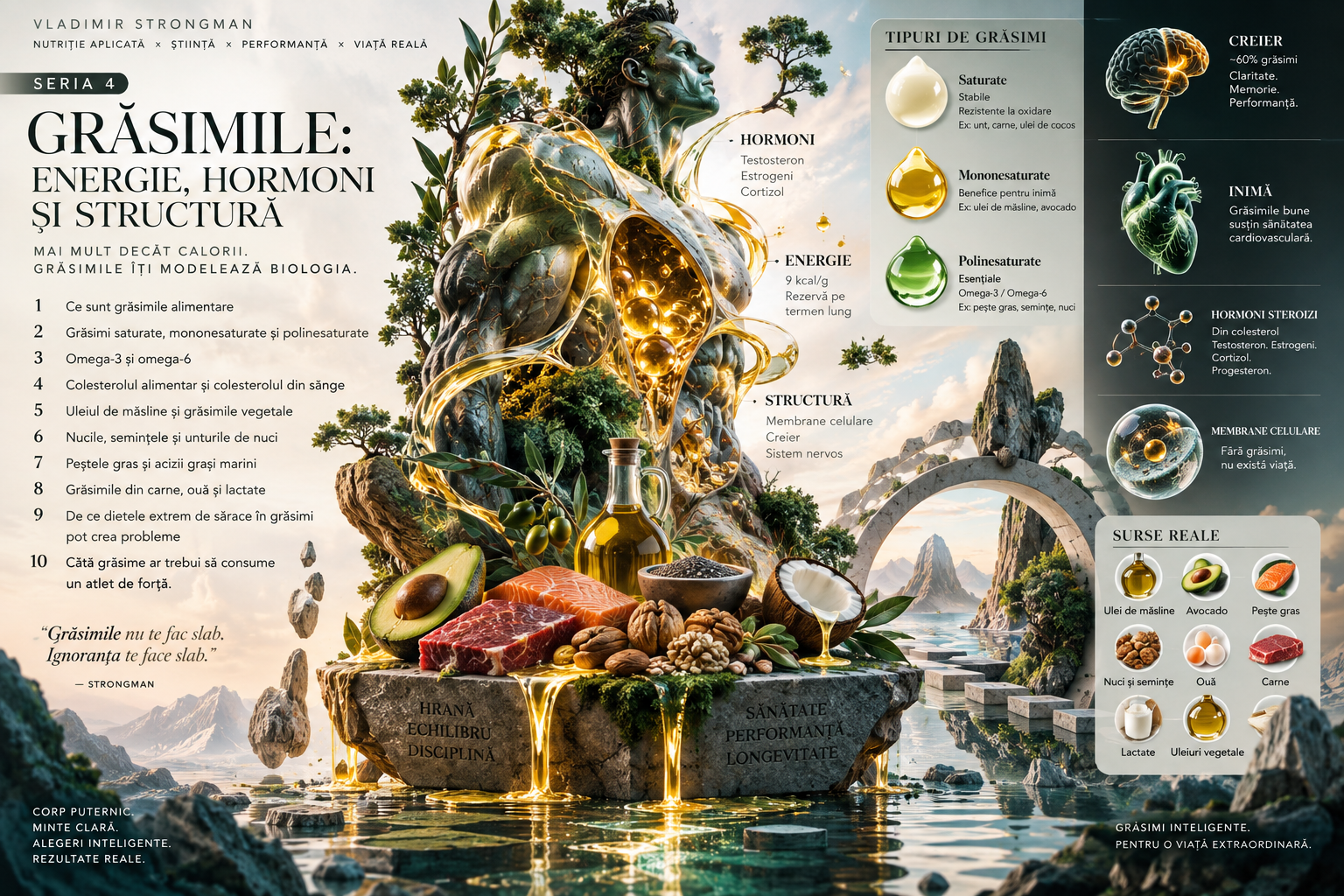
Fatty fish are among the few food categories that directly provide meaningful amounts of EPA and DHA, two long-chain omega-3 fatty acids with structural and signaling roles in the human body. This is why salmon, sardines, herring and mackerel frequently appear in recommendations for cardiovascular and metabolic health.
For a strongman, the subject is broader than the simple idea of “omega-3 for recovery.” Fatty fish provide high-quality protein, fat, vitamins and minerals at the same time, helping build a high-calorie diet without forcing all dietary fat to come from fatty meat, butter, cheese or ultra-processed foods.
This episode follows fatty fish from lipid composition to effects on triglycerides, membranes, inflammation and cardiovascular risk. We will discuss important species, the difference between fish and supplements, contaminants, cooking, digestion and how marine sources can be intelligently integrated into a strength athlete’s diet.
1. What does “fatty fish” actually mean?
Fatty fish generally refers to species that store a higher proportion of lipids in muscle tissue rather than only in the liver. Salmon, herring, sardines, mackerel and some trout are classic examples. The exact fat content varies greatly by species, season and growing environment.
That fat is not nutritional ballast. It is the main reason these fish provide EPA and DHA, and it also increases calorie density. For an athlete who must eat a lot of energy, the difference between lean and fatty fish can be practically important.
2. The fat content of fish is not fixed
Lipid composition changes with species, diet, water temperature, season, maturity and reproductive state. Two salmon fillets can therefore contain different amounts of total fat and omega-3 even if they look almost identical on the plate.
3. EPA and DHA are the main marine fatty acids of interest
EPA, eicosapentaenoic acid, and DHA, docosahexaenoic acid, are long-chain polyunsaturated omega-3 fatty acids. They are found especially in marine organisms and reach fish through the food chain, originating largely from microalgae.
4. ALA is essential, while EPA and DHA have a different metabolic status
Alpha-linolenic acid, ALA, is the nutritionally essential omega-3 because the body cannot synthesize it. EPA and DHA can be formed to some extent from ALA, but conversion is limited, which gives direct marine sources a distinct role.
5. Conversion of ALA to EPA and DHA is modest
The body can elongate and desaturate ALA toward EPA and then DHA, but the pathway is metabolically inefficient, particularly for DHA. Flax and chia are useful ALA sources, but they are not gram-for-gram substitutes for fatty fish.
6. EPA has an important role in lipid signaling
EPA can be incorporated into membrane phospholipids and serve as a precursor for lipid mediators involved in inflammatory and vascular responses. It is not simply an “anti-inflammatory” molecule, but one component of a much more complex signaling network.
7. DHA has a pronounced structural role
DHA is abundant in neuronal and retinal membranes, where it contributes to the physical properties of membranes and the behavior of embedded proteins. Its importance extends far beyond sport and cardiovascular health into basic cellular architecture.
8. DPA is a less discussed third marine omega-3
Docosapentaenoic acid, DPA, sits metabolically between EPA and DHA and is present in fish and other animal foods. It has received less research attention than EPA and DHA, but it is part of the real biological picture of long-chain omega-3 fatty acids.
9. Marine fatty acids become part of cell membranes
After digestion and absorption, EPA and DHA can gradually be incorporated into membrane phospholipids in different tissues. This does not happen after one meal, but over weeks depending on intake and tissue turnover.
10. The brain and retina are especially rich in DHA
DHA is an important component of nervous-system and retinal membranes. This helps explain why its biological role is deeper than popular claims about a supplement for memory or recovery.
11. EPA and DHA change the raw material available for eicosanoids
The fatty-acid composition of membranes influences which lipid mediators can be produced when cells are activated. EPA competes in some pathways with arachidonic acid and can alter the balance of prostaglandins, thromboxanes and leukotrienes generated.
12. Specialized pro-resolving mediators also exist
EPA and DHA can give rise to mediators such as resolvins, protectins and maresins. These participate in resolution, the active processes through which an inflammatory response is brought to a close and tissue moves back toward homeostasis.
13. Inflammation is not an on-off switch
Acute inflammation is necessary for defense, healing and training adaptation. Omega-3 fatty acids can influence some inflammatory pathways, but they do not erase inflammation and they cannot compensate for poor sleep, chronic energy excess or badly managed training.
14. Lowering triglycerides is one of the best documented effects
Higher intakes of EPA and DHA can reduce blood triglycerides through effects on hepatic synthesis and export of triglyceride-rich lipoproteins. This effect is robust enough that concentrated preparations are also used medically in selected situations.
15. The liver and VLDL sit at the center of the triglyceride effect
The liver exports triglycerides in VLDL particles. EPA and DHA can reduce the synthesis and secretion of these lipoproteins, contributing to lower circulating triglycerides. That does not mean every other lipid marker changes in the same direction.
16. The effect on blood pressure is usually modest
Some studies report small reductions in blood pressure with higher EPA and DHA intake, especially in people with elevated values. This may matter to a strength athlete, but it does not replace body-weight management, sleep, cardiovascular activity or medical evaluation.
17. The vascular endothelium can respond to fatty-acid profile
The endothelium regulates vessel dilation, vascular tone and many circulatory signals. Changes in lipid composition and omega-3-derived mediators can influence endothelial function, although the final effect depends on the broader metabolic context.
18. Omega-3 also influences platelet function
EPA and DHA can alter production of some thromboxanes and influence platelet aggregation. The popular phrase “thins the blood” is too crude. Hemostasis is complex, and high doses should be discussed with a clinician when anticoagulant medication or bleeding disorders are present.
19. Effects on heart rhythm are more complex than they appear
Marine fatty acids can influence electrical properties of membranes and have been studied in relation to arrhythmias. Clinical data do not support the simple idea that more omega-3 automatically means greater protection in every setting.
20. Cardiovascular outcomes depend on dose, population and formulation
Studies of omega-3 and cardiovascular events have produced different results. Dose, EPA-to-DHA ratio, participant health status, statin use and baseline fish consumption can all influence the outcome.
One trial should therefore not become a universal verdict. The strongest practical idea remains that fatty fish can be part of a cardioprotective dietary pattern, while pharmacological-dose omega-3 therapy is a separate medical question.
21. Fish and supplements are not nutritionally identical
Fish provides EPA and DHA together with protein, selenium, iodine, vitamin B12 and sometimes vitamin D. A supplement mainly provides concentrated fatty acids. The effects of a whole food therefore cannot be completely reduced to capsules that reproduce only part of its composition.
22. Fatty fish is also an excellent protein source
Fish provides complete protein containing all essential amino acids required for protein synthesis. For strongman, the combination of protein and fat can be useful in meals that need both building material and energy density.
23. Some species contribute meaningfully to vitamin D intake
Fatty fish such as salmon, herring and sardines can provide relevant amounts of vitamin D. Content varies widely and fish is not the only source, but it can contribute in a way plant oils cannot reproduce.
24. Vitamin B12 is another advantage of fish
Fish provides vitamin B12, which is essential for normal blood-cell formation and nervous-system function. This is another benefit that comes from the whole food rather than isolated EPA or DHA.
25. Selenium is part of the marine nutrient package
Many fish species are good selenium sources, a mineral involved in antioxidant enzymes and thyroid-hormone metabolism. Amounts vary by species, but the contribution can be meaningful in a varied diet.
26. Iodine depends heavily on species and environment
Fish and seafood can contribute iodine, although levels vary and not all species are equal sources. Iodine is required for thyroid-hormone synthesis and can be overlooked in diets centered almost entirely on terrestrial meat.
27. Salmon is the popular reference point for fatty fish
Salmon generally provides meaningful EPA and DHA, protein and energy. Composition differs between wild and farmed salmon, but both can be valuable foods. The idea that one is always good and the other always bad is too simplistic.
28. Sardines provide omega-3 in a compact package
Sardines are small fatty fish rich in EPA and DHA. When canned with edible soft bones they can also provide calcium. Their small size usually places them lower in the food chain than large predatory fish.
29. Mackerel is valuable, but the species matters
Mackerel is often rich in marine fatty acids, but the name covers several species with different contaminant profiles. Some are commonly eaten with low concern, while larger predatory species can accumulate more mercury.
30. Herring is a traditional and efficient omega-3 source
Herring is rich in fat and provides significant EPA and DHA. Pickled or salted versions can contain a large amount of sodium, which matters for athletes with elevated blood pressure or already high daily salt intake.
31. Trout can contribute EPA and DHA
Trout, especially some farmed varieties, can provide useful amounts of long-chain omega-3 fatty acids. Content depends on species and feed, but trout is a valuable option for diversifying fish intake.
32. Tuna is not always a fatty fish
Some tuna products are relatively lean compared with salmon or mackerel, and omega-3 content can vary greatly. Tuna is useful as a protein source, but not every can provides the same EPA and DHA as classic fatty fish.
33. Lean fish and fatty fish serve different roles
Cod, pike-perch and other lean fish can provide a lot of protein with relatively few calories, but generally contain less EPA and DHA than fatty fish. In a strongman diet, both categories can be used strategically according to the energy needs of the meal.
34. Wild versus farmed is not a simple battle
Wild and farmed fish can differ in fatty-acid profile, contaminants, price and availability. Quality depends on species, feed, farming system and food-control standards. The label alone does not justify absolute conclusions.
35. Fish feed influences fatty-acid composition
In aquaculture, the proportion of EPA and DHA in fish tissue partly reflects feed composition. Changing feed ingredients can alter the balance between marine fatty acids and fatty acids originating from plant sources.
36. Contaminants matter, but they do not erase the benefits of fish
Fish can accumulate environmental contaminants including mercury, dioxins and PCBs. Risk varies widely by species and geography, and public-health advice generally emphasizes choosing appropriate species and eating a variety rather than eliminating fish altogether.
For most adults, a practical strategy is to favor fish with good omega-3 content and lower contaminant burden while avoiding repetitive consumption of large predatory species. Nutritional benefit and toxicological risk should be evaluated together.
37. Mercury accumulates more in large predators
Methylmercury bioaccumulates and biomagnifies through the food chain. Large, long-lived species that eat other fish therefore tend to carry higher levels than sardines, herring and other small fish.
38. PCBs and dioxins are fat-soluble contaminants
PCBs and dioxins can accumulate in animal and fish fat. Levels are monitored in the food supply, and exposure depends on origin, species and frequency of consumption.
39. Variety reduces dependence on a single species
Rotating salmon, sardines, herring, trout and other appropriate fish can improve nutritional variety and reduce repetitive exposure to contaminants specific to one source.
40. Cooking does not automatically destroy all omega-3
EPA and DHA are susceptible to oxidation, but ordinary cooking does not make them disappear completely. Method, temperature and duration influence losses. Baking, steaming and moderate-temperature cooking can preserve much of the nutritional value.
41. Frying can alter the lipid profile more substantially
Frying exposes lipids to high temperatures and can promote oxidation, especially when oil is reused. Fish can also absorb frying oil, changing both its final fatty-acid profile and calorie density.
42. Smoking introduces a separate issue: sodium
Smoked fish can retain EPA and DHA, but processing often involves substantial salt. For an athlete already consuming a lot of sodium from processed foods, this may matter particularly when blood pressure is elevated.
43. Canned fish can be highly practical
Canned sardines, mackerel and salmon can retain meaningful omega-3 content while offering low cost, long shelf life and portability. It is worth checking sodium and the type of liquid or oil used for packing.
44. EPA and DHA per serving can vary enormously
Species, origin, season, feed and preparation can all change omega-3 content. Nutrition tables should therefore be treated as useful estimates rather than guarantees for every fillet.
45. Serving size matters more than the phrase “rich in omega-3”
A food may have a good EPA and DHA concentration, but actual intake depends on how much is eaten. A substantial serving of fatty fish provides a different exposure from a symbolic amount added to a salad.
46. For strongman, fatty fish can be a calorie-density tool
Salmon, mackerel and herring provide more calories than lean fish and can help during high-energy phases. The advantage is that those calories arrive together with protein and marine fatty acids rather than isolated fat alone.
47. Before training, high fat can slow digestion
A very fatty meal eaten too close to training can slow gastric emptying and create heaviness. For yoke, farmer's walk or medley events, digestive tolerance can matter more than nutritional theory.
48. After training, fish can provide both protein and energy
Fatty fish can work well in a post-training meal when daily carbohydrate and protein intake are adequate. There is no special window in which EPA and DHA must be consumed immediately after the final repetition.
49. Recovery is more than reduced muscle soreness
Some studies have observed changes in soreness or inflammatory markers after omega-3 supplementation, but real recovery includes restoration of force, neuromuscular function, sleep and the capacity to tolerate the next training session.
50. Omega-3 and muscle protein synthesis remain an active research area
Some data suggest EPA and DHA can modify anabolic responses in selected populations, but there is no strong evidence that fish or omega-3 supplements automatically increase muscle mass in a well-trained athlete already consuming adequate protein.
51. Less soreness does not automatically mean better performance
Perceived muscle soreness and force-producing capacity are not the same thing. An athlete can feel less sore and still be incompletely recovered, which is why performance needs to be measured directly.
52. The direct effect on maximal strength is modest and uncertain
EPA and DHA are not acute ergogenic agents comparable with interventions that directly change energy availability or neural stimulation. If they benefit strongman, the effect is more likely indirect through cardiometabolic health, diet quality and perhaps recovery.
53. At high body mass, cardiovascular health becomes part of performance
Strongman often rewards high body mass, calorie surplus and large food intake. These conditions can place pressure on blood pressure, triglycerides, glucose regulation and cardiovascular function even when the athlete is very active and strong.
In that context, fatty fish is not a magic solution, but it can replace some less favorable fat sources and help create a better long-term dietary profile.
54. A lipid panel gives better feedback than assumptions
Triglycerides, LDL-C, HDL-C, non-HDL-C and, when available, ApoB provide concrete information about metabolic response. For an athlete eating a very high-calorie diet, periodic monitoring is more useful than assuming one healthy food automatically neutralizes the rest of the diet.
55. Therapeutic doses for triglycerides belong to medicine
Concentrated omega-3 preparations can be used medically for hypertriglyceridemia, but they should not be confused with ordinary fish consumption or general supplementation. Dose and indication should be individualized clinically.
56. Fish-oil supplement quality matters
Products differ in EPA and DHA concentration, purity, stability and oxidation control. A label stating “1000 mg fish oil” does not automatically tell you how many milligrams of EPA and DHA are actually present.
57. Chemical form can influence supplement absorption
EPA and DHA can be supplied as triglycerides, ethyl esters or other lipid forms. Absorption can vary with formulation and with whether the supplement is consumed alongside dietary fat, but practical value also depends on the actual dose and product quality.
58. Krill oil and algal oil are alternatives, not magic
Krill oil supplies omega-3 largely in phospholipid-associated form, while microalgae oils can provide DHA and sometimes EPA without fish. These can be useful alternatives, but there is no reason to assume they are automatically superior in every situation.
59. Practical strategy begins with variety and consistency
For most athletes, regularly eating fatty fish and rotating species is more useful than obsessing over one number on a supplement label. Salmon, sardines, herring, appropriate mackerel species and trout can form a simple and effective rotation.
On competition days or before hard training, meal timing should be adjusted to digestive tolerance. During the rest of the week, consistency and overall diet quality matter more than perfect timing.
60. Conclusion: fatty fish is food, not a capsule with fins
Fatty fish provides EPA and DHA inside a food matrix that also includes protein, vitamins and minerals. Marine fatty acids can influence triglycerides, membranes and cellular signaling, but their effects need context. For strongman, the best use is regular integration of varied marine sources into a diet that supports both performance and long-term health.
Sources and recommended reading
1. Calder PC. Omega-3 fatty acids and inflammatory processes: from molecules to man. Biochemical Society Transactions, 2017.
2. Calder PC. Functional Roles of Fatty Acids and Their Effects on Human Health. Journal of Parenteral and Enteral Nutrition, 2015.
3. Rimm EB et al. Seafood Long-Chain n-3 Polyunsaturated Fatty Acids and Cardiovascular Disease: A Science Advisory From the American Heart Association. Circulation, 2018.
4. Siscovick DS et al. Omega-3 Polyunsaturated Fatty Acid Supplementation and the Prevention of Clinical Cardiovascular Disease. Circulation, 2017.
5. Mozaffarian D, Wu JHY. Omega-3 Fatty Acids and Cardiovascular Disease: Effects on Risk Factors, Molecular Pathways, and Clinical Events. Journal of the American College of Cardiology, 2011.
6. Philpott JD, Witard OC, Galloway SDR. Applications of omega-3 polyunsaturated fatty acid supplementation for sport performance. Research in Sports Medicine, 2019.
7. Food and Agriculture Organization of the United Nations. Fats and Fatty Acids in Human Nutrition. FAO Food and Nutrition Paper 91, 2010.
8. EFSA Panel on Dietetic Products, Nutrition and Allergies. Scientific Opinion on Dietary Reference Values for fats. EFSA Journal, 2010.
9. Nichols PD, Petrie J, Singh S. Long-chain omega-3 oils: an update on sustainable sources. Nutrients, 2010.
10. Thomas DT, Erdman KA, Burke LM. Nutrition and Athletic Performance. Journal of the Academy of Nutrition and Dietetics, 2016.
Editorial note: this article is educational and does not replace individualized advice from a physician or dietitian. People with hypertriglyceridemia, cardiovascular disease, bleeding disorders, fish allergy or anticoagulant treatment should individualize nutrition and supplementation with a qualified healthcare professional.
More From The Journal

Training
The Science of Strongman Training - Episode X: Competition Programming
How to build a complete Strongman competition preparation block: calendar, events, volume, intensity, specificity, simulations, autoregulation, tapering and fatigue management.

Training
The Science of Strongman Training - Episode IX: Peaking
Peaking in Strongman: how to turn months of training into maximal competition performance by reducing fatigue, preserving adaptations and managing specificity.