
Nutrition
Series: Fats: Energy, Hormones and Structure - Episode 4: Dietary Cholesterol and Blood Cholesterol
September 10, 2026
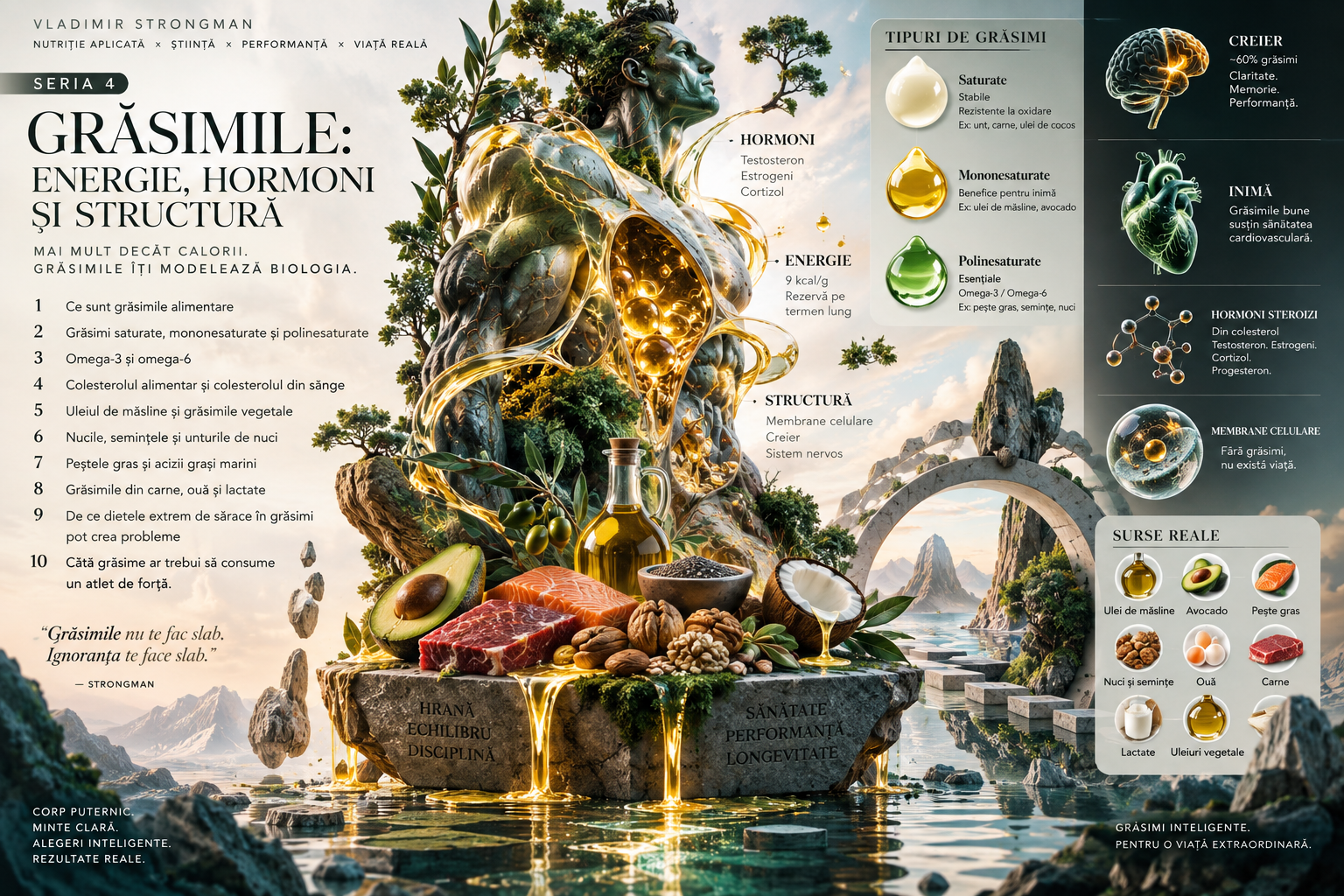
Cholesterol is one of the most misunderstood terms in nutrition. Many people assume that cholesterol in an egg or a piece of meat enters the bloodstream and immediately becomes “bad cholesterol.” In reality, the body regulates cholesterol through a complex system of intestinal absorption, endogenous synthesis, lipoprotein transport and elimination through the liver and bile.
For a strongman, the distinction matters because very high-calorie diets can contain large amounts of dietary cholesterol, saturated fat and total energy at the same time. These factors overlap, but they are not identical. An unfavorable lipid profile cannot be explained only by the number of eggs eaten, and it should not be ignored simply because the athlete trains hard.
This episode follows cholesterol from the plate to the intestine, liver and circulation. We will separate dietary cholesterol from LDL-C and HDL-C, explain ApoB, saturated fat, individual responses to eggs and why laboratory values must be interpreted within the athlete’s total cardiovascular risk.
1. Cholesterol is a molecule, not a food
Cholesterol is a sterol, a lipid molecule with a distinct structure. It is found in animal tissues and foods of animal origin, but it is not the same as total dietary fat. A food can contain relatively little fat and still provide cholesterol, or contain a large amount of fat with very little cholesterol.
2. The body needs cholesterol
Cholesterol is an essential component of cell membranes and a precursor for steroid hormones, bile acids and vitamin D. The medical problem is not the existence of cholesterol in the body, but excessive accumulation of atherogenic lipoproteins in the circulation and prolonged exposure of the arterial wall to these particles.
3. Dietary cholesterol and blood cholesterol are not the same thing
Dietary cholesterol is the cholesterol present in food. Blood cholesterol is the cholesterol transported through the circulation inside lipoproteins. The two are related, but not in a one-to-one fashion because the body adjusts absorption, synthesis and elimination.
4. Cholesterol does not circulate freely in blood
Because cholesterol is hydrophobic, it does not dissolve well in the aqueous environment of plasma. It therefore travels inside particles called lipoproteins. LDL, HDL, VLDL and chylomicron remnants are different vehicles carrying lipids and apolipoproteins between the intestine, liver and tissues.
5. The liver is the control center of cholesterol balance
The liver receives cholesterol from several sources: its own synthesis, chylomicron remnants coming from the intestine, LDL taken up through receptors and cholesterol delivered by HDL. At the same time, it can export cholesterol in lipoproteins, convert it to bile acids or secrete it into bile.
Blood cholesterol is therefore the result of constant metabolic traffic. Food influences that traffic, but the liver, LDL receptors, genetics, body composition, glucose metabolism and the composition of the entire diet determine how crowded the lipoprotein system becomes.
6. The body synthesizes cholesterol on its own
Even if the diet contained very little cholesterol, the body would continue to produce it. Endogenous synthesis occurs in several tissues, with the liver and intestine playing important roles. This internal production explains why removing dietary cholesterol does not make blood cholesterol disappear.
7. HMG-CoA reductase is a key enzyme in cholesterol synthesis
Cholesterol synthesis begins from acetyl-CoA and proceeds through a pathway in which HMG-CoA reductase has a major regulatory role. The same enzyme is targeted by statins. The ability of statins to lower LDL-C by reducing synthesis illustrates how important endogenous production is to cholesterol balance.
8. The dietary contribution varies between people
People differ in how efficiently they absorb cholesterol and how strongly they synthesize it. Some absorb more and compensate less, while others absorb less and produce more. This balance explains part of the variability in LDL-C response to the same dietary cholesterol intake.
9. Cholesterol also enters the intestine through bile
Cholesterol in the intestinal lumen does not come only from food. The liver secretes cholesterol into bile, and this reaches the intestine together with dietary cholesterol. The digestive system therefore handles a mixture of exogenous and endogenous cholesterol every day.
10. Cholesterol absorption is incomplete
Not all cholesterol entering the intestine is absorbed. Some is taken up, while some remains in the lumen and is excreted. The absorbed fraction varies between people and is influenced by genetics, diet composition and intestinal transport mechanisms.
11. NPC1L1 participates in intestinal absorption
The NPC1L1 protein participates in cholesterol uptake by enterocytes. It is clinically relevant because ezetimibe reduces cholesterol absorption by inhibiting this pathway. The mechanism demonstrates that intestinal absorption is regulated rather than a passive transfer of food cholesterol directly into blood.
12. ABCG5 and ABCG8 send some sterols back into the intestine
The ABCG5 and ABCG8 transporters help move sterols from enterocytes back into the intestinal lumen and from hepatocytes into bile. These systems are part of the mechanisms that limit sterol accumulation and maintain cholesterol balance.
13. Absorbed cholesterol leaves the intestine in chylomicrons
After absorption, cholesterol is packaged with triglycerides and other lipids into chylomicrons. These particles travel through lymph and blood, deliver mainly triglycerides to tissues, and their remnants are subsequently taken up by the liver.
14. Chylomicron remnants deliver cholesterol to the liver
After chylomicrons lose much of their triglyceride content, the remaining particles are relatively cholesterol-rich and are cleared by the liver. The liver then integrates absorbed cholesterol into its own regulatory system and determines whether it is stored, reused, exported or eliminated.
15. More dietary cholesterol can reduce endogenous synthesis
One compensatory mechanism is a reduction in endogenous synthesis when intake and absorption rise. Compensation is not perfect in everyone. Dietary cholesterol can therefore raise LDL-C, but the average response is usually much smaller than a direct gram-for-gram relationship would suggest.
16. The LDL receptor controls LDL clearance from blood
LDL receptors on hepatocytes recognize LDL particles and remove them from circulation. Their number and activity strongly influence LDL-C concentration. Mutations that impair LDL receptor function can cause familial hypercholesterolemia and very high LDL-C even without an extreme diet.
17. LDL-C measures cholesterol carried in LDL particles
LDL-C is not a particle or a separate type of cholesterol molecule. It is an estimate or measurement of the amount of cholesterol carried inside LDL particles. It is clinically useful because long-term exposure to atherogenic lipoproteins is causally related to atherosclerosis.
18. ApoB describes the number of atherogenic particles
Every LDL particle contains one ApoB molecule, and ApoB is also present on other atherogenic lipoproteins. ApoB concentration therefore reflects the total number of atherogenic particles more directly than the amount of cholesterol those particles happen to carry.
19. Two people with the same LDL-C can have different ApoB
LDL particles do not all contain the same amount of cholesterol. One person may have many relatively cholesterol-poor particles, while another has fewer cholesterol-rich particles. ApoB can therefore add information, especially in insulin resistance, obesity, diabetes or elevated triglycerides.
20. HDL-C does not simply mean good cholesterol
HDL-C measures cholesterol carried inside HDL particles. Higher levels are often epidemiologically associated with lower risk, but simply raising HDL-C does not guarantee protection. HDL function is complex, and cardiovascular risk cannot be reduced to a battle between one “good” number and one “bad” number.
For an athlete, it is more useful to consider the lipid profile as a whole: LDL-C, non-HDL-C, triglycerides and, when available, ApoB and Lp(a), together with blood pressure, glucose regulation, family history and other risk factors.
21. HDL participates in reverse cholesterol transport
HDL particles participate in collecting cholesterol from tissues and moving it toward the liver. This is called reverse cholesterol transport, but it involves multiple proteins, lipid exchanges and hepatic pathways. HDL-C is only a marker of one part of this system.
22. Dietary cholesterol can raise LDL-C, but the average effect is moderate
Controlled studies show that higher dietary cholesterol can increase total cholesterol and LDL-C, but the average magnitude is usually modest and highly variable. The response depends on baseline intake, the background diet and the individual’s metabolic characteristics.
23. The dose-response relationship is not perfectly linear
As intake rises, feedback mechanisms tend to limit part of the effect. This does not mean very high intake becomes irrelevant, but each additional 100 mg does not produce the same fixed LDL-C increase at every level of consumption.
24. Hyporesponders and hyperresponders exist
In feeding studies, some people show very small changes in blood cholesterol when dietary cholesterol rises, while others respond more strongly. These phenotypes are not absolute labels, but they demonstrate that individual biology matters.
25. Genetics can modify the response
Genes involved in sterol absorption, lipoprotein receptors, hepatic synthesis and ApoE metabolism can contribute to differences between people. The same diet can therefore produce different lipid profiles even in people of similar age and body weight.
26. The background diet changes the effect of dietary cholesterol
An egg eaten within a diet rich in vegetables, fiber, fish and unsaturated fats does not exist in the same metabolic context as the same egg eaten with processed meat, butter, fried foods and chronic calorie excess. Food never exists in a nutritional vacuum.
27. Saturated fat is a separate and often more important factor
Many cholesterol-rich foods also contain saturated fat, so the effects are easily confused. Saturated fat can raise LDL-C through mechanisms involving LDL receptor regulation and hepatic metabolism. A food should therefore be evaluated by its complete lipid profile, not only its cholesterol content.
28. What replaces saturated fat matters
Reducing saturated fat is more useful when energy is replaced by polyunsaturated fats, monounsaturated fats or high-quality carbohydrate sources. Replacing it with refined sugar and ultra-processed foods is not automatically a cardiometabolic improvement.
29. Eggs are the best-known source of dietary cholesterol
A large egg contains roughly 180-200 mg of cholesterol, almost entirely in the yolk. Eggs also provide protein, choline, vitamins and carotenoids. Their effect on the lipid profile should be separated from the idea that they are either a perfect food or a forbidden food.
30. The response to eggs varies between individuals
Some people can eat eggs regularly with only small changes in LDL-C, while others show more obvious increases. For someone consuming many eggs, the most useful strategy is to monitor the lipid profile over time rather than assume their response will match the average in a study.
31. Eggs eaten with bacon and butter are a different nutritional problem
In observational studies, egg intake can cluster with other dietary habits that influence risk. If eggs are routinely eaten with processed meat, butter, fried foods and little fiber, separating the independent effect of dietary cholesterol from the overall dietary pattern becomes difficult.
32. Shellfish can contain cholesterol without much saturated fat
Shrimp and other shellfish can contain relatively high dietary cholesterol while remaining low in saturated fat. This is a useful example of why dietary cholesterol and saturated fat need to be analyzed separately even though they are often grouped together in popular discussions.
33. Organ meats are particularly rich in cholesterol
Liver, brain and other organ meats can contain large amounts of cholesterol. They also provide valuable micronutrients, but frequent large portions can raise total dietary cholesterol substantially, especially in a diet already rich in animal products.
34. Meat and dairy provide different combinations of cholesterol and fat
Lean meat, fatty meat, cheese, yogurt and butter are not metabolically equivalent. Their saturated fat content, calorie density, protein, sodium and food matrix differ. The label “cholesterol-containing food” therefore provides too little information on its own.
35. Chronic calorie excess changes the lipid context
A persistent energy intake above needs can promote fat gain, higher triglycerides and increased hepatic production of triglyceride-rich lipoproteins. In this setting, the effects of dietary cholesterol overlap with a metabolic system that is already under greater load.
For a strongman, a calorie surplus may be intentional, but there is a meaningful difference between a controlled surplus and a permanently massive one. Short-term performance does not erase the cardiometabolic consequences of a diet that consistently pushes body weight, blood pressure and lipids in an unfavorable direction.
36. Insulin resistance can create a more atherogenic profile
Insulin resistance is commonly associated with higher triglycerides, lower HDL-C and a greater number of ApoB-containing particles. In this context, LDL-C alone can sometimes underestimate atherogenic particle burden, making ApoB or non-HDL-C especially useful.
37. Triglycerides and VLDL are part of the same story
The liver exports triglycerides in VLDL. As these particles lose triglycerides, they can generate remnant particles and LDL. A very high-calorie diet, insulin resistance and elevated triglycerides can therefore reshape the whole lipoprotein system rather than just one laboratory number.
38. Visceral fat has metabolic relevance
Visceral adipose tissue is associated with insulin resistance, metabolic inflammation and altered hepatic lipoprotein production. Two people with the same body weight can have very different metabolic risk depending on fat distribution, fitness and overall metabolic health.
39. Training does not provide immunity from high LDL
Physical activity clearly benefits cardiovascular health, but it does not neutralize prolonged exposure to atherogenic particles. An athlete can be strong, active and high-performing while still having elevated LDL-C or ApoB and accumulating long-term risk.
40. High body mass makes monitoring more important in strongman
Strongman often involves high body mass, high calorie intake and long periods of positive energy balance. These characteristics do not automatically mean disease, but they justify closer attention to blood pressure, blood lipids, glucose regulation and other cardiovascular risk factors.
41. The standard lipid panel is the starting point
A standard lipid panel usually includes total cholesterol, LDL-C, HDL-C and triglycerides. These values provide a basic view of lipoprotein metabolism and can be followed over time to observe the effects of diet, body weight, training and treatment.
42. Total cholesterol is useful but too broad on its own
Total cholesterol combines cholesterol carried in several lipoprotein classes. Two people with the same total value can have very different distributions among LDL, HDL and other particles. Total cholesterol should therefore not be interpreted in isolation.
43. LDL-C remains a central risk marker
LDL-C is widely used for cardiovascular risk assessment and treatment, and genetic and clinical evidence supports the causal role of ApoB-containing lipoproteins in atherosclerosis. The greater and longer the exposure, the greater the cumulative risk.
44. HDL-C is information, not a risk permit
A high HDL-C does not automatically cancel out a high LDL-C or ApoB. Risk is not calculated by imaginatively subtracting one number from another. The lipid profile has to be interpreted alongside clinical factors and the total burden of atherogenic particles.
45. Triglycerides provide important metabolic information
Elevated triglycerides can signal increased hepatic VLDL flux, energy excess, alcohol intake, insulin resistance or other factors. They are not cholesterol, but they belong to the same lipoprotein system and influence how cardiovascular risk is interpreted.
46. Non-HDL-C captures cholesterol in atherogenic particles
Non-HDL-C is calculated by subtracting HDL-C from total cholesterol. It includes cholesterol in LDL, VLDL, IDL and other atherogenic particles. It is simple and useful, particularly when triglycerides are elevated.
47. ApoB can clarify discordant situations
When LDL-C appears acceptable but triglycerides, abdominal adiposity or insulin resistance raise concern, ApoB can show whether atherogenic particle number is still high. This is one reason modern lipid guidance increasingly emphasizes ApoB in selected patients.
48. Lp(a) is largely genetically determined
Lipoprotein(a), or Lp(a), is an atherogenic particle strongly influenced by genetics and only modestly affected by diet. A high Lp(a) cannot be explained by dietary cholesterol and clearly illustrates the limits of a purely nutritional explanation of lipid risk.
49. Lipid panels can often be measured without fasting
For routine assessment, many guidelines accept non-fasting lipid profiles. Fasting can still be useful in specific situations, especially when triglycerides are very high or when standardized conditions are desired. The key is to compare results obtained under reasonably similar conditions.
50. One test does not always define your lipid profile
Lipid values can vary with acute illness, body-weight changes, diet, alcohol, medication and sampling conditions. When a result is unexpected or would change an important decision, repeat measurement may be appropriate.
For an athlete testing a dietary change, comparison is more useful when body weight, calorie intake and training phase are relatively stable. Otherwise, an LDL-C change may be incorrectly attributed to a single food.
51. LDL targets depend on total cardiovascular risk
There is no single target value suitable for everyone. Guidelines use different risk categories based on age, existing cardiovascular disease, diabetes, kidney disease, blood pressure, smoking, family history and other factors. The higher the risk, the more stringent the targets generally become.
52. Modern guidance does not reduce everything to one universal dietary cholesterol cap
Contemporary recommendations emphasize dietary pattern, saturated fat and overall cardiovascular risk more than a single rigid milligram limit for every healthy adult. This does not make very high dietary cholesterol irrelevant; it means intake has to be interpreted in context.
53. Removing a universal cap does not mean unlimited cholesterol
A common distortion is to assume that if there is no single population-wide cap, dietary cholesterol no longer matters. People with elevated LDL-C, familial hypercholesterolemia, diabetes or high cardiovascular risk have stronger reasons to be cautious with concentrated sources of cholesterol and saturated fat.
54. Dietary pattern matters more than demonizing one food
A pattern rich in vegetables, fruit, legumes, whole grains, fish, nuts and unsaturated oils can support cardiovascular health while still containing some cholesterol-rich foods. Conversely, removing eggs does not repair a diet dominated by ultra-processed foods and chronic calorie excess.
55. Soluble fiber can help lower LDL-C
Soluble fiber from oats, barley, legumes, fruit and other sources can modestly lower LDL-C by influencing intestinal handling of bile acids and cholesterol. For athletes it also supports satiety, the gut microbiome and glucose control.
56. Plant sterols reduce cholesterol absorption
Plant sterols compete with cholesterol for incorporation into intestinal micelles and can reduce cholesterol absorption. They can lower LDL-C when consumed in effective amounts, but they do not replace a sound diet or medically indicated treatment.
57. Weight loss can improve the metabolic profile
In people with excess adiposity and insulin resistance, weight reduction can improve triglycerides, glucose regulation and sometimes the lipoprotein profile. For a strongman the goal is not automatically weight loss, but finding a body mass that supports performance without driving metabolic risk into an unfavorable range.
58. Diet and medication act through different pathways
Statins reduce hepatic synthesis and increase LDL receptor activity, ezetimibe reduces intestinal absorption, and other drug classes act through different mechanisms. The fact that treatments target multiple pathways illustrates the complexity of cholesterol homeostasis and why diet alone is sometimes insufficient.
59. Very high LDL-C deserves medical evaluation
Very high LDL-C, especially when persistent or present at a young age together with a family history of premature heart disease, can suggest a genetic disorder such as familial hypercholesterolemia. In that setting, the issue goes far beyond the number of eggs in the diet.
Abnormal values deserve the same seriousness in athletes as in everyone else. Performance, muscle mass and exercise capacity are not screening tests for atherosclerosis and do not eliminate the need for medical evaluation when lipid markers are clearly abnormal.
60. Conclusion: cholesterol on the plate influences blood cholesterol, but does not dictate it alone
Dietary cholesterol is only one input into a system regulated by absorption, synthesis, receptors and elimination. It can alter LDL-C, but the effect varies and is strongly shaped by saturated fat, genetics, energy balance and metabolic health. For strongman, the mature strategy is to combine an energy-dense diet with high-quality fat sources and periodic monitoring of the lipid profile.
Sources and recommended reading
1. Carson JAS et al. Dietary Cholesterol and Cardiovascular Risk: A Science Advisory From the American Heart Association. Circulation, 2020.
2. Berger S, Raman G, Vishwanathan R, Jacques PF, Johnson EJ. Dietary cholesterol and cardiovascular disease: a systematic review and meta-analysis. American Journal of Clinical Nutrition, 2015.
3. Lütjohann D et al. From Dietary Cholesterol to Blood Cholesterol, Physiological Lipid Fluxes, and Cholesterol Homeostasis. Nutrients, 2022.
4. Cohen DE. Balancing Cholesterol Synthesis and Absorption in the Gastrointestinal Tract. Journal of Clinical Lipidology, 2008.
5. Ference BA et al. Low-density lipoproteins cause atherosclerotic cardiovascular disease. European Heart Journal, 2017.
6. Sniderman AD, Langlois M, Cobbaert C. Update on apolipoprotein B. Current Opinion in Lipidology, 2021.
7. Glavinovic T et al. Physiological Bases for the Superiority of Apolipoprotein B Over LDL Cholesterol and Non-HDL Cholesterol as a Marker of Cardiovascular Risk. Journal of the American Heart Association, 2022.
8. Herron KL et al. Men classified as hypo- or hyperresponders to dietary cholesterol feeding exhibit differences in lipoprotein metabolism. Journal of Nutrition, 2003.
9. European Society of Cardiology / European Atherosclerosis Society. 2025 Focused Update of the 2019 ESC/EAS Guidelines for the management of dyslipidaemias.
10. Miettinen TA, Kesäniemi YA. Cholesterol absorption: regulation of cholesterol synthesis and elimination and within-population variations of serum cholesterol levels. American Journal of Clinical Nutrition, 1989.
Editorial note: this article is educational and does not replace medical assessment. People with elevated LDL-C, familial hypercholesterolemia, diabetes, cardiovascular disease, kidney disease or other major risk factors should individualize nutrition and treatment with a qualified healthcare professional.
More From The Journal

Training
The Science of Strongman Training - Episode X: Competition Programming
How to build a complete Strongman competition preparation block: calendar, events, volume, intensity, specificity, simulations, autoregulation, tapering and fatigue management.

Training
The Science of Strongman Training - Episode IX: Peaking
Peaking in Strongman: how to turn months of training into maximal competition performance by reducing fatigue, preserving adaptations and managing specificity.