
Physiology
GH, IGF-1 and Growth Factors - Episode 7: GH and Fat Metabolism
September 7, 2026
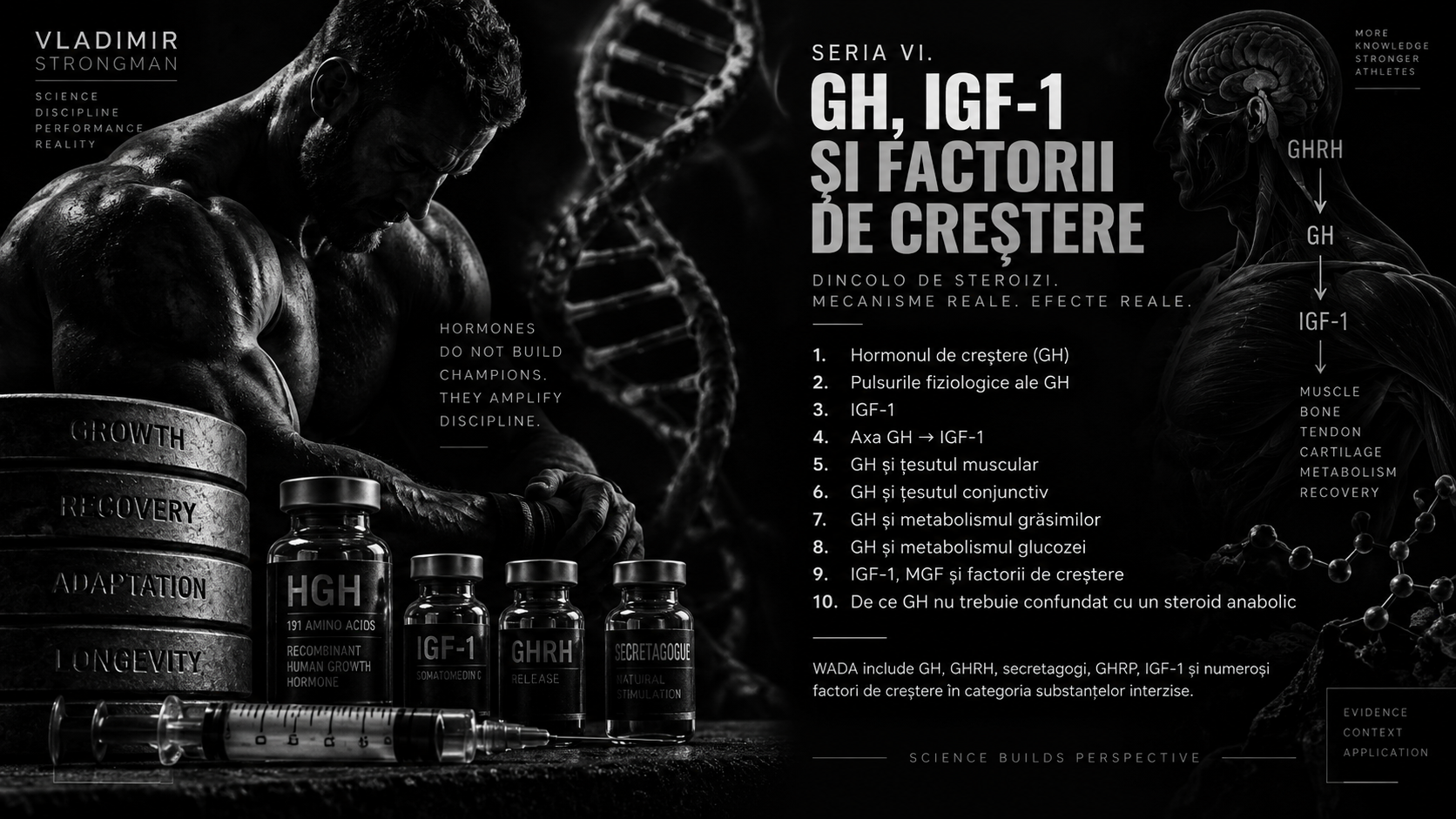
1. GH influences fat metabolism, but it is not simply a “fat burner”
Growth hormone changes how the body mobilizes and uses lipids. Its central metabolic effect is to increase fatty-acid availability, particularly by promoting lipolysis in adipose tissue. However, changing fat flux does not automatically mean net loss of body fat: energy balance, food intake, insulin, physical activity, and the duration of hormonal exposure determine the final outcome.
2. First step: mobilizing stored triglycerides from the adipocyte
Triglycerides stored in adipocytes can be hydrolyzed into glycerol and fatty acids. GH favors this mobilization, increasing the flow of non-esterified fatty acids into the circulation. Metabolically, this changes the fuel available to oxidative tissues.
3. Lipolysis is easier to understand as fuel mobilization
A higher concentration of circulating fatty acids indicates that fat has been mobilized, not that it has already been permanently “burned.” For net fat loss, fatty acids must be oxidized to a greater extent than they are re-esterified and stored again. Mobilization and oxidation are therefore distinct steps.
4. GH can increase fatty-acid use as an energy substrate
By increasing fatty-acid availability and shifting substrate selection, GH can favor lipid use under certain metabolic conditions. The effect depends on the energy and hormonal context and should not be interpreted as a complete switch from carbohydrate to fat metabolism.
5. Insulin and GH can push metabolism in different directions
Insulin generally suppresses lipolysis and promotes nutrient storage, while GH can support fatty-acid mobilization and reduce glucose use in some tissues. This metabolic opposition is part of how the body redistributes fuels between the fed state and periods of fasting or greater energy demand.
6. Why GH raises circulating free fatty acids
Adipose tissue responds to hormonal signals by changing the balance between lipolysis and re-esterification. When lipolysis predominates, more fatty acids leave the adipocyte and become available for oxidation in liver, muscle, and other tissues. The glycerol released can also enter hepatic metabolism.
7. GH can promote glucose sparing in some settings
An important metabolic consequence of GH is reduced glucose utilization in some tissues together with greater fatty-acid availability. This can help conserve glucose when the body needs to preserve that substrate for glucose-dependent tissues.
8. This is why GH is linked to insulin-resistance physiology
Higher fatty-acid flux and GH’s anti-insulin actions can reduce insulin sensitivity under certain conditions. This is a physiological adaptation that can be useful during fasting, but it can become unfavorable when the signal is excessive or persistent.
9. Fasting is a natural setting for these effects
During fasting, GH secretion may rise while the body relies more heavily on fatty acids as an energy source. GH is part of a broader system involving insulin, catecholamines, glucagon, and cortisol rather than acting in isolation.
10. Sleep, exercise, and energy intake change the GH context
Physiological GH pulses occur in contexts such as deep sleep and after certain forms of exercise. The metabolic response associated with a pulse is influenced by energy status, insulin and glucose concentrations, and the type of physical activity.
11. Visceral fat is not identical to subcutaneous fat
Visceral adipose tissue has distinct metabolic properties and is closely linked to insulin sensitivity and cardiometabolic risk. The relationship between GH and fat distribution helps explain why the somatotropic axis matters for body composition, but changing one hormonal component alone does not control adipocyte distribution.
12. GH deficiency can change body composition
GH deficiency is associated in clinical settings with increased fat mass, including visceral fat, and with altered lipid metabolism. These observations show that GH has a genuine role in energy homeostasis, not merely in growth.
13. But GH cannot override energy balance
Greater fatty-acid mobilization cannot erase a chronic energy surplus. The body can mobilize fat and simultaneously re-esterify it. Net loss of fat mass depends on the balance among intake, storage, and oxidation over time.
14. Circulating fatty acids can also have unfavorable metabolic effects
When fatty-acid flux remains chronically elevated, excess lipid exposure and lipid intermediates can impair insulin signaling and metabolic homeostasis. Therefore, “more lipolysis” should not automatically be equated with a better metabolic profile.
15. GH can change the balance between carbohydrate and lipid use
Energy metabolism is flexible. Depending on diet, exercise, glycogen availability, and hormonal state, the body can change the proportion of carbohydrate and fat being used. GH is one component that can push the system toward greater fatty-acid availability.
16. Why visible changes in body composition cannot be explained by GH alone
Changes in body weight and composition include water, glycogen, muscle mass, fat mass, and gastrointestinal contents. GH influences some of these compartments indirectly through the IGF-1 axis and metabolism, but there is no simple one-to-one relationship between a hormonal signal and a visible body-composition change.
17. Muscle can use fatty acids, but context matters
Muscle can oxidize fatty acids, but its preference for carbohydrate or lipid varies with exercise intensity, glycogen availability, training status, and metabolic state. GH’s effect on lipid availability does not mean muscle will proportionally use more fat in every situation.
18. What happens to fat metabolism when GH is reduced
With GH deficiency, lipolysis may be reduced and accumulation of adipose tissue may be favored, particularly centrally. The links with circulating lipids, insulin sensitivity, and body composition show that GH is part of an integrated metabolic circuit.
19. In strength sports, lipid metabolism can affect recovery and body composition
The strength athlete needs not only muscular force but also an energy system capable of supporting large workloads and recovery. GH influences substrate availability, but performance and body composition remain dependent on diet, training, sleep, and the broader endocrine environment.
20. The most important distinction: mobilization is not the same as net fat loss
This is the key to the entire topic. GH can increase fatty-acid mobilization and alter lipid oxidation, but the final effect on fat mass depends on long-term metabolic balance. Biology does not count only what leaves the adipocyte; it also counts what is oxidized and what is stored again.
21. The key idea of Episode 7
GH is an important regulator of energy and lipid metabolism. It promotes lipolysis, increases fatty-acid availability, and can shift substrate use while exerting anti-insulin effects in certain contexts. These actions help explain the relationship between GH, visceral fat, and body composition, but they do not turn GH into a substitute for energy balance or for the adaptations produced by diet and exercise.
Editorial and safety note
This article presents GH physiology and lipid metabolism for educational purposes. It does not provide doses, protocols, or instructions for using GH or other hormones for doping or body-composition manipulation.
More From The Journal

Training
The Science of Strongman Training - Episode X: Competition Programming
How to build a complete Strongman competition preparation block: calendar, events, volume, intensity, specificity, simulations, autoregulation, tapering and fatigue management.

Training
The Science of Strongman Training - Episode IX: Peaking
Peaking in Strongman: how to turn months of training into maximal competition performance by reducing fatigue, preserving adaptations and managing specificity.