
Physiology
GH, IGF-1 and Growth Factors - Episode 2: The Physiological Pulses of GH
September 7, 2026
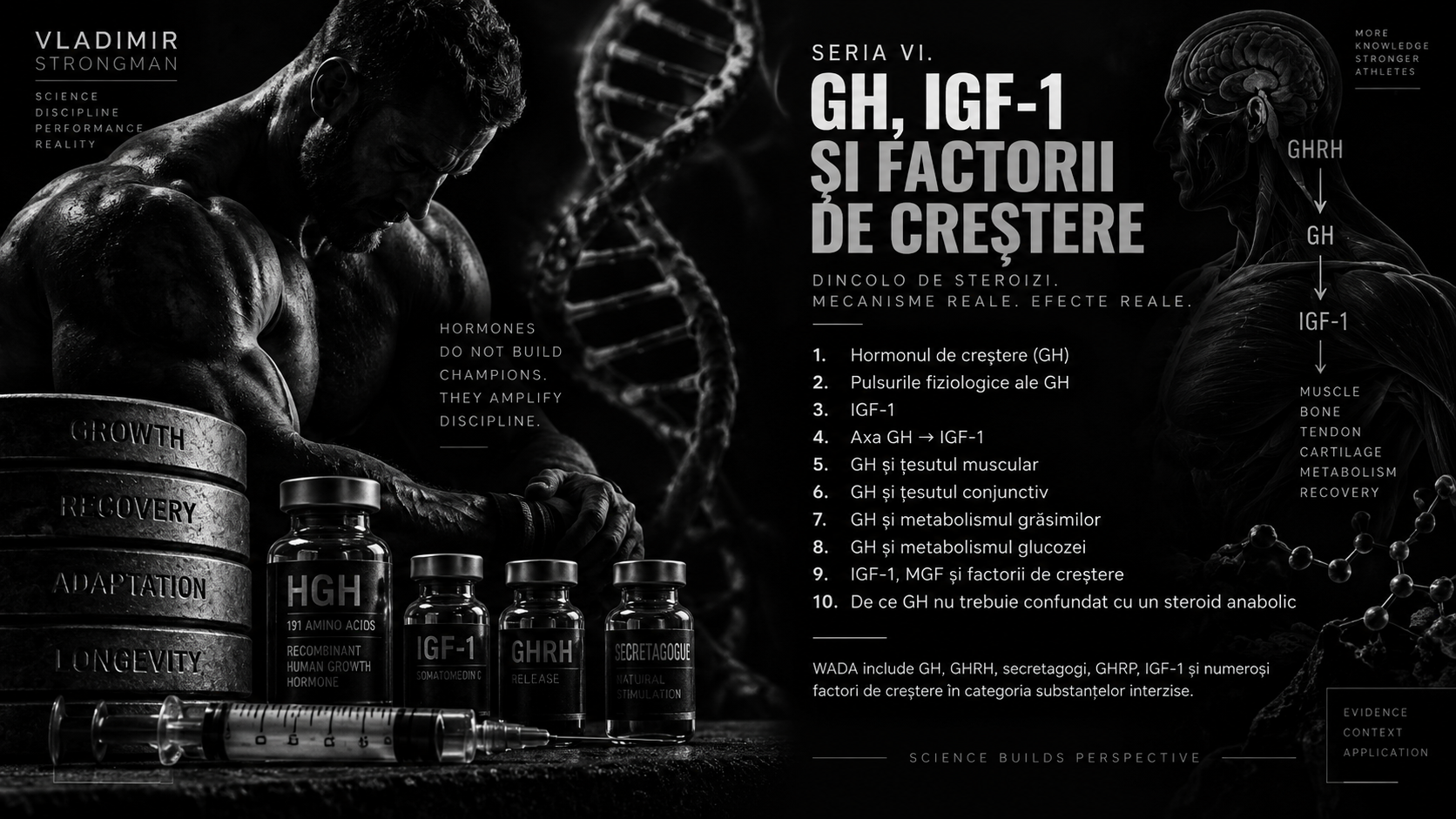
1. GH does not flow constantly through the blood
Growth hormone is secreted episodically. Circulating levels rise rapidly during discrete secretory bursts and then fall toward much lower concentrations between bursts. This pulsatile pattern is one of the defining features of GH physiology and explains why a single blood test can provide an incomplete picture of GH-axis activity.
2. What exactly is a GH pulse?
A pulse is a discrete secretory event during which the pituitary releases GH into the circulation over a limited interval. With frequent sampling and deconvolution analysis, researchers can estimate the number, amplitude, duration, and secretory mass of these events. Adult physiology includes multiple episodes across 24 hours, but exact values vary substantially between individuals and with the analytical method used.
3. Between pulses, secretion does not necessarily fall to zero
When GH appears undetectable between two peaks, that does not necessarily mean secretion has stopped completely. Modern measurement methods have demonstrated basal secretion during the valleys, whereas older assays could make these concentrations appear undetectable. Physiologically, the GH axis is better described as an oscillating signal over a variable background than as a rigid sequence of on and off states.
4. Where does the rhythm come from: GHRH versus somatostatin
The hypothalamus controls somatotrophs through a dynamic dialogue. GHRH stimulates GH secretion, whereas somatostatin inhibits it. Pulses emerge from the timing interaction between these influences rather than from a single signal. The relationship is complex, and somatostatin activity can shape both peak amplitude and the levels between pulses.
5. GH also participates in the feedback loop
As the GH signal rises, feedback mechanisms limit the response. IGF-1 contributes to negative feedback at the pituitary and hypothalamic levels, while GH itself participates in autoregulation of the axis. The system is therefore not designed to maintain a continuously maximal stimulus, but to oscillate within physiological boundaries.
6. The most striking pulse is linked to sleep
In adults, the most reproducible GH peak occurs near sleep onset, in association with the first major episode of slow-wave, deep NREM sleep. A large proportion of nocturnal GH secretion is linked to this sleep architecture, and disrupted sleep can modify the GH response.
7. It is not accurate to reduce GH to “10 PM”
The nocturnal pulse is not simply scheduled by the clock. It is linked to sleep onset and sleep architecture, especially slow-wave sleep. Therefore, two people who go to bed at the same clock time can have different GH profiles if their sleep architecture differs. Circadian timing matters, but sleep context matters just as much.
8. Exercise can trigger additional pulses
Exercise is one of the strongest physiological stimuli for GH secretion. The response depends on intensity, duration, the amount of muscle mass involved, and the metabolic context. However, an acute exercise-induced GH pulse should not automatically be interpreted as a sustained increase in GH signaling or as a guaranteed increase in muscle mass.
9. Why does pulse amplitude matter?
Two people can have a similar pulse frequency but different biological exposure because pulse amplitude and secretory mass can differ. An important part of the age-related decline in GH secretion is explained by reduced pulse amplitude rather than complete disappearance of pulsatility.
10. Pulse frequency is another variable
Frequency describes how often secretory episodes occur. It is not the same as amplitude. Across life stages and physiological or pathological states, these two dimensions can change to different degrees. That is why the phrase “high GH” is too imprecise: we need to ask how often, how strongly, for how long, and at what time pulses occur.
11. Puberty dramatically changes the GH profile
During puberty, GH secretion increases and the diurnal pattern matures. This stage is important for longitudinal growth and for normal developmental changes in body composition. After puberty, secretion remains pulsatile, but pulse amplitude and distribution change across the lifespan.
12. Aging mainly reduces pulse amplitude
With aging, integrated 24-hour GH secretion declines. Physiological data indicate that this decline is largely associated with reduced pulse amplitude, while the frequency of episodes changes less. This is one component of what is sometimes called the “somatopause.”
13. Biological sex changes the secretion pattern
The pulsatile GH profile differs between sexes. In men, secretion can be more strongly pulsatile, with larger bursts separated by periods of low concentration. In women, integrated 24-hour exposure can be higher, and nocturnal secretion represents a different fraction of total production. These differences are also influenced by sex steroids.
14. Body composition can alter the pulse
Obesity is associated with changes in pulsatile GH secretion and hormone clearance. This is an important example of metabolic-endocrine feedback: metabolic state is not merely an outcome of GH action, but can also influence how GH is secreted and cleared.
15. Fasting and energy deficit change the story
Fasting and some forms of metabolic stress can increase GH secretion. This does not automatically mean the body is in a globally anabolic state. GH also promotes fatty-acid mobilization and helps regulate substrate use, so a GH pulse can occur in a metabolic context that is not primarily directed toward building muscle.
16. The GH pulse and the IGF-1 signal are not twins
GH changes rapidly in pulses, whereas circulating IGF-1 is much more stable. Therefore, minute-to-minute GH oscillations do not map perfectly onto serum IGF-1 concentration. The axis operates on different time scales: GH is the dynamic signal, while IGF-1 is one of the more integrated responses of the system.
17. Why a random GH test can be misleading
Because GH is pulsatile, a sample collected during a valley may be very low, while a sample taken near a peak may be much higher. Both can occur in the same healthy person. For this reason, suspected GH deficiency is not usually diagnosed from a single random GH value, but from the clinical context and, when indicated, dynamic stimulation testing.
18. GH pulses matter for understanding sports physiology
In sport, a large GH spike after training may sound impressive, but it does not by itself tell us how large the long-term muscular adaptation will be. An endocrine signal must be interpreted alongside its duration, tissue responses, IGF-1, nutrition, sleep, and training design. A hormonal peak is an event; adaptation is a process.
19. What happens when sleep is fragmented?
Reducing or fragmenting slow-wave sleep can reduce the nocturnal GH response. Sleep-deprivation research shows a close relationship between sleep architecture and GH secretion. It is not only about how many hours someone spent in bed, but also how intact the physiological structure of sleep was.
20. GH pulses have a biological logic
Pulsatility is not a control-system defect. It is part of the system. Discrete signals allow tissues to respond according to amplitude, duration, and context, while negative feedback prevents continuous exposure to a high hormonal stimulus. In physiology, the shape of the signal matters, not only its average concentration.
21. The key idea of Episode 2
GH is a pulsatile hormone. Its rhythm is built through the interaction of the hypothalamus, GHRH, somatostatin, GH, and IGF-1 and is modified by sleep, exercise, age, puberty, sex, and metabolic state. The central lesson is that GH physiology cannot be reduced to a single blood value or a single “spike.” To understand GH, we must follow the signal over time: amplitude, frequency, duration, timing, and context.
Editorial and safety note
This article explains the physiology of pulsatile GH secretion for educational purposes. It does not provide doses, protocols, cycles, or instructions for GH use as doping or performance enhancement.
More From The Journal

Training
The Science of Strongman Training - Episode X: Competition Programming
How to build a complete Strongman competition preparation block: calendar, events, volume, intensity, specificity, simulations, autoregulation, tapering and fatigue management.

Training
The Science of Strongman Training - Episode IX: Peaking
Peaking in Strongman: how to turn months of training into maximal competition performance by reducing fatigue, preserving adaptations and managing specificity.