
Physiology
Strongman Physiology - Episode 4: The Autonomic Nervous System: Sympathetic, Parasympathetic and Recovery
September 4, 2026
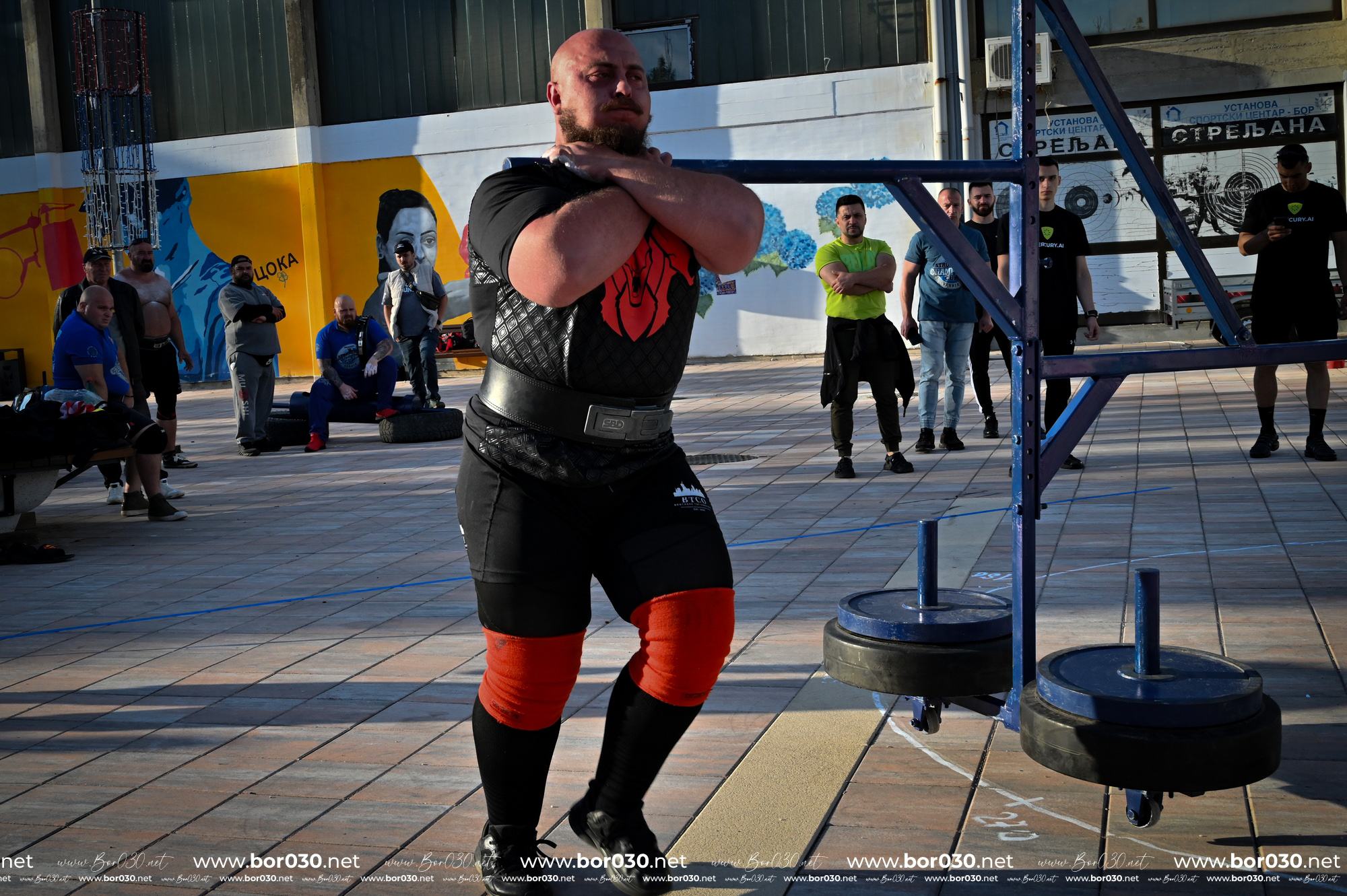
The first three episodes covered the cardiovascular system, the heart under load, and then breathing, bracing, intra-abdominal pressure and the Valsalva maneuver. Now we move into another control center of Strongman physiology: the autonomic nervous system.
The autonomic nervous system does not decide how much you can lift in a single attempt, but it strongly influences how the body responds to stress, how quickly it returns after effort and how well performance can be repeated. Behind heart rate, breathing, vascular tone, digestion and a large part of the recovery process sits a continuous network of autonomic regulation.
1. What is the autonomic nervous system?
The autonomic nervous system, or ANS, regulates functions that are largely adjusted without direct voluntary control: heart rate, vascular tone, sweating, digestion, pupil diameter and many metabolic processes. It works continuously to maintain homeostasis, but it also allows the body to move rapidly from rest to effort and then back toward recovery.
In sport, the autonomic system can be viewed as part of the infrastructure that manages the internal cost of exercise. There is no simple rule such as 'sympathetic is bad and parasympathetic is good'. Both are necessary, and performance depends on how flexibly the body moves from one state to another.
2. The sympathetic system: physiological acceleration
Sympathetic activation is associated with mobilizing the body for action. During intense exercise, it contributes to increases in heart rate and contractility, redistribution of blood flow and mobilization of energy resources. Adrenaline and noradrenaline are part of this response, together with direct neural signaling.
Before a near-maximal deadlift, autonomic activation may begin before the bar moves. Concentration, anticipation and competitive arousal can all increase activation. For Strongman, this matters because competition begins before the implement leaves the floor, sometimes seconds or minutes earlier.
3. The parasympathetic system: the brake that enables recovery
The parasympathetic component is especially associated with reducing cardiac activation and bringing the organism back toward a resting state. The vagus nerve has a major role in cardiac control. After exercise, parasympathetic reactivation is one of the main contributors to the fall in heart rate.
This does not mean that the parasympathetic system is simply a brake. It is more accurate to see it as part of the regulation that allows the body to switch off the alarm response when the stimulus has passed. The more efficiently this transition matches the context, the faster autonomic recovery can be.
4. Sympathetic and parasympathetic activity do not work in isolation
The simple image of a fight between two systems is useful at first, but incomplete for an advanced athlete. Autonomic control is a dynamic network influenced by the brain, baroreflex, breathing, CO2, temperature, blood volume, psychological stress and metabolism.
In competition, the same athlete may move from very high activation before an event to rapid recovery between events, and then return to a strong sympathetic state again. Good performance does not mean the absence of autonomic stress. It means being able to regulate it.
5. What happens to heart rate during effort?
During exercise, heart rate increases to support the cardiac output required. Autonomic mechanisms also contribute to changes in contractility and blood-flow distribution. In very heavy resistance exercise, heart rate should be interpreted together with contraction intensity, arterial pressure and the duration of respiratory bracing.
This is why heart rate alone does not perfectly describe Strongman stress. A maximal deadlift lasting a few seconds can produce an extreme cardiovascular response without necessarily reaching the same heart rate seen during a longer medley.
6. Heart-rate recovery: how quickly do you return?
Heart-rate recovery, or HRR, describes the decline in heart rate after exercise stops. Recovery is influenced by parasympathetic reactivation and withdrawal of sympathetic activity. In sports research, HRR is studied as an indicator of autonomic response and training status.
However, HRR should not be treated as an absolute score. It is affected by exercise intensity and duration, body position, temperature, hydration and measurement method. Useful comparisons are made under standardized conditions.
7. HRV: heart-rate variability
Heart-rate variability, or HRV, describes the variation between successive heartbeats. It does not mean that the heart is 'beating irregularly' in a pathological sense. In a healthy system, the interval between beats varies continuously, and that variation is influenced by breathing and autonomic regulation.
RMSSD is one of the measures frequently used as a practical marker of vagal modulation at rest. Recent work considers it useful for monitoring autonomic dynamics, but interpretation should be based on an athlete's own baseline and standardized measurement conditions rather than crude comparisons between people.
8. What happens to HRV after resistance training?
After a resistance-training session, HRV may temporarily decline, while autonomic markers can reflect reduced parasympathetic modulation and increased sympathetic activation. A meta-analysis including 26 studies found, on average, withdrawal of cardiac parasympathetic modulation and increased sympathetic modulation following acute resistance exercise.
The effect is dose dependent. Intensity, volume, number of sets and rest periods influence the response. After an extremely demanding session, autonomic disruption may be larger and recovery may take longer.
9. Strongman and autonomic stress: why is it special?
Strongman combines maximal-strength tasks, carries, loading, relative isometric work and events where effort density can be very high. This combination demands rapid alternation between activation and recovery.
The psychological component can also be substantial. Heavy implements, crowds, opponents, waiting for the start and competitive stakes can amplify sympathetic activation before the event. Physiologically, this means the same external workload can feel different to the same athlete on different days.
10. Why recovery between events matters so much
A Strongman does not compete in a single lift. After every event, the athlete must recover enough to produce force again and regain control of breathing. If recovery is incomplete, the next event begins with physiological cost already accumulated.
That is why the ability to lower heart rate and restore respiratory control during a short break can have practical value. It does not mean forcing the heart rate down through a ritual. It means allowing the body to move efficiently from alarm toward recovery.
11. Breathing and the autonomic system
Breathing and autonomic control are closely linked. Respiratory rate changes heart rhythm through respiratory sinus arrhythmia, and slow breathing can increase certain components of vagal modulation. After hard exercise, restoration of breathing is therefore part of autonomic recovery.
This connects directly with the previous episode: after the Valsalva maneuver and maximal effort, the body does not only need oxygen. It must also restore a more normal coordination between breathing, circulation and neural control.
12. The baroreflex: regulating arterial pressure
The baroreflex is one of the rapid mechanisms the body uses to regulate arterial pressure. Stretch-sensitive receptors in arterial walls send signals to the central nervous system, which adjusts autonomic activity and cardiovascular responses.
In Strongman, where arterial pressure can change very rapidly during heavy effort and immediately afterward, this system is especially relevant. It does not eliminate fluctuations. It helps the body manage them.
13. Why can you be strong and still feel 'systemically exhausted'?
Muscle strength and autonomic state are not the same thing. You can retain a high capacity to produce force while recovering poorly from a very dense training block. Insufficient sleep, psychological stress, low energy intake and illness can all alter autonomic responses independently of muscular progress.
That is why an athlete may say, 'the weights do not feel impossible, but I feel completely drained'. This is not a perfect measurement of autonomic state, but fatigue can reflect a wider combination of physiological costs.
14. HRV is not an overtraining detector
It is tempting to see a lower HRV value and immediately conclude that an athlete is overtrained. Reality is more complicated. HRV is sensitive to sleep, stress, alcohol, illness, temperature, time of day, posture, breathing and the previous day's training.
Recent athlete-monitoring literature emphasizes standardized measurements and longitudinal interpretation. One bad morning is far less informative than a repeated pattern associated with performance, symptoms and training load.
15. How can HRV be used in practice?
The most useful approach is to treat HRV as contextual information, not a judge. Measurements taken under similar conditions, ideally at the same time and in the same position, can reveal trends in an athlete's own autonomic reactivity.
For example, if HRV stays well below an individual's baseline for several days, resting heart rate is elevated, sleep is poor and warm-up performance is declining, the combined picture may support the idea that recovery is inadequate. Training decisions should not be based on HRV alone.
16. What does autonomic recovery after a hard session mean?
Autonomic recovery begins immediately when exercise stops. Heart rate starts to fall, sympathetic activity gradually withdraws and parasympathetic influence increases. The speed of this transition is affected by exercise dose and by the athlete's overall state.
Some physical recovery techniques can accelerate parasympathetic reactivation in certain contexts. A 2023 systematic review and meta-analysis found a small-to-moderate effect of physical recovery techniques on RMSSD, but results varied by technique and exercise type. This does not mean every recovery method is mandatory or universally effective.
17. Sleep and the autonomic nervous system
Sleep is one of the most important periods of systemic recovery. For a Strongman, a poor night does more than reduce the feeling of energy. It can alter autonomic control, perceived exertion and decision quality.
That is why recovery assessment should start with the major factors: sufficient and regular sleep, adequate nutrition, hydration, sensible training load and alternation of stress. Devices can measure, but they cannot replace these foundations.
18. Psychological stress and Strongman
The autonomic system does not neatly distinguish between every form of stress. A body dealing with psychological pressure, sleep restriction and hard training may carry a larger total load than the training plan alone suggests.
In competition, adrenaline can be useful for mobilization. In daily life, the same persistent activation without sufficient recovery can become costly. Elite performance requires the ability to be highly activated when needed and to exit that state when it is no longer useful.
19. The sympathetic system is not the enemy of performance
It would be a mistake to try to keep sympathetic activation permanently low. Before a maximal event you need mobilization. Higher heart rate, alertness and energy availability are part of the normal response to effort.
The problem appears when the system can no longer switch efficiently between activation and recovery. A good athlete needs acceleration for the event and a functional brake afterward.
20. Why the break between events is part of the strategy
The time between events is not dead time. It is a window in which the body is trying to restore cardiovascular and autonomic balance before the next demand. Position, breathing and behavior during this period can affect how prepared the athlete feels for the next start.
In a medley, one important point is not to spend more mental energy than the situation requires. Once the event ends, recovery begins before the athlete returns to the warm-up.
21. Adaptation to training: do you become stronger or more efficient?
Autonomic adaptation is not captured by one biomarker. Some studies suggest that resistance training can alter certain measures of cardiac autonomic control, but effects in healthy adults are not uniform. A systematic review and meta-analysis found more consistent improvements in people with autonomic dysfunction than in young healthy adults.
In Strongman, an important practical adaptation may be the ability to tolerate heavy work and recover efficiently between efforts. That conclusion should be judged through performance, symptoms, sleep and physiological response, not one number.
22. Where does conditioning fit?
The ability to recover between events is not exclusively genetic and not exclusively autonomic. Cardiovascular conditioning, metabolic tolerance and movement economy can reduce the cost of an event and support faster functional recovery.
For Strongman, this means a decent aerobic engine can coexist with maximal strength. You do not need to turn every session into a cardio circuit. You do need enough work capacity that the autonomic and cardiovascular systems are not left struggling long after the event.
23. Signs that recovery may be insufficient
One symptom does not diagnose anything. A repeated pattern is more informative: unexplained performance decline, poorer sleep, unusually elevated resting heart rate, HRV persistently shifted from the individual's baseline, disproportionate fatigue and reduced readiness to train.
When these signs occur together and persist, the answer is not to find the perfect parasympathetic 'hack'. First examine training dose, sleep, nutrition, stress and possible medical issues.
24. What should a Strongman understand about recovery?
Recovery does not mean making the parasympathetic system 'as high as possible'. It means autonomic flexibility: responding strongly when performance is required and returning efficiently when the stimulus is over.
For training, that means intelligently dosing volume and intensity, using appropriate rest periods, getting enough sleep and nutrition, and interpreting HRV or other monitoring tools longitudinally. There is no universal value that says 'you are recovered'.
25. Conclusion: performance also depends on how quickly you can leave fight mode
The autonomic nervous system is one of the bridges between effort and recovery. The sympathetic system mobilizes. The parasympathetic system helps recovery. The baroreflex, breathing and central control connect these processes into one continuous network.
For Strongman, the lesson is simple but deep: you do not only need to produce a peak performance. You need to recover from it well enough that the next event does not begin with part of the previous event's fatigue still attached.
An advanced athlete does not learn to eliminate physiological stress. The athlete learns to create it when it is useful and shut it down when it is no longer needed.
References and recommended reading
1. Pereira LA, et al. Acute and training effects of resistance exercise on heart rate variability. Scand J Clin Lab Invest. 2015. PubMed PMID: 25524332.
2. Michael S, Graham KS, Davis GM. Cardiac autonomic responses during exercise and post-exercise recovery using heart rate variability and systolic time intervals: a review. Front Physiol. 2017;8:301. PubMed PMID: 28611675.
3. Factors that affect heart rate variability following acute resistance exercise: a systematic review and meta-analysis. PubMed PMID: 33246163.
4. Influence of physical post-exercise recovery techniques on vagally-mediated heart rate variability: a systematic review and meta-analysis. PubMed PMID: 37754676.
5. Monitoring training adaptation and recovery status in athletes using heart rate variability via mobile devices. 2026 review. PubMed PMID: 41516438.
6. Does resistance training modulate cardiac autonomic control? A systematic review and meta-analysis. PubMed PMID: 30141031.
Editorial note: HRV and other autonomic markers should be interpreted in context. This article is educational and does not replace medical evaluation.
More From The Journal

Training
The Science of Strongman Training - Episode X: Competition Programming
How to build a complete Strongman competition preparation block: calendar, events, volume, intensity, specificity, simulations, autoregulation, tapering and fatigue management.
Training
The Science of Strongman Training - Episode IX: Peaking
Peaking in Strongman: how to turn months of training into maximal competition performance by reducing fatigue, preserving adaptations and managing specificity.