
Physiology
Strongman Physiology - Episode 2: The Heart Under Load - Adaptation vs. Overload
September 4, 2026
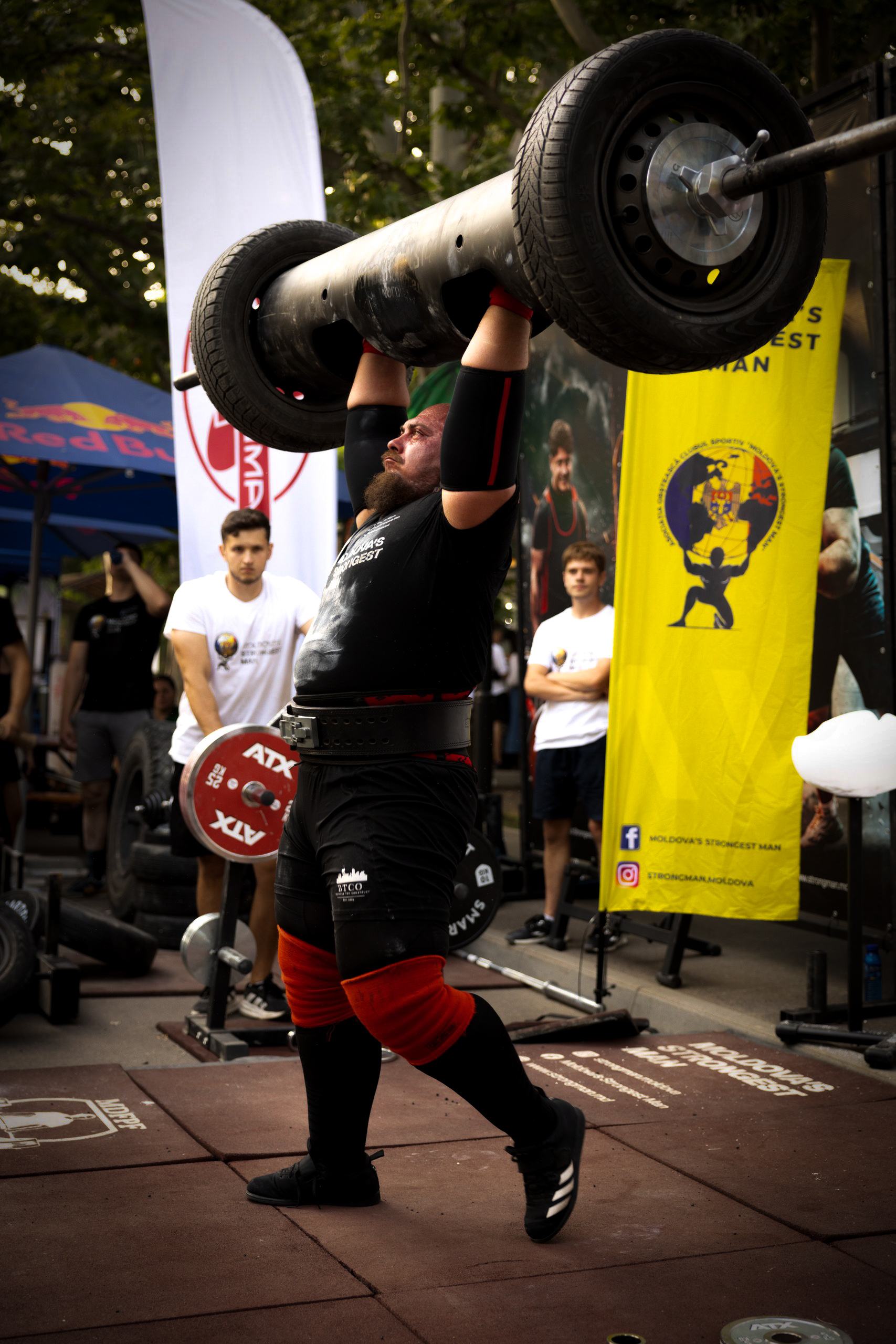
If Episode 1 looked at the cardiovascular system as a whole, this chapter goes directly to the organ facing one of the central paradoxes of strength sport: the heart must adapt to extraordinary workloads, yet the same exposure may become problematic when training volume, intensity, blood pressure, recovery and individual factors exceed the body's ability to remodel favorably.
In Strongman, the question is even more interesting. The athlete may carry very high body mass, repeatedly handle enormous external loads, use intense isometric contractions and the Valsalva maneuver, then move from a near-maximal event into a metabolically demanding medley. The result is a combination of pressure loading, volume loading and repeated physiological stress. Current literature shows that resistance training produces real cardiovascular adaptations and, in general, important health benefits, but the pattern and magnitude of remodeling depend on training dose, athlete level, genetics, blood pressure and other factors.
The central idea: a heart that is more adapted to exercise is not the same thing as a diseased heart, but a larger heart is not automatically a healthier heart.
1. Cardiac adaptation begins with a simple question: how hard does the heart have to work?
The heart does not know that today is deadlift day, yoke day or log day. It responds to physiological demand. When muscles require more blood flow and the body has to maintain arterial pressure during forceful contraction, the cardiovascular system changes heart rate, contractility, cardiac output and vascular tone. Repeated often enough, this workload becomes a biological signal for adaptation.
In simplified terms, the left ventricle has to eject blood against arterial pressure. How much its structure changes depends on the stimulus and the duration of exposure. In strength sport, the history of research has often been dominated by the idea that static and pressor exercise produces concentric hypertrophy, with thicker walls and relatively little change in cavity size. That model is a useful starting point, but it is too rigid to explain every strength athlete.
2. What is ventricular hypertrophy, really?
Left-ventricular hypertrophy broadly means an increase in left-ventricular myocardial mass. In an athlete, that increase can be a physiological response to training. In a patient with hypertension or cardiomyopathy, the same morphological label may reflect a pathological process. Identical wording can therefore describe very different biology.
Meta-analyses of resistance-trained athletes show that they tend to have larger cardiac dimensions than sedentary controls, without clear evidence of impaired systolic or diastolic function in the healthy populations studied. One modern meta-analysis included 949 resistance-trained athletes and 1,053 controls and found greater cardiac dimensions in the trained group, but no clear functional impairment in the pooled populations.
3. The Morganroth hypothesis: historically useful, insufficient for modern Strongman
The Morganroth model popularized a distinction between the endurance heart and the strength heart: dynamic sports were thought to produce more ventricular enlargement, while static sports were thought to produce more wall thickening. Later research showed that reality is less tidy. Sport type, training history, volume, intensity and individual characteristics can produce different patterns.
For Strongman, this nuance matters. The sport is not a collection of purely static lifts. Farmer's Walk, Yoke Walk, medleys and repeated events add locomotion, metabolism and cardiorespiratory stress. A well-conditioned Strongman does not live inside a single hemodynamic model.
4. When adaptation is beneficial
Physiological adaptation is the process by which the body becomes better able to tolerate and produce a given workload at a relatively lower cost. In the heart, training can influence ventricular mass, cardiac volumes, vascular function and autonomic control.
The American Heart Association scientific statement on resistance exercise concludes that resistance training can provide important cardiovascular benefits and can improve risk factors such as blood pressure, glucose regulation and body composition. The fact that a person lifts heavy weights therefore does not, by itself, mean that the heart is being damaged.
5. Where the problem begins: workload is not the same thing as adaptation
A common mistake is to treat every structural change as evidence of fitness. Biology does not use the words good and bad. It responds to the signal it receives. If the signal is appropriate and recovery is sufficient, the result can be functional adaptation. If the stimulus is too large, too frequent or combined with risk factors, the same biology can become chronic stress.
In practice, cardiovascular overload may be favored by persistent hypertension, repeated exposure to very high arterial pressure, chronic under-recovery, pre-existing cardiovascular disease, severe excess body mass, sleep-disordered breathing and anabolic-androgenic steroid use. None of these factors diagnoses disease by itself, but each changes the risk profile.
6. Blood pressure: one of the most important chapters
During very heavy contraction, arterial pressure can rise dramatically for brief periods. That acute response is not the same as chronic hypertension, but it should not be ignored. If resting pressure is persistently elevated, the heart is exposed to extra workload before the athlete even starts warming up.
The AHA notes that resistance training can contribute to lower resting blood pressure. The apparent paradox disappears when acute and chronic responses are separated: a session may create huge transient pressure peaks while an appropriately dosed long-term program improves the resting cardiovascular risk profile.
7. The heart under pressure: what happens in the ventricular wall?
The ventricular wall experiences mechanical stress determined by pressure, geometry and wall thickness. Conceptually, for a given intracavitary pressure, a thicker wall can reduce wall stress. This is one of the physiological explanations for hypertrophic adaptation to pressure loading.
But not every increase in thickness is beneficial. Pathological hypertrophy may include fibrosis, impaired relaxation, reduced functional reserve and increased arrhythmic risk. Wall thickness is therefore only one piece of the puzzle.
8. Diastole: the part of the heart we discuss too little
For the heart to pump well, it is not enough to contract strongly. It must also relax and fill efficiently. Diastolic function describes this phase.
A classic study comparing Strongmen, marathon runners and sedentary controls reported larger absolute heart size in Strongmen and poorer diastolic relaxation than in the other groups. It was a small cross-sectional study and cannot be used to conclude that Strongman automatically causes cardiac dysfunction. A better interpretation is that the sport has a distinct cardiovascular profile and that diastolic function deserves attention whenever structural changes or risk factors are present.
9. Physiological versus pathological remodeling
In an athlete's heart, remodeling is generally proportional to the training stimulus and fits a coherent picture: the athlete is asymptomatic, function remains preserved, the adaptation makes physiological sense and the rest of the evaluation does not raise red flags.
Pathological remodeling may involve disproportionate hypertrophy, impaired systolic or diastolic function, fibrosis, symptoms, abnormal ECG findings, relevant family history or persistent hypertension. The distinction cannot be made correctly from body weight, appearance or performance alone.
10. Table: adaptation or warning signal?
Conceptual table for education, not self-diagnosis:
Feature | Possible physiological adaptation | Finding worth evaluating
Ventricular mass | Increase proportional to sport and body size | Disproportionate or unexplained increase
Systolic function | Preserved | Reduced
Diastolic function | Generally preserved | Abnormal relaxation, especially with other findings
Blood pressure | Normal or controlled at rest | Persistently elevated
ECG | Changes compatible with athletic training | Abnormalities beyond accepted athletic patterns
Symptoms | Absent | Syncope, chest pain, unusual palpitations, disproportionate dyspnea
Family history | No concerning pattern | Sudden death or cardiomyopathy at young age
11. What role does recovery play in heart health?
Recovery is not merely a rule for muscles. The cardiovascular system also responds to accumulated stress. Insufficient sleep, psychological stress, dehydration, intercurrent illness and high training volumes can alter autonomic regulation and perceived effort.
This does not mean that one bad night causes cardiomyopathy. It means that performance and health exist within a physiological context. A program in which every day becomes a maximal day leaves less room for the organism to absorb the stimulus and return toward equilibrium.
12. Sleep, breathing and pressure
In athletes with high body mass, sleep-disordered breathing has additional relevance. Obstructive sleep apnea is associated with sympathetic activation, blood-pressure fluctuations and increased cardiovascular risk. In a Strongman, severe snoring, observed pauses in breathing, daytime sleepiness and morning headaches should not automatically be dismissed as simply the consequence of being large.
13. Body mass: mechanical advantage, cardiovascular cost
High body mass can be extremely useful in Strongman: stability, inertia, leverage and the ability to move large loads. Cardiovascularly, however, the same mass increases perfusion requirements, circulating volume and overall mechanical demand.
That does not mean every heavy athlete is unhealthy. It means evaluation should account for true body size. Athlete's-heart studies often index measurements to body surface area for exactly this reason, separating the effects of body size from structural changes that exceed what would be expected.
14. Resistance training is not the enemy: dose is the issue
The AHA and ACSM support resistance training for health and physical function. An ACSM position stand published in 2026 synthesized 137 systematic reviews involving more than 30,000 participants and confirmed major benefits of resistance training for strength, hypertrophy, power and multiple functional outcomes.
For a Strongman, the useful question is not 'is hard training bad for the heart?' It is 'what dose, intensity, frequency and physiological context can my body tolerate and absorb?' That question is much closer to real physiology.
15. Where do anabolic steroids enter the cardiac story?
For strength sports, this question cannot simply be ignored. Recent literature indicates that anabolic-androgenic steroid use may further alter cardiovascular structure and function.
A meta-analysis published in 2026 included 35 studies and 2,000 men and found that AAS-using resistance-trained athletes, compared with resistance-trained non-users, had greater septal and posterior wall thickness, higher left-ventricular mass, and lower ejection fraction and global longitudinal strain. The findings suggest adverse cardiac remodeling associated with AAS exposure, although they should not be turned into an individual diagnosis.
A 2025 review on cardiovascular risk associated with AAS highlighted hypertension, adverse lipid changes, atherogenesis, subclinical cardiomyopathy and structural and functional cardiac abnormalities. This is one reason the 'Strongman heart' cannot be analyzed solely through training.
Training and pharmacology are not independent variables. When they overlap, the cardiovascular profile changes and must be interpreted accordingly.
16. Why we cannot blame everything on the sport
An athlete may have impressive cardiac hypertrophy and still have a physiologically adapted heart. Another athlete may have less dramatic hypertrophy but also hypertension, fibrosis, a genetic abnormality or another cardiovascular problem. Size alone does not solve the question.
That is why distinguishing athlete's heart from cardiomyopathy may require ECG, Doppler echocardiography and, when findings remain unclear, cardiac magnetic resonance imaging. Sports-cardiology literature emphasizes this multimodal approach.
17. Echocardiography: what can the clinician actually see?
Echocardiography can assess wall thickness, chamber dimensions, ventricular mass, systolic function and measures of diastolic function. In a strength athlete, these data are interpreted together with body size, sport type and clinical history.
Modern techniques, including speckle tracking and strain analysis, can add information about myocardial function. They are not performance tests and do not replace clinical assessment, but they can be valuable when anatomy and physiology do not tell the same story.
18. When is it athlete's heart and when could it be cardiomyopathy?
This is one of the questions most emphasized in sports cardiology. In the diagnostic gray zone, some measurements overlap between highly trained athletes and people with cardiomyopathy. Differentiation uses multiple variables: dimensions, proportions, function, ECG, symptoms, family history and sometimes the response to detraining.
Reference literature on differentiating athletic hypertrophy from hypertrophic cardiomyopathy shows why intermediate cases can be difficult. In such cases, medical evaluation matters more than any conclusion drawn from a wearable or a screenshot of an echocardiogram found online.
19. Detraining: what happens when the stimulus is reduced?
An interesting concept in sports cardiology is that some cardiac adaptations can regress when training stimulus decreases. That reversibility may help distinguish physiological adaptation from some forms of pathological hypertrophy, although it is not a simple test and should not be attempted as a home experiment.
For Strongman, true detraining is also difficult to separate from changes in body mass, hydration, conditioning and pharmacology. Interpretation therefore needs to account for all of these variables.
20. Arrhythmias: when electricity matters as much as anatomy
The heart is also an electrical organ. Structural remodeling, electrolyte disturbances, inflammation, stimulants and certain substances can alter myocardial excitability. In strength athletes, new palpitations, syncope or near-syncope and unusual rhythms should not automatically be attributed to training adrenaline.
21. Recovery between events: the test you cannot see on an echocardiogram
A Strongman can have a structurally normal heart and still lose a contest because he cannot recover fast enough between events. In a medley, the ability to restore cardiovascular equilibrium, dissipate heat, ventilate and redistribute blood flow becomes part of performance.
This is where health and performance meet. Better conditioning does not automatically protect against every cardiac problem, but it can reduce the chance that the cardiorespiratory system becomes the primary limiter of performance.
22. What does clinically relevant overload look like?
There is no single sign. Concern comes from the combination of symptoms, measured values and context. Persistently elevated resting blood pressure, disproportionate shortness of breath, unexplained decline in exercise tolerance, chest pain, syncope, unusual palpitations or abnormal cardiac testing deserve evaluation.
The absence of symptoms does not exclude every problem. Some cardiovascular changes can remain subclinical, particularly early in their course.
23. What should a strength athlete monitor?
For a healthy athlete, simple and repeatable monitoring is more useful than collecting dozens of numbers. Properly measured resting blood pressure, resting heart rate, recovery trends, symptoms and family history are reasonable starting points.
At high competitive level or when risk factors exist, evaluation may include ECG, echocardiography, laboratory testing and, when indicated, exercise testing or cardiac MRI.
24. The short version: healthy adaptation versus overload
Healthy adaptation means improved exercise capacity, efficient recovery, well-controlled resting blood pressure, preserved cardiac function and remodeling that is proportionate to the training stimulus.
Clinically relevant overload is different: it involves chronic exposure, risk factors and/or signs that the organism is no longer handling the workload favorably. It cannot be diagnosed simply because an athlete has a high heart rate after a deadlift or thicker ventricular walls.
25. Conclusion: the heart does not merely need to be large, it needs to remain capable
A Strongman needs a heart that can tolerate pressure, increase cardiac output, recover quickly and continue to function efficiently across a career. That is the more useful definition of adaptation.
The problem begins when we confuse size with performance and performance with health. Cardiac hypertrophy can be part of athletic adaptation, but it can also occur with hypertension or cardiomyopathy. A very strong athlete can have excellent cardiovascular function, but can also carry invisible risk factors. Pharmacology, sleep, body mass, blood pressure and genetics can all change the equation.
Ultimately, the question is not whether the heart should adapt to Strongman. Of course it should. The important question is how far adaptation can go before its biological cost exceeds its benefit. That boundary between adaptation and overload will return, in different forms, throughout the physiology of Strongman series.
References and recommended reading
1. Paluch AE, Boyer WR, Franklin BA, et al. Resistance Exercise Training in Individuals With and Without Cardiovascular Disease: 2023 Update. Circulation. 2024;149:e217–e231. doi:10.1161/CIR.0000000000001189.
2. Currier BS, D’Souza A, Fiatarone Singh M, et al. American College of Sports Medicine Position Stand. Resistance Training Prescription for Muscle Function, Hypertrophy, and Physical Performance in Healthy Adults: An Overview of Reviews. Med Sci Sports Exerc. 2026;58(4):851–872. doi:10.1249/MSS.0000000000003897.
3. The athlete's heart: a contemporary appraisal of the 'Morganroth hypothesis'. Heart. 2008.
4. Naylor LH, O'Driscoll G, Fitzpatrick E, et al. Cardiac structure and function in resistance-trained and untrained adults: A systematic review and meta-analysis. Sports Med. 2023.
5. Venckunas T, Vasiliauskas D, Marcinkeviciene JE, et al. Strongmen sport is associated with larger absolute heart size and impaired cardiac relaxation. J Strength Cond Res. 2011;25(10):2919–2925. doi:10.1519/JSC.0b013e31820f50ef.
6. Pelliccia A, Caselli S, Sharma S, et al. European Association of Preventive Cardiology / European Society of Cardiology guidance on the athlete's heart and sports cardiology.
7. Left ventricular hypertrophy in athletes: How to differentiate between hypertensive heart disease and athlete's heart. Eur J Prev Cardiol. 2021. doi:10.1177/2047487320911850.
8. Differentiating Athlete's Heart from Left Ventricle Cardiomyopathies. Curr Treat Options Cardiovasc Med. 2020. doi:10.1007/s12265-020-10021-8.
9. Cavalcante DN, Romariz L, Neto A, et al. Anabolic-androgenic steroids on cardiac structure and function in resistance-trained athletes: A systematic review and meta-analysis. Int J Cardiol. 2026;442:133896. doi:10.1016/j.ijcard.2025.133896.
10. Meagher S, Irwig MS, Rao P. Anabolic-androgenic steroids among recreational athletes and cardiovascular risk. Curr Opin Cardiol. 2025;40(4):221–229. doi:10.1097/HCO.0000000000001235.
11. Nieschlag E, et al. Adverse effects of doping with anabolic androgenic steroids in competitive athletics, recreational sports and bodybuilding. Review literature.
12. Opondo MA, Mujtaba MT, Shapiro BP. The Cardiovascular Physiology of Sports and Exercise. Clin Sports Med. 2015;34(3):391–404. doi:10.1016/j.csm.2015.03.004.
13. European Society of Cardiology. 2020 ESC Guidelines on sports cardiology and exercise in patients with cardiovascular disease. Eur Heart J. 2021;42(1):17–96.
Editorial note: this article is educational and does not provide individual medical diagnosis or treatment. Values and mechanisms are drawn from scientific literature and must be interpreted in the context of the individual athlete.
More From The Journal

Training
The Science of Strongman Training - Episode X: Competition Programming
How to build a complete Strongman competition preparation block: calendar, events, volume, intensity, specificity, simulations, autoregulation, tapering and fatigue management.

Training
The Science of Strongman Training - Episode IX: Peaking
Peaking in Strongman: how to turn months of training into maximal competition performance by reducing fatigue, preserving adaptations and managing specificity.