
Nutrition
Series: Digestion of a 140-Kilogram Athlete - Episode 8: Diarrhea and Digestive Problems Around Competitions
September 11, 2026
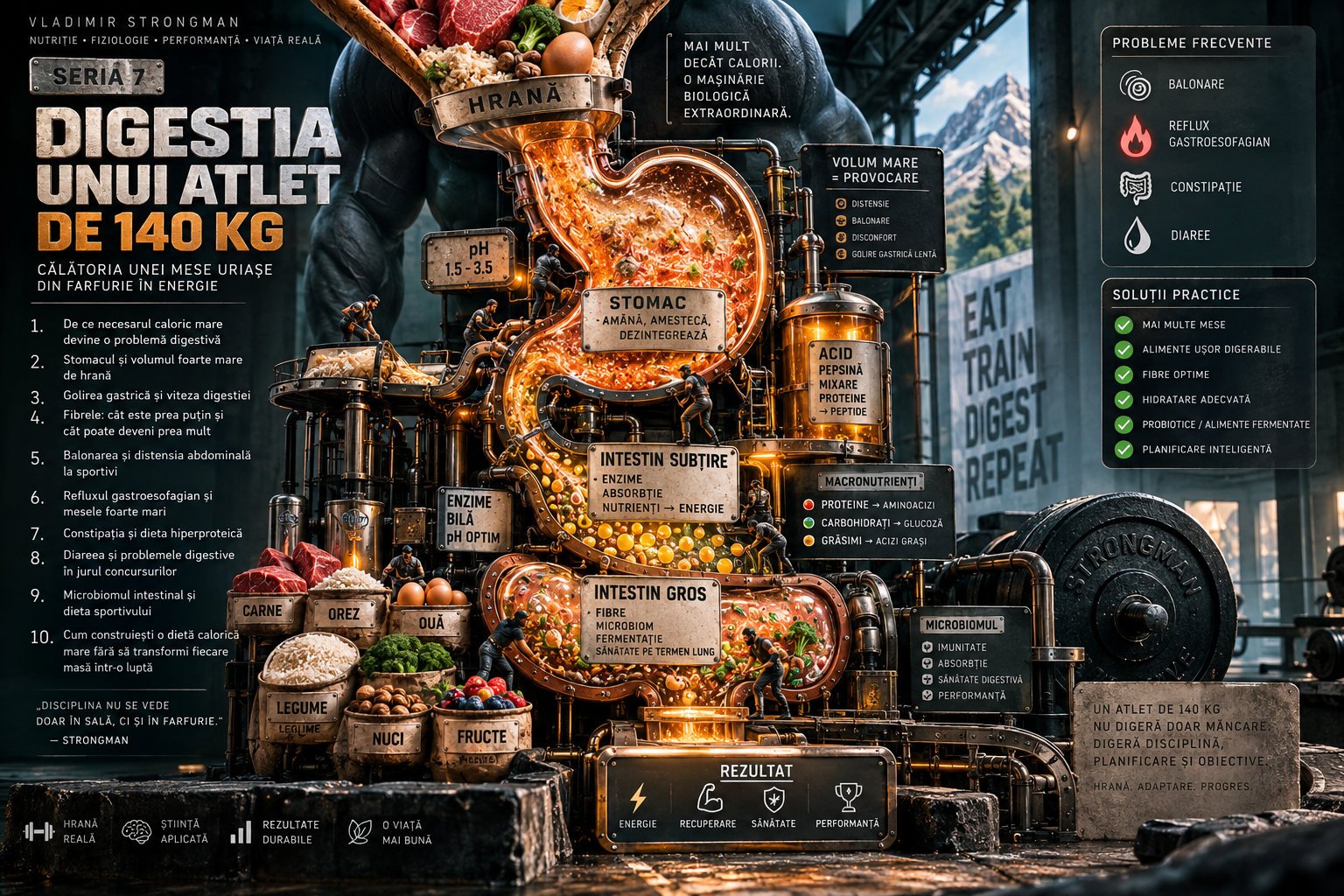
Around a strongman competition, the digestive tract can become as unpredictable as the weather. Stress, travel, altered meal timing, caffeine and unfamiliar foods can change bowel function exactly when the athlete needs stability.
Diarrhea is not merely uncomfortable. Loss of water and electrolytes can affect body mass, exercise tolerance, concentration and the ability to repeat heavy events across the day.
Episode 8 explains why digestive problems are so common around competitions and how to build a strategy that lowers risk without turning competition day into a nutrition experiment.
1. Diarrhea means more than one loose stool
Clinically, diarrhea generally means stools that are more frequent and more watery than a person's normal pattern. One loose bowel movement after coffee is not the same as an episode of acute diarrhea.
For an athlete, context matters: frequency, urgency, cramps, fever, vomiting, blood and fluid loss. These details help distinguish a functional reaction from a situation that may require medical evaluation.
2. Competition stress can accelerate transit
The autonomic nervous system and the gut-brain axis respond rapidly to stress. In some people, anticipation of competition increases intestinal motility and the sensation of urgency.
This is why an athlete may tolerate a breakfast perfectly in training yet develop cramps or urgent bowel movements on competition morning. Emotion changes physiology, not just mood.
3. Adrenaline changes gastrointestinal function
Before an event, the body prioritizes muscle, the cardiovascular system and the systems involved in exertion. Gastrointestinal blood flow and motility can change depending on the intensity of the stress response.
Some athletes experience slower digestion, while others develop faster transit or urgency. The response is individual and can vary even from one competition to another.
4. Travel changes more than the time zone
Long trips by car, bus or plane alter meal timing, hydration, sleep and physical activity. All of these can influence bowel function.
Athletes also end up eating at gas stations, fast-food restaurants or unfamiliar places. A problem that looks purely food-related may actually reflect the cumulative stress of an entire travel day.
5. New foods the night before competition are an unnecessary gamble
A meal can be healthy and still be a poor choice if the athlete is not used to it. Spices, sauces, fat content, dairy and fiber may all differ from the usual routine.
The day before competition is not the ideal time for culinary exploration. Predictability is more valuable than variety when digestive comfort is at stake.
6. Food poisoning must be distinguished from nerves
Diarrhea accompanied by fever, repeated vomiting, severe pain or similar symptoms in several people who ate the same food raises concern for infection or foodborne illness.
In that situation, blaming everything on stress can be a mistake. Priorities shift toward hydration, assessing severity and seeking medical care when appropriate.
7. Contaminated water can ruin the entire weekend
During travel, water sources and food hygiene matter. Ice, tap water or foods washed with unsafe water can become sources of infection in some regions.
Athletes traveling internationally should pay as much attention to water as they do to food. A good hydration strategy starts with safe fluids.
8. Caffeine can be useful and problematic
Caffeine can improve alertness and performance, but it can also stimulate colonic motility in some people. Coffee itself may provoke a gastrointestinal response independently of its stimulant effect.
If an athlete doubles their caffeine dose on competition morning, digestive risk increases. An effective dose should be tested in training, not invented during warm-up.
9. Magnesium can have a laxative effect
Some forms of magnesium draw water into the intestine and can soften stool. This may be useful in certain situations but troublesome before competition.
Supplements used the night before or morning of competition should already be familiar. A new magnesium dose is a poor experiment when the nearest bathroom is across the venue.
10. Polyols and sweeteners can cause osmotic diarrhea
Sorbitol, xylitol, maltitol and other polyols are incompletely absorbed in many people. In larger amounts they can draw water into the intestine and undergo fermentation.
Bars, chewing gum and sugar-free products can add up to a surprising polyol load over a competition day. Labels matter especially when several products are combined.
11. Highly concentrated drinks can upset the gut
A drink containing a great deal of sugar or carbohydrate in a small volume can have a high osmotic concentration. In some people, this slows gastric emptying or contributes to intestinal discomfort.
Competition hydration should use a concentration that has been tested and adjusted. More carbohydrate in the bottle does not automatically mean more usable energy.
12. Too much fructose can exceed absorption capacity
Fructose is absorbed through specific intestinal transporters and tolerance varies. Large doses, especially when consumed alone, can cause gas and diarrhea in susceptible people.
Fruit, juice, gels and sports drinks may all contribute at the same time. The problem is often the combined dose rather than any single food.
13. Fiber can become too much on the wrong day
Fiber is important in everyday nutrition, but a very large amount before competition can increase intestinal bulk, fermentation and stool frequency.
Temporarily reducing fiber in the final meals before the start may help some athletes without turning their normal diet into a chronically low-fiber pattern.
14. Very high fat intake can worsen symptoms
Very fatty meals slow gastric emptying and can cause heaviness, nausea or reflux. In some people, large amounts of fat can also alter bowel function.
The night before and morning of competition, digestive predictability is often more important than maximizing the calorie density of a single meal.
15. Lactose: usual tolerance matters
An athlete with lactose intolerance may develop cramps, gas and diarrhea after large amounts of milk or certain dairy products. Tolerance depends on dose and the specific food.
If dairy is eaten every day without problems, it does not need to be removed automatically. Competition is simply not the time to test a huge milk-based shake that is not part of the usual routine.
16. Dehydration and diarrhea can feed each other
Diarrhea causes water and electrolyte losses, and an athlete who is already sweating heavily has less room for error.
As dehydration progresses, heart rate can rise, performance can fall and heat tolerance can deteriorate. During a long competition, the consequences can develop quickly.
17. Sodium and glucose support rehydration
Oral rehydration solutions use the combination of sodium and glucose to promote water absorption in the intestine. The principle is different from simply drinking a very large amount of plain water.
After meaningful gastrointestinal losses, an appropriate rehydration drink may be more useful than large volumes of plain water. Symptom severity should still determine whether continuing to compete is safe.
18. Vomiting plus diarrhea changes the situation completely
When vomiting accompanies diarrhea, the ability to replace fluids orally is reduced. The risk of dehydration and electrolyte imbalance rises sharply.
At that point, between-event carbohydrate strategy is no longer the priority. If fluids cannot be kept down or marked dizziness and weakness develop, medical assessment is needed.
19. Poor sleep can destabilize the gut
A short night before competition alters stress, appetite and the perception of digestive symptoms. For some athletes, the combination of sleep loss and caffeine amplifies the problem.
Protecting sleep during competition week is an indirect digestive intervention. The intestine does not operate independently from the nervous system.
20. Anti-inflammatory drugs can irritate the gastrointestinal tract
Nonsteroidal anti-inflammatory drugs can irritate the stomach and intestine and may increase gastrointestinal risk, particularly in the setting of dehydration or intense exercise.
Using them preventively before competition is not a benign digestive strategy. Their use should reflect a medical indication and individual risk.
21. Competition-day meals should be familiar
The safest foods are usually those the athlete has repeatedly used before hard training sessions. Familiarity reduces the number of unknown variables.
Rice, potatoes, bread, bananas, lean meat or other simple foods can work well if they are already well tolerated. The exact list is individual rather than universal.
22. Small portions are easier to control between events
When little time separates events, a large meal can overload the stomach and intestine. Smaller snacks allow intake to be adjusted according to how the athlete feels.
Easily digested carbohydrates, fluids and sodium can be spread gradually. The goal is continuous fueling without creating a gastrointestinal crisis.
23. Antidiarrheal drugs are not universal solutions
Some medications can reduce intestinal transit, but they are not suitable for every cause of diarrhea. With fever, blood in the stool or suspected infection, self-medication may be inappropriate.
Athletes with recurrent episodes should discuss a clear plan with a physician rather than improvising in the changing room with medications used only occasionally.
24. Warning signs should stop the competition plan
Blood in the stool, high fever, severe abdominal pain, obvious dehydration, confusion, fainting, persistent vomiting or inability to keep fluids down require medical evaluation.
In these situations, continuing to compete can turn a digestive problem into an emergency. No event justifies ignoring signs of systemic deterioration.
25. Conclusion: the gut loves predictability on competition day
Many digestive problems can be reduced through routine: familiar foods, tested caffeine doses, planned hydration, attention to hygiene and avoiding excess fiber, fat, polyols or new supplements.
For the 140-kilogram athlete, the best strategy is not to eat as much as possible on competition day. It is to maintain energy, fluid and electrolytes without allowing the intestine to become the seventh event.
Selected bibliography
Guyton and Hall. Textbook of Medical Physiology. Boron WF, Boulpaep EL. Medical Physiology. de Oliveira EP, Burini RC. Food-dependent, exercise-induced gastrointestinal distress. J Int Soc Sports Nutr. Costa RJS et al. Systematic review: exercise-induced gastrointestinal syndrome. Aliment Pharmacol Ther. World Health Organization. Oral Rehydration Salts: Production of the New ORS. Thomas DT, Erdman KA, Burke LM. Nutrition and Athletic Performance.
More From The Journal

Training
The Science of Strongman Training - Episode X: Competition Programming
How to build a complete Strongman competition preparation block: calendar, events, volume, intensity, specificity, simulations, autoregulation, tapering and fatigue management.

Training
The Science of Strongman Training - Episode IX: Peaking
Peaking in Strongman: how to turn months of training into maximal competition performance by reducing fatigue, preserving adaptations and managing specificity.